
Custom Mold Manufacturing Process: From Design to Delivery
Custom mold manufacturing is a multi-stage engineering process that transforms your product concept into production-ready tooling. Understanding each phase
 Kyler Yang · Founder4 min read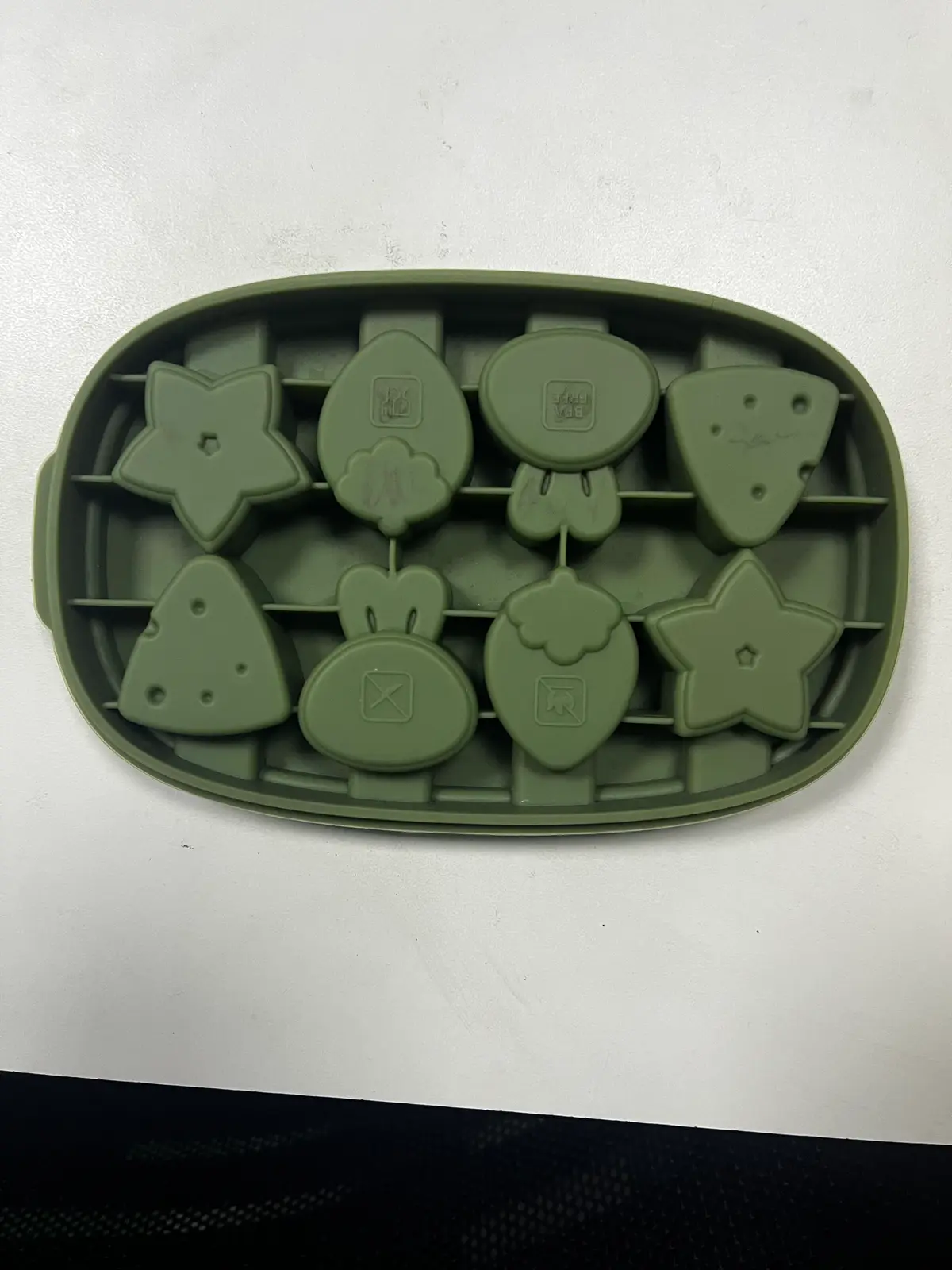
Overview
Custom mold manufacturing is a multi-stage engineering process that transforms your product concept into production-ready tooling. Understanding each phase helps you set realistic expectations and ensures a smooth collaboration.
This guide walks through the complete custom mold manufacturing process.
Phase 1: Requirements Collection (Days 1-3)
What We Need From You
Product Specifications:
- Target product dimensions (length × width × height)
- Target weight per cavity (in grams)
- Expected production volume (pieces per shift/week/month)
- Product shape description and reference images
Production Requirements:
- Equipment compatibility (hand pour, flood & scrape, automatic depositor)
- Cooling method (walk-in chiller, refrigeration, ambient)
- Demolding method (manual, semi-automatic, automatic)
- Packaging requirements
Regulatory Requirements:
- State symbols or compliance markings
- Dosing accuracy specifications
- FDA compliance documentation needs
Branding Assets:
- Logo in vector format (.AI, .EPS, or .SVG)
- Text or tagline for embossing
- Custom shapes or design elements
Reference Materials (if available):
- 3D model files (STEP, STL, IGES, or OBJ)
- Technical drawings with dimensions
- Hand sketches with annotations
- Physical product samples
What We Provide
Within 24 hours:
- Confirmation of requirement completeness
- Preliminary feasibility assessment
- Estimated timeline and pricing range
- Clarifying questions (if needed)
Phase 2: CAD Engineering (Days 4-10)
Design Process
Using SolidWorks, our engineering team designs:
Cavity Geometry:
- Optimized for your product shape and dimensions
- Correct depth for target weight per cavity
- Appropriate draft angles for demolding
- Detail reproduction optimized for silicone casting
Multi-Cavity Tray Layout:
- Maximum cavity count within tray size requirements
- Uniform fill characteristics across all cavities
- Structural ribbing for tray rigidity
- Alignment features for two-piece molds
Pour Gate Design:
- Positioned for optimal material distribution
- Sized for your production volume and viscosity
- Designed for easy cleaning and maintenance
Your Review
You receive:
- Full CAD render — Photorealistic visualization
- Technical specifications — Cavity dimensions, tray size, durometer
- Production estimates — Expected output per pour, cycle time
- Pricing quotation — Detailed cost breakdown
Review period: 3-5 business days
Phase 3: Master Model Fabrication (Days 11-14)
Master Creation Methods
| Method | Best For | Details |
|---|---|---|
| SLA 3D Printing | Most applications | 50μm layer height, Clear or Grey General Purpose resin |
| CNC Machining | Large formats | Higher material strength, metals and rigid plastics |
| Sculpting | Organic designs | Hand-crafted detail reproduction |
Surface Quality Standards
- Layer height: 50μm (0.05mm) for SLA printing
- Surface finish: a production surface finish set at DFM for high-detail applications
- Post-processing: IPA washing and UV post-curing
Phase 4: Prototype Manufacturing (Days 15-21)
Prototype Production
We manufacture a prototype mold using the approved master model. This prototype is shipped to you for testing.
Validation Testing
| Test | Method | Acceptance Criteria |
|---|---|---|
| Weight accuracy | Weigh 10 pieces from different cavities | a job-specific weight band after DFM tolerance |
| Demolding performance | Test release from all cavity types | Clean release, no tearing |
| Detail fidelity | Inspect logo sharpness, text legibility | Matches master model |
| Equipment compatibility | Verify tray dimensions fit depositor | Proper fit, adequate clearance |
Adjustment Process
- Minor adjustments: Modify master and re-produce prototype
- Major redesign: Revise CAD design and restart process
- Approval: You confirm prototype meets all requirements
Phase 5: Production Manufacturing (Days 22-35)
Manufacturing Process
1. Material preparation — Platinum-cured silicone formulation selected 2. Mold pouring — Silicone mixed, degassed, and poured over master 3. Curing — Controlled curing process (typically 4-8 hours) 4. Demolding — Prototype removed from master 5. Inspection — Dimensional verification and quality check 6. Documentation — CoC, MSDS, and weight verification chart prepared 7. Shipping — Carefully packaged and dispatched
Quality Control
| Check | Method |
|---|---|
| Cavity dimensions | CNC measurement |
| Surface finish | Visual inspection |
| Material certification | CoC and MSDS verification |
| Weight consistency | Cavity weight verification |
Phase 6: Delivery and Support
Documentation Included
| Document | Purpose |
|---|---|
| Certificate of Compliance (CoC) | FDA 21 CFR 177.2600 compliance |
| Materials Safety Data Sheet (MSDS) | Material composition and safety |
| Cavity Weight Verification Chart | Weight consistency across cavities |
| Care and Maintenance Guide | Mold保养 instructions |
| Warranty Information | Coverage terms and conditions |
Post-Delivery Support
- Technical support — Equipment compatibility consultation
- Production optimization — Recommendations for maximizing output
- Troubleshooting — Guidance on common production issues
- Mold modifications — Design changes for production adjustments
Timeline Summary
| Phase | Duration | Key Deliverable |
|---|---|---|
| Requirements | 1-3 days | Complete specification package |
| CAD Engineering | 3-7 days | Approved CAD render |
| Master Fabrication | 2-4 days | Verified master model |
| Prototype | 3-5 days | Test prototype for approval |
| Production | 5-10 days | Production-ready molds |
| Total | after sample approval, depending on the job |
FAQ
Q: How long does the custom mold process take? A: Typical lead time is after sample approval, depending on the job from requirement submission to production delivery.
Q: Can I request changes after approval? A: Yes, changes can be made at any phase. However, changes after master fabrication may incur additional costs.
Q: Do you offer rush production? A: Yes, rush scheduling is available for time-critical launches.
Q: What if the prototype doesn't meet my requirements? A: We work with you to make adjustments until the prototype meets your specifications.
*Published: 2026-08-12 | Category: Production Process | Read Time: 8 minutes*
Ready to order custom silicone molds?
Free quote for OEM/ODM projects. MOQ 20 · Prototype 3-7 days · FDA/LFGB available.