
Silicone Mold Defects: Prevention Guide for Consistent Production
Silicone mold defects can cause product quality issues, production delays, and increased costs. While high-quality platinum-cured silicone molds from reput
 Kyler Yang · Founder5 min read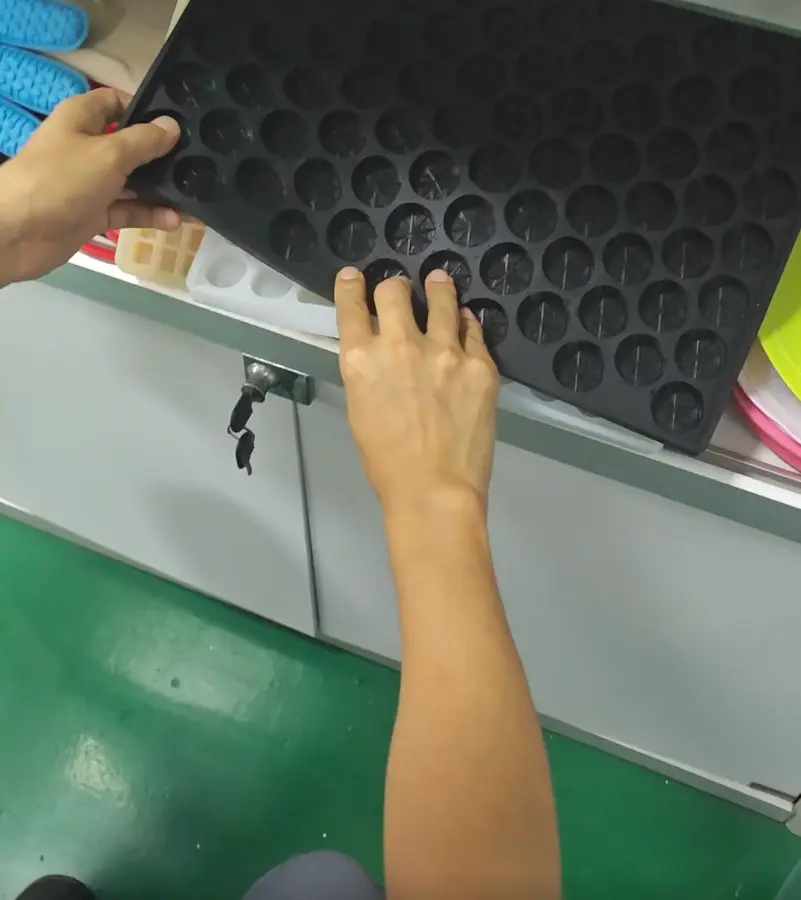
Introduction
Silicone mold defects can cause product quality issues, production delays, and increased costs. While high-quality platinum-cured silicone molds from reputable manufacturers have defect rates below 0.5%, defects can still occur due to material contamination, improper handling, or manufacturing variations. This guide identifies common defects, their root causes, and prevention strategies.
Prevention Over Remediation
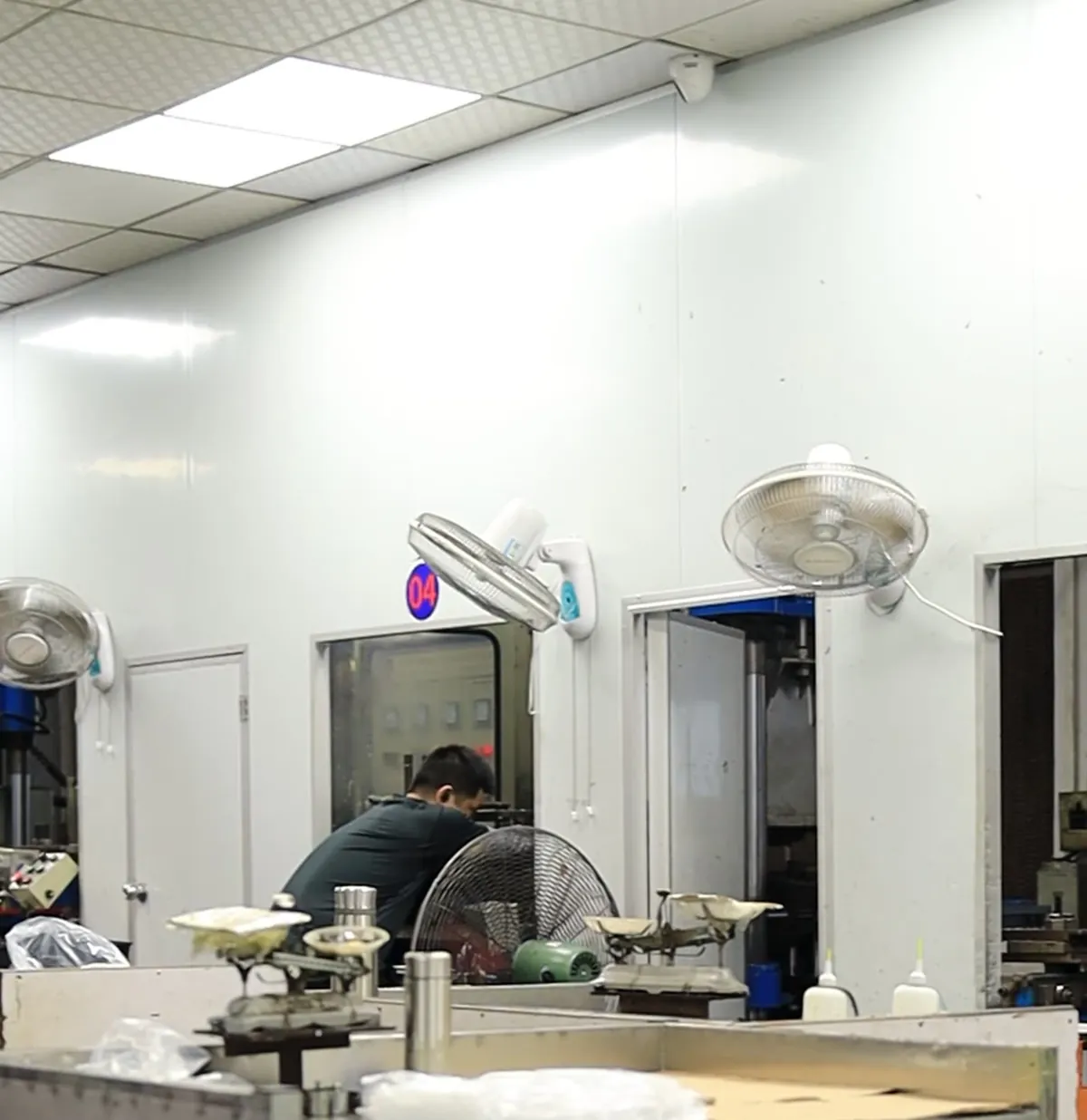
The most effective approach to mold defects is prevention. Working with a manufacturer that implements rigorous quality control at every stage minimizes the risk of receiving defective molds. This guide focuses on both prevention and identification, so you can evaluate your mold supplier's quality systems.
Common Mold Defects and Prevention
1. Cavity Surface Bubbles
Symptoms: Small pits or pores visible on cavity surfaces. Products cast from affected cavities may have surface imperfections.
Root Causes:
- Air trapped in silicone during pouring
- Inadequate degassing of mixed silicone
- Pouring silicone too quickly
- Contaminated master surface
Prevention:
| Prevention Method | How It Works |
|---|---|
| Vacuum degassing | Mixed silicone is placed in a vacuum chamber before pouring, removing entrapped air |
| Slow, controlled pouring | Silicone is poured in thin streams to minimize air entrapment |
| Master surface preparation | Master is cleaned and inspected before mold production |
| Multiple pour layers | Thin layers are poured and degassed separately rather than one large pour |
Quality Control Check: Inspect cavity surfaces under magnification before approving a mold. Bubble-free surfaces indicate proper degassing.
2. Dimensional Inaccuracy
Symptoms: Finished product dimensions or weight deviate from specifications. Weight variation exceeds a job-specific weight band after DFM (CBD) or ±5% (general).
Root Causes:
- Master model dimensional error
- Silicone shrinkage during cure
- Inconsistent curing conditions
- Post-cure distortion
Prevention:
| Prevention Method | How It Works |
|---|---|
| CNC-master fabrication | CNC-machined masters provide CAD-locked cavity dimensions accuracy |
| Controlled curing environment | Temperature and humidity are monitored during cure |
| Post-cure inspection | Dimensions are verified with calibrated instruments |
| Weight verification testing | Test pieces are produced and weighed before shipping |
Quality Control Check: Request a Cavity Weight Verification Chart. Cavities showing variation beyond your tolerance should trigger a quality review.
3. Surface Finish Defects
Symptoms: Uneven gloss, visible texture variations, or loss of detail on cavity surfaces.
Root Causes:
- Master surface imperfections
- Incomplete curing
- Mold release agent residue
- Surface contamination during production
Prevention:
| Prevention Method | How It Works |
|---|---|
| Master surface inspection | Masters are inspected for surface quality before molding |
| Proper curing time | Silicone is given adequate time to reach full cure |
| Clean room environment | Mold production occurs in controlled, clean conditions |
| No release agents | Platinum silicone does not require release agents; avoiding them prevents surface contamination |
Quality Control Check: Compare finished cavity surface to the master under consistent lighting. Surface finish should match the master within visual tolerance.
4. Tears and Cuts in Cavities
Symptoms: Visible tears, cuts, or nicks in cavity walls. Products may stick, tear, or have surface defects aligned with the damage location.
Root Causes:
- Sharp tools used during trimming
- Over-stretching during master removal
- Material stress during curing
- Post-production damage during handling
Prevention:
| Prevention Method | How It Works |
|---|---|
| Soft tool trimming | Silicone trimming tools are used instead of metal blades |
| Careful master extraction | Masters are removed with controlled force to avoid stretching |
| Reinforced cavity design | Cavity walls are designed with adequate thickness |
| Protective packaging | Molds are packaged to prevent damage during shipping |
Quality Control Check: Inspect all cavity surfaces under magnification. Any tear or cut larger than 0.5mm should be grounds for rejection.
5. Logo and Detail Loss
Symptoms: Logo text is blurry, incomplete, or missing. Fine details are not reproduced on finished products.
Root Causes:
- Insufficient master resolution
- Logo depth too shallow (< 0.3mm)
- Air entrapment in detail areas
- Silicone flow masking fine features
Prevention:
| Prevention Method | How It Works |
|---|---|
| High-resolution masters | SLA 3D printing at 25μm layer height captures fine detail |
| Adequate emboss depth | Logo depth is specified at 0.3–0.8mm minimum |
| Optimized pour direction | Material is directed to fill detail areas first |
| Vent channel design | Air escape paths are incorporated near detail areas |
Quality Control Check: Inspect logo and text reproduction on prototype test pieces under magnification. All characters should be sharp and legible.
6. Tray Warping or Deformation
Symptoms: Pour surface is no longer flat. Tray does not sit level on depositor. Flood-and-scrape blade does not make uniform contact.
Root Causes:
- Insufficient ribbing or structural support
- Stored under weight or歪曲条件
- Exposed to heat sources
- Over-torqued alignment pins (two-piece)
Prevention:
| Prevention Method | How It Works |
|---|---|
| Structural ribbing design | Tray frames include reinforced ribbing for flatness |
| Proper storage guidelines | Storage at room temperature, flat, uncovered |
| Flatness verification | Pour surface flatness is measured with precision level |
| Alignment pin specification | Pins and sockets are sized for proper engagement without over-torquing |
Quality Control Check: Verify tray flatness with a precision level. For flood-and-scrape trays, flatness should be within ±0.1mm across the entire pour surface.
Defect Prevention Checklist for Buyers
Before placing an order, verify your manufacturer can demonstrate:
| Prevention Measure | Required |
|---|---|
| Vacuum degassing during silicone mixing | ✓ |
| CNC or SLA master fabrication with inspection | ✓ |
| Dimensional verification of finished molds | ✓ |
| Cavity weight testing on prototypes | ✓ |
| Surface finish inspection under magnification | ✓ |
| Protective packaging for shipping | ✓ |
| Quality documentation with every order | ✓ |
| Defect rate tracking and continuous improvement | ✓ |
When to Request Mold Replacement
| Defect Type | Severity | Action |
|---|---|---|
| Cavity surface bubbles (> 0.5mm) | High | Request replacement |
| Dimensional inaccuracy (> CAD-locked cavity dimensions) | High | Request replacement |
| Logo/detail loss | High | Request replacement |
| Tray warping (> ±0.1mm) | High | Request replacement |
| Minor surface nicks (< 0.3mm) | Low | Document and monitor |
| Slight color variation | Low | Acceptable |
FAQ
Q: What defect rate should I expect from a quality manufacturer? A: A quality manufacturer should maintain a defect rate below 0.5%. Any mold that does not pass quality checks should be reworked or replaced before shipping.
Q: Can I repair a defective mold myself? A: Minor surface nicks can sometimes be filled with silicone repair compound, but structural defects (cavity distortion, tears, dimensional errors) require manufacturer intervention.
Q: How do I inspect a mold for defects when it arrives? A: Inspect each cavity under good lighting. Check for bubbles, tears, surface irregularities, and logo detail. Produce test pieces and verify weight consistency against the Cavity Weight Verification Chart.
Q: What should I do if I receive a defective mold? A: Document the defect with photos, contact the manufacturer immediately, and request a replacement or repair. Do not use defective molds for production.
Conclusion
Preventing silicone mold defects requires both manufacturer quality systems and buyer inspection practices. Work with manufacturers that demonstrate rigorous quality control, and inspect all received molds before production use. A proactive approach to defect prevention saves time, money, and compliance risk.
For quality-controlled platinum-cured silicone molds with complete documentation, contact our engineering team.
*Published: 2026-08-13 | Category: Quality Guide | Read Time: 9 minutes* *Primary Keyword: silicone mold defects prevention* *Secondary Keywords: mold quality control, cavity defect prevention, FDA compliant mold manufacturing*
Ready to order custom silicone molds?
Free quote for OEM/ODM projects. MOQ 20 · Prototype 3-7 days · FDA/LFGB available.