
Why Flood-and-Scrape Gummy Molds Fail in Real Use: A Manufacturer's Troubleshooting Guide
When flood-and-scrape gummy molds fails in use, the fastest fix is rarely 'change the silicone.' The failure normally starts at an interface between g
 Kyler Yang · Founder9 min read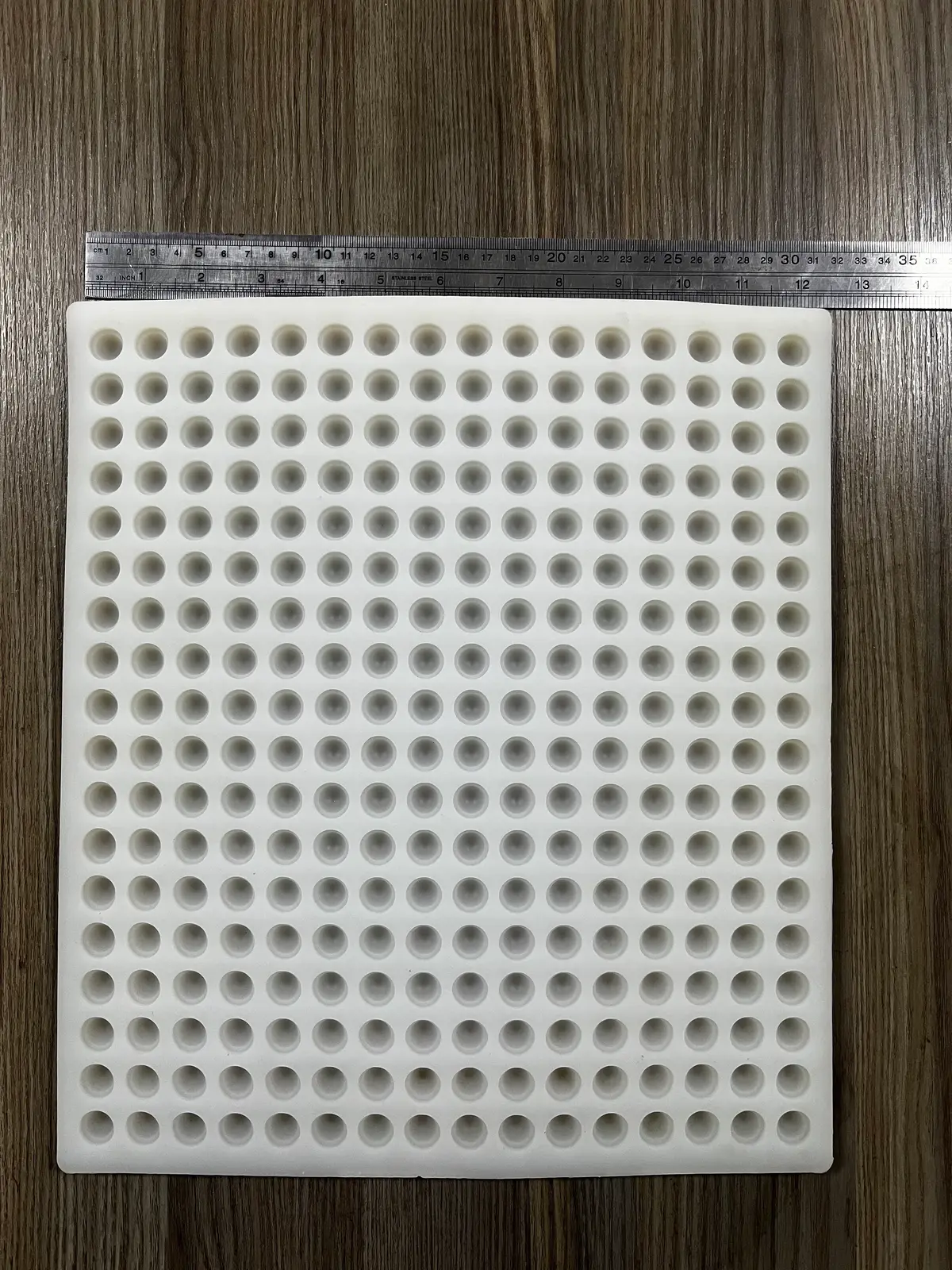
When flood-and-scrape gummy molds fails in use, the fastest fix is rarely 'change the silicone.' The failure normally starts at an interface between geometry, material, process and the way the product is handled.
This article is for food brands, commercial kitchens and food-contact product buyers. It uses flood and scrape gummy molds as the search topic, but the purpose is to help a buyer make a better engineering or sourcing decision rather than repeat a sales page.
Failure 1: Sticky pectin product stretches out of a deep cavity
Before changing material, inspect where the failure starts. Compare local wall thickness, radii, undercuts, parting line and the way the part is handled.
A tear or distortion that always begins at the same geometry is a design clue.
Failure 2: Outer rows fill at a different weight because the tray bows
Check whether the approved sample and failed sample use the same material grade, hardness, cure/post-cure and drawing revision.
Failure 3: Nozzle pitch does not match the cavity pattern
A functional failure often needs a functional measurement. Visual inspection may not show retention force, tray deflection, sealing load or demold stress.
Failure 4: Micro-lettering tears the gummy
Recreate the use condition. If the problem appears only after heat, chemical exposure, repeated flex or a particular casting formula, bench inspection at room temperature is incomplete.
Failure 5: The cavity nominal ml does not match actual formulation density
Separate variables. Change one meaningful factor at a time so the team learns which change solved the failure.
Engineering example (hypothetical): A 60-cavity pectin tray produces acceptable center-row pieces but lighter outer rows. Before changing cavity CAD, the team checks the full tray on the depositor and finds the unsupported edge is slightly below the center scrape plane. Adding support and rechecking deposit weight isolates the real cause before a new tool is cut.
A practical root-cause sequence
- Keep the failed part.
- Mark the exact failure origin.
- Check drawing revision and material lot.
- Measure critical geometry.
- Reproduce the real load/use condition.
- Decide whether the cause is design, material, process, assembly or handling.
- Make one controlled prototype change.
- Re-test against the same acceptance criterion.
What to document after the fix
Update the drawing, material specification or work instruction. If the solution exists only in an email, the same failure can return on the next reorder.
What the drawing should make explicit
A good production drawing for flood-and-scrape gummy molds should identify:
- units and revision
- datum or measurement references for critical dimensions
- Shore A and material only where they are actually controlled
- surface finish or texture when appearance matters
- parting-line/flash restrictions on functional surfaces
- logo/artwork revision
- mating component reference for fit-sensitive products
- test or inspection notes that cannot be inferred from geometry
Soft silicone is easy to distort during measurement. If a dimension is important, define how it is measured rather than adding an unrealistically tight tolerance.
How to use a golden sample
A golden sample is useful for characteristics that are hard to describe numerically: feel, color, surface gloss, acceptable trim witness, logo appearance or the way a flexible part sits on another component.
It should complement the drawing, not replace it.
Questions to ask before approving production
- Is the sample made from the intended production material?
- Is the CAD revision frozen?
- Have the critical dimensions been measured?
- Has the sample been tested in the real use or casting process?
- Are color and surface approved?
- Are required documents tied to the actual material?
- Is packaging defined?
- Is the repeat-order reference clear?
What RUUIPON would need to review this project
- STEP/STP or a dimensioned drawing; STL is useful for sculptural geometry
- physical sample or mating part when fit is critical
- material/use environment and target Shore A if known
- first-order quantity plus realistic repeat volume
- required reports, packaging, color and logo instructions
If some data is unavailable, state that clearly. A useful engineering review can distinguish “unknown and to be tested” from “fixed requirement.”
Review the related commercial page Send an RFQ
Frequently asked buyer questions
Should I give the supplier a target Shore A for flood-and-scrape gummy molds?
Give it if it has already been validated. If not, describe the functional feel/load and allow prototype comparison. Hardness should not be guessed independently of geometry.
Is a physical sample better than STEP/STL?
For fit-sensitive or organic geometry, the physical sample is very valuable. For controlled dimensions and revisions, STEP is usually easier to engineer. Using both is ideal when available.
How many samples should be tested before production?
There is no universal number. Test enough pieces and use cycles to expose the failure mode that matters. A fit check may need several parts; a cavity-weight study may need samples across every tray region.
When should tooling be changed instead of the silicone grade?
When the failure repeats at the same geometry-sharp corner, thin transition, poor split, unsupported span or bad retention-the tool/design is often the more direct fix.
Can the same supplier document be reused for every silicone material?
No. Important compliance or material evidence should match the actual compound used for the order and the buyer's intended market/use.
Shop-floor review: what we would look at before calling this production-ready
For flood-and-scrape gummy molds, we would put the approved sample beside the drawing and ask a small number of practical questions.
First, does the part or mold return to its intended shape after the real handling cycle? Silicone can pass a static dimensional check and still behave badly when stretched, compressed or filled.
Second, are the failure-prone features visible on the drawing? The likely problem areas for this topic include:
- sticky pectin product stretches out of a deep cavity
- outer rows fill at a different weight because the tray bows
- nozzle pitch does not match the cavity pattern
- micro-lettering tears the gummy
- the cavity nominal mL does not match actual formulation density
Third, is the inspection plan linked to these risks? If the concern is retention, test retention. If it is cavity weight, measure piece weight. If it is a split mold, check registration after repeated opening. If it is food-contact documentation, verify the report against the compound rather than the website claim.
Finally, keep the first approved production sample. On a repeat order six months later, that physical reference can resolve color, trim, feel and surface questions faster than a long email thread.
Detailed review worksheet
Use this worksheet before you accept a quotation or approve a sample.
Geometry
- Which feature is hardest to mold or demold?
- Which dimension controls function?
- Where can flash or a seam be tolerated?
- Is a thin section flexible by design, or simply thin because of packaging/appearance?
- Does the CAD show the real mating/casting condition?
Material
- What exact property is driving the silicone choice?
- Is Shore A already validated or still a prototype variable?
- What temperature, chemical, food, skin or outdoor exposure applies?
- Is there a required report tied to the material?
- Does color/translucency affect function or only appearance?
Process
- Which manufacturing route is quoted?
- Is the process suitable for the first quantity and forecast volume?
- Which secondary steps are included-trim, post-cure, assembly, printing, inspection?
- Will a future scale-up require new tooling?
Validation
For this topic, the central risk is piece-weight consistency, sticky demolding, tray flatness and compatibility with the customer's filling process.
The prototype plan should therefore include a test that can expose that risk. Deposit the real pectin/gelatin formula at normal process conditions, then check release after the real cooling/drying window.
A decision table for common changes
| What you observe | First thing to check | Do not immediately assume |
|---|---|---|
| Part/mold too soft | Local wall/span and real load | Entire compound must be harder |
| Tear at one location | Radius, undercut, demold path | Silicone batch is bad |
| Fit too loose/tight | Mating-part dimensions + measurement method | Global shrink factor is wrong |
| Excess flash | Parting line, shutoff, tool condition | Trim operator is the only issue |
| Poor logo/detail | Artwork depth, fill/release, master finish | Higher pressure alone will fix it |
| Variation between cavities | Tool/cavity, support, filling/process | Average dimension tells the whole story |
This table matters because changing the wrong variable can create a second problem while hiding the first.
How to document a prototype result
Do not write only “sample approved.”
A useful approval note contains:
- sample ID
- drawing revision
- silicone/material identification
- hardness/color
- tool or cavity reference
- tests performed
- measured result
- cosmetic comments
- deviations accepted
- changes required before production
- photo/golden sample reference
That note is inexpensive insurance for the repeat order.
Practical measurement note
Sample piece weights from center and outer rows; if the tray works with a depositor, also verify cavity pitch and tray registration.
For flexible silicone, repeatability of measurement is often more important than adding another decimal place. If two inspectors can produce very different numbers by squeezing the part differently, the method needs a fixture or clearer instruction.
What the operator may reveal that engineering misses
Watch how the tray is moved from depositor to cooling/drying; a high-cavity tray that twists can create more production loss than a smaller stable tray.
During a pilot, ask the operator:
- Which step is slow?
- Where do they need two hands?
- Where do they use more force than expected?
- Which defect is hardest to see?
- Which part of the mold is easiest to damage?
- Does packaging make the finished part harder to inspect?
Operator feedback can lead to small geometry changes that reduce recurring labor far more than a raw-material price negotiation.
Repeat-order control
Keep target cavity volume, approved formula test notes, tray dimensions and machine pitch with the reorder record.
Before a reorder, compare the previous approved reference to the new PO. If the buyer changes color, packaging, material evidence or a mating component, treat it as a controlled change rather than a routine reorder.
A hypothetical example of a good engineering conversation
Buyer: “Can you make this in 40 Shore A?”
Factory: “We can prototype 40A, but which behavior are you trying to control?”
Buyer: “It should stay in place but still be easy to remove.”
Factory: “Then we should test retention/removal on the real mating part. We may be able to keep 40A and change the local retention geometry instead of moving the whole part to 50A.”
That conversation is better than accepting the material number with no functional target. It ties the specification to the use.
Final checklist before you move on
- [ ] Search intent/question answered without generic filler
- [ ] Real application and failure mode defined
- [ ] Drawing/sample available
- [ ] Critical dimensions marked
- [ ] Material requirement is specific enough
- [ ] Prototype test written
- [ ] Tooling/NRE separated from unit cost
- [ ] Required documents named
- [ ] Production change-control reference defined
- [ ] Related commercial page linked
Ready to order custom silicone molds?
Free quote for OEM/ODM projects. MOQ 20 · Prototype 3-7 days · FDA/LFGB available.