
Remote Audit Script for Overseas RTV Mold Suppliers
Remote audit of an RTV mold shop is a timed shot list: vacuum bench, mix, pattern, resin mother, jackets, metrology. If you cannot name the shots, you are touring.
 Kyler Yang · Founder9 min read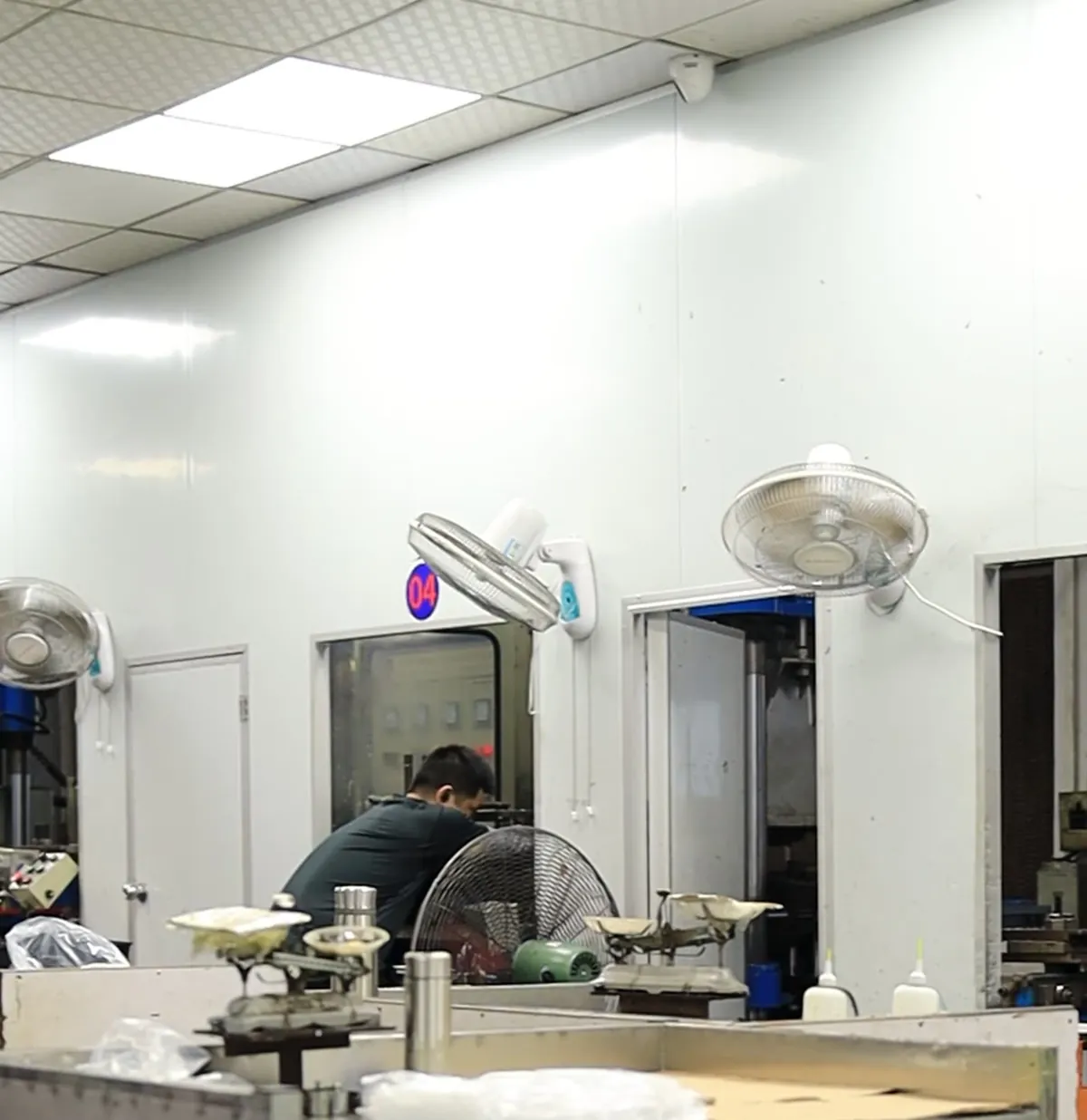
If you are picking an overseas custom RTV mold shop, a remote audit is a shot list plus documents. If you cannot name the shots, you are not auditing. You are watching a brochure. The shop you want can show photos / sketch / CAD intake, a 3D-printed pattern cell, often a temporary silicone flip, a resin production mother rack, and a vacuum bench for batch RTV. The mother is not the pattern. A highlight reel of LSR presses is the wrong cell.
Overseas RTV houses can be audited without a plane ticket well enough to kill the worst mismatches: a trading desk with no vacuum bench, a "manufacturer" that only forwards STL files, a metrology corner with a rusty caliper, a "food-grade" line that shares a mill with sulfur rubber. You will not replace a full QMS audit. You will replace hope. Run it as a script. Same order every shop, so you can compare. Finished HTV/HCR/LSR parts are an HTV product RFQ here. HTV/HCR compression mold tooling stays on a RUUIPON RFQ - do not send the mold-tool PO as an HTV product RFQ here, or ask us for a high-volume LSR tool. RUUIPON has poured RTV in Bao'an since 2018. Free DFM. CAD revision about USD 50 when we edit your 3D. Prototype usually 3-7 business days after CAD lock. Production MOQ 20 pieces per design.
Before the call: the document pile
Ask for these 72 hours ahead. If they cannot produce them, the video is a sales call.
- Business license and the actual factory address (match it on the live camera to a street sign or a locked-in map pin).
- Machine list: vacuum chambers, mix benches, ovens, CNC/printers - not just LSR press tonnage.
- Tooling ownership statement: who prints the pattern, who flips the temporary silicone, who casts the resin production mother, who pours batch RTV, who archives the living mother.
- Material control: how platinum kits are identified, FIFO, leftover policy, tin vs platinum segregation.
- A redacted FAI packet from a similar RTV job (balloons, cert, fill-weights).
- Calibration list for durometer, scale, vacuum gauge.
- If they claim ISO 9001 / food-contact systems: the certificate and the scope line. Scope that says "trading" is a warning. We do not treat a certificate as an FDA-approved factory stamp.
NDA first if the pocket is sensitive. Watermark the CAD you send for the audit example.
Common mix-up: a highlight reel of LSR presses
If they claim RTV and show only heated platens and a cold-runner manifold, they are bidding the wrong cell. Cross-contamination with millable sulfur stock next to platinum food RTV is a process risk, not a vibe. ISO 3302-1 on their wall is not an audit pass. It is a drawing class. If your email still says "master, box, keys, jacket" as the audit object, you are listing shop furniture. Audit the path: pattern, often a flip, resin production mother, batch RTV.
Shot list (live, not a file)
Demand a handheld walk, not a tripoded highlight reel. Time-stamp. Ask them to show a phone clock and a unique token you sent that morning (a code on paper) in the first minute so the footage is today.
Shot A - Gate and floor plate. Entrance, then the production floor in a slow pan. You want to see whether RTV vacuum tables, print/CNC pattern cells, and any LSR/HCR cells coexist, and whether powder or millable sulfur stock sits next to platinum food RTV.
Shot B - The vacuum bench they would use for you. Chamber, pump, gauge, mix cups, 1:1 or 10:1 protocol, not a kitchen vacuum sealer under a tarp. Ask them to pull up the last traveler (they can blur customer names). A bench with no gauge is not an RTV cell.
Shot C - Pattern / mother shop. Printer, wash, UV post-cure, barrier coat, and the rack of resin production mothers. If the "manufacturer" has a bench and a shipping crate, they are a broker. Brokers can be useful. They are not the mold shop. Price them as brokers.
Shot D - Material cage. Labeled platinum kits, lot cards, tin segregated. Open one pail label on camera (grade, lot). Match it to a cert they already sent.
Shot E - Jacket / secondary. Jacket / mother-mold support-shell construction, trim benches, storage racks out of UV.
Shot F - Metrology. Durometer, hardness slabs, scale for fill-weight. Ask for a live measurement of a dummy dump against a ballooned print you provided. Watch whether they fixture a soft dump like a steel block.
Shot G - Mold storage. Jackets not stacked to warp, living mothers unsanded. Ask them to open a production RTV tool (customer-blind) and show a split land. You are looking for maintenance culture, not their other customer's IP.
Shot H - Document wall in real life. Traveler on a running pour, first-off dumps in a red box, scrap in a tagged bin. If there is no traveler, there is no traceability.
Keep the whole walk under 90 minutes. After that people perform.
Questions that belong on the live mic
- For my mold, which bench, which process (platinum/tin RTV), which cavity count?
- Who prints the pattern? Who casts the resin production mother? In-house or a vendor?
- What flash at the split will you accept without a secondary, and where is trim done?
- Show me last calibration dates on the durometer and the vacuum gauge.
- How do you separate tin-cure / millable sulfur / platinum food RTV?
- If the living mother is damaged in storage, who pays the recut? (Listen for hesitation.)
- Can we video first pours at tryout with the same token?
Write answers into a one-page record. A shop that answers in machines and lot numbers is a shop. A shop that answers in adjectives is a website.
Typical shop values
Reference values only. Confirm material-specific limits against the supplier’s technical data and agree project acceptance criteria before production.
| Item | Typical shop value |
|---|---|
| What you are auditing | RTV path: pattern, often a flip, resin production mother, batch RTV |
| Walk length | Under 90 minutes, handheld, token on camera |
| Docs lead time | 72 hours ahead or the video is a sales call |
| Mix / vacuum tell | 1:1 or 10:1; gauge on the chamber - not a kitchen sealer |
| Our card (RUUIPON) | Free DFM; USD 50 when we edit 3D; proto 3-7 days after CAD lock; MOQ 20 |
Worked example: 12-cavity bear, token walk
A confectioner had two bidders for a 12-cavity 18 mm bear, food-contact, about 2,000 dumps a month. Shop A: handheld walk, vacuum gauge on camera, platinum 10A-20A pail matched to cert, pattern/printer cell, resin mothers on racks. Shop B: tripoded LSR press reel, "we also do silicone molds." Shop A got the PO. Paying a tooling charge still needed a living-mother custody clause.
Stay on this page / skip this page
Stay when you need a remote script that kills brochure shops before you send a tooling PO.
Skip if you actually need an LSR/HCR part cell audit - a different RFQ - ask us. Skip a 90-minute walk for a local artisan with one vacuum pot you can visit. High-IP or high food-brand risk: remote is a filter, then one short on-site or a third-party inspector with your shot list.
We will not quote a brochure video as an audit. We will not skip living-mother custody because the pail looked pretty. We will not accept LSR press footage against a pour-cavity RFQ. We will not let a broker sign a no-export clause they cannot keep. We will not raise Shore A first to fix a shop with no vacuum gauge.
Related: FAI, IP protection, manufacturer, contact.
What to send / fail criteria
Put on the RFQ: "Remote audit required before tooling PO: live shot list A-H, token on camera, document pile as specified. Broker status must be declared. Object is an RTV mold (pattern / flip / resin mother / batch RTV), not an LSR press."
End the call if: address on camera does not match documents; no pattern/mother shop and no named cutting partner in writing; RTV claimed, no vacuum gauge / no mix protocol; certs that do not match the pail on camera; refusal to show metrology live; "we can do any MOQ, any class, any ISO" with one press in the shot and no pour bench.
Pass is not a gold star. Pass is "this bench could pour our skin." Then you still do DFM and FAI. Send the token and the ballooned sample print to [email protected] or contact. We will walk the bench or tell you we are a broker.
- Docs 72h ahead -> Token + handheld A-H
- Token + handheld A-H -> Vacuum + pattern/mother + custody?
- Vacuum + pattern/mother + custody? - no -> End call
- Vacuum + pattern/mother + custody? - yes -> DFM + FAI like an adult
FAQ
Is a polished factory video an audit? No. Handheld, token, today, shots A-H. A tripoded reel is a brochure.
They showed ten LSR presses. Are they a mold maker? They may be a parts OEM. That is a different RFQ and usually a different site. Ask for the vacuum bench and the resin-mother rack.
Can a broker pass if they name the pour shop? Price them as a broker. Custody and recast still have to name who archives the living mother.
What remote cannot see? Jacket warp, sulfur smell, a night-shift subcontract. Bound it with tryout video, serial photos of your mother, and a tagged subset you remeasure on arrival.
What numbers should I hear on an RTV shop card? On this site: free DFM, about USD 50 when we edit 3D, prototype usually 3-7 business days after CAD lock, MOQ 20 per design. Do not paste those three onto an HTV/HCR compression-mold RFQ, and do not invent an HTV MOQ.
Custom silicone development · DFM & prototype support
CAD, drawing, photos or sample details