
Dry Ice vs Ultrasonic Cleaning: Not for Soft RTV Skins
Dry ice and ultrasonic clean metal parts tools. Do not blast a soft RTV skin. Wash the cavity; recast when residue is in the rubber, not on it.
 Kyler Yang · Founder8 min read
The cavity still prints a dull film after three solvent wipes. On an RTV tool that film is often baked pectin, cocoa fat, resin smear, or gypsum in the texture — or pigment that migrated into the rubber. Dry ice blasting and ultrasonic cleaning both remove *films on metal* without grit. They are not how you refresh a 10A–20A skin.
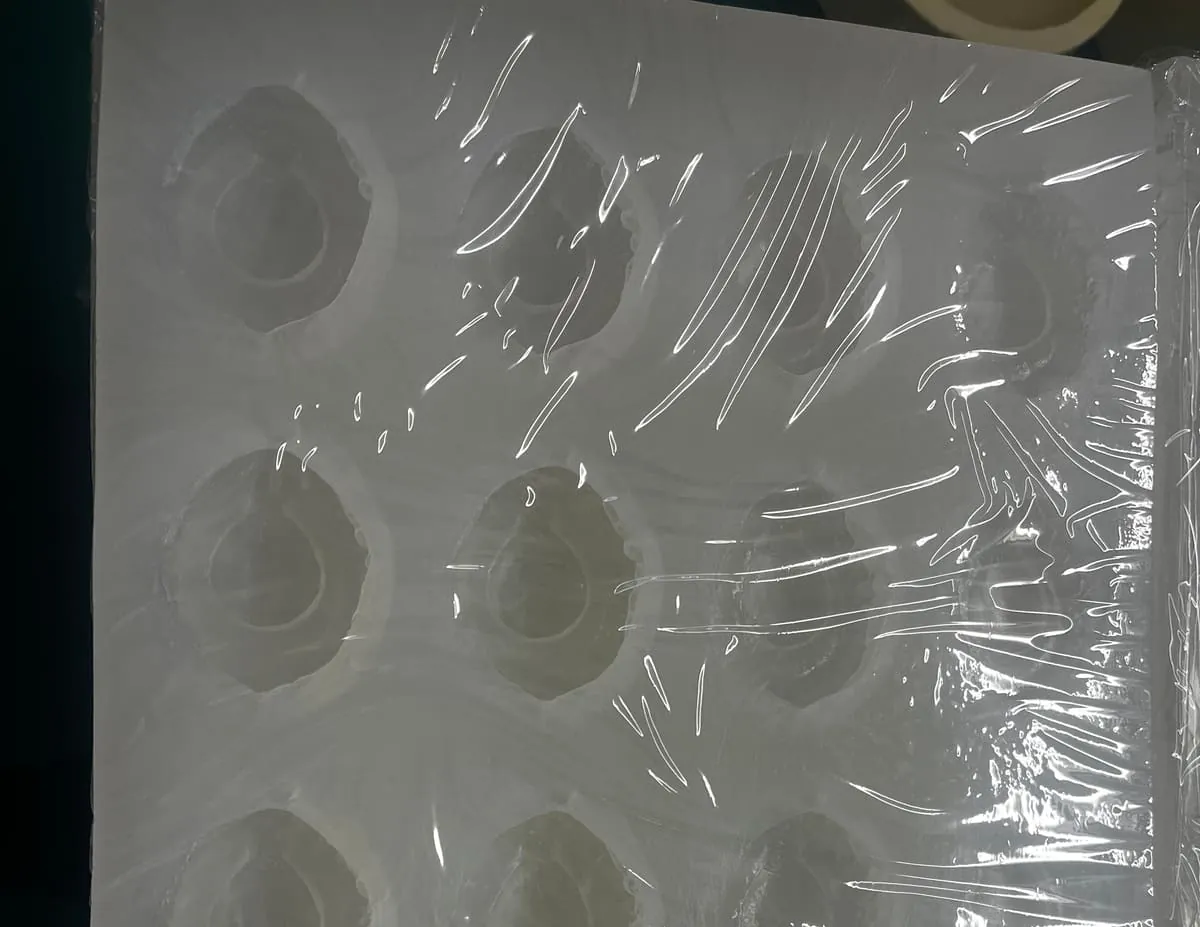
If the dirty object is an HCR or LSR steel plate, those two methods belong on a parts-tool PM. If the object is a custom RTV cavity, the adult path is soil-specific wash, then recast when the rubber itself is stained, swollen, or torn.
What each metal method is doing (so you do not borrow it)
Dry ice blasting. Solid CO₂ pellets hit steel in a compressed-air stream. The ice is soft (Mohs ~1.5–2), so it does not cut hardened tool steel the way glass bead does. Cleaning comes from kinetic impact, a local cold shock, and sublimation. The ice disappears as gas. The only waste is the dirt, plus a CO₂ ventilation problem.
Ultrasonic cleaning. Inserts sit in a bath. Cavitation undercuts residue in lettering and cooling-circuit dead legs. Then you rinse, dry, and rust-protect. Miss the dry step and you trade residue for flash rust.
Neither method is a rubber-mold wash. Do not dry-ice blast a soft RTV silicone mold to “refresh” it. You will erode edges and drive ice into tears. Do not drop a glued-up RTV block into an ultrasonic tank.
Choose by the residue on an RTV cavity
Fat, cocoa, light resin on an open pour face. Warm surfactant wash (see the culinary cleaning article). Dry fully. Oil “to keep it supple” is contamination.
Sugars and caramel. Hot soak first; scraping a cold sticky cavity gouges rubber.
Gypsum or concrete slurry. Wash the same day. Set mineral in a texture is an abrasive chisel on the next cycle.
Pigment packed in texture, or a halo that wiped off then came back. If color is *in* the rubber, washing will not save it. Recast against the master. If color is on the jacket keys, clean the jacket so it does not reprint.
Inhibition tack. That is chemistry (dirty SLA, sulfur, tin next to platinum), not dirt. Barrier-coat the master; do not blast the skin.
Food or skin-contact tools. The cleaner itself becomes a contaminant. No hardware-store degreaser, no d-limonene, no acetone on a glossy chocolate face. Dry ice is attractive on *steel* because it leaves no detergent. On RTV it is still a mechanical attack.
Downtime is the real cost — recast vs a heroic clean
A mid-size RTV tray that can stay on the bench: a correct wash is tens of minutes. A recast against a living master is a vacuum-table day, not a steel recut. That is why shops recast instead of inventing a blast SOP for rubber.
A 16-cavity LSR cold-runner with valve gates (different quote): blasting the parting face in place does not clean needle guides. Plan insert-level ultrasonic when that tool is apart. Do not paste that PM onto a gummy jacket.
Damage modes people skip
Dry ice is “non-abrasive” relative to sand. It is not harmless on 10A rubber. Pressure, close standoff, or a concentrated pass on a sharp letter will frost a gloss and open a tear. Moisture in the air line makes mud in texture.
Ultrasonic cavitation on a glued jacket can unzip a bond and flood keys. Water in a plaster mother mold wrecks the geometry fixture that keeps the skin in spec. Heat-treat labels are a steel problem; swollen tin is an RTV problem.
A practical split for an RTV bench
- Every dump (food): wash soil, then sanitizer if required, then dry. Nested wet molds grow odor.
- When texture packs: dedicated soft brush, not steel wool. Recast if the tooth is gone.
- After a color or media change: wash, then a witness dump you will scrap. Shiny rubber can still ghost pigment.
- Never: grit blast, dry-ice, or ultrasonic a cosmetic RTV cavity to save 20 minutes. Recast costs less than a destroyed letter.
If you only buy one “clean” process for RTV, buy wash discipline plus a recast in the price. Write both into the PM sheet rather than arguing which steel brochure “wins.”
Common mix-up: a tire-shop dry-ice video on a chocolate tray
Tire and rubber *steel* shops adopted dry ice for scheduled PM. Your pour face is the product. Ice that would not cut H13 will still chew 10A.
What to ask when you're buying PM, not a brochure
- Is the dirty object RTV skin, jacket, master, or a steel parts tool?
- Soil: fat, sugar, slurry, pigment, inhibition?
- Recast included after the skin stains, or wash-only forever?
- Food-contact: which detergents are in the article file?
- Who owns the master if we recast?
Worked example: 12-cavity gummy, pectin packed in letters
12-cavity, 18 mm, platinum 10A–20A, jacket, ~2,000 dumps/month. Outer letters pack pectin. Adult PM: hot soak, soft brush, dry, inspect under raking light. If the letter radius is already gone, recast. Do not dry-ice the bear face. Outer-row 3–6% heavy is still a jacket sag issue, not a dirty-letter issue.
When this article is the wrong quote
If you are PM’ing a heated LSR or HCR *parts* tool, dry ice vs ultrasonic is the right fork — on that OEM. A tiny shallow ice tray still should not be blasted. Geometry can override: architectural skins want slurry wash the same day, not a tank.
Related reading: culinary wash protocol, repair vs recast, storage after you clean, custom RTV molds.
What to put on the RTV PM / RFQ
“No dry-ice or ultrasonic on RTV skins. Wash by soil. Recast when residue is in the rubber or a letter is gone. Jacket and master cleaned separately. Food detergents named.”
Send photos of the packed texture and whether the master still exists. We will say wash or recast — not which blast nozzle.
We would not recommend dry-ice blasting a 10A pour face
We would not recommend an ultrasonic tank for a glued jacket. We would not raise Shore A first so the skin “can take a blast.” We would not paste a 16-cavity cold-runner PM onto this tray.
RUUIPON Mold Structure Decision: clean what you can peel. If the letter is gone, recast against the master. Deep undercuts still need a split, not a nozzle. Large wet casts still need the jacket after the wash.
- Object? - steel HCR/LSR parts tool -> Dry ice and/or ultrasonic — different PO
- Object? - RTV skin -> Residue on surface or in rubber?
- Residue on surface or in rubber? - on surface -> Soil-specific wash, dry, raking light
- Residue on surface or in rubber? - in rubber / letter gone -> Recast on living master
- Soil-specific wash, dry, raking light -> Food/skin?
- Food/skin? - yes -> Named detergent only; no solvent spray
Typical shop values
Reference values only. Confirm material-specific limits against the supplier’s technical data and agree project acceptance criteria before production.
| Item | Typical shop value | | --- | --- | | RTV cavity | Platinum 1:1 or 10:1, 10A–20A, jacket | | Wash water (chocolate) | About 40–50 °C mild surfactant | | Dry-ice start on *steel* (contrast) | Often ~4–5.5 bar / 60–80 psi, generous standoff | | Recast vs blast | Recast a skin; do not blast it | | Loaded-tray sag if you skip jacket dry-out | About 0.5–1.5 mm |
FAQ
Can I dry-ice blast a soft RTV silicone mold to refresh it? No. Ice will erode RTV edges and drive into tears. Do not drop a glued RTV block into an ultrasonic tank either. Those methods are for metal production tools that mold HCR or LSR.
When is recast the better clean than another wash? When residue is in the rubber: pigment migration, swollen tin, a letter radius that is gone, or inhibition tack that is chemistry. Washing packed pectin is still a wash. Destroying a gloss to save twenty minutes is not.
Why is downtime the real cost, not the brochure method? A tray on the bench may take tens of minutes of correct wash versus a vacuum-table day to recast. That recast is still cheaper than a steel recut, and cheaper than a destroyed master copy. A 16-cavity LSR cold-runner PM is a different object.
Can dry ice frost a high polish even though it is "non-abrasive"? On steel, yes relative to sand — too much pressure or too close can frost A-2. On 10A RTV it is worse: letters round off. Start neither process on a logo. Wet air makes mud in texture.
What split belongs on an RTV PM sheet? Every food dump: soil, sanitizer if required, dry. When texture packs: soft brush, raking light. After a color change: witness dump you will scrap. Never grit-blast, dry-ice, or ultrasonic a cosmetic RTV cavity. Recast when the rubber is the dirt.
Custom silicone development · DFM & prototype support
CAD, drawing, photos or sample details