
Hidden Costs in Custom RTV Molds: Trim, Scrap, Recast
Mold price is the visible third. Split-trim labor, sag scrap, and recasts often outrun the first skin. Budget the leaks, not just the glove.
 Kyler Yang · Founder8 min read
If you're buying a custom RTV silicone mold, the mold quote is the visible third of the spend. Trim at the split, scrap from a sagging jacket, and recast upkeep eat the rest, quietly, on every lot.
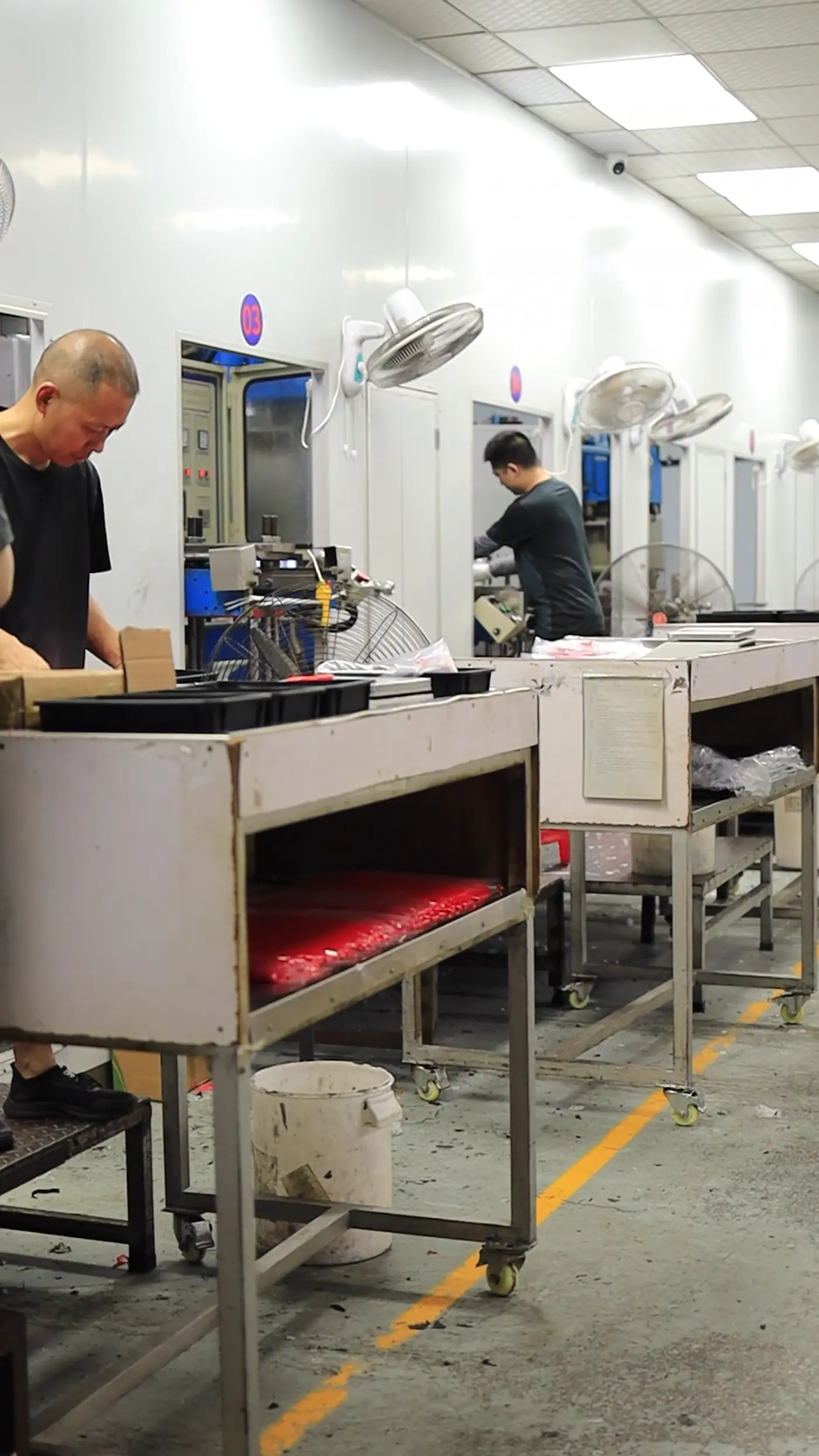
These are not “gotchas.” They are conversion costs that a pretty glove photo never shows. You find them the same way a technician finds a leak: start at the parting line, then the secondary bench, then the rack where the jacket sits between orders.
LSR flash-trim on steel is a different leak. Don't import Class 103 shutoff stories onto a 10A tray.
Leak 1: The split that became a department
RTV tools flash at the split of the rubber. Someone removes that film. That someone is a cost driver.
Hand trim is skilled, slow, and inconsistent. Fine for 100 dumps. At 10,000 it is a second factory. Edge quality depends on who had the knife.
Die-cut or punch secondary needs a nest. You paid for another tool and you still need the flash to be predictable.
The hidden piece is not the trim method. It is that flash is a keying-and-jacket problem billed as labor. A keyed two-part with a rigid mother mold can make trim almost disappear. A cheap one-piece that walks 0.3 mm will hire people forever.
Ask for: flash max on the drawing, the planned trim method, and a dump-price *with trim* and *if the split is held*. The delta is the leak.
Common mix-up: 2% scrap on a tired glove you still call production
Start-up pours, air in bosses, sticky inhibition, fill-weight misses after sag, and trim nicks are all scrap. Two percent on a capable jacketed tray is a different universe from high single digits on a flashing glove. Releasing in tiny lots also buys start-up forever.
ISO 3302-1 does not hide scrap. It is a drawing class if the article is rubber.
Leak 2: Scrap that looks like a small percentage
Start-up pours. Mix, degas, first fills while the jacket seats. On a 200-dump lot this can be a real fraction. If you release in 200s, you buy start-up forever.
Process scrap. Voids, inhibition (platinum vs dirty masters), incomplete dump, wrong fill-weight. RTV voids often mean vacuum or vent, not “operator error.”
Cosmetic scrap. Transparency of resin, flow marks, smeared outer-row logos when the tray sags 0.5–1.5 mm.
Dimensional / weight scrap. Outer row 3–6% heavy vs center is a missing mother mold wearing a “process” costume.
Trim scrap. Dumps nicked by the knife.
Demand the assumed scrap % on the quote, what it includes (start-up vs running), and whether rejected dumps still consume compound you paid for.
Leak 3: Molds that need a budget after they ship
RTV skins tear. Jackets warp. Masters get sanded “to clean them up.”
Maintenance that should be a line, not a surprise:
- Recast of the RTV skin against the unsanded master after a tear reaches a logo or a key
- Jacket refresh. Warped printed shells, cracked plaster, loose pins
- Key replacement. Crushed buttons that stopped locating
- Storage. UV, stacking that warps jackets, temperature
- Cleaning chemistry. Aggressive scour on a food cavity is how you cut the face
- Master custody. If the pattern is lost, you are back to CAM
Paying a tooling charge does not, by itself, give you unrestricted transfer rights or free recasts. Write who owns master and jacket.
The hidden cost is running a throwaway glove as if it were a library tool, paying recast rates as surprises, and still scrapping dumps.
What to ask when you're buying
- Flash maximum and whether price includes trim?
- Scrap assumption, start-up vs running?
- Recast of the skin included or extra? Who keeps the master?
- Jacket PM and storage?
- Fill-weight map on first article, every pocket?
Worked example: 12-cavity bear, trim vs jacket
A 12-cavity 18 mm bear, ~2,000 dumps a month, food-contact. Cheap open-back without jacket: edge sag 0.5–1.5 mm, outer row 3–6% heavy, knife trim on every split. Pricier platinum 10A–20A skin, mix 1:1, vacuum degas, rigid jacket, keys: trim almost gone, recast priced at first tear to a letter. Year-one TCO favored the jacket. A parallel LSR cryo-deflash quote was the wrong leak.
When this article is the wrong quote
If you actually need steel LSR/HCR part tools, shutoff PM and cold-runner leaks belong on a parts OEM pack. A tiny shallow tray can skip the jacket. Geometry can override quantity: one deep core still needs a recast plan at 80 dumps.
Related reading: custom RTV molds, TCO, keying, gummy trays.
The P&L picture a buyer can actually use
For a year of one SKU, add:
- Mold (and any planned recast)
- Dump price × good pieces
- Trim labor if not inside (2)
- Scrap × (material + labor)
- Maintenance events you can name (jacket, keys, storage)
- Freight of molds and of dumps (two different crates)
If (3)+(4)+(5) rival (1), you don't have a cheap mold. You have a deferred invoice.
Cavitation interacts: an 8-cavity that sags on two pockets scraps 2/8 of every dump and still needs eight trims. A 1-cavity that shuts can beat it on TCO at mid volume.
On the RFQ: flash max and whether price includes trim; scrap assumption; recast and master custody; jacket; post-cure/wait state at inspection.
The test: take last year’s lot, count hours at the trim bench and dumps in the scrap bin, and divide by good pieces. If that number is not on the new quote, the quote is incomplete.
Send last-lot trim hours if you have them, plus STEP and dump material. We will mark jacket, keys, and whether a recast belongs in the price.
We would not recommend a cheap glove that hires a trim department
We would not recommend skipping the jacket to win the mold price. We would not run a throwaway skin as a library tool. Raising Shore A first is the wrong fix for flash; fix keys. We would not sand the master “to clean it up” if you expect a recast.
RUUIPON Mold Structure Decision: leaks start at the split. Flat back? open-back. Deep undercuts that will not peel? two-part / core. Soft 10A–20A or wet dump? mother mold before you budget trim people.
- Split flashing? - yes -> Keys + jacket; not more knives
- Split flashing? - no -> Outer row heavy?
- Outer row heavy? - yes -> Mother mold / sag
- Outer row heavy? - no -> Skin torn at logo?
- Skin torn at logo? - yes -> Recast against unsanded master
- Where is the leak? -> LSR steel PM?
- LSR steel PM? - yes -> Stop: different part RFQ
Typical shop values
Reference values only. Confirm material-specific limits against the supplier’s technical data and agree project acceptance criteria before production.
| Item | Typical shop value | | --- | --- | | Mix | Platinum 1:1 or 10:1; vacuum degas | | Cavity Shore | 10A–20A skin with jacket | | Platinum shrink | About 0.1–0.3% | | Loaded-tray edge sag | About 0.5–1.5 mm without a jacket | | Outer-row vs center if tray sags | Edge often 3–6% heavy | | Recast trigger | Tear reaches a logo or a key, not “looks tired” |
FAQ
Why is flash trim often a jacket problem billed as labor? RTV flashes at the rubber split. Hand trim at volume is a second factory. A keyed, jacketed shut can make trim almost disappear; a walking glove hires people forever. Ask for dump price with trim and if the split is held; the delta is the leak.
Why is a 2% scrap assumption dangerous on a tired glove? Start-up pours, voids, cosmetic rejects, sag weight misses, and trim nicks are all scrap. Two percent on a capable jacketed tray is a different universe from high single digits on a flashing bridge you still call production.
What mold upkeep should be a budget line after the skin ships? Recast of the RTV skin, jacket refresh, key replacement, UV storage, and cleaning chemistry that cuts the face. The hidden cost is running a throwaway glove as if it were a library tool.
How can a 1-cavity tray beat an 8-cavity on yearly cost? An 8-cavity that sags on two pockets scraps a quarter of every dump and still needs eight trims. A 1-cavity that shuts can win mid-volume TCO. Add mold, good-dump price, trim, scrap, named recast, and freight.
What last-year test shows leaks the new quote hid? Count trim-bench hours and scrap-bin dumps, divide by good pieces, and see whether that number is on the new quote. If the vendor will not split flash, scrap, recast, and jacket, the unit price is a bucket you will fund after first article.
Custom silicone development · DFM & prototype support
CAD, drawing, photos or sample details