
Oven Post-Cure for Platinum RTV Cavities | RUUIPON
RTV post-cure is a supported oven bake after room cure. It is not HCR mill post-cure. Time/temp from the grade, not a kitchen max. MOQ 20, $50 CAD.
 Kyler Yang · Founder7 min read
An oven post-cure on platinum RTV is a supported bake after the cavity has already room-cured. You are driving residuals and stabilizing the skin before a food dump or a fussy odor spec, using the grade's processing notes for time and temperature. You are not running an HCR mill post-cure on a compression *part*, and you are not "finishing" a green mold that never reached demold. A floppy 10A–20A tray without a rack or jacket will sag in the oven the same way it sags under a loaded dump — typically about 0.5–1.5 mm at an unsupported edge, enough to throw a depositor row. Heat the oven to the TDS band, support the tool, then cool it on the same support.
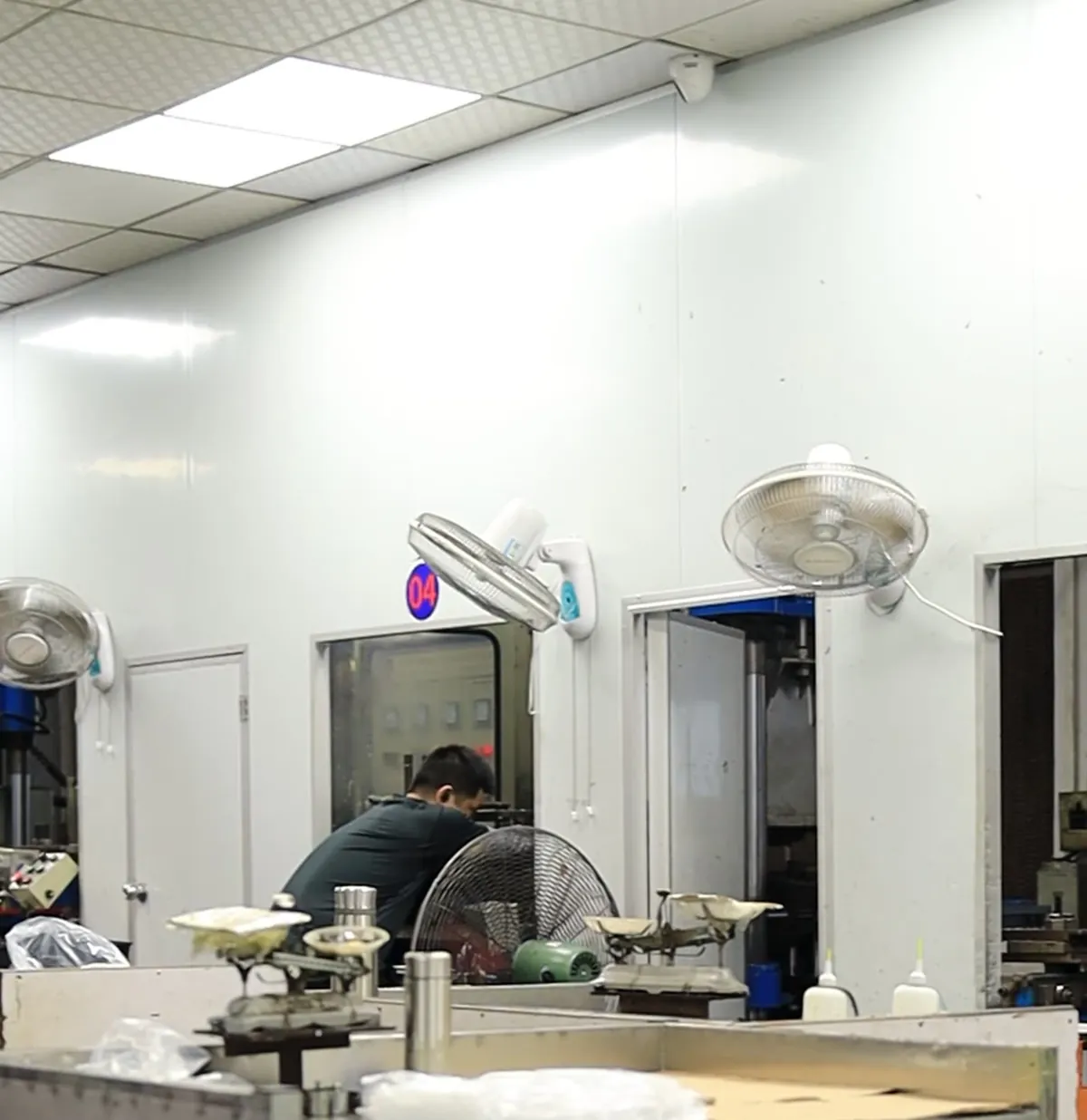
RUUIPON bakes platinum tools in Bao'an, Xinhe Blvd, Shajing, since 2018 when the PO names that step. Mix is 1:1 or 10:1 by weight. Prototype is 3–7 business days after CAD lock. Production is MOQ 20 pieces per design. Simple 3D is USD $50 when that CAD scope applies. Platinum shrink after a full cure is typically about 0.1–0.3%. HCR/LSR *part* ovens: an HTV product RFQ here. Wash-then-food sequence is a cousin page: post-cure before food contact.
Does not apply when the face is inhibited (tacky against the master, snap-cured on the back). Baking will not un-poison platinum. Remake from a sealed master. It also does not apply to tin-cure craft rubber you hoped to "FDA" with heat, or to a kitchen broiler aimed at a chocolate well.
Support the tray, then heat the air, not the logo
Park the cavity on a flat screen or in its jacket so the skin cannot drape. A 10A open-back sheet hung from two corners will take a permanent set that looks like a bad CAD. Jacket-on is the default for any tray that will later see a loaded dump.
Time and temperature come from the platinum grade, not from "as hot as the kitchen goes" and not from an HCR 200 °C folklore number. RTV cavity rubber is a different network. Overshoot and you can embrittle a thin lip or yellow a clear tool. Undershoot and you only warmed the box.
Dry first. Water in a serif becomes steam and a blister conversation. Wash if the PO is food; dry cavity-up until the face is matte; then bake. Do not oil. Do not torch the well "to kick volatiles."
- Face tacky, back cured? - yes -> Inhibition — remake, do not bake
- Face tacky, back cured? - no -> Wash if food; dry matte
- Wash if food; dry matte -> Support: jacket or flat rack
- Support: jacket or flat rack -> Oven at the grade band, not kitchen max
- Oven at the grade band, not kitchen max -> Cool on the same support
- Cool on the same support -> First dump or pack
The photo that would prove a post-cure: tray in a jacket on an oven rack, traveler with time and temperature, thermometer in the oven — not a lifestyle "we bake our molds" shot of a home range.
ISO 3302-1 M2 is a dump class. It is not an oven recipe. CAD lock still includes whether this bake is on the PO, because our 3–7 business day clock has to schedule the oven, not surprise it.
Failure: sag, blister, or a baked-in sticky face
Symptom: edge cavities sit low after the oven; logo wells show bubbles; face still greasy.
Cause: unsupported 10A sheet; wet serif into a hot box; inhibition baked in; oven overshoot.
Confirm: set the tray on a surface plate or a known-flat table. Edge sag you can see is not "settle in shipping." A greasy face that matches the master side only is still inhibition.
Fix: recast and bake on a support. Do not press a sagged depositor tray under a board and hope the Shore remembers. Do not ship a blistered food logo.
Clear RTV yellowing in a windowed oven is a UV plus heat conversation for a different page. Here the rule is shorter: do not use a clear tool as an oven window experiment.
Typical shop values
Reference values only. Confirm material-specific limits against the supplier’s technical data and agree project acceptance criteria before production.
| Item | Typical shop value |
|---|---|
| Mix / shrink | 1:1 or 10:1 by weight; platinum about 0.1–0.3% |
| Cavity Shore | 10A–20A skins; 20A–40A trays |
| Loaded / oven sag without support | about 0.5–1.5 mm at the edge |
| Oven | grade processing notes — not HCR mill °C |
| Prototype | 3–7 business days after CAD lock |
| Production MOQ | 20 pieces per design |
| Simple 3D | USD $50 when that CAD scope applies |
| Drawing class | ISO 3302-1 M2 as a common default |
Oven shortcuts we would not run
We would not recommend a heat gun on a food well as a "local post-cure."
We would not recommend stacking trays in the oven so the upper skin prints the lower cavities.
We would not recommend borrowing an HCR part post-cure chart for an RTV glove.
We would not recommend baking a tin craft mold and then printing a 21 CFR 177.2600 sentence on the carton. 177.2600 is extraction of a named platinum article, not heat as a blessing.
A tooling charge is not unrestricted ownership of our bake traveler. Ask for the grade name if you will recast and bake later.
Worked example: 24-cavity pectin sheet baked without a jacket
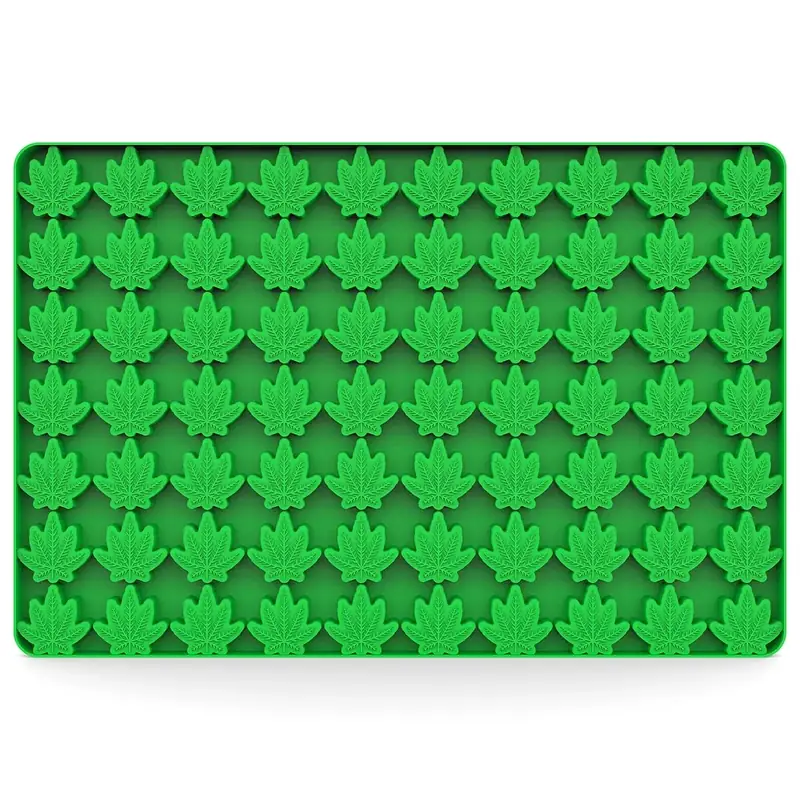
Open-back 24-up pectin tray, 15A, no jacket on the PO. Buyer asked for a smell bake before first dump. Oven on a home rack, two corners propped. Outer row sat about a millimetre low; those cavities ran heavy. Recast with a jacket, room cure, dry, bake on the jacket at the grade band, cool on the jacket. Prototype 3–7 business days after CAD lock of jacket and tray. $50 CAD applied because cavity pitch was photos-only. Production MOQ 20 of that design. Related: gummy molds.
Mix-up: post-cure is how you finish a green mold faster
Post-cure is after a full room cure. It is not a shortcut around demold. The other mix-up is calling any oven step "FDA." 21 CFR 177.2600 is an extraction path on the article. The bake is process. Name both if you need both.
What to ask when you're buying the bake
- Grade and the TDS post-cure band, if any?
- Food wash first, or odor-only craft?
- Jacket or rack support in the oven?
- Dump chemistry after the bake?
- After CAD lock, 3–7 business days, then MOQ 20 / design?
Related: food-grade molds, contact.
RFQ copy-pack — RTV oven, not HCR
Paste into [email protected]:
Object: RTV mold (not an LSR/HCR part) Post-cure: yes/no, food wash first yes/no Grade if specified: 1:1 or 10:1 by weight Dump chemistry and peak °C Jacket in the oven: yes / ask us File: STEP / STL / photos with a millimetre scale CAD: mold-ready STEP OR USD $50 3D if that scope applies Prototype 3–7 business days after CAD lock, then MOQ 20 per design
Send whether the bake is on the PO, not "make it food in the oven." We schedule a supported bake — not a blank free quote. Phone +86 135 3006 2969. Licheng Technology Industry Park, Xinhe Blvd, Shajing, Bao'an. Shop since 2018.
FAQ
Do all RTV molds need an oven post-cure? No. Many craft dumps skip it. Food and odor specs often want a written bake after room cure. Put it on the PO.
Can I use my HCR part oven recipe on a silicone tray? We would not copy mill-part °C onto a 10A RTV skin. Read the RTV grade.
Why did the tray warp in the oven? It was unsupported. Jacket or a flat rack, cool on the same support.
Will baking fix a sticky inhibited face? No. Remake from a sealed or different master.
Does the bake add days on top of 3–7? The 3–7 business days after CAD lock is the shop calendar. If the PO names a bake, it sits inside that calendar when we can schedule it — say so at lock, not after peel.
Custom silicone development · DFM & prototype support
CAD, drawing, photos or sample details