
MOQ, Prototype Quantity and Sample Cost for Custom Silicone Molds
A custom RTV silicone mold project does not need to begin with a full production order.
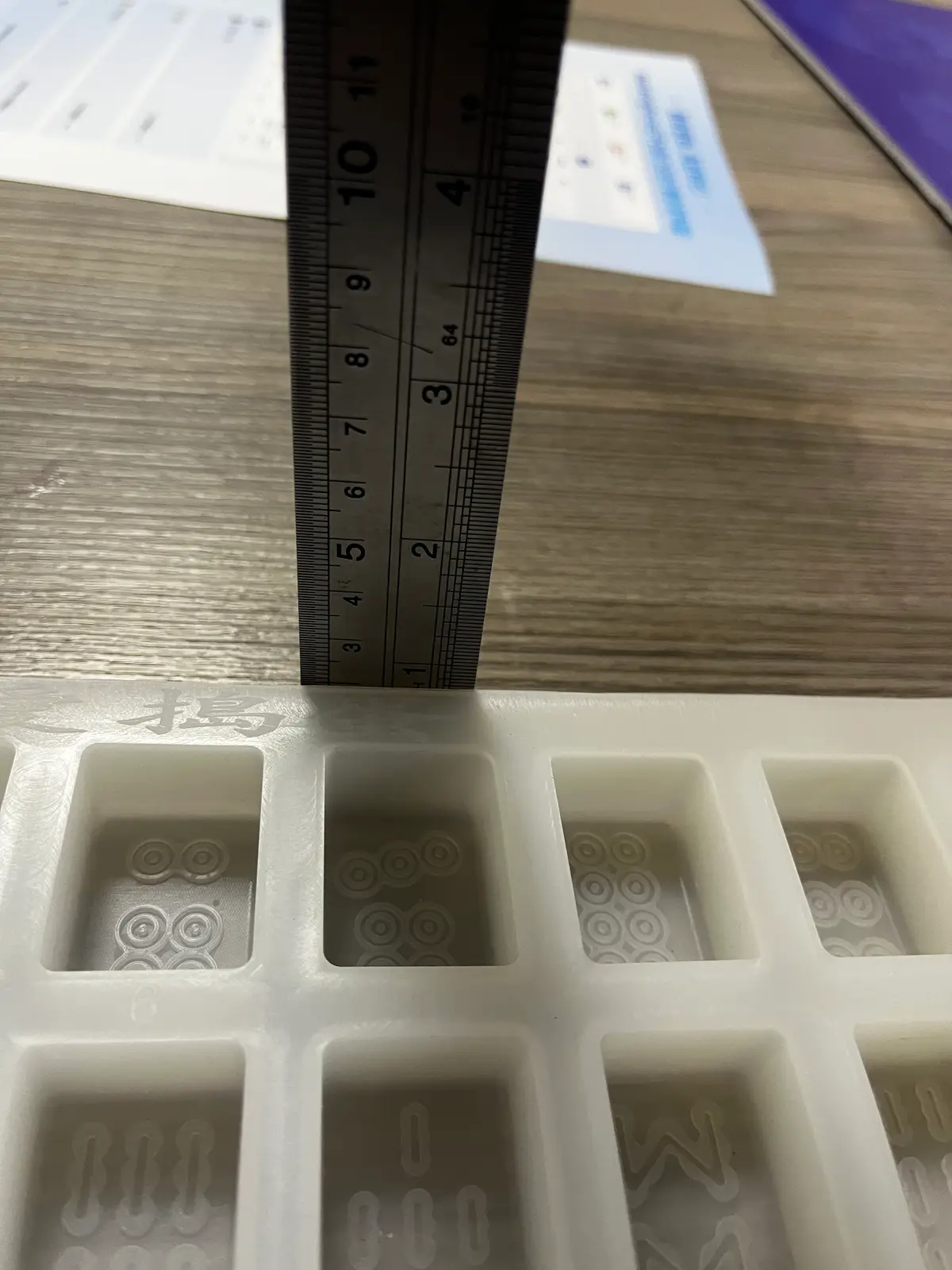
For a new design, one prototype mold can be enough to answer the engineering questions, while the production MOQ applies only after that sample is approved. Those are two different purchasing stages and they should be quoted separately.
At RUUIPON, the normal production starting point is typically 20 molds per approved design. A prototype can be developed before that production quantity is released. The usual RTV chain is photos, sketch, or CAD, then a 3D-printed pattern, often a temporary silicone flip, a resin production mother, then batch RTV. DFM is free. CAD revision is about USD 50 when we edit your 3D. Prototype is usually 3-7 business days after CAD lock. The sample is not a miniature sales token; it is the point where you verify that the geometry, material, demolding and casting result are worth multiplying.
Why one prototype is often technically sufficient
The first mold should answer questions that CAD cannot fully answer.
For example:
- Does the resin trap air at the highest point?
- Does a candle release without tearing around the handle or logo?
- Does a plaster figurine break at the arm during demolding?
- Does a food tray stay flat when filled?
- Is the cavity volume correct for the target piece weight?
- Does a two-part seam close cleanly?
- Does an inner core stay centered?
You do not need 20 molds to discover that a split line is in the wrong place.
That is why a single functional prototype is often the lowest-risk starting point.
A prototype is not automatically the same as a production mold
The word "sample" can mean several different things. Ask the supplier what you are receiving.
Possible sample stages include:
Visual pattern only A 3D print or CNC pattern used to approve shape and surface. It is not the resin production mother and not a silicone mold yet.
Prototype silicone mold A functional mold made with the intended geometry so the customer can cast a real part.
Pre-production mold from the final process Made with the same silicone grade, structure and production method planned for the repeat batch.
Local feature test A small test around a risky undercut, logo, texture or core before committing to a large full mold.
If your project is expensive or large, a local feature test can be more useful than rushing into a full-size prototype.
What the prototype must validate
Define the test before the prototype is made.
A good acceptance plan is specific to the application.
Resin mold
Check:
- release from deep undercuts;
- high-point air traps;
- surface finish;
- seam cleanup;
- local tear strain;
- compatibility with the intended resin process.
Candle mold
Check:
- wax release;
- seam visibility;
- wick path;
- support of tall walls;
- deformation when filled;
- surface texture after cooling.
Food or gummy tray
Check:
- cavity volume;
- tray flatness;
- loaded support;
- actual demolding;
- logo clarity;
- material/document match.
Plaster or concrete mold
Check:
- wet-load deformation;
- support shell fit;
- fragile-feature demolding;
- core alignment;
- finished dimension after cure.
Without a defined test, "sample approved" often becomes a visual judgment made from photos.
Why production MOQ exists even with RTV casting molds
RTV tooling does not require the same steel investment as injection or compression tooling, but repeat production still has setup costs.
A production batch can require:
- silicone compound preparation;
- controlled mixing and degassing;
- repeated pour-containment setup;
- pattern / resin production mother cleaning and release preparation;
- trimming;
- assembly of split molds;
- support-shell work;
- inspection;
- packaging.
Those operations are inefficient when repeated for only one or two units at a time.
MOQ is therefore not simply "the factory wants a bigger order." It is the quantity where the repeat manufacturing process becomes practical.
For RUUIPON's normal custom RTV casting-mold programs, the production MOQ is typically 20 molds per design after prototype approval. Very large or highly complex molds may need project-specific quantity terms.
Why the prototype can cost more per mold
A buyer may ask why one sample mold costs much more per unit than 20 production molds.
Because the prototype can carry work that is reused later:
- CAD/DFM;
- pattern and resin production mother construction;
- pattern / resin production mother finishing;
- mold structure planning;
- first setup;
- test casting;
- revision time.
The first mold is carrying development cost. The twentieth mold is mostly carrying repeat material and labor.
This is also why a supplier should separate:
development / prototype cost
from:
repeat production mold price.
When the prototype itself can be used in production
Sometimes the prototype is a fully functional production mold.
That can be reasonable when:
- the same silicone grade is used;
- the same resin production mother is used;
- the structure is final;
- the test does not damage the mold;
- there is no experimental trimming that differs from production.
In that case, the customer may keep using the prototype after approval.
But do not assume this on complex projects. A prototype may intentionally use temporary features or be modified during testing.
Ask the supplier whether the sample is expected to become production unit #1 or only a development tool.
What changes should trigger a second prototype
Not every edit needs another full prototype.
A second prototype is justified when the change can affect function, such as:
- cavity dimension change;
- parting-line relocation;
- core redesign;
- significant Shore change;
- cavity-count/layout change;
- wall/support change;
- logo depth that changes demolding;
- new casting chemistry or operating condition.
A cosmetic text correction that does not affect release may only require a pattern / resin production mother revision and local verification.
The decision should follow risk, not a rigid "one free revision" rule.
A practical 1 → 20 → repeat-order path
A low-risk custom mold program can look like this:
Stage 1 - feasibility / DFM
Input:
- STEP/STL, sample or measured photos;
- casting material;
- key dimensions;
- target mold quantity;
- production requirement.
Output:
- proposed structure;
- modeling / pattern scope;
- prototype quote.
Stage 2 - one prototype
Verify the real casting process.
Do not multiply the mold until the critical issues are closed.
Stage 3 - production MOQ
Once approved, duplicate the frozen design. At RUUIPON, the standard production starting point is usually 20 molds per design.
Stage 4 - reorder
Reproduce from the approved archived resin production mother and revision record rather than copying a worn mold.
This approach protects both startup cash and repeatability.
When 20 molds is too many-or too few
Twenty is not a magical engineering number.
It may be too many if:
- the product concept is not validated;
- the pattern is still changing;
- you have not tested the casting material;
- the target piece weight is not locked;
- you do not know whether the SKU will launch.
It may be too few if:
- each mold has only one cavity;
- daily production output is high;
- curing time keeps the mold occupied for hours;
- the operator needs multiple molds cycling in parallel;
- replacement inventory is critical.
The better question is:
How many molds do I need to meet my output target without creating unnecessary tooling inventory?
How to calculate how many production molds you actually need
For planning, define:
- pieces per mold;
- usable cycles per shift;
- shifts per day;
- target pieces per day;
- expected reject allowance;
- spare/replacement requirement.
Example:
A 12-cavity mold that can be cast three times per day produces 36 nominal pieces per mold per day. A 720-piece daily target would require 20 molds before allowing for cleaning, downtime and rejects.
The correct MOQ discussion therefore starts with output, not only purchasing policy.
What to ask in the sample quotation
Request separate lines for:
- 3D modeling / DFM;
- 3D-printed pattern / resin production mother;
- one prototype mold;
- prototype shipping;
- optional test casting;
- production mold unit price at 20 / 50 / 100 if relevant;
- revision policy;
- ownership of CAD / resin production mother;
- production lead time after approval.
That lets you decide how much money is at risk before the product is proven.
What RUUIPON needs to define the right stages
Send:
- your available file or reference photos;
- casting material;
- target first-order quantity;
- estimated annual volume;
- required cavities per mold;
- target launch date;
- destination.
We can then separate prototype validation from production quantity instead of treating a new design as one irreversible order.