
Self-Lube Oil in RTV Molds Contaminates the Casting
Self-lubricating LSR blooms a designed fluid after cure. In a poured mold that oil fouls chocolate and resin. Use release and geometry, not shop oil in
 Kyler Yang · Founder8 min read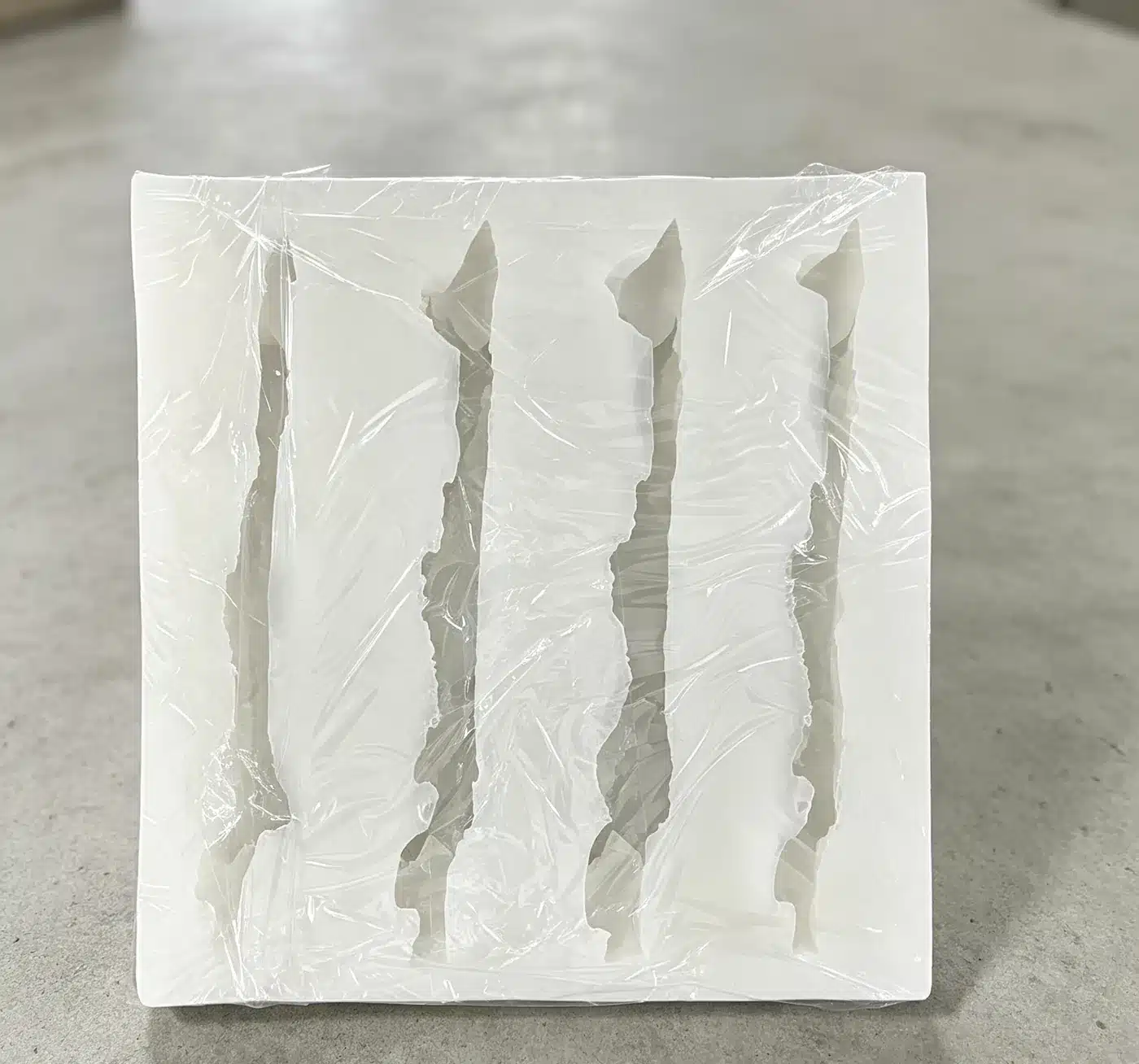
Self-lubricating LSR is platinum liquid silicone with a designed, incompatible fluid that blooms to the surface after vulcanization. The film cuts friction so a connector seal slides into a housing, a slit valve does not self-heal, or an O-ring turns without a secondary grease.
It is not a spray. It is not a harder grade. It is not an oil you stir into a 1:1 RTV mold cup. If you're buying a custom RTV mold, bloom in the cavity is contamination of the casting: oily chocolate, fisheye resin, a gummy that won't set on the face. Mechanical parts that need bloom are a different RFQ (LSR parts, cold-runner, never a LIM hot tool).
The fluid type, the amount, and when it reaches the surface are the compound. Bloom too soon and a steel part-tool fouls. Bloom into a food mold and you bought a release you cannot wash off on schedule.
Bloom is a migration, timed on purpose
After the network forms, a portion of the free silicone fluid (often a phenyl-containing or other mismatched siloxane fluid) moves to the surface over hours to a day or more. Supplier literature for healthcare self-lube LSR commonly describes delayed bloom starting on a clock measured in hours after cure, not in the cavity. That delay is the difference between a clean tool and a weekend spent scrubbing plates.
What the film does on parts:
- Lowers sliding friction against plastic and metal
- Reduces stick-slip on assembly robots
- Keeps a slit in a needle-free valve from closing back up (self-heal)
- Replaces a secondary lubrication step that is hard to dose evenly
What it does not do:
- Turn the bulk into a bearing grade with infinite wear life
- Stay identical after a solvent wash or a plasma treat
- Guarantee food-contact or implant status (the fluid is part of the test article)
- Belong in a poured mold rubber
Coefficient of friction is measured on a named method and a named counterface. Do not print “low friction” without the mate material and the wait time after demold.
Common mix-up: sticky dump versus self-lube rubber
A chocolate or resin dump sticks. The cheap email says “add silicone oil to the RTV.” That coats the master, inhibits platinum if the oil is dirty, and then blooms forever into the food. The mold-side fixes are geometry (draft, peel, split), Shore 10A–20A with a jacket so you can flex the undercut, a food-safe release the TDS allows, and a full platinum cure so the face isn't tacky from inhibition.
HCR oil-bleed compounds exist for millable parts. They are not RTV. Keep the families unmixed.
What to ask when you're buying
- Is friction a dump/release problem on a cavity, or a sliding part problem?
- Casting material (pectin, chocolate, urethane) and whether oil in the food/resin is forbidden?
- Undercuts: peel, keyed split, or core?
- If it is truly a part: delayed-bloom LSR, bloom window, insertion-force test?
- Who keeps the master if we recast a contaminated skin?
Worked example: 12-cavity bear that won't dump
A gummy line ran a 12-cavity 18 mm bear, platinum 12A, jacketed, ~2,000 dumps/month. Ears locked; operators brushed on shop silicone oil. Outer-row weight drifted 3–6% heavy and the face stayed greasy. Fix: keyed split or a higher-tear peel, jacket so the tray doesn't sag 0.5–1.5 mm, stop the oil, recast the skin. Self-lube LSR in steel would not dump pectin.
When not to buy self-lubricating rubber for a mold
Skip self-lube — and skip shop oil in the mix — when:
- The silicone is the mold (food, wax, resin, soap)
- The part is bonded, overmolded as a second shot that must adhere, or inked
- The part is an optical or dusty medical surface
- The only “friction” problem is a sharp plastic edge or a missing split; fix the geometry
- You needed conductive or self-lube and a pristine bond line
Self-lube LSR wins when the lube has to be on every shot of a part, in the right amount, without a person with a brush. A thin dry-film or a metered food-safe release can still be the right process for a low-volume dump.
You can often run self-lube LSR in the same steel cavity as the dry twin. The process window still changes: fouling, overnight bloom in the tote, painting/bonding fail, oil holds dust. Food and skin: the fluid is an extractable. 21 CFR 177.2600 is a new test article, not the dry LSR's paperwork. Dry-grade files do not cover it.
When this article is the wrong quote
Connector seals and slit valves in the thousands belong on a parts OEM. Custom RTV food and resin molds belong here. Geometry can override quantity: a one-off resin figurine still wants a dry high-tear glove, not bloom.
Related reading: gummy mold release, custom RTV molds, food-grade molds, gummy trays.
What to send for an RTV mold quote
- Object: dry platinum RTV cavity (no oil in the mix)
- Stick/release failure: photos of the undercut and the dump
- Casting material and whether oil contamination is forbidden
- Split / jacket / Shore / recast
- If you actually need a sliding part: delayed-bloom LSR, insertion test, counterface
Send the stuck part, the cavity photos, and what you pour. We'll recast a clean skin rather than formulate a bloom into the mold.
We would not recommend adding oil to standard RTV
We would not recommend shop oil in platinum or tin mold rubber as a production control. We would not raise Shore A first to “make it slipperier.” We would not cut LSR steel while you still need a cavity to dump pectin into. Tooling charge ≠ a license to contaminate the jacket.
RUUIPON Mold Structure Decision: stuck dump with a bail or negative-draft letter? two-part / plug, not oil. Soft 10A–20A? jacket. Flat tray that already peels? open-back, dry platinum.
- Cavity dump or sliding part? - cavity -> Geometry, tear, jacket, allowed release
- Cavity dump or sliding part? - part -> Delayed-bloom LSR; different RFQ
- Geometry, tear, jacket, allowed release -> Oil in the mix?
- Oil in the mix? - yes -> Stop; recast dry platinum
- Oil in the mix? - no -> Undercut peels?
- Undercut peels? - no -> Split / core
- Undercut peels? - yes -> Keep dry; check inhibition tack
Typical shop values: release vs bloom
| Item | Typical shop value | | --- | --- | | Food/resin cavity | Dry platinum RTV, 10A–20A, jacket; no self-lube fluid | | Mix | 1:1 or 10:1; vacuum degas until foam collapses | | Platinum shrink | ~0.1–0.3% | | Bloom (parts only) | Hours after cure on delayed-bloom LSR, not in the cavity | | Sticky dump first checks | Inhibition tack, missing split, missing jacket, sharp shoulder | | Outer-row weight drift | 3–6% heavy vs center if the tray sags |
Reference values only. Confirm material-specific limits against the supplier’s technical data and agree project acceptance criteria before production.
FAQ
How does self-lubricating LSR reduce friction without greasing the mold? A mismatched silicone fluid is mixed into the part compound and migrates after the network forms. Delayed-bloom grades are designed so most of that migration happens after demold. That is a parts process. In a poured RTV mold, the same fluid is contamination of the casting.
Can I add silicone oil to standard LSR or RTV to get the same effect? Not as a production control. Shop oil changes cure, tear, and bloom timing, and it will coat the master immediately. Buy a formulated self-lube LSR with a stated bloom window if you needed a part. For a mold, fix split, Shore, and release.
Will the same steel tool run dry LSR and self-lube LSR? Often yes, which is why the upgrade is a compound change on a parts tool. Plan for plate filming and a qualification of insertion force. It does not make an RTV food mold “self-dumping.”
Does blooming oil make a slit valve leak? The oil is there to stop the slit from healing shut, not to open a leak path by itself. Seal performance is still geometry, hardness, and compression. Qualify leak after the bloom window. This is not a gummy-tray spec.
Is self-lubricating LSR automatically biocompatible or food-contact? No. The fluid is part of the finished article. Use supplier data on that exact self-lube grade, then complete ISO 10993 or 21 CFR 177.2600 on the real part. Dry-grade files do not cover it, and a food mold should not be a self-lube grade in the first place.
Custom silicone development · DFM & prototype support
CAD, drawing, photos or sample details