
Tolerances on Platinum RTV Mold Cavities | RUUIPON
Mark ISO 3302-1 M2 on the dump drawing if you need a rubber class. RTV cavity maps use millimetres and grams. “Precision silicone mold” is not a class.
 Kyler Yang · Founder7 min read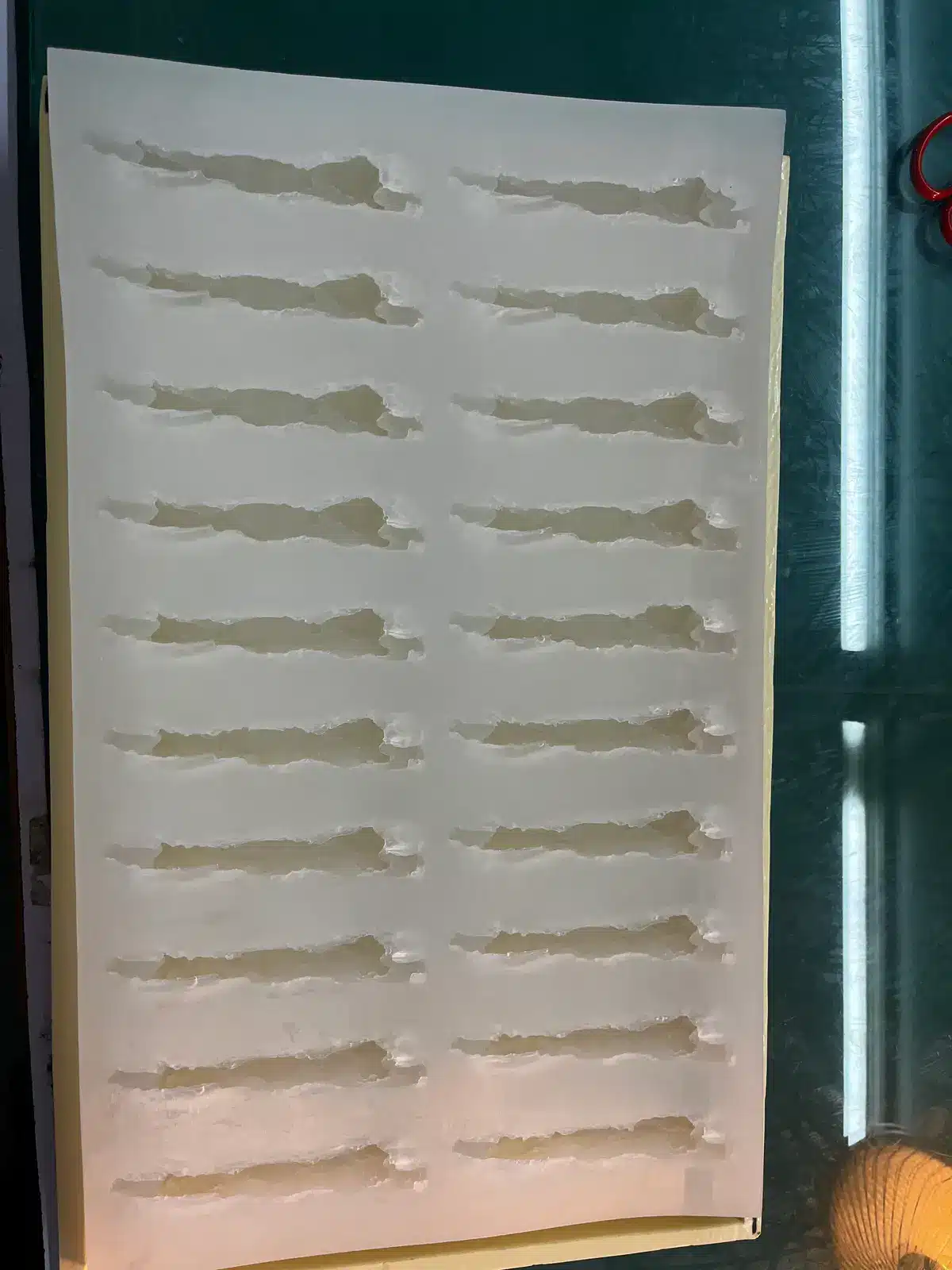
ISO 3302-1 is a rubber product tolerance class you put on a 2D of a molded article. M2 is a common default. It is not a shop nickname for a precise RTV tool, and it is not granted because the email said “precision silicone mold.” On a RUUIPON platinum tray, the things you actually inspect are cavity millimetres, logo depth, pitch, and often grams or millilitres of the dump — plus platinum shrink of about 0.1–0.3% already built into the master. If you need M2 (or M1/M3) language, put it on the pour that leaves the cavity, or say you are inspecting the tray as a rubber article. Do not paste a steel FAI balloon set onto a glove mold and call it class.
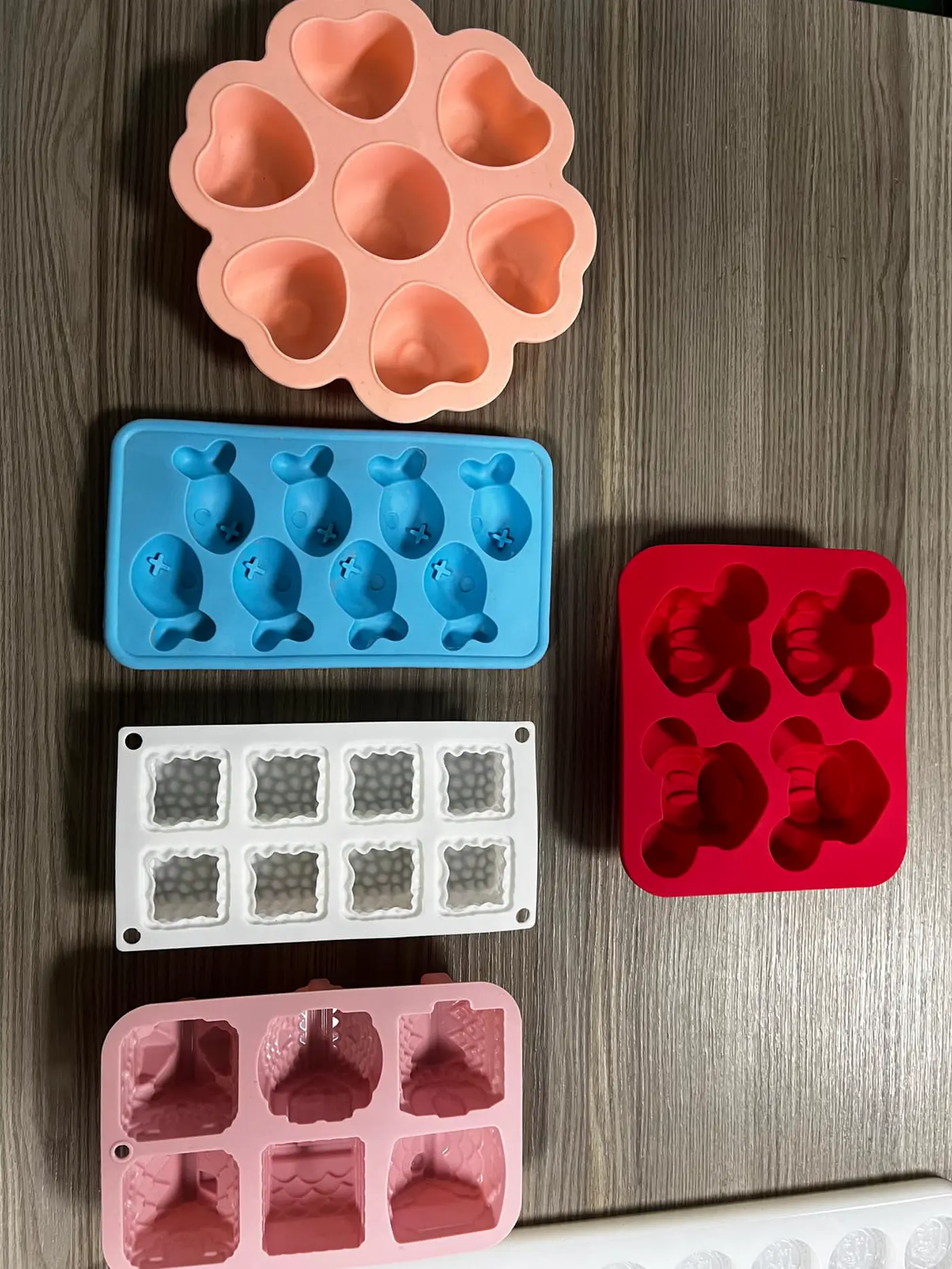
This page is RTV-as-tool in Bao'an since 2018. Prototype 3–7 business days after CAD lock. MOQ 20 pieces per design. USD $50 when CAD scope applies. OEM *parts* in HCR/LSR with ISO 3302-1 on the part 2D an HTV product RFQ here. — that plant’s class-vs-slogan article is a different intent.
Does not apply when you already have a locked steel tool and a T1 pack, when you want M1 on a 0.15 mm serif (class will not fill a hairline), or when the RFQ only says “tight tolerance” with no 2D. We will not invent millimetres from that line.
What we can hold, and what the class does not do
A platinum RTV cavity copies a master. The master can be CNC or a quiet print. Shrink is small (about 0.1–0.3%) and still real. Soft skins sag; a loaded tray can droop about 0.5–1.5 mm at a weak edge, which moves grams even when the CAD was honest.
If you inspect the dump (chocolate bar, resin coaster, soap): mark overalls, CTQ thickness, logo depth, and an ISO 3302-1 class *if that dump is a rubber article*. Most chocolate and resin dumps are not rubber articles — they need millimetres and grams, not M2.
If you inspect the tray as a silicone article you will sell empty: then M2 on the tray 2D is a fair default. Measure after the skin is fully cured, at room temperature, unstretched. Do not measure a cold fridge-stiff tray and call it out of class.
If you inspect steel-like balloons on a glove: we will push back. A 10A glove will not hold M1 the way a press part does. Write which dimensions are CTQ versus reference. Not every fillet needs a class fight.
M1 is the expensive conversation: more master control, more argument about how you fixtured a floppy skin. M3 is the “this is a bumper tray” conversation. M2 is where most food/craft trays should start *if* you insist on the standard at all.

Typical shop values
Reference values only. Confirm material-specific limits against the supplier’s technical data and agree project acceptance criteria before production.
| Item | Typical shop value |
|---|---|
| Rubber class default if used | ISO 3302-1 M2 on the 2D |
| Platinum RTV shrink | about 0.1–0.3% on the master |
| Mix | 1:1 or 10:1 by weight, vacuum degas |
| Cavity Shore | 10A–20A gloves; 20A–40A trays |
| Loaded-tray edge sag | about 0.5–1.5 mm when the jacket is weak |
| Prototype | 3–7 business days after CAD lock |
| Production MOQ | 20 pieces per design |
| Simple 3D | USD $50 when that CAD scope applies |
The photo that would prove a class call: 2D with M2 boxed on named CTQs, dump on a granite plate with a height gauge on the CTQ, tray unstretched at room temp. A caliper on a flexed glove is not that method.
Worked example (anonymized)
A 24-cavity resin coaster RFQ stamped “precision ±0.05 mm.” No 2D class. First witness was a platinum 30A open-back. Buyer rejected outer-row thickness because the jacket sagged. We did not claim M1. We added a jacket, marked thickness as CTQ with a shop millimetre band, and wrote that ISO 3302-1 was not the contract unless they issued a dump 2D. CAD lock, 3–7 business days, MOQ 20. The ±0.05 line was never a class.
Measurement method matters more than a tighter class slogan. A floppy 10A glove measured in a V-block is a different number than the same glove laid on a plate. Write the state: after full cure, room temperature, unstretched, jacket on or off. We would rather you mark three CTQs well than balloon forty reference fillets.
Platinum shrink of about 0.1–0.3% is applied on the master so the dump lands near nominal. It is not a tolerance. If you change Shore after lock, sag changes, grams change, and the class fight you booked on M2 will not save the outer row. Say Shore on the RFQ with the class.
One procurement mix-up
“Precision mold” and ISO 3302-1 are not synonyms. The standard is a table of permitted deviations for rubber dimensions. An RTV tool is a copy of a master plus shrink plus sag. Tooling charge ≠ a steel tolerance pack, and it is not unrestricted ownership of a recut when you change class after lock.
We would not recommend
We would not recommend writing “precision” on an RFQ instead of millimetres.
We would not recommend M1 on a 10A glove without saying how you will fixture it.
We would not recommend inspecting a fridge-stiff tray and calling sag a shrink miss.
We would not recommend stacking HCR 1.5–2.5% or LSR 2–3% language onto a platinum RTV PO.
- What is inspected? - Dump is chocolate/resin/soap -> mm + grams/ml on the dump — class only if that dump is rubber
- What is inspected? - Empty tray sold as silicone article -> ISO 3302-1 on tray 2D — M2 default
- What is inspected? - Steel balloons on a glove -> Push back — name CTQs, fixture, Shore
- ISO 3302-1 on tray 2D — M2 default -> Class?
- Class? - M1 -> Master control + measurement method — expect cost
- Class? - M2 -> Common default
- Class? - M3 or silent -> Say so; do not argue precision later
What to ask when you're buying
- Are we inspecting the dump or the tray?
- Which dimensions are CTQ, and at what temperature/state?
- Is ISO 3302-1 actually on the 2D, or only the word precision?
- Jacket yes/no if grams are CTQ on a large sheet?
- Who owns the master if class changes after the first witness?
RFQ copy-pack
[email protected] · +86 135 3006 2969 · Xinhe Blvd, Shajing, Baoan.
RUUIPON RTV tolerance RFQ Inspect: dump / empty tray 2D: ISO 3302-1 class (M1/M2/M3/none) + CTQs listed Grams or ml target if dump Jacket: yes/no Shore target Qty: sample / MOQ 20 CAD: STEP in mm / need $50 3D
Matched next step: send a 2D with class and CTQs, or say you only need millimetres and grams. We will not quote “precision.” Prototype 3–7 business days after CAD lock. MOQ 20 per design.
Related: silicone shrink compensation, DFM before tooling, files for a mold quote, contact.
FAQ
Does platinum RTV meet ISO 3302-1 automatically? No. The class is a drawing call you inspect to. M2 is a common default *when you put it on the 2D*.
Can I get ±0.05 mm on a logo well? That is a millimetre conversation on the master and the dump, not a slogan. Soft skins and sag will eat a number that small on a large tray. Send the CTQ.
Is M2 “food grade”? No. Food path is platinum plus article tests such as 21 CFR 177.2600 / LFGB as specified. Class is dimensional.
Do you inspect LSR shrink tables on these trays? No. LSR typical shrink is about 2–3% on *parts*. Platinum RTV trays sit on about 0.1–0.3%. Do not mix.
If the first dump is out of the millimetre band, is CAD $50 again? Only if we still need CAD scope. A jacket add on a locked model may be a recast, not a remodel. Production after the new lock is MOQ 20 per design.
Custom silicone development · DFM & prototype support
CAD, drawing, photos or sample details