
Custom RTV Epoxy Resin Silicone Molds from Photo, Sketch, or CAD
Photos, a sketch, or CAD can start an epoxy mold. An STL still can hide a hook, a wrong scale, or a print that will inhibit platinum. If you are sending a mesh for a reusable RTV epoxy tool, this page is that intake: scale and holes, the longest forced peel, Shore plus support, and heat from a thick pour. Soft Shore does not delete an undercut.
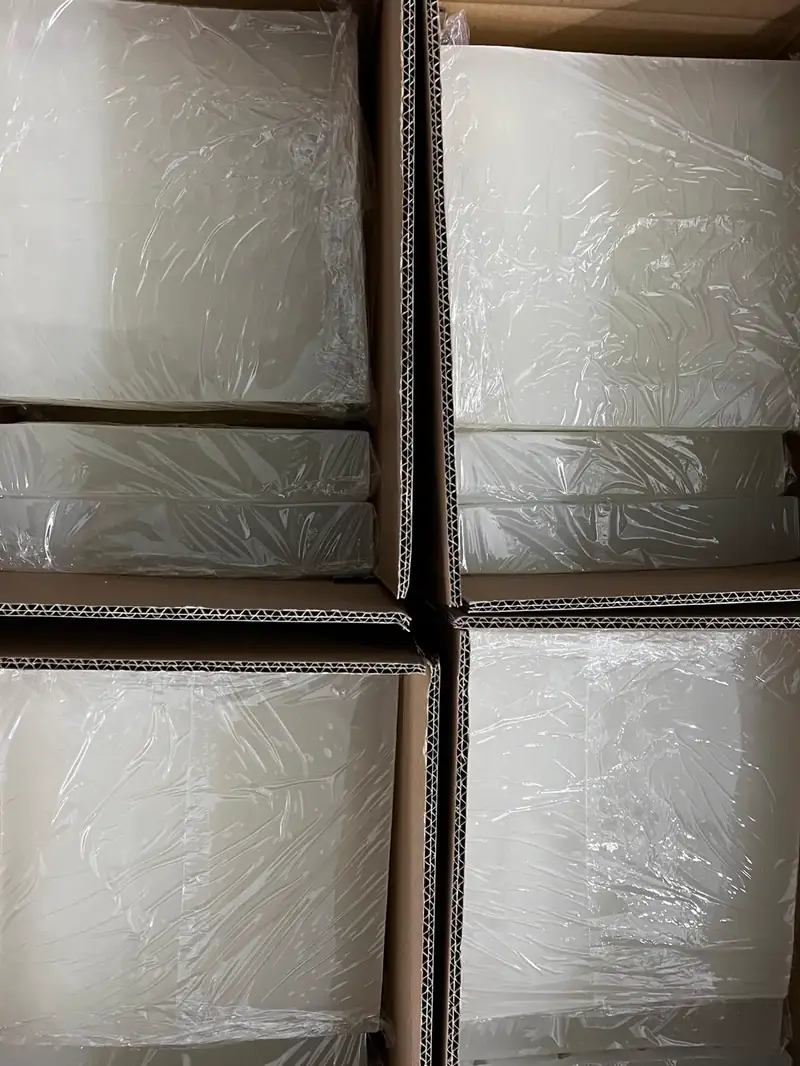
RUUIPON pours platinum RTV resin tools in Bao'an, Shenzhen (Licheng Technology Industry Park, Xinhe Blvd, Shajing; USCC 91440300MA5FAXCN9W) since 2018. Simple 3D is USD 50 when that CAD scope applies. Prototype is 3-7 business days after CAD lock. Production is MOQ 20 pieces per design. These are not food-contact trays.
Where this page sits
Epoxy fill, coupon compatibility, and application chemistry live on silicone mold for epoxy resin. The product SKU is custom silicone resin molds. Scaling trays and picking a production supplier live on custom silicone resin molds production. This page covers STL-to-tool intake.
Check the mesh first
Before structure: scale, holes, inverted faces, duplicate shells, paper-thin walls, accidental texture, and whether the file is the casting or the negative. STL is fine for sculpture. STEP is easier when a dimension must move. If grams or a fit face matter, say so - we may rebuild, not just print the mesh.
Map the forced peel
Resin copies hooks. Mark recesses, loops, deep logos, necks, fingers, and internal openings. Ask whether silicone can peel without concentrating strain on one thin root. If not: split, plug, multi-part, or a local master change. Do not solve every undercut by dropping Shore A.
Typical shop values
Reference values only. Confirm material-specific limits against the supplier’s technical data and agree project acceptance criteria before production. Not a standard for every resin geometry.
| Item | Typical shop value |
|---|---|
| Preferred file if dims will change | STEP; STL for sculpture / print masters |
| Open-back shallow | Often 20A-40A platinum |
| Deep peel / undercut | Often 10A-20A plus jacket, or a keyed split |
| SLA master | Wash, full post-cure, 20 g platinum coupon before the cup |
| Exotherm | Name resin, max pour thickness, mass - do not infer from "epoxy" |
| 3D / CAD | USD 50 when that simple modeling scope applies |
| Prototype after CAD lock | 3-7 business days, in the resin you will sell |
| Production after written pass | MOQ 20 pieces per design |
| Contact | [email protected] · +86 135 3006 2969 |
Exotherm belongs on the RFQ
Send resin system, max pour thickness, cure, mass, and fillers. Thick blocks heat more than thin coatings. Heat changes surface aging, support during cure, and when you can peel. We will not invent one vent diameter or one Shore band for every epoxy.
Finish and prototype
The master surface becomes the resin surface: layers, scratches, primer, dust. Approve gloss on the physical master. Prototype with the real system - fill, air, release, strain, dimension. A later resin change is a new process.
Worked example: figurine STL
Typical job, not a named PO. Mesh was 1:1 but arms locked. We refused a one-piece glove, marked a plug behind the elbow, coupon-tested the SLA, and poured a 10A-20A skin with a jacket. The empty STL render had looked simple.
When this page does not apply
This intake page does not replace the epoxy application page, the resin product, or resin production. It does not apply to food trays. HCR compression products and molds stay on a RUUIPON HTV RFQ. High-volume LSR cold-runner part tools are a different RFQ - ask us. A one-cavity hobby pour you will run twice is the wrong fit for MOQ 20.
RFQs we will not accept as-is
A one-piece glove on a bail or two-sided logo. Skipping the platinum coupon on an SLA. Inferring exotherm from the word epoxy. Sending a silicone-part RFQ through this STL path.
Matched next step
Send photos, a sketch, or CAD (STL/STEP and scale), resin name, max pour thickness, and where a seam is forbidden. We will say open-back, split, plug, or support - and whether USD 50 3D still applies. "Epoxy mold from STL, 20 pcs" with no chemistry is not enough.
Send photos, sketch, or CAD, resin, and pour thickness · Epoxy application · Resin product · Resin production
[email protected] · +86 135 3006 2969 · Licheng Technology Industry Park, Xinhe Blvd, Shajing, Bao'an, Shenzhen. USCC 91440300MA5FAXCN9W.
FAQ
Is STL enough? For sculpture, often. For a moving dimension, send STEP or expect a rebuild.
Is this the epoxy application page? No. Chemistry lives there.
Do you hang FDA papers on epoxy tools? No.
When is USD 50 3D in scope? Simple production-ready modeling. Sculpture rebuild is quoted separately.
What is MOQ after a pass? 20 pieces per design.