
Replacing a Worn Silicone Mold: Copy the Old Mold or Use the Original Master?
If the original approved master or CAD still exists, do not automatically copy a worn silicone mold to make its replacement. A mold that has stretched, bowed, swollen, torn or taken a permanent set may no longer represent the geometry you originally approved. Copying it can turn wear into the new nominal.
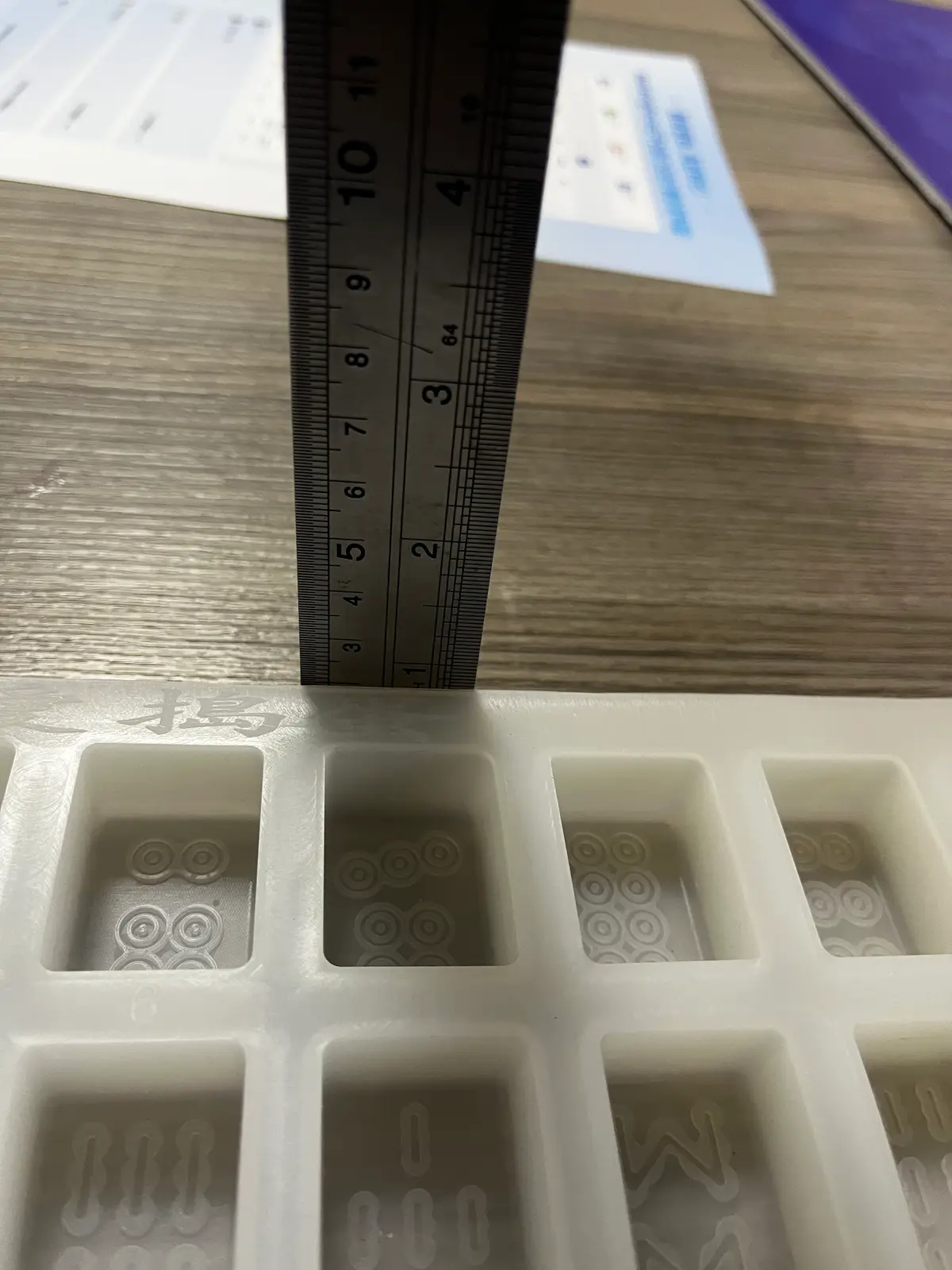
The replacement decision should start by identifying the most trustworthy reference: approved CAD, living master, golden finished casting, or-only if nothing better exists-the worn mold itself.
Rank the possible references
A practical priority is:
- approved CAD + living master that still matches the approved revision;
- approved finished product / golden sample with known dimensions;
- archived master that can be measured and verified;
- old silicone mold, used as evidence and partial geometry reference;
- photographs only, if the physical references are lost.
The ranking can change if the product was hand-finished after molding. In that case, the approved finished casting may represent the real requirement better than old CAD.
Why an old silicone mold changes over time
Typical failure modes include:
- permanent deformation from folded storage;
- local stretching around deep undercuts;
- tear growth at wick holes or thin islands;
- tray bow under repeated loaded use;
- swelling or tackiness from casting chemistry;
- abrasion from plaster or concrete;
- registration-key wear;
- trimmed or repaired edges that no longer match the original split.
The visual mold may still "look usable" while cavity dimensions have drifted.
Recast, reconstruct or redesign?
There are three distinct replacement jobs.
Recast
Use when the master is correct and the old mold failed mainly from normal wear. Make the new RTV mold from the same controlled master and lock the same material/structure unless there is a reason to change.
Reconstruct
Use when the original master is lost or damaged. Rebuild from CAD, approved finished parts and measurements. Do not blindly duplicate distortion from the old mold.
Redesign
Use when the same failure repeats: the mold always tears at the same ear, the same planter core shifts, the same tall candle mold bulges. In that case, replacing the mold without changing the failure geometry only resets the clock.
Diagnose the old failure before ordering replacements
Ask where the damage started.
- Tear at a thin corner → local web thickness or notch issue.
- Tear at a parting line → split geometry, trimming or opening stress.
- Distorted tray → support, storage or loaded flatness issue.
- Sticky surface after resin use → chemistry/cleaning/exposure issue.
- Uneven hollow casting → core location or support issue.
The old mold is valuable evidence even when it is not a valid master.
Keep the same material unless you are intentionally revalidating
A repeat order should normally reference:
- silicone grade;
- cure system;
- Shore range;
- color if functionally relevant;
- post-cure/processing requirement where applicable;
- mold structure;
- master revision;
- QC/acceptance test.
Changing Shore A "to make it stronger" can change demolding force, tray stiffness and fit. If material changes, treat the replacement as a controlled revision and run a first article.
Example: tall candle mold that splits at the wick channel
A candle mold has been replaced twice, and both versions tear from the same narrow wick-hole feature after repeated demolding. Making a third identical mold is not the best response.
Review the wick-channel geometry, local notch radius, opening method and whether the mold needs a slit or external support. The correct replacement may preserve the candle geometry while changing the mold structure.
The customer buys a more durable process, not just another piece of silicone.
Replacement planning for production programs
Do not wait until the final mold fails if the SKU is commercially important. Keep records of:
- mold ID;
- first-use date;
- approximate cycles or batches;
- failure location;
- cleaning/storage method;
- master revision;
- replacement date.
When the same failure repeats across multiple mold IDs, that is a DFM signal.
What to send for a replacement quotation
Send:
- approved CAD/master revision if available;
- photos of the old mold and exact failure;
- approved finished casting or golden sample;
- casting material and process conditions;
- quantity of replacement molds;
- whether structural improvement is allowed;
- whether you need the exact old Shore/material maintained;
- deadline and destination.
Do not clean or cut away the failed region before taking detailed photos. The crack origin often tells the engineering story.
What should happen to the old URL/content
RUUIPON already has a replacement/reorder commercial page. Keep that URL and rewrite/upgrade it, rather than creating another replacement article that competes for the same intent. The revised page should remove generic template sections and make the core decision-recast, reconstruct or redesign-the center of the page.
Next step
Send the failed mold photos together with any original CAD, master or approved finished product. We can tell you which reference should control the replacement and whether the correct next step is recast, reconstruction or a DFM change.