
RTV Baking Mold Manufacturing for Food-Contact Ware
Baking-mold manufacturing is platinum RTV, even walls, jacket, post-cure, wash, then 21 CFR 177.2600 or LFGB/BfR XV on the oven-claimed cavity.
 Kyler Yang · Founder7 min read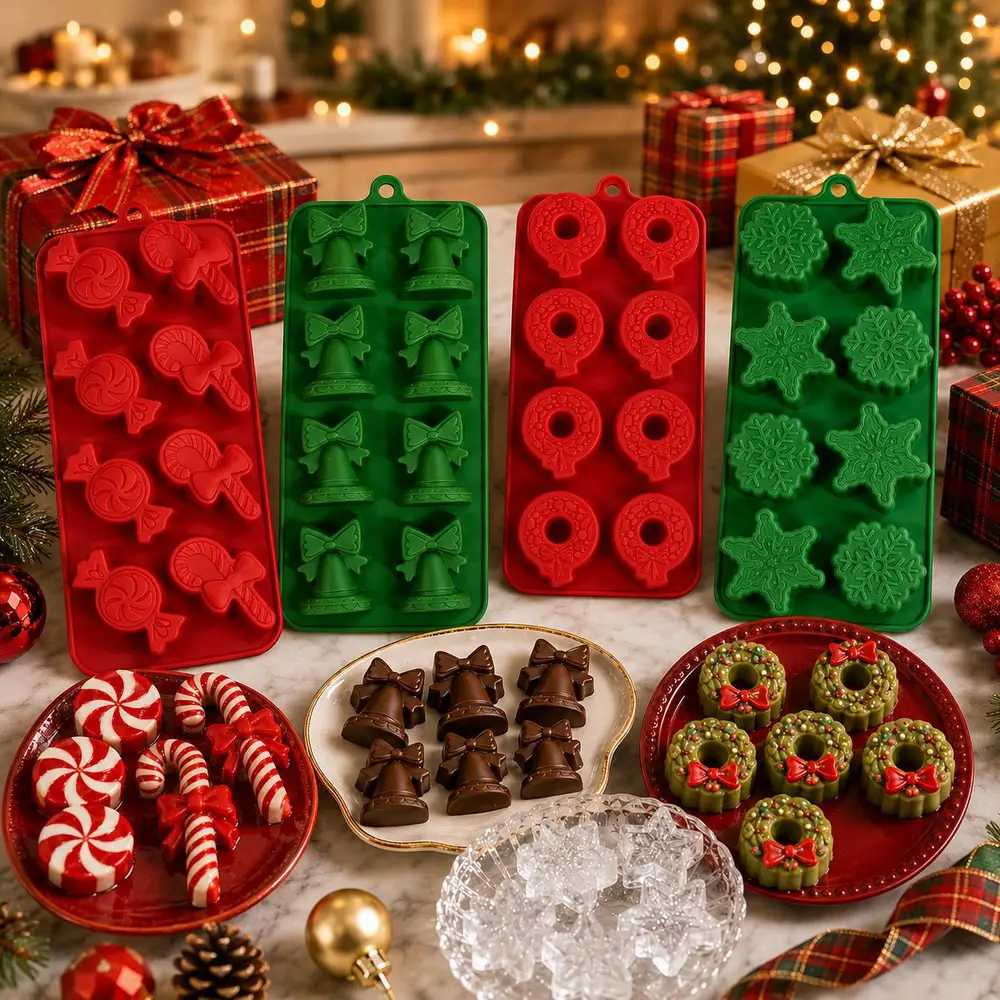
If you're buying a custom baking mold that will see batter, fat, and oven heat, then demold, you're buying a food-contact RTV article — not a craft pour that looks like cake. The chain is a food-contact platinum RTV compound, a master and mold box, a jacket so the cavity doesn't slump under batter, a post-cure scaled to the thick rim, a wash, and a report on that SKU.
FDA 21 CFR 177.2600 extracts the finished rubber article for repeated use. LFGB/BfR XV adds volatiles, simulants, and sensory for the German/EU path. Oven temperature on the carton is a claim that has to match those conditions. Don't print FDA approved. If someone quotes heated steel and a cold-runner, that's a molded LSR *pan*, not this mold.
Common mix-up: a pretty muffin photo sets the traveler
A lot of RFQs treat catalog photography as the oven claim. In the shop that usually means boiling-water simulants on the lab PO, 220 °C on the carton, and German sensory failing on first bake.
Write the use on the work order: cake, muffin, madeleine, bread, sheet mat; peak oven temperature claimed; dishwasher or freezer if claimed; food types (aqueous and fatty are the usual bakeware pair). Dry-only is the wrong assumption for batter. Empty-pan broiler abuse isn't a manufacturing spec. If marketing wants a number, manufacturing has to post-cure and test inside a real envelope.
What to ask when you're buying an RTV baking mold
- Platinum RTV against a named master, jacketed, or is this actually an LSR *part* quote?
- Even walls against the master, and post-cure time for the thickest rim?
- Dry release from polish/texture/draft, or does the sample only come out with aerosol?
- 177.2600 food types and/or LFGB/BfR XV at times that represent the oven claim?
- Who owns the master, and is a recast included after a torn logo?
Tooling muffin trays, shells, and mats on RTV hardware
Muffin and cupcake multi-cavity tools need a balanced pour so every cup is the same article. A starved cup is under-cured mass, not a discount cavity. Polish or a controlled blast on the cavity so cake releases dry. Madeleine shells like even walls and a detail coat on the ridges. Sheet mats want uniform thickness; local thick logos need extra post-cure. Ribs belong in the jacket, not as a heat sink next to a massive food-contact rim.
Tin-cure RTV masters have no place as the production baking mold. Platinum RTV still needs post-cure and article testing. Unmix the processes on the traveler. Color freeze before first article. Holiday red is a new SKU. Shore is a handling choice (too soft spills batter, too hard fights demold), not a compliance class.
Cure in the box, then post-cure in a ventilated oven with time for the thickest section. A 2 mm mat and a 15 mm muffin block don't share a recipe. Wash. 177.2600 expects a cleansed article.
After the lab file, run a shop oven check on the production article: batter at the carton temperature, in the geometry you sell. You're looking for distortion, smell, and demold — not an invented cycle-life brag. If the first shop bake smells, stop shipping and open the post-cure records.
Worked example: 9-cavity muffin, 70 mm cups
A bakery wants a 9-cavity muffin tray, cups about 70 mm diameter and 35 mm deep, platinum RTV with a fiberglass jacket, 400–800 oven cycles a month, US plus a German account.
Traveler: CNC master with radiused logo, registered box, even walls, jacket, post-cure scaled to the rim, wash, 177.2600 water and n-hexane, LFGB/BfR XV at oven-representing conditions. First article is this color, this bake. Keep a retain pan from the oven load. A retain that doesn't match the packed SKU color isn't a retain.
When this baking guide is the wrong process
If you need 50,000 identical consumer muffin *pans* a month as molded parts, RTV recast isn't the line — that's LSR with a cold-runner or HCR compression at a parts OEM. If the “baking mold” is a resin cake-pop shape for craft, don't claim oven food-contact. A tiny madeleine can live as a one-piece glove; a 24-cavity batter tray usually needs a jacket. Geometry can override quantity.
Related reading: applications by food, temperature claims vs flasks, DFM notes, food-grade molds.
What to send for a baking-mold traveler
Copy this.
- Cup/cavity dimensions, count, logo, monthly oven cycles
- Peak oven temperature you'll print; dishwasher/freezer if claimed
- Food types (aqueous + fatty typical); markets and methods
- Master type; one-piece vs split; jacket
- Platinum RTV Shore; pigment freeze; post-cure for max wall
- Recast included or extra; retain plan
Send the CAD or a sample pan, the carton temperature, and the market list. We'll align post-cure and lab conditions to the oven claim, or we'll tell you to change the carton.
We would not recommend copying a 220 °C banner onto boiling-water simulants
We would not recommend tin-cure for a bakery pilot, or an LSR cold-runner *part* quote when you need a cavity to bake in. We would not skip the jacket on a 9-cavity batter tray because a madeleine glove didn't need one.
- Lab time/temperature must represent oven -> Post-cure the thickest rim first
- Post-cure the thickest rim first -> Shop bake: batter at carton temp
- Shop bake: batter at carton temp - smell or slump -> Open oven records; don't add illegal release
- Shop bake: batter at carton temp - demold dry -> Keep carton inside what you saw + BfR XV
Typical shop values: RTV baking cavity
| Item | Typical shop value | | --- | --- | | Shore | 10A–20A platinum RTV + jacket | | Mix | 1:1 or 10:1; vacuum degas | | Shrink | ~0.1–0.3% platinum | | Wall vs bake | 2 mm mat ≠ 15 mm muffin rim for post-cure | | Edge sag if unjacketed | About 0.5–1.5 mm under batter | | First production band | ~400–800 oven cycles/month on a 9–12 cavity tray is common |
Reference values only. Confirm material-specific limits against the supplier’s technical data and agree project acceptance criteria before production. Don't invent cycle lives.
FAQ
LSR part tool or RTV mold for a 12-cavity muffin tray? RTV is the custom cavity you bake in and recast. LSR with a cold-runner is a molded consumer *pan*. Pick one and test that process. A report from the other is the wrong file.
Can I print 220 °C on the carton if the lab used boiling-water simulants only? Not honestly. Oven claims need time and temperature that represent oven use, especially on the LFGB/BfR XV path. Align the lab with the carton or change the carton.
Why did German sensory fail when the US hexane flask passed? Odor. Oven ware is smell-sensitive. Platinum-cure plus real post-cure is the usual fix path. Hexane isn't a sensory panel.
Do steel-framed RTV pans need a different traveler? The silicone face is still the 177.2600 article. The frame is extra materials and dishwasher/oven behavior. Bond lines must be washable.
Is a craft tin-cure cupcake mold acceptable for a bakery pilot? Volume doesn't change the chemistry. Tin-cure isn't the typical food-contact process. Pilot food still touches the cavity.
Custom silicone development · DFM & prototype support
CAD, drawing, photos or sample details