
Best RTV Materials for Custom Silicone Mold Cavities
Best mold material here is platinum or tin RTV for the cavity, often 10A–20A with a jacket. LSR and HCR are article chemistries on a different parts quote.
 Kyler Yang · Founder11 min read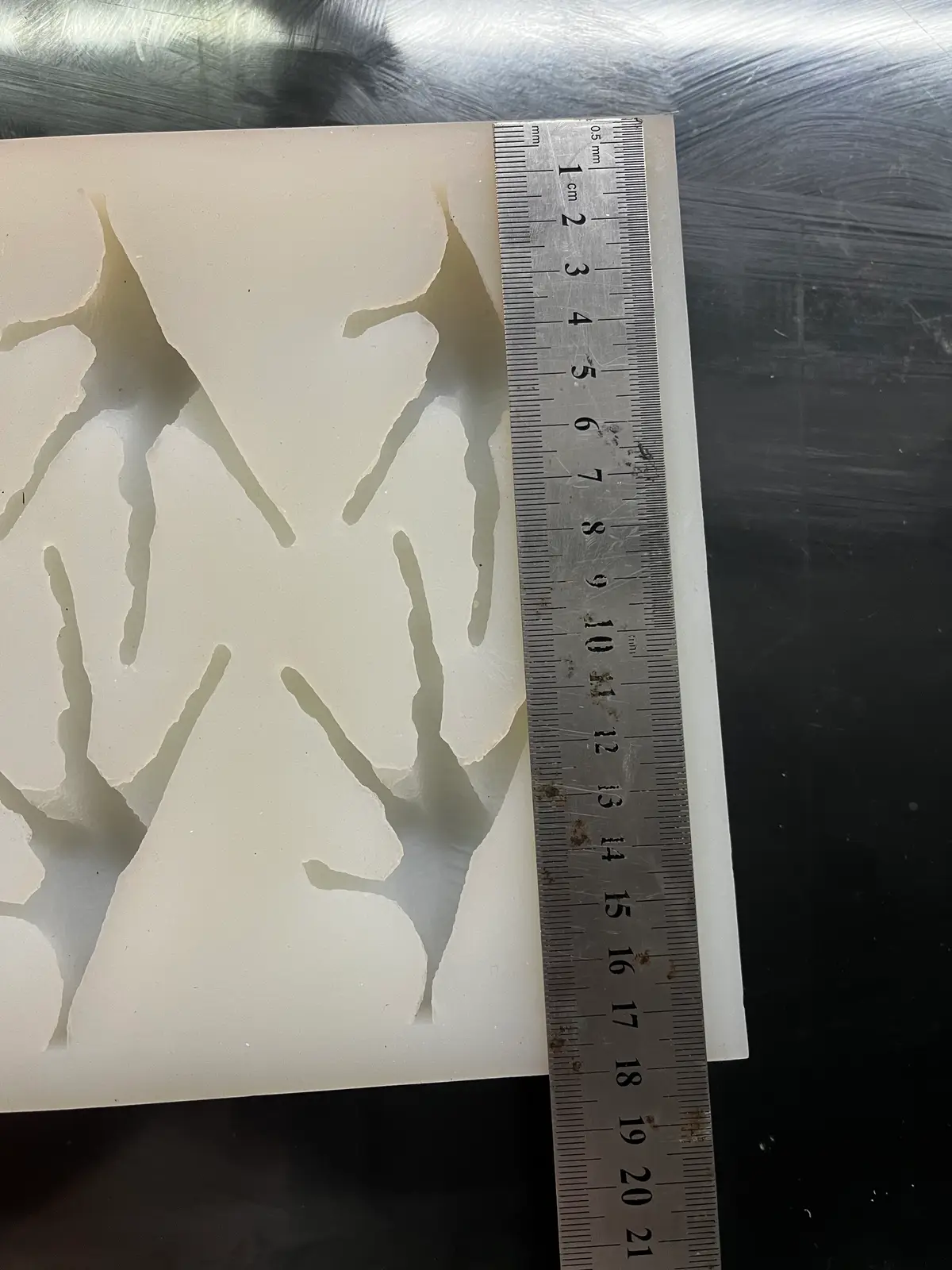
If you're specifying the "best material for a silicone mold" on this site, you're specifying the cavity rubber: a poured platinum or tin RTV skin, usually Shore 10A–20A, behind a rigid jacket. That isn't the same drum as the article (platinum LSR or millable HCR that leaves a metal tool). The best answer for one is the wrong drum for the other. Shore A doesn't settle it. A 50A tin-cure RTV, a 50A platinum LSR, and a 50A peroxide HCR share a durometer and almost no other file.
Pick the object first. Then pick a chemistry. Then pick a named standard if the end use needs one. This article is that order, not a ranked shopping list.
Decide whether you are specifying the cavity or the part
If the silicone *is* the mold (chocolate, resin, wax, low-melt alloy, gummy lines that still use flexible trays), you are in RTV mold-making. Tear, inhibition, and how the block peels matter. The metal or resin jacket around it is structure, not the molding surface.
If the silicone *is* the product (baby care, gaskets, bakeware sold as the article, medical components, keypad webs), you are in heat-cured processing. The cavity is steel or aluminum. The material question is LSR versus HCR, platinum versus peroxide, and the grade's test file. That's a different finished-part quote for a molded *part*. Calling the steel "silicone mold material" confuses procurement into buying a rubber TDS for a mill.
Write one sentence on the RFQ: "Material means the cavity rubber" or "Material means the molded article; cavity is metal." Quotes that ignore that sentence cannot be compared.
Platinum RTV, tin RTV: mold rubbers, not production parts
Platinum-cure RTV (addition-cure, room temperature). Low shrink relative to heat-cured stocks — typically about 0.1–0.3% after a full cure — good detail, used when the mold must be cleaner for food-contact castings or when inhibition can be managed. Some SLA resins, tin residues, sulfur clays, and amines inhibit it. Degassing is normal. Mix is 1:1 or 10:1 by grade. This rubber makes a flexible cavity. It doesn't qualify an LSR consumer part.
Tin-cure RTV (condensation-cure). More tolerant of dirty masters, often cheaper by the drum, and it keeps shrinking. Condensation byproducts are a process fact. Don't use tin RTV as a stand-in for platinum when the buyer asked for a platinum food-contact story. Don't mix tin tools with later platinum pours without a contamination plan.
Neither RTV is millable HCR. Neither is pumped LSR. If a catalog says "LSR mold rubber" for a 1:1 cup kit, treat it as RTV until a TDS shows a LIM process. Best in this box means: platinum when you need dimensional stability and a cleaner chemistry; tin when the master is ugly and the mold is short-lived on purpose.
LSR and HCR: the articles, not the mold rubber
LSR (liquid silicone rubber). Two-component platinum addition-cure, injected into a hot tool, often with a cold-runner. Default for high-volume, tight-flash, thin-wall consumer and many medical *parts*. Mix ratio is a machine problem. Best when the geometry needs LIM and the compound file (FDA 21 CFR 177.2600, ISO 10993, USP Class VI where specified) lives in LSR. Different RFQ.
HCR (high consistency rubber). Millable gum, peroxide or platinum, compression or transfer. Best for many gaskets, bumpers, sheets, and bakeware geometries that like a press. Peroxide grades need a ventilated post-cure when the recipe says so. Platinum HCR exists when you want addition-cure in millable form. Don't assume HCR means peroxide, and don't assume peroxide HCR drops into an LSR biocompatibility file. Different RFQ.
FSR (fluorosilicone) is a different polymer for fuel and oil swell. It isn't a "better silicone mold." Specify it when the article needs that swell resistance. Extrusion is another process again: profiles, not cavities.
Tool metals and jackets that actually contact the rubber
For RTV, the "tool metal" is often a plywood, resin, fiberglass, or aluminum jacket. Best here means rigid enough to hold the pour. A floppy box makes a floppy cavity no matter how premium the RTV. Unsupported edge sag of about 0.5–1.5 mm on a loaded tray is a missing mother mold, not a "bad rubber."
For metal *part* tools, "best material" is plate and surface, not a rubber brand. Aluminum is the usual first HCR compression metal and a common LSR prototype cavity. Steel is chosen for shut-off life, texture durability, and volume. Coatings (nickel, some proprietary releases) are process aids. They can help strip. They can also contaminate a later paint or bond step. Specify them as a trial, not as a miracle. Those choices live on the parts quote.
Polish and texture are materials in practice. On RTV, call out master finish (layer lines vs machined vs blasted). VDI 3400 / SPI-style polish callouts belong on *metal part tools*. A mirror finish on a 20A LSR cavity can stick by vacuum — again, different object.
Food, medical, and industrial: name the standard, not the color
Food-contact isn't a pigment. FDA 21 CFR 177.2600 and LFGB (and the finished-article rules of the market, plus CPSIA when children's products apply) are the language. Platinum systems are the usual path for food-contact cavities. Tin-cure RTV is the wrong default for a food mold you will sell as food-contact without a file.
Medical is ISO 10993 and, where used, USP Class VI, plus ISO 13485 if you need the quality system — typically on *parts*, not on this tray. Industrial gaskets may need UL 94 at a thickness, fuel swell, or a simple compression-set target. None of those is "best silicone." Each is a named test on a named grade.
ISO 3302-1 is a drawing class for rubber articles, not a material and not "precision." Don't pick a grade to "meet ISO 3302."
The best material, then, is the one that matches the object (cavity vs article), the process (RTV vs LSR vs HCR), and the standard. Anything ranked as "#1 silicone for molds" without that split is a drum with a slogan.
Common mix-up: a cup kit labeled LSR
A lot of RFQs treat a 1:1 kit stamped "LSR" as production liquid silicone. In the shop that usually means RTV poured into a box. Production LSR is injected on a LIM cell. If you need a flexible cavity, specify platinum or tin RTV. If you need LSR *parts*, specify LIM on a parts OEM.
What to ask when you're buying
- Is material the cavity rubber (RTV) or the molded article (LSR/HCR)?
- Platinum or tin, mix 1:1 or 10:1, which Shore skin, jacket yes/no?
- Food-contact path if needed: 21 CFR 177.2600 and/or LFGB?
- Who keeps the unsanded master for the next recast?
- Any HCR or LSR line on this quote — is that a separate object?
Worked example: chocolate tray, 10A–20A platinum skin
A bakery wanted a 6-cavity swirl, 80 x 40 x 18 mm, food-contact, about 600 pours a month. Best material here was a platinum RTV skin in the 10A–20A band, mix per the grade, vacuum degassed, with a rigid jacket so the sheet wouldn't sag 0.5–1.5 mm at the edge. Tin would have copied a dirtier master and then kept moving in storage. A parallel quote for 50A LSR "because platinum is best" was a *part* compound on a hot tool — wrong object.
When this material split does not apply
If you actually need thousands of vulcanized silicone *parts*, don't buy a premium RTV drum as a fake LSR. Quote HCR or LSR on a parts OEM. A one-off art casting on a dirty master can honestly use tin. Geometry can override quantity: a large wet chocolate slab at 80 pours still wants platinum plus a mother mold.
Related reading: what a custom RTV mold is, platinum-cured silicone, food-grade molds, custom RTV molds.
Material lines to copy onto the RFQ
Copy this. A drum without these lines isn't a spec.
- Object: cavity rubber = platinum or tin RTV (not HCR, not LSR part compound)
- Mix 1:1 or 10:1 by grade; vacuum degas
- Shore of skin (often 10A–20A) and jacket material
- Food-contact path if any: 21 CFR 177.2600 and/or LFGB
- Master chemistry compatibility (SLA barrier, no sulfur clay)
- Recast of the skin: included or extra
Send the pocket STEP, dump material, and whether the master is SLA or CNC. We'll name platinum vs tin, Shore, and jacket so the next PDF is the same drum.
We would not recommend ranking a "best silicone" without naming the object
We would not recommend a tin cavity as a platinum food-contact stand-in. We would not raise Shore A first to "make it stronger" when the jacket is missing. We would not pour a cup kit labeled LSR and call it LIM. We would not mill HCR because the RFQ said "best mold material."
RUUIPON Mold Structure Decision: platinum when size and food-contact matter; tin when the master is dirty and the mold is short-lived. Flat back? open-back. Deep undercuts that won't peel? two-part / plug / core. Soft 10A–20A or wet dump? mother mold — the jacket is part of the material stack.
- Cavity you pour into? - yes -> Platinum or tin RTV
- Platinum or tin RTV - size and food-contact -> Platinum 10A-20A plus jacket
- Platinum or tin RTV - dirty master, short run -> Tin, freeze a wait
- Cavity you pour into? - no, silicone is the article -> Stop: HCR or LSR part RFQ
Typical shop values
Reference values only. Confirm material-specific limits against the supplier’s technical data and agree project acceptance criteria before production.
| Item | Typical shop value | | --- | --- | | Cavity Shore | 10A–20A platinum RTV skin, rigid jacket behind it | | Mix | Platinum 1:1 or 10:1 by grade; vacuum degas | | Platinum shrink after full cure | About 0.1–0.3%; tin keeps moving in storage | | Loaded-tray edge sag without a jacket | About 0.5–1.5 mm | | Contrast: HCR / LSR *part* shrink | HCR about 1.5–2.5%; LSR about 2–3% — different RFQ | | 6-cavity 80 x 40 x 18 mm swirl | About 600 pours/month is a common food-mold band |
FAQ
Is platinum silicone always the best mold material? Platinum is the usual pick for RTV cavities that need lower shrink and cleaner chemistry, and for LSR *articles*. Tin RTV can be the right mold rubber for dirty masters and short-lived tools. Peroxide HCR can be the right article for many gaskets. Always isn't a shop word.
Can I use LSR as the poured mold rubber? Production LSR is injected on a LIM cell. A cup kit labeled LSR is almost always an RTV. If you need a flexible cavity, specify platinum or tin RTV. If you need LSR parts, specify LIM on a parts OEM.
What metal is best for a custom silicone mold? For this product, a rigid jacket (resin, fiberglass, aluminum, printed shell) behind a soft skin. Aluminum and steel are cavity metals for HCR/LSR *part* tools — different quote. The rubber grade doesn't pick the plate by itself.
Does food-grade silicone mean the same grade in a mold and in a spatula? No. A platinum RTV chocolate mold and a platinum LSR spatula can both sit on food-contact paths, but they're different products and different tests. Name FDA 21 CFR 177.2600 or LFGB on the article you will sell.
Is Shore 30A better than 70A for molds? Neither is better in the abstract. Soft RTV peels more easily and tears more easily. Food and gummy skins often live at 10A–20A with a jacket. Hard HCR holds a gasket differently than it holds a cavity. Pick hardness inside a process and a duty, not from a ranking table.
Custom silicone development · DFM & prototype support
CAD, drawing, photos or sample details