
Can You Pour Platinum RTV Onto Silicone? | RUUIPON
Platinum on platinum can grab, inhibit, or copy — depending on release and cure. When a second pour is a tool or scrap. MOQ 20, $50 CAD when it applies.
 Kyler Yang · Founder7 min read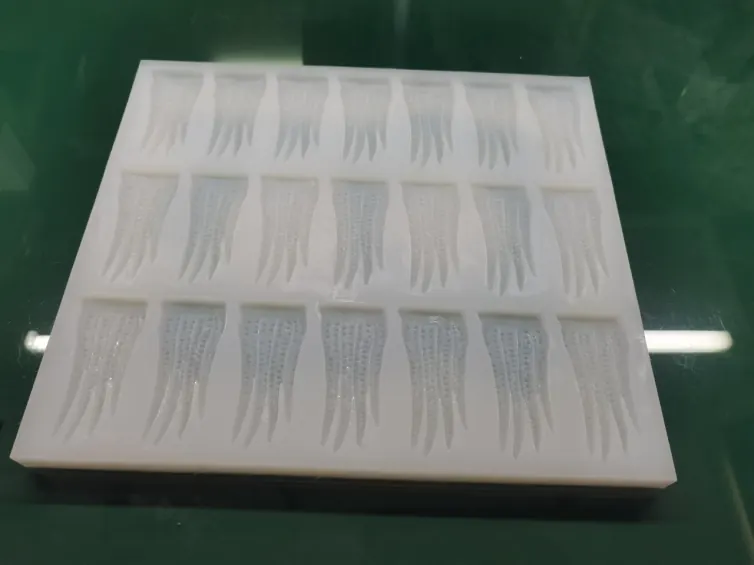
Yes, you can pour platinum RTV against a cured platinum mold — shops do it to copy a cavity, to cast a second skin, or to fill a jacket pocket. You can also glue the two rubbers into one useless brick, or inhibit the new face so it stays tacky forever. The fork is surface condition, not "silicone likes silicone." Fully cured, clean, barrier-coated platinum with a release the TDS allows will usually copy. Fresh, oily, tin-contaminated, or under-cured platinum will grab or inhibit. We decide that on a coin-sized test patch before we commit a kilogram.
RUUIPON runs second pours in Bao'an / Shajing since 2018. Prototype 3–7 business days after CAD lock. Production MOQ 20 pieces per design. Simple 3D is USD $50 when that CAD scope applies. Mix 1:1 or 10:1 by weight; platinum shrink after a full cure typically about 0.1–0.3%. Pouring LSR into a heated steel cavity is not this page.
Does not apply when you mean "can I dump resin into a silicone mold." That is the normal use of the tool. It also does not apply to patching a torn food-contact cavity with Sil-Poxy and calling it a new pour; food articles want a recast, not a repair.
Same-family platinum still needs a barrier
Addition-cure rubber wants to keep reacting with itself if the first face still has leftover hydride or vinyl, or if you poured the second shot before the first reached a full cure. A "dry to the touch" back is not a full cure. Wait the TDS full-cure band, then wash, then apply a release the drum allows (often a dedicated silicone-to-silicone release, not kitchen oil).
Three outcomes we actually see:
- Copy (intended). Second pour peels, keys match, shrink stacks twice in the 0.1–0.3% band. Size the master if both generations must hit a millimetre CTQ.
- Lock (failure). No release, or the first face was sanded raw. You now own a two-colour brick. Cut it off the master if you can; recast from the unsanded original.
- Inhibit (failure). Tin residue, sulfur, amine, some latex, some SLA films transferred onto the first mold. New face stays wet; first mold's back is fine.
Tin onto platinum, or platinum onto a tin glove, is a contamination plan, not a friendly stack. We would not run that as a production method.
- First tool fully cured and clean? - no -> Wait full cure; wash
- First tool fully cured and clean? - yes -> Tin, sulfur, SLA film on the face?
- Tin, sulfur, SLA film on the face? - yes -> Do not pour — recast from the master
- Tin, sulfur, SLA film on the face? - no -> Approved release; test patch
- Approved release; test patch -> Patch peels?
- Patch peels? - yes -> Pour the shot 1:1 or 10:1 by weight
- Patch peels? - no -> Do not pour — recast from the master
- Wait full cure; wash -> Tin, sulfur, SLA film on the face?
The photo that would prove a second-pour call: a test-patch coin peeled from the cavity next to a locked brick someone tried without release. We are not attaching a staged lot.
Inhibition vs mechanical lock vs covalent grab
Inhibition is chemistry: tacky face. Mechanical lock is keys or texture the second rubber flowed into and you cannot flex out. Covalent grab is an under-cured first face still willing to network. Diagnose before you "add more B." Extra catalyst does not unstick a lock.
ISO 3302-1 M2 on the first dump does not describe the second generation. Stacked shrink is two bands, not one.
Coin-patch before a second platinum shot
Mix a 10 g 1:1 or 10:1 patty. Brush or pour a coin on a hidden land of the existing mold after the release you plan to use. Demold on the same clock you will use for the shot. If it peels clean, proceed. If it smears, you have inhibition or green rubber. If it will not peel, you have grab — change release or abort.
Shop numbers for a second pour
Reference values only. Confirm material-specific limits against the supplier’s technical data and agree project acceptance criteria before production.
| Item | Typical shop value |
|---|---|
| Mix | 1:1 or 10:1 by weight |
| Platinum shrink per generation | about 0.1–0.3% after full cure |
| Cavity Shore | 10A–20A skins; 20A–40A trays |
| Prototype | 3–7 business days after CAD lock |
| Production MOQ | 20 pieces per design |
| Simple 3D | USD $50 when that CAD scope applies |
| Drawing class | ISO 3302-1 M2 as a common default |
Second pours we would not run
We would not recommend pouring platinum into a tin glove to "upgrade" it.
We would not recommend kitchen oils as silicone-to-silicone release on a food-contact path. Name 21 CFR 177.2600 on the finished article; recast a clean tool.
We would not recommend a second pour to hide a torn logo. Recast from the master.
We would not recommend stacking two generations and then calling the size "precision" without stacking the shrink bands.
A tooling charge is not unrestricted ownership of the first mold you asked us to copy.
Worked example: spare cavity copied from a lost master
Buyer had a good 15A resin cavity and wanted a spare without sending the master (lost). We washed, full-cured, applied a dedicated release, poured a 1:1 copy after a coin patch. Keys were recut in a new jacket because the copy would have locked into the old pockets. Prototype 3–7 business days after CAD lock of the jacket. $50 3D applied to rebuild the jacket from photos. Production MOQ 20 was not the right line — they wanted two library copies, quoted as two designs of one. Related: library life.
Mix-up: "platinum bonds to platinum, so skip release"
That sentence is how you make a brick. Bonding primers exist for overmolded *parts* in steel tools. An RTV copy wants release. The other mix-up is treating a tacky second face as off-ratio when the first mold was stored in a sulfur-rubber bin.
Questions that keep a second pour from locking
- Is the first tool platinum or tin, and is it fully cured?
- Why a second pour instead of recast from the unsanded master?
- Release product the TDS allows, and did a coin patch peel?
- Do we stack shrink, and is size a CTQ?
- Who keeps both generations after the charge?
Related: inhibition, contact, resin molds.
RFQ copy-pack — silicone onto silicone
Paste into [email protected]:
Object: second platinum pour onto an existing RTV tool First tool chemistry: platinum / tin / unknown Why not recast from the master? Size CTQ: yes/no (stacked 0.1–0.3% shrink) File: photos of the existing mold with a millimetre scale, or the master CAD: USD $50 3D if we must rebuild a jacket from photos Prototype 3–7 business days after CAD lock, then MOQ 20 per design if this is production Coin-patch plan: required
Send the first tool's chemistry and a photo of the face. We patch-test — not a blank "free quote." Phone +86 135 3006 2969. Licheng Technology Industry Park, Xinhe Blvd, Shajing, Bao'an. Shop since 2018.
FAQ
Will two platinum pours fuse if I skip release? They often grab, especially if the first face is young. Use a TDS-allowed release and a coin patch.
Can I pour platinum into a tin mold to upgrade it? We would not. Tin residue is a platinum inhibitor. Recast from a clean master.
Does a second pour double the shrink? Each full-cured generation takes about 0.1–0.3% typical. Stack them if millimetres matter.
Can I use the copy as a food-contact tray? Only on a documented platinum article path (21 CFR 177.2600 / LFGB), not because it was copied from a "food" mold of unknown history.
If I send my only mold to copy, do I still own it? A tooling charge is not unrestricted ownership, and shipping your only tool is a custody risk. Write who holds what, and consider a recast from the master instead.
Custom silicone development · DFM & prototype support
CAD, drawing, photos or sample details