
RTV Chocolate Mold Production Without Illegal Oils
Chocolate RTV molds are fatty-food articles: platinum pour, dry release, jacket, then 21 CFR 177.2600 n-hexane extraction or LFGB/BfR XV on that SKU.
 Kyler Yang · Founder7 min read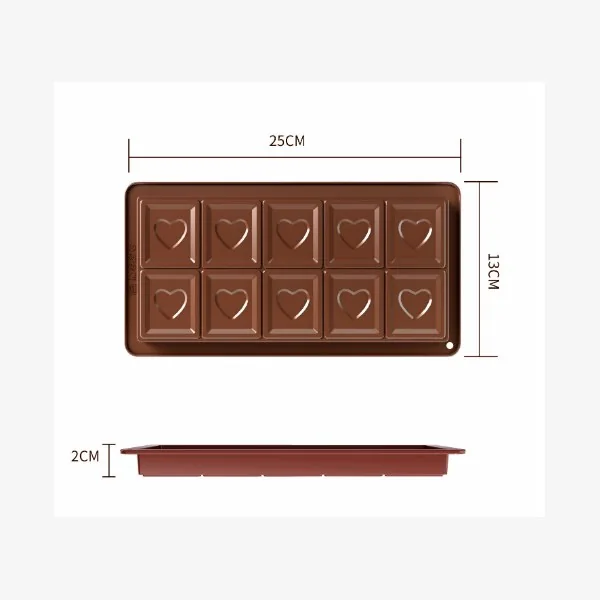
If you're producing a custom chocolate silicone mold, you're making a food-contact RTV cavity for a fatty, cool-to-warm, detail-hungry food. The cavity is the article. FDA 21 CFR 177.2600 therefore brings n-hexane extraction of the finished rubber surface for fatty repeated use. LFGB/BfR XV still cares about volatiles and whether the first pull tastes like catalyst.

Platinum addition-cure RTV is typical. Release has to come from polish, texture, Shore, flex, and a keyed split where you need it — not from an unlisted oil that will bloom into cocoa butter. Polycarbonate still wins on high-gloss bars; silicone wins on undercuts, small-batch recast, and 3D shapes. Don't call the mold FDA approved. If the quote is LSR steel with a cold-runner, that's a molded *part*, not a chocolate dump tool.
Common mix-up: polycarbonate gloss, or a cocoa-butter smear, is the RTV spec
A lot of RFQs treat silicone as “PC with flex” and plan to lubricate cavities with fat until the geometry works. In the shop that usually means a warped unjacketed skin, piece-weight drift, rancid oil in a warehouse stack, and a sensory fail on first ganache.
Tempered chocolate copies the cavity at a fine scale. Micro-bubbles, knit lines, and flash become defects on the bar. Residual volatiles become flavor. Post-cure and wash are production steps even though nobody bakes the mold at 200 °C in normal chocolate work. Fatty-food use is the 177.2600 hexane flask: 175 mg/in² in the first 7 hours at reflux, 4 mg/in² in the succeeding 2 hours. Scope German simulants to chocolate (often ambient to warm), not a generic oven kitchenware package, unless you also print oven use.
What to ask when you're buying a chocolate RTV mold
- Platinum RTV against a CNC or fully post-cured master, or tin-cure craft?
- One-piece peel or keyed two-piece? Two-sided logos and undercut characters almost always need a split and keys
- Jacket stiffness so cavity depth — piece-weight — doesn't balloon
- Dry demold: polish vs light blast, radiused logos, flash off the show face
- 177.2600 hexane (and water if you also claim aqueous uses); LFGB/BfR XV if Germany is a door
- Who owns the master; recast when the face tears or a seasonal shape changes
Cavity finish, process, and hygiene after the pour
Production intent: the bar or praline leaves the cavity without a food-illegal spray. Means: controlled polish or a light texture that breaks vacuum without holding fat; radiused logo lines; Shore and wall thickness that flex for undercuts; vacuum degas and a detail coat so bubbles don't sit on the eating face; no tin-cure production cavities.
Deep 3D characters need split thinking or enough silicone flex to peel. Multi-cavity sheets need uniform cavity depth so fill weights match. Color is often natural or a brand color — freeze it. Brown pigment doesn't make the mold “chocolate grade”; it makes a new specimen if it wasn't the first-article color.
Post-cure scaled to thickness, even if chocolate never sees an oven. Then wash; 177.2600 expects a cleansed article. Pack cavity-to-cavity so carton ink doesn't print onto the chocolate face. Isolate food-contact platinum from tin-cure resin/soap tools in the same hall. A Halloween bat isn't covered by a Valentine heart report.
High-gloss bars still often live in polycarbonate. Don't promise PC gloss on flexible RTV. If a brand wants both shine and undercuts, split the program: PC for the bar face, RTV for a 3D character, each with its own food-contact file. Don't hide PC's BPA conversation inside the silicone folder.
Worked example: 24-cavity 28 mm praline, two-piece
A confectioner ordered a 24-cavity praline, 28 mm, two-sided logo, fatty chocolate, 800–1,500 dumps a month.
Traveler: CNC master with radiused brand mark, keyed two-piece platinum RTV, vacuum degas, fiberglass jacket, post-cure, wash, 177.2600 hexane, LFGB/BfR XV scoped to warm contact if Germany is in. Incoming check: a cold pull of cocoa butter on one cavity plus a wash check on logos — that's not a substitute for n-hexane, it's how you catch oil, tack, or warpage the PDF never saw. Quarantine sticky lots. Don't season them with more fat.
When silicone is the wrong chocolate tool
If you need mirror shine on a flat bar at high volume, PC is still the usual cavity. If you need a molded silicone *toy* that looks like chocolate, that's LSR with a cold-runner, not a dump mold. If the shape is resin-only, don't file 177.2600. A one-piece shallow coin can skip a split; a hollow sphere needs a core pull path. Geometry can override quantity.
Related reading: applications by food, candy and gummy sheets, cleaning the cavity, food-grade molds.
What to send for a chocolate RTV quote
Copy this.
- Piece size, cavity count, two-sided yes/no, monthly dumps
- Shine vs undercut priority (don't promise PC gloss on RTV)
- Master type; split/keys; jacket; Shore of the skin
- Pigment freeze; post-cure; 177.2600 hexane and/or LFGB/BfR XV
- Recast for seasonal shapes; who owns the master
- Current failure if any: oil, odor, weight drift, stain in blast
Send master photos or the STL, a chocolate spec (temper, fill weight), and the market list. We'll mark dry-release geometry and whether PC should take the bar face instead.
We would not recommend oiling the cavity until the geometry "works"
We would not recommend promising polycarbonate gloss on flexible RTV, or using a chocolate-cool file to cover oven claims you didn't print. We would not skip the jacket on a 24-cavity praline sheet and then chase piece-weight with cocoa butter.
- Geometry - undercuts / 3D / recast -> Platinum RTV, keyed split, jacket
- Platinum RTV, keyed split, jacket -> Dry release?
- Dry release? - needs aerosol -> Move split or add radii; recast slug
- Dry release? - peels dry -> Post-cure, wash, 177.2600 hexane
Typical shop values: chocolate RTV dump mold
| Item | Typical shop value | | --- | --- | | Shore | 10A–20A platinum RTV + jacket | | Mix | 1:1 or 10:1; vacuum degas; detail coat on logos | | Shrink | ~0.1–0.3% platinum | | Fatty flask | 175/4 mg/in² n-hexane reflux | | Piece-weight drift | Follows cavity-depth sag ~0.5–1.5 mm if unjacketed | | Monthly dumps | ~800–1,500 on a 24-cavity praline is a common band |
Reference values only. Confirm material-specific limits against the supplier’s technical data and agree project acceptance criteria before production.
FAQ
Why not just use polycarbonate for all chocolate molds? PC still wins on some gloss bars. Silicone is chosen for undercuts, flex demold, and faster shape changes by recast. Food-contact rules still apply to the RTV article. PC also has its own food-contact file, including the BPA conversation silicone doesn't actually share.
Does chocolate need oven-temperature LFGB testing? Only if you claim oven use. Chocolate contact is usually cooler. Align simulants and times to real use. Don't buy an oven kitchenware package by habit, and don't skip fatty-food thinking on the US side.
Can I lubricate cavities with cocoa butter instead of redesigning? Cocoa butter is food, but it's also a process crutch that hides geometry problems and can go rancid in a warehouse of molds. Design dry release. If a food-grade fat is used in production, name it in hygiene instructions.
Is a 64-cavity sheet one article or 64? One SKU if compound, color, process, and post-cure are uniform and cavities are the same design. A repaired single cavity with a different gum is a problem. First-article the sheet as produced.
Will a strong new-mold smell disappear after a few chocolate pulls? Those pulls are the food taking volatiles, which is a sensory and post-cure failure, not seasoning. Don't ship it. Bake and wash as the process intended, then reassess.
Custom silicone development · DFM & prototype support
CAD, drawing, photos or sample details