
CNC Wood Masters for Platinum RTV Molding | RUUIPON
A CNC wood master copies grain unless you seal it. MDF vs pine, tannin and sulfur risk, sealer stack before platinum. Typical shop. MOQ 20, $50 CAD.
 Kyler Yang · Founder7 min read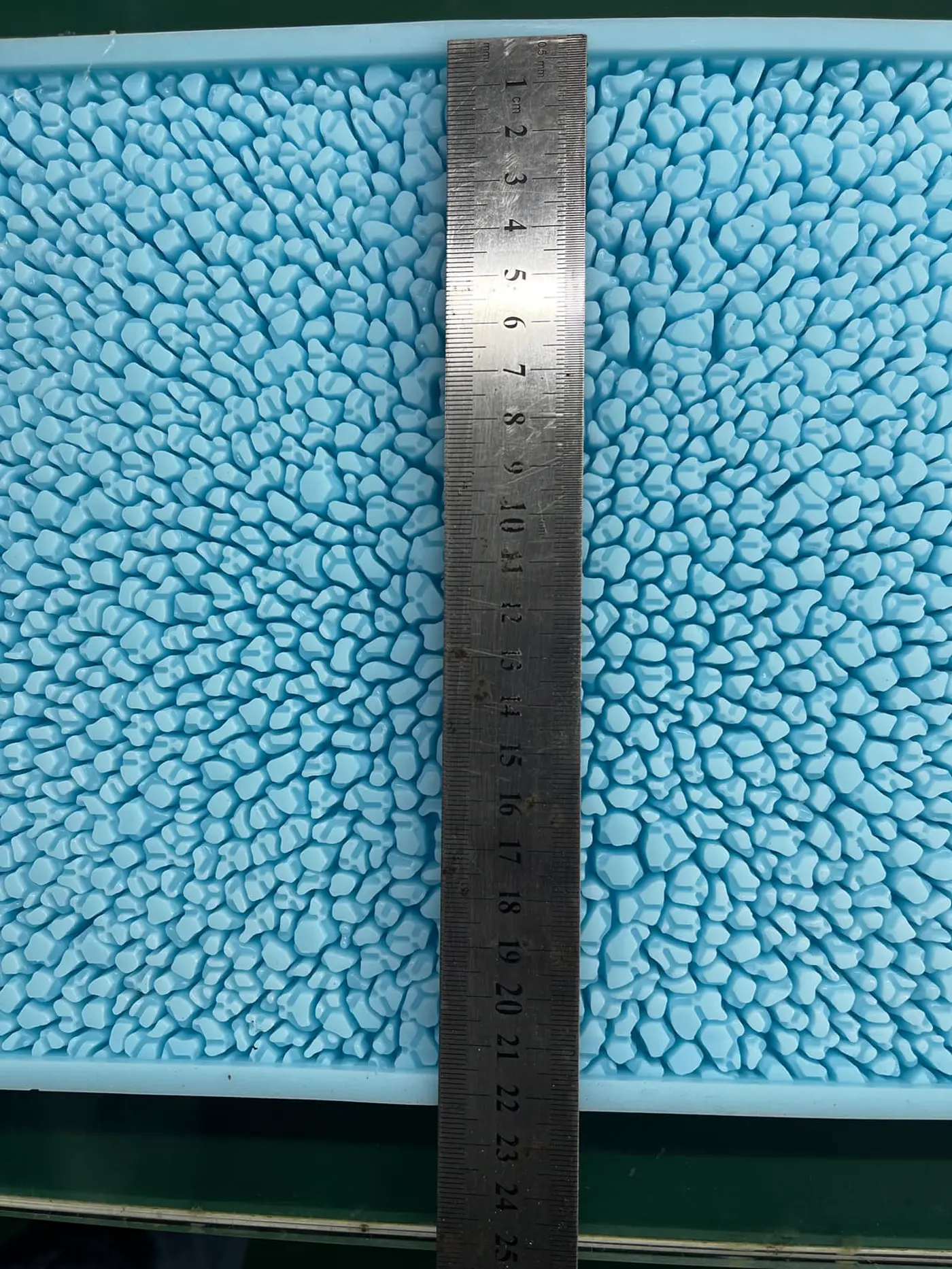
A CNC wood master will print its grain, cutter marks, and open pores into the RTV cavity unless you seal it as a closed pattern. Pine and oak drink platinum and can fight addition-cure; MDF is smoother but still porous at a routed edge; plywood can telegraph voids. Grain is a texture you *signed* (a rustic chocolate bar, a wood-look soap) or a leak you *sealed* (a food logo that must not look like oak). This page is the wood path - not FDM stairs, not SLS dust, not a steel CNC cavity for finished silicone parts. We will not pour food platinum against raw routed pine and call the tack "character."
A CNC wood piece can be the pattern / master-pattern after the sealer stack is honest. It is not the resin production mother. On this site the path is photos, sketch, or CAD, then a 3D-printed pattern, often a temporary silicone flip, a resin production mother, then batch RTV. The mother is not the pattern. Free DFM. HTV/HCR compression mold tooling is also quoted on RUUIPON.
Does not apply when the master is already aluminum or tooling board, when the "wood" is a filament-filled FDM print, or when you wanted a steel chocolate tool. Sulfur clay is a different poison page. We will not spec an unsealed outdoor carving as a production food master.
Grain, tannin, and the sealer stack
Solid pine / fir. Open grain, resin pockets, movement with humidity. Tannins and some sap can leave platinum tacky. Seal until the grain no longer drinks a solvent wipe, then slug.
Oak / walnut / exotic. Beautiful grain you will copy. Tannin risk is higher. Fine for a signed rustic soap or a craft plaque. Poor for a 0.4 mm wordmark.
MDF / HDF. Routed pockets fuzz. Edges drink. A two-part sealer plus a sanded film coat usually closes it. Watch water-based sealers that are still green.
Plywood. Voids in the core become pits if the pocket cuts into a ply gap. Plug before seal.
Sulfur in some rubbery "wood clays" or old fillers is not the board - it is contamination on the board. If a sculptor used sulfur clay on the same bench, read the sulfur page.
The photo that would prove a wood master: raking light on sealed vs unsealed grain, millimetre scale in a routed pocket, slug puck on a hidden land. A walnut slab on a workbench is not a sealer spec.
- Grain signed as texture? - yes -> Seal enough to stop drink, keep grain
- Grain signed as texture? - no -> Fill, sand, film-coat until closed
- Seal enough to stop drink, keep grain -> 20 g platinum slug
- Fill, sand, film-coat until closed -> 20 g platinum slug
- 20 g platinum slug -> Tack or pits?
- Tack or pits? - yes -> More seal, or $50 remodel off wood
- Tack or pits? - no -> CAD lock, 1:1 or 10:1, vacuum
Humidity movement vs CAD lock
Wood moves after you measure it. A board that was 200.0 mm in a dry shop can be 200.6 mm after a monsoon freight. Platinum will copy whatever arrives. CAD lock on a wood pattern includes a measure-*after-seal, after-climate* step, or we remodel in a stable material for USD $50 when that scope applies. ISO 3302-1 M2 is a rubber class on the dump, not a wood moisture grade.
Food path: a sealed, fully cured, slug-tested film can be a master. Raw wood cannot. Do not oil the board with a salad oil and call it food-safe - that oil is now in the platinum conversation.
Structure Decision still applies: a flat-back bar → open-back tray. A carved statue in wood → glove plus jacket or a split. Wood does not change peel physics.
Failure: tacky face mapped to the grain
Symptom: platinum sticky in the pores, snap-cured on the sealed flats and the flask back.
Cause: drink into unclosed grain, tannin/sap, or a green sealer.
Confirm: slug on a hidden land vs slug on a polypropylene cup of the same mix. Cup good + wood land tacky = the board.
Fix: more seal, longer sealer cure, or abandon wood for a remodelled master. Do not bake a food cavity to "drive out tannin."
Typical shop values
Reference values only. Confirm material-specific limits against the supplier’s technical data and agree project acceptance criteria before production.
| Item | Typical shop value |
|---|---|
| Mix / shrink | 1:1 or 10:1 by weight; platinum about 0.1-0.3% |
| Wood risk | open grain, tannin, humidity movement |
| Cavity Shore | 10A-20A skins; 20A-40A trays |
| Prototype | 3-7 business days after CAD lock |
| Production MOQ | 20 pieces per design |
| Simple 3D | USD $50 when that CAD scope applies |
| Drawing class | ISO 3302-1 M2 as a common default |
Stay on this page / skip this page
Stay when a CNC or carved wood piece is the pattern / master-pattern - grain you signed vs pores you sealed.
Skip if you needed FDM stairs or SLS dust. Skip a steel CNC cavity at a parts plant. Skip calling raw pine "food-safe" because it is wood.
We will not quote raw routed pine as a chocolate-logo pattern. We will not quote salad oil as the sealer. We will not lock millimetres on an unacclimated board. We will not put oak grain on a 0.4 mm wordmark unless you signed the blur. We will not carve a new board every reorder when a sealed pattern or a CAD remodel exists.
Related: FDM PLA pattern, SLS nylon pattern, contact.
Worked example: MDF soap loaf, fuzzy pocket
Soap loaf, 80 × 50 × 40 mm pocket in MDF, buyer wanted a clean brand face. Routed fuzz copied as pills. First slug drank at the edge. We filled, sanded, film-coated, slug passed, poured platinum 1:1 open-back. Prototype 3-7 business days after CAD lock. $50 CAD applied because the brand depth was only on a phone photo. Production MOQ 20 of that design. Grain was *not* signed; the seal hid it.
Mix-up: "wood is natural so it is food-safe as a master"
The dump's food pack is about the rubber and the factory path, not the tree. Related: custom soap loaf molds, master prototype, contact.
What to ask when you're buying a wood path
- Species or board type, and is grain a signed texture?
- Sealer stack and whether it is fully cured?
- Measure after seal, in the climate the board will travel?
- Food vs rustic craft?
- After lock, 3-7 business days, then MOQ 20 / design?
RFQ copy-pack - CNC wood master
Paste into [email protected]:
Object: RTV mold from a wood pattern, not an LSR/HCR part Board: pine / oak / MDF / plywood Grain: signed texture or must disappear Dump: food or craft Sealer used, and a slug if you already poured File: photos with millimetre scale OR STEP if you remodelled CAD: seal-in-place OR USD $50 3D to leave wood behind Prototype 3-7 business days after CAD lock, then MOQ 20 per design Who keeps the pattern
Send species and whether grain is the product, not "it's just wood." We seal or remodel - not a blank quote request. Phone +86 135 3006 2969. Xinhe Blvd, Shajing, Bao'an. Shop since 2018.
FAQ
Can I CNC a wood master for a silicone mold? Yes, after a sealer stack that closes pores and a 20 g platinum slug. Raw routed wood copies grain and can inhibit.
Will oak grain show in chocolate? Yes, if you left it. Sign that rustic look or fill and film-coat until the grain is gone.
Why is platinum tacky only in the pores? The sealer did not close them, or tannin/sap is still active. Recoat or remodel. More cure time on a food face will not extract oak.
Should I just model it in CAD for $50? Often, if the board is moving or the type is fine. USD $50 when that CAD scope applies. A stable sealed MDF pocket with locked mm can skip it.
Does wood change your 3-7 day clock? Lock includes a quiet, measured pattern. A damp carving in a crate is not locked. MOQ 20 per design after the witness.
Custom silicone development · DFM & prototype support
CAD, drawing, photos or sample details