
Fix Color Drift and Pigment Bleed in RTV Cavity Batches
Cavity shade shifts and halo bleed are separate faults: weigh-up, loading, inhibition, post-cure. Lock the paste and cure state before blaming the master.
 Kyler Yang · Founder10 min read
The second cavity is a shade darker than the first, and the third has a pink halo at the pour. That is not one problem. Shade drift across a tray, drift across a lot, and true pigment migration are different mechanisms. If you chase them with a single “add more color,” you will stain the next natural skin — and the next chocolate.
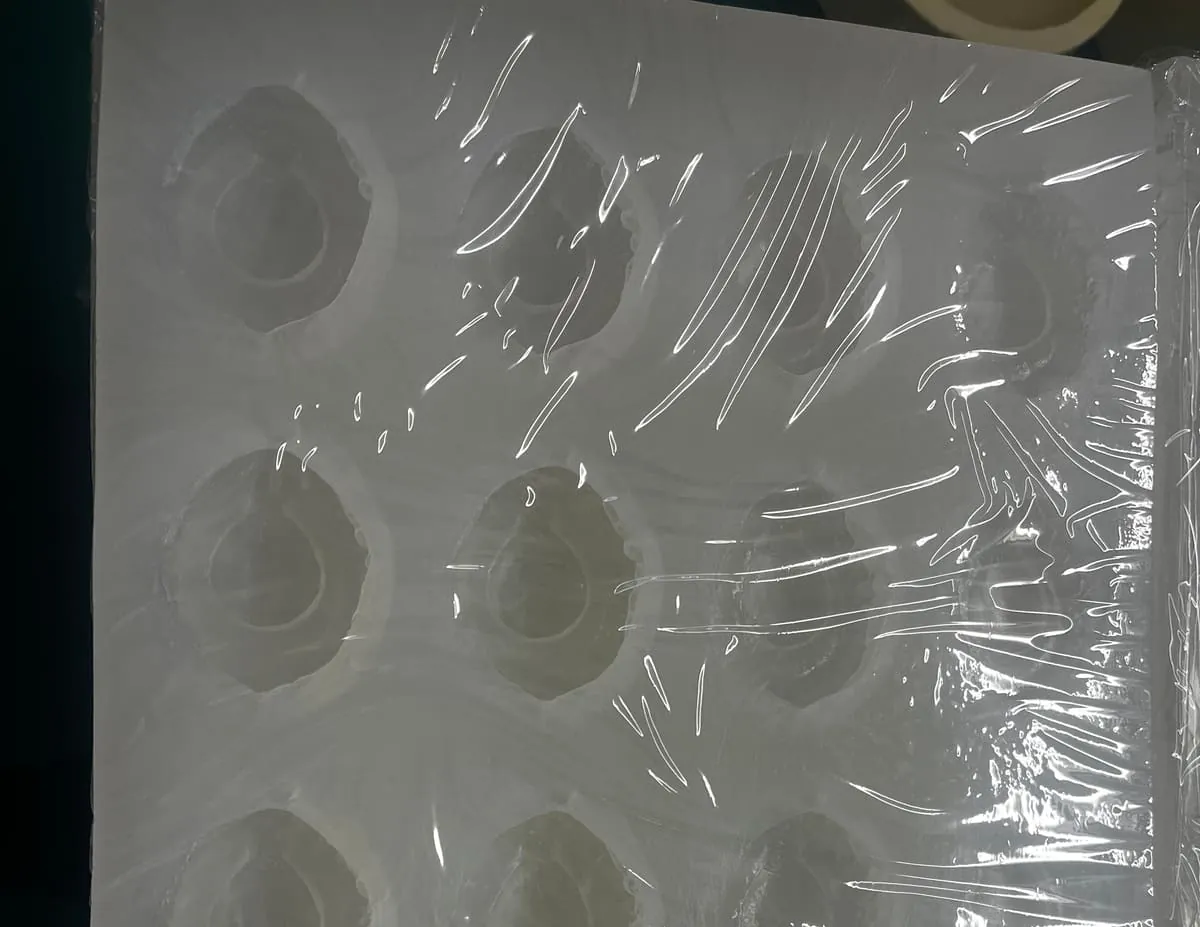
This covers tinted platinum RTV cavities poured on the bench, plus the pigmented HCR and LSR *parts* some buyers also run. Food and medical colors have extra rules; those sit on top of the same physics. On this site the colored object is often the mold itself (a red baking tray, a chocolate cavity that must not tint white chocolate).
Name the defect before you open a cup
Pour-to-pour or cavity-to-cavity shade mismatch. Same kit, same hour, different pockets or different skins look like different colors. This is fill, jacket sag, or dispersion, not a new pigment.
Lot-to-lot drift. Monday’s red does not match Thursday’s red. This is weigh-up, masterbatch lot, or a cup that was not thrown.
Bleed / migration / halo. Color walks to the surface, onto a mating plastic, into chocolate, or into a solvent wipe. A halo around a pour scar, a bond, or an inhibited letter is often inhibition or oil carrying pigment, not “too much dye.”
Staining of the mold. The RTV cavity takes on the media color (mica, dye, cocoa) and reprints it. That is deposit — or migration into the rubber, which wash will not save. Recast when the rubber is the dirt.
Walk the dumps in that order. Mixing the names mixes the fixes.
Dispersion and loading (the usual cavity batch fault)
Pigment that is not fully broken down acts like specks and like local loading swings. RTV needs mix time that actually distributes the paste, then vacuum degas until the foam collapses; a short stir to “save pot life” leaves streaks that the pour then orients along the fill. HCR needs mill time; LSR needs a paste compatible with the A/B streams, dosed by a pump you calibrate — those are parts-cell cousins.
Loading. Every gum has a pigment loading above which you buy opacity and lose physicals, and sometimes cure. Chasing a deep black by dumping more carbon into platinum RTV is a classic inhibition and set-up problem: sticky surface, incomplete cure, then a surface that rubs off as grey. Stay inside the gum supplier’s food or healthcare loading if those apply. For industrial, stay inside the masterbatch sheet.
Masterbatch carrier. A carrier that is not the same polymer family can bloom and take color with it. That bloom reads as bleed. For food, the carrier has to belong on the 21 CFR / BfR list. A cheap color paste that worked in a toy HCR can fail a chocolate sensory test.
Weigh-up. Color at 0.5–2 percent is unforgiving. A scale that is fine for gum is not fine for paste. Dedicated cups, tare discipline, and a retained plaque from every lot. Throw the red cup before a natural pour.
Heat and cure that shift shade
RTV color can shift with post-cure because the base yellows slightly or because the pigment’s undertone moves. A skin post-cured in the jacket will not match a floppy skin that sagged in the oven. Inspect at the shipped state, under a defined illuminant. Do not match a baked tray to a raw plaque.
LSR color also shifts with cavity temperature on a parts tool; a hotter cavity will not match a cooler one. A cold deck that drools and then scorches at the gate can darken a vestige halo — different quote.
Undercure leaves a tacky face that picks up dirt and looks like mottling. That is not pigment.
Bleed that is actually chemistry
Some organic reds and yellows migrate in silicone, especially with oil-extending fillers or with a plasticizer that was never supposed to be there. The test is a contact stack: press the cavity or the casting against white polyethylene, a painted plaque, or chocolate at temperature and time that match service. If color transfers, you have migration. Changing hardness will not fix it. Changing pigment chemistry will.
Platinum inhibition around a pour, a bond, or a contaminated master leaves a sticky, often lighter or pinkish ring that then picks up dirt. That ring is unreacted gum plus pigment sitting in oil. Clean the inhibitor (sulfur, tin, amine, some blacks, some tapes, undercured SLA), do not add white to “correct” it.
Food contact: a pigment that bleeds into fat is a failed article, even if the gum passed 177.2600 as a natural slab. Test the colored article. A color change is a new article. Do not transfer last year’s blue report onto mint green.
Mold and cup hygiene
A 12-cavity tray that just ran carbon will ghost into a translucent optical or natural food lot. Wash the face, recast if pigment is *in* the rubber, purge until the next mix is visually clean, then run a natural witness dump you will scrap. Cups that were used for red will tint the next natural pour. Throw the cup.
A porous or oil-soaked skin holds color. That is a recast, not a polish problem. Steel that is rusted holds color on a parts tool — different PM.
Common mix-up: adding more dye to hide an inhibition halo
A sticky lighter ring around a dirty SLA letter is unreacted gum. More red makes more stain in the chocolate. Barrier-coat the master.
What to ask when you're buying
- Object: colored RTV cavity, or pigmented LSR/HCR part?
- Masterbatch type, loading, color standard (plaque, not a printout)?
- Illuminant, inspect after post-cure in the jacket?
- Food/skin: listed pigment, no-bleed contact test on the colored article?
- Dedicated cups, leftover paste owner?
Worked example: 12-cavity red chocolate bear
12-cavity, 18 mm, platinum 10A–20A, jacket, red food paste inside supplier loading. Retain a plaque from the mix. Inspect after post-cure under a named illuminant. Contact-stack against white chocolate. If pocket 12 is darker, check jacket sag and fill, not the formula first. Outer-row 3–6% heavy is weight, not shade — unless the edge also ran hotter in post-cure.
When this article is the wrong quote
If color lives on a 16-cavity LIM cell, send the parts OEM the hopper SOP. A tiny natural ice tray can skip paste theater. Geometry can override: a deep letter still needs degas, not more carbon.
Related reading: FDA/LFGB colored food molds, beauty gloss vs tint, culinary wash vs recast, custom RTV molds.
Put this on the RFQ
Masterbatch type, loading, color standard (plaque, not a printout), illuminant, inspect-after-post-cure in the jacket, and a no-bleed contact test if the cavity meets food, skin, or painted housings. Dedicated cups. Recast when stain is in the rubber. A cavity batch is a controlled mix. Treat it that way and the master will stop taking the blame.
Send the color plaque target, food/skin yes/no, and whether the RTV *is* the article. We will lock paste and post-cure — not add dye to an inhibition ring.
We would not recommend dumping more carbon into platinum to get a deeper black
We would not recommend transferring last year’s blue report onto mint green. We would not raise Shore A first to “stop bleed.” We would not match color under warehouse sodium lights. We would not keep a red cup for the natural pour.
RUUIPON Mold Structure Decision: a colored food tray is still a cavity you dump into. Flat back? open-back. Deep letters that cannot peel? two-part. Soft 10A–20A plus wet dump? mother mold — and post-cure in that jacket so shade and sag do not fight.
- Name it - pockets differ, same pour -> Fill, jacket sag, dispersion — not new pigment
- Name it - lot-to-lot -> Weigh-up, paste lot, dirty cup
- Name it - halo / sticky ring -> Inhibition or oil; clean master, do not add white
- Name it - transfers to chocolate/PE -> Migration; change pigment chemistry
- Name it - stain in rubber -> Recast; wash will not save it
Typical shop values
Reference values only. Confirm material-specific limits against the supplier’s technical data and agree project acceptance criteria before production.
| Item | Typical shop value | | --- | --- | | RTV mix | Platinum 1:1 or 10:1; vacuum degas | | Cavity Shore | 10A–20A with jacket | | Pigment loading | Often ~0.5–2%; stay inside food/healthcare sheet | | Platinum shrink | About 0.1–0.3% after full cure | | Inspect state | After post-cure, in the jacket, named illuminant | | Outer-row vs center | Edge often 3–6% heavy if tray sags — weight, not always shade |
FAQ
Why is cavity 2 a shade darker not the same problem as a pink halo at the pour? Shade mismatch in one pour is fill, jacket sag, or dispersion. Lot-to-lot drift is weigh-up, masterbatch lot, or a dirty cup. A halo at a pour or bond is often inhibition or oil carrying pigment, not "too much dye." Staining of the rubber is deposit or migration. Name the defect before you open a cup.
Why not dump more carbon into platinum to get a deeper black? Loading past the gum supplier's sheet buys opacity and loses physicals, and carbon can inhibit platinum: sticky surface, incomplete cure, grey rub-off. Stay inside food or healthcare loading when those apply. A carrier that is not the same polymer family can bloom and take color with it.
Why inspect color after post-cure under a defined illuminant? Post-cure often deepens or settles a shade. QC as-poured versus customer after the oven is a ghost delta E. A skin post-cured floppy will not match one post-cured in the jacket. Undercure leaves tack that picks up dirt and looks like mottling.
How do I tell true pigment migration from an inhibition ring? Press the cavity or casting against white polyethylene, paint, or chocolate at service temperature and time. Color transfer is migration; change pigment chemistry, not hardness. A sticky lighter ring around a contaminated master is unreacted gum plus pigment in oil; clean sulfur, tin, amine, or undercured SLA, do not add white.
Why does a tray that just ran carbon ghost a natural food lot? Pigment packed in texture reprints; pigment in the rubber recasts. Wash, then a natural witness dump you will scrap. Cups that mixed red will tint the next natural pour; throw the cup. Compare pockets in one pour before you change the formula.
Custom silicone development · DFM & prototype support
CAD, drawing, photos or sample details