
Custom Chocolate Silicone Molds: Temperature Resistance and Production Guide
Chocolate molding presents unique challenges that differentiate it from gummy production:
 Kyler Yang · Founder5 min read
Why Chocolate Requires Specialized Mold Engineering
Chocolate molding presents unique challenges that differentiate it from gummy production:
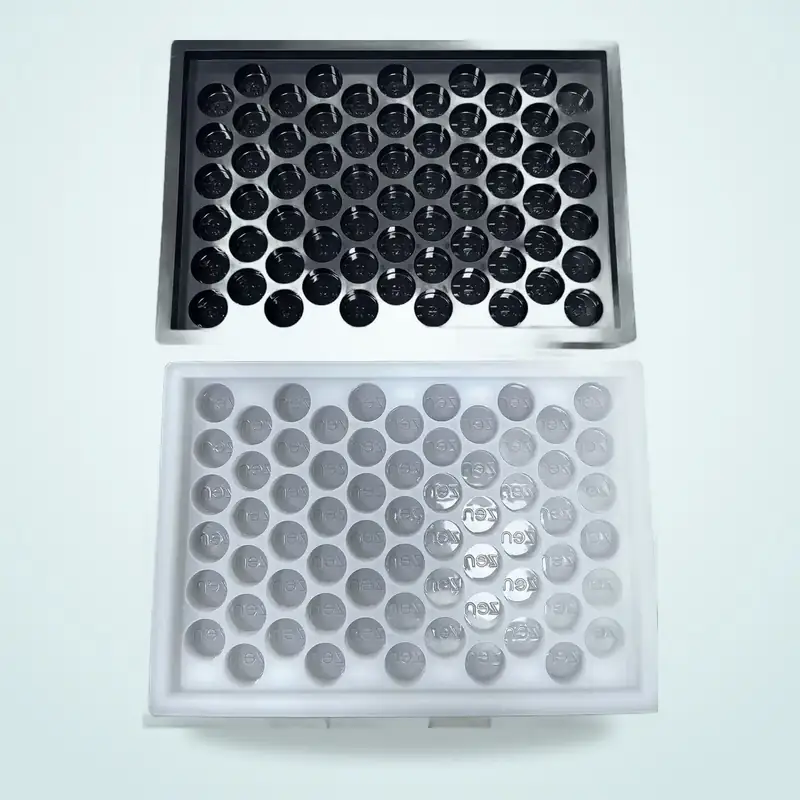
- Temperature sensitivity: Chocolate must be poured at specific temperatures (31-32°C for dark, 29-30°C for milk)
- Thermal cycling: Molds experience repeated heating (pouring) and cooling (setting) cycles
- Surface finish: Chocolate requires high-gloss cavity surfaces for proper release and appearance
- Viscosity: Chocolate flows differently than gummy mass, requiring different gate design
This guide covers the engineering considerations for custom chocolate silicone molds.
Temperature Requirements
Chocolate Pouring Temperatures
| Chocolate Type | Tempering Temperature | Pouring Temperature |
|---|---|---|
| Dark chocolate | 31-32°C (88-90°F) | 29-30°C (84-86°F) |
| Milk chocolate | 29-30°C (84-86°F) | 27-28°C (81-82°F) |
| White chocolate | 29-30°C (84-86°F) | 27-28°C (81-82°F) |
| Couverture chocolate | 31-32°C (88-90°F) | 29-30°C (84-86°F) |
Silicone Temperature Resistance
Quality platinum-cured silicone maintains elastomeric properties from -65°C to +230°C (-85°F to +446°F). This range easily accommodates:
- Direct pouring of molten chocolate (up to 50°C / 122°F)
- Hot sugar deposition for hard candy (up to 160°C / 320°F)
- Rapid cooling in walk-in chillers without thermal shock
- Dishwasher sanitization cycles (top rack, up to 75°C)
Durometer Selection for Chocolate Molds
Recommended: 25A-30A Shore A
Why firmer durometer for chocolate:
- Structural support: Firmer silicone maintains cavity shape under the weight of molten chocolate
- Thermal stability: Firmer durometer resists deformation during temperature cycling
- Clean release: Firm surface promotes clean chocolate release without sticking
- Surface finish: Firmer silicone maintains high-gloss cavity finish longer
When to Use Softer Durometer (20A-25A)
Softer durometer may be appropriate for:
- Intricate decorative shapes where maximum flexibility aids release
- Very small chocolate pieces where detail reproduction is critical
- Manual demolding operations where ease of release is prioritized
Mold Architecture for Chocolate Production
One-Piece (Open) Molds — Primary Choice
One-piece molds are the standard for chocolate production because:
- Open cavities allow direct pouring of molten chocolate
- No parting line ensures clean chocolate surface finish
- Higher cavity density maximizes production output
- Simpler design reduces manufacturing cost and lead time
Best for: Chocolate bars, truffles, bonbons, filled chocolates, basic shapes
Two-Piece (Split) Molds — Specialty Applications
Two-piece molds are used for:
- 3D chocolate shapes — Characters, letters, custom figures
- Hollow chocolate shells — Easter eggs, specialty shapes
- Complex decorative pieces — Full-surface detail required
Note: Two-piece chocolate molds require careful parting line placement to minimize visible seams on the final product.
Surface Finish Requirements
High-Gloss Cavity Finish
Chocolate requires high-gloss cavity surfaces for:
- Clean release — Smooth surface prevents chocolate sticking
- Professional appearance — Glossy chocolate indicates proper tempering
- Easy cleaning — Smooth surfaces resist residue buildup
Specification: Cavity surface finish Ra < 0.4μm (mirror finish)
Surface Treatment Options
| Finish Type | Application | Benefits |
|---|---|---|
| Mirror polish | Standard chocolate molds | Maximum gloss, easiest release |
| Matte finish | Decorative chocolate pieces | Unique aesthetic, textural contrast |
| Texture finish | Specialty chocolates | Patterned surfaces, brand differentiation |
Common Chocolate Mold Issues and Solutions
Issue 1: Chocolate Sticking to Cavity
| Cause | Solution |
|---|---|
| Cavity surface degradation | Replace mold; ensure proper cleaning |
| Incorrect durometer (too soft) | Upgrade to 25A-30A formulation |
| Chocolate not properly tempered | Verify tempering process; adjust pouring temperature |
| Moisture in cavity | Ensure molds are completely dry before pouring |
Issue 2: Cloudy or Blooming Chocolate
| Cause | Solution |
|---|---|
| Thermal shock from rapid cooling | Cool at room temperature first, then refrigerate gradually |
| Temperature fluctuation during setting | Maintain consistent chiller temperature |
| Moisture contamination | Store molds in dry environment; air-dry completely |
| Wrong chocolate type for application | Verify chocolate formulation is suitable for molding |
Issue 3: Poor Detail Reproduction
| Cause | Solution |
|---|---|
| Durometer too soft for detail | Upgrade to firmer durometer (25A-30A) |
| Insufficient cavity depth | Redesign with deeper cavities |
| Pouring temperature too low | Increase pouring temperature within chocolate range |
| Chocolate viscosity too high | Adjust chocolate formulation or temperature |
Issue 4: Weight Variation
| Cause | Solution |
|---|---|
| Inconsistent cavity depth | Request mold re-engineering with tighter tolerance |
| Uneven chocolate distribution | Adjust pouring technique or depositor settings |
| Mold flex during handling | Upgrade to rigid tray design with structural ribbing |
| Temperature variation affecting viscosity | Maintain consistent chocolate temperature throughout production |
Chocolate Mold Maintenance
Daily Care
- Clean cavities with warm water and food-safe detergent after each use
- Dry completely before storage — moisture causes chocolate bloom
- Inspect cavity surfaces for scratches or degradation
Weekly Care
- Deep clean with food-safe sanitizer
- Check for surface film buildup that affects release
- Verify cavity dimensions with calibrated gauge
Storage
- Store flat on clean surface
- Keep in cool, dry environment
- Protect from dust and contaminants
- Never fold or crease silicone
Chocolate Mold Design Specifications
Standard Tray Sizes
| Tray Size | Common Cavity Counts | Application |
|---|---|---|
| 40cm × 60cm | 24-72 cavities | Standard chocolate bars, bonbons |
| 50cm × 70cm | 36-96 cavities | High-volume chocolate production |
| Custom sizes | Variable | Equipment-specific requirements |
Cavity Depth Recommendations
| Chocolate Type | Recommended Cavity Depth | Notes |
|---|---|---|
| Solid chocolate | 8-12mm | Standard bar and piece production |
| Hollow chocolate | 4-6mm | Shell formation for Easter eggs |
| Filled chocolate | 6-10mm | Space for filling center |
| Decorative chocolate | 10-15mm | Deep detail for premium shapes |
FAQ
Q: Can I use gummy molds for chocolate production? A: Yes, platinum silicone handles the temperature range for both applications. However, we recommend dedicated molds for each product type to prevent flavor cross-contamination.
Q: What durometer is best for chocolate molds? A: We recommend 25A-30A Shore A for chocolate molds. The firmer durometer provides better structural support and maintains cavity definition during thermal cycling.
Q: Can chocolate molds be used for hot filling? A: Yes. Platinum silicone handles pouring temperatures up to 230°C. For chocolate, typical pouring temperatures of 29-32°C are well within the safe range.
Q: How do I prevent chocolate bloom on my products? A: Prevent bloom by: cooling at room temperature first, maintaining consistent chocolate temperature, ensuring molds are completely dry, and using properly tempered chocolate.
*Published: 2026-08-12 | Category: Chocolate Production | Read Time: 10 minutes*
Custom silicone development · DFM & prototype support
CAD, drawing, photos or sample details