
Custom Silicone Mold Cost Breakdown: Prototyping Soft Tooling vs. Steel Production Molds
Soft tooling is a different bill of materials, not a cheap steel mold. Compare aluminum, printed, and steel LSR tools by cavitation, finish, scrap, and lif
 Kyler Yang · Founder8 min read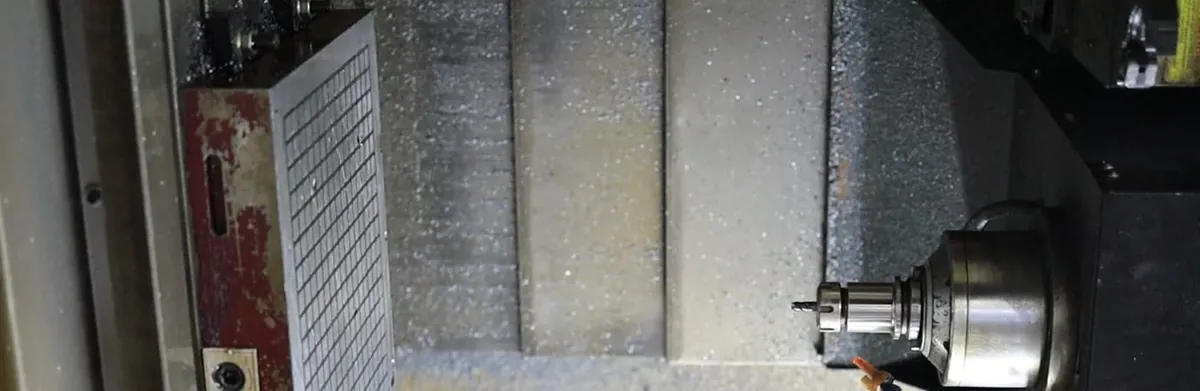
Soft tooling is not a discounted steel mold. It is a shorter-life stack of metal, labor, and risk, built so you can change the part before the geometry is frozen.
A steel production tool is a longer-life stack: harder steel, more plates, more cooling or heating channels, more polish, more tryout. You pay that stack once. You amortize it across every shot the cavity still holds.
If you compare “the mold price” as two numbers, you will pick the wrong one. Compare the stack.
The stack, not the sticker
Every custom silicone mold quote is five buckets. Soft tooling and steel both have them. The mix changes.
1. Cavity and core metal (or polymer). Aluminum CNC, printed photopolymer or metal, pre-hardened steel, or through-hardened tool steel. This is the visible line. It is rarely the whole job.
2. Base, plates, and actuation. Leader pins, sprue, cold-runner manifold for LSR, slides, lifters, vacuum grooves, cartridge heaters, thermocouples. Soft tools often skip or simplify this. Steel tools cannot, not if you want a stable cycle.
3. Finishing. EDM, polish, texture, SPI finish class, plating or coating on a wear face. A prototype tool can leave cutter marks in a non-cosmetic pocket. A production LSR tool that flashes at 0.02 mm of mismatch cannot.
4. Tryout and first-article labor. Design review, DFM, first shots, flash tuning, cure-time mapping, dimensional loop. Soft tools still need this. They just fail faster when you skip it.
5. Expected life, expressed as shots you trust. Not a warranty. A construction intent. A printed LSR cavity may be a few dozen to a few hundred shots before heat and clamp chew the parting line. Aluminum, if the geometry is kind, can bridge low thousands. Steel is the class conversation (101-105), not a magic number.
Piece price sits *outside* this stack. Do not fold it in until the tool type is chosen. Mixing them is how a cheap aluminum tool “wins” a quote and then loses on scrap and changeovers.
Soft tooling, line by line
“Soft tooling” in silicone work usually means one of three things. Do not let a quote hide which.
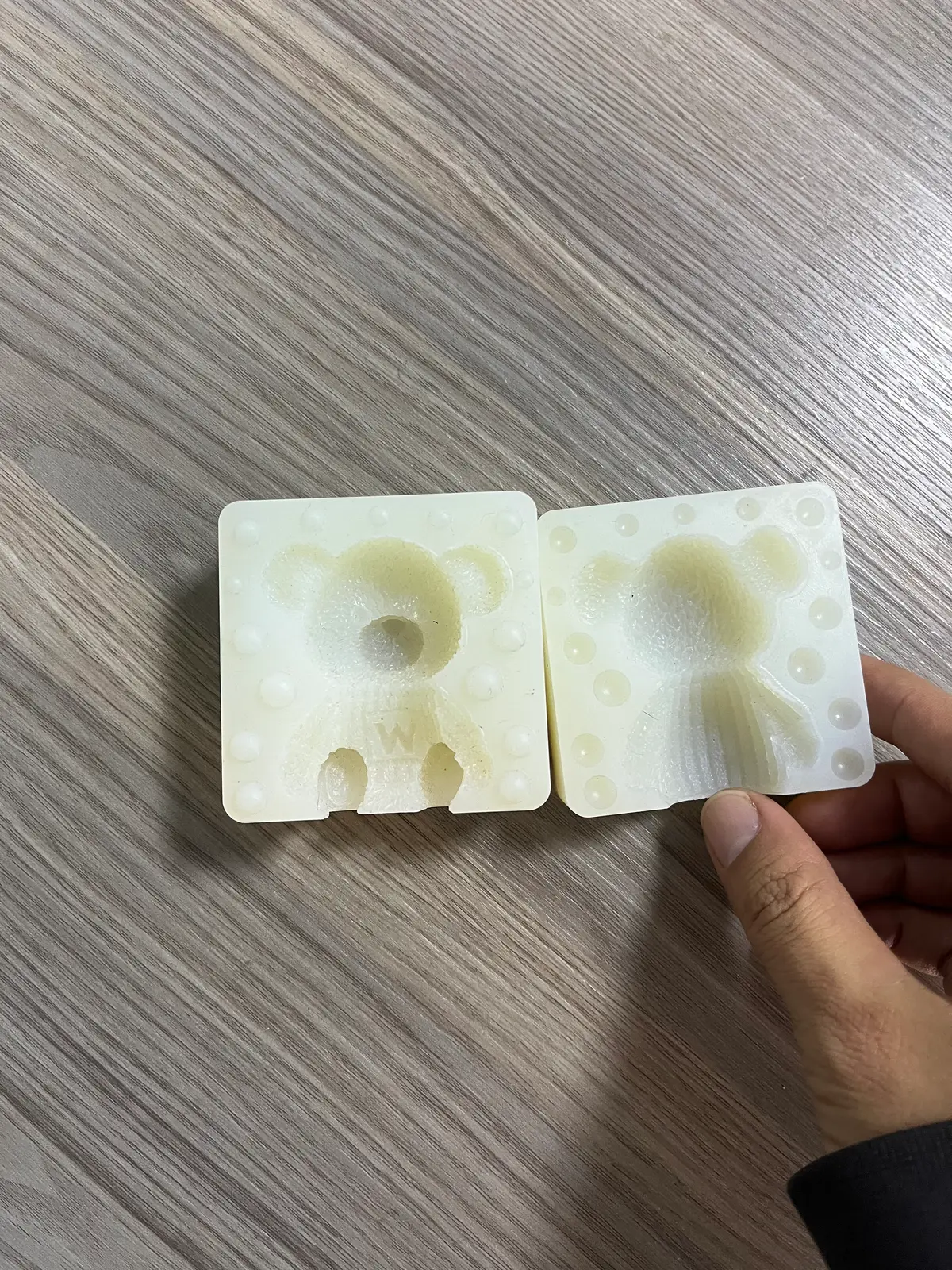
Printed polymer or printed-metal cavities for very short LSR or compression trials. Cheap and fast to iterate. Heat is the limiter: LSR molds run hot. Printed faces also flash earlier because parting-line fit and surface hardness are weaker than a cut aluminum shutoff. Abrasion from clamp, flash trim, and any filled compound ends the tool. Use this when the question is “does this geometry even fill,” not “can we ship 2,000 pieces.”
CNC aluminum, often a single cavity, sometimes with steel inserts on the shutoff or gate. This is the honest prototype and bridge tool for LSR. You pay more than a print, less than production steel. You get real thermal mass, real machining tolerances, and a face you can polish. You do not get Class 101 life. Aluminum galls, dings, and grows flash as the shutoff rolls over. Plan maintenance, not immortality.
RTV or urethane jackets around a master, used for vacuum casting rather than injection. This is not an LSR tool at all. The “mold cost” is silicone, a master, and labor. Cycle life is counted in casts, not shots. Do not compare it to a steel LSR quote as if they were the same machine.
What moves a soft-tool number:
- Cavitation. 1-cavity is the default. A 2-cavity aluminum tool can make sense for a bridge. An 8-cavity aluminum tool is usually a false economy: you paid multi-cavity steel problems without multi-cavity steel life.
- Parting complexity. Open-and-shut vs slides vs a pick-out core.
- Finish. As-machined vs polish vs texture. LSR copies the steel (or aluminum) face. You buy the face you want to see.
- Cold runner vs cold-sprue vs wasted runner. LSR is a thermoset. A cheap prototype that wastes a large cold slug on every shot taxes material and cycle even at sample volumes.
- Vacuum and clamp features. Optional on a 20-shot print. Not optional if the part has thin flash-prone fins.
Steel production molds, line by line
Steel is not one price. It is a class plus LSR-specific hardware.
The SPI/SPMA class (101 down to 105) tells the shop how long you *intend* the tool to run and how it should be built. It is not a steel-grade recipe. A Class 103 LSR tool and a Class 103 thermoplastic tool share a durability intent. They do not share a runner. LSR wants a cold runner (the manifold stays cool so the compound does not cure in the feed). The cavity is hot. Vacuum assist is common because LSR is low-viscosity and will print every air trap as a void or a short. Clamp tonnage is high for the projected area because the same low viscosity flashes a poor shutoff.
What moves a steel number:
- Class. 105 is prototype construction. 104 is low-volume. 103 is the usual production ask. 102 and 101 buy hardened cavities, better guidance, better cooling/heating, and the maintenance plan that goes with a million-cycle intent. Jumping a class because “steel is steel” is how you overpay for a six-month product.
- Cavitation. Steel is where 4- and 8-cavity tools earn back the plate work, *if* the annual volume is real.
- Insert strategy. Full cavity blocks vs replaceable inserts. Inserts cost more to design. They save you when a logo changes or a gate wears.
- Slides, unscrewing, and undercuts. Each moving unit is design hours, fit hours, and a flash risk on LSR.
- Finish and texture. Medical/food-contact polish is not the same hour-count as a hidden gasket.
- Spare cavities and wear parts. A production quote that omits these is not cheaper. It is incomplete.
The comparison that actually changes the buy
Use volume *and* change-risk, not volume alone.
| If this is true | Soft tooling | Steel |
|---|---|---|
| Geometry still moving | Correct. Iterate in print or aluminum. | Wrong. You will pay for steel twice. |
| Lifetime volume is hundreds | Printed or 1-cavity aluminum | Overbuilt |
| Lifetime is low thousands, design frozen | Aluminum bridge, maybe 2-cavity | Optional; run the TCO |
| Lifetime is tens of thousands+, design frozen | False economy | The job |
| Tight flash spec, thin fins, medical cosmetic | Aluminum only as a short bridge | Steel shutoff, vacuum, real class |
| Need production-compound data (LSR grade, post-cure, shrink) | Aluminum LSR or a very short printed LSR tool | Steel, once the grade is locked |
A common failure: buying steel “because we will go to production” while the CAD still has three competing lips. Another: staying on RTV vacuum casts for a year, then discovering the LSR shrink and flash behavior were never in the sample.
How to read two quotes without fake unit prices
Ask both vendors to split:
- Tool construction (class or “printed / aluminum / steel,” cavity count, runner type)
- Expected construction life in shots, as an intent, not a guarantee
- Tryout shots and FAI packet included
- Piece-price drivers at two volumes: material, cycle, labor/trim, scrap assumption, packing
Then do the only arithmetic that matters: tool + (piece × volume) + expected scrap + expected trim + one planned modification. Soft tooling wins when that last term is likely. Steel wins when it is not, and the volume is high enough to bury the steel.
Put this on the RFQ: “Quote aluminum 1-cavity and Class 103 steel 1-cavity as separate stacks, same part, same LSR grade, same flash spec. Do not blend them into one number.”
FAQ
Is soft tooling just a discounted steel mold?
No. It is a shorter-life stack of metal or polymer, simpler plates, lighter finish, and fewer trusted shots, built so you can change the part. Steel is a longer-life stack: class, heating, polish, tryout. Compare those five buckets, not two stickers.
Why can't I compare an RTV jacket quote to a steel LSR quote?
An RTV or urethane jacket around a master is vacuum-casting tooling. Cycle life is casts, not shots, and the machine is a person. It is not an LSR injection tool. Treat it as a different object.
When does 1-cavity aluminum beat Class 103 steel?
When geometry is still moving, lifetime is hundreds to low thousands, or you still need production-compound data before freeze. Steel while three lips compete is paying twice. Aluminum is also only a short bridge if flash spec, thin fins, or medical cosmetics need a real shutoff.
Should I 8-cavity an aluminum bridge to save piece price?
Usually not. You paid multi-cavity steel problems without multi-cavity steel life. 1-cavity is the default soft tool; 2-cavity aluminum can make sense as a bridge.
What two stacks belong on one RFQ so quotes are comparable?
Aluminum 1-cavity and Class 103 steel 1-cavity, same part, same LSR grade, same flash spec, split as construction, intended shots, tryout and FAI, then piece-price drivers. Then add tool plus piece times volume plus scrap plus trim plus one planned modification.
Ready to order custom silicone molds?
Free quote for OEM/ODM projects. MOQ 20 · Prototype 3-7 days · FDA/LFGB available.