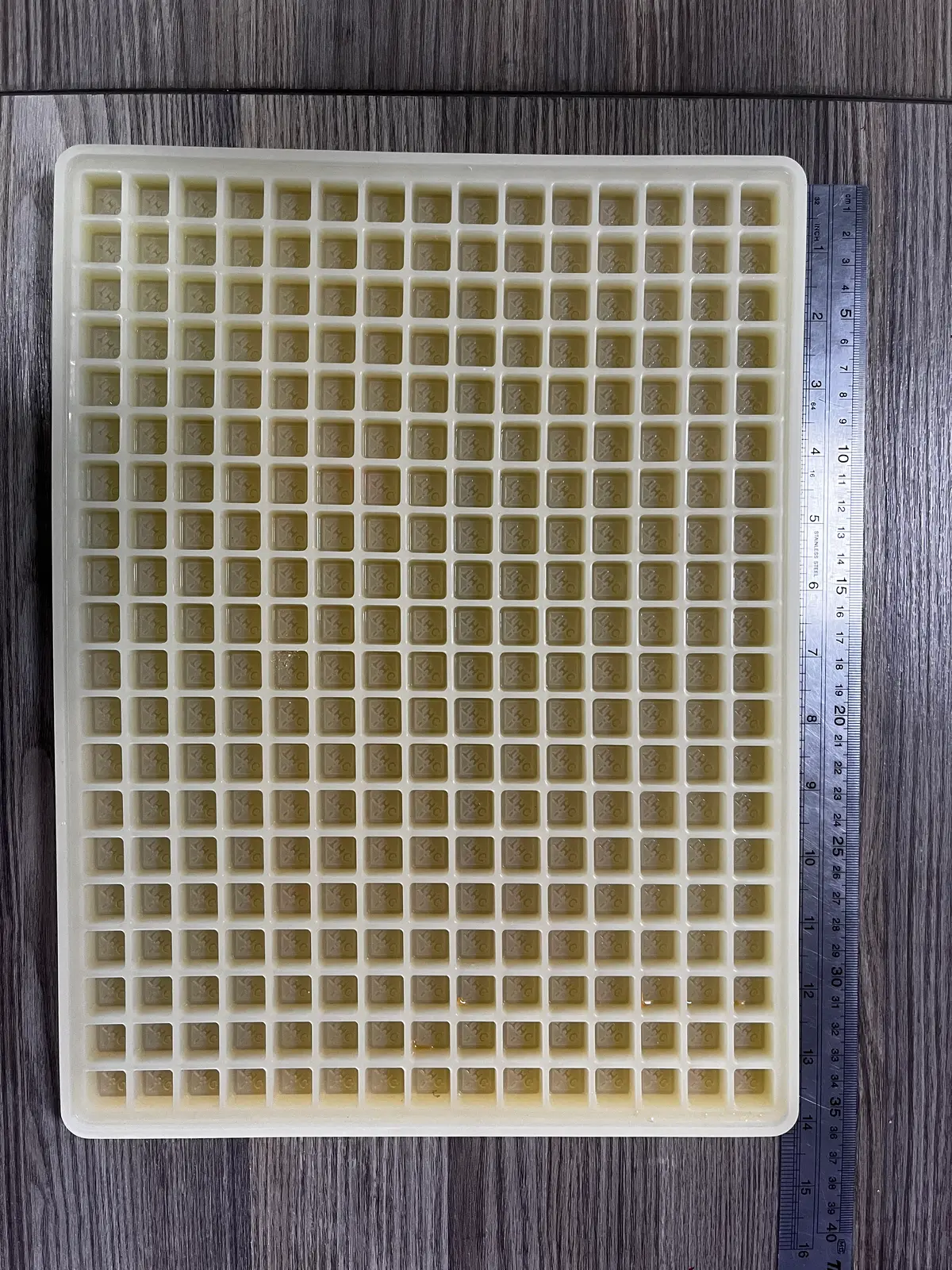
Custom Silicone Mold Prototype Process: From CAD to Production Tray
What happens from CAD to master to first silicone mold sample to revision to production - where buyers waste money, and the checklist before approving a sample.

On this page
A custom mold order is not "send STL, get tray." Between those two points sits a short chain of decisions that either locks a clean production tool - or burns two weeks and a remake fee. This walkthrough is the custom silicone mold prototype process we run on most RUUIPON jobs: CAD → master → first sample → revision → production tray.
Written from the project-manager side after hundreds of quotes. Numbers are typical for low-MOQ custom silicone (MOQ 50), not high-volume steel programs.
Why Sampling Exists (The Buyer Problem)
Stock molds skip sampling because the shape already exists. Custom means your geometry is new. Until you pour your actual resin, wax, chocolate, or soap into a real cavity, you are guessing about:
- Shore A vs demold force
- Logo depth readability after fill
- Air traps and vent need
- Shrinkage vs packaging fit
- Whether a 1° draft is enough on a 40 mm wall
Buyers who skip sample approval to "save a week" often reorder the entire tray. Sample cost is cheap insurance. At RUUIPON, prototype molds typically land in 3-7 days after CAD sign-off.
If your goal is factory-scale steel tooling for confectionery, that is a different program. We keep RUUIPON on custom / low-MOQ / design-driven silicone so small brands can iterate without factory MOQs.
Stage 1: CAD → Master
You send STEP, STL, PDF, or clear photos. We rebuild or clean the model for moldability:
- Add draft where walls are 0° and taller than ~15 mm (usually 1-3°)
- Call out undercuts that need soft Shore A or a two-part split
- Set logo depth - often 0.3-0.6 mm for retail readability without trapping air
- Confirm wall thickness targets for the silicone tool (typically 2.5-5 mm)
Master options:
| Master method | Best for | Notes |
|---|---|---|
| CNC machined (ABS/aluminum/resin block) | Sharp logos, tight dims | Preferred for production-bound parts |
| High-res 3D print + seal | Fast organic shapes | Must seal porosity or silicone sticks |
| Client physical sample | Existing product copy | We scan or mold from the part |
CAD review on your side is usually 1-2 days. Do not rubber-stamp if packaging size is fixed - measure the model against the box insert now.
Stage 2: First Sample Mold (Silicone Mold Sampling)
We cast a prototype cavity set from the approved master. Typical first sample:
- 1-2 cavities for complex 3D parts
- 4-6 cavities for smaller chocolates or wax melts when layout matters early
- Shore A matched to your material guess (see Shore hardness guide)
- Platinum-cure grade; food-grade compound when you sell food
You cast with your material. Not ours. A resin that demolds clean in our shop can stick with your pigment load. Chocolate temper and soap cure schedules are yours to validate.
What we check in-house before ship: cavity dims vs CAD, Shore A reading, surface finish, flash lines, registration on two-part tools.
Stage 3: Revision Cycles That Matter
Most clean designs approve on sample 1. Sticky materials and zero-draft heroes need a second pass. Typical pattern across our jobs:
| Revision type | How often | Lead impact |
|---|---|---|
| No change - approve | ~50-60% of jobs | Go to production |
| Shore A tweak only | ~15-20% | +3-5 days for new sample |
| Draft / undercut / logo depth | ~15-20% | +3-7 days (master + mold) |
| Full redesign | ~5-10% | Treat as new quote timeline |
Budget mentally for 1 revision cycle on first branded SKUs. Two is not a failure - it is cheaper than 50 bad production molds.
Release behavior belongs in this stage too. Some epoxies need a light release; tempered chocolate often does not. Guide: why molds stick on demold.
Where Buyers Waste Money
- Approving CAD from a phone screenshot - then discovering the logo is illegible at real scale.
- Skipping sample casting - "just go to 24-cavity" with an untested undercut.
- Changing the formula after approval - new wax blend, thicker resin, different chocolate. New material can invalidate Shore A.
- Ordering max cavities on day one - 24-up looks efficient until you remake the whole sheet. Start 1-6 up, then scale layout.
- Ignoring draft to "keep the design pure" - purity costs tear-outs and remakes.
- Mixing food and resin tools in one quote without saying so - grade and cert path differ. See FDA vs LFGB.
Cost structure of tooling vs units: custom silicone mold cost guide.
Sample Approval Checklist (Do Not Skip)
Sign off only after you can answer yes to each item with your real process:
| Check | Pass criteria |
|---|---|
| Dimensions | Critical lengths within your tolerance (often ±0.2-0.5 mm for consumer goods) |
| Logo / text | Readable dry and after fill; no air-lock in strokes |
| Demold | Clean pull in ≤2-3 flex motions; no cavity tear |
| Surface | Gloss/matte matches brand; no pit from master porosity |
| Flash / parting | Two-part seams acceptable for your finish standard |
| Cycle feel | You can imagine 50-200 repeats without fighting the tool |
| Packaging fit | Cast sits in box / label / wick position as designed |
| Food docs (if needed) | Grade and report path confirmed before production PO |
Email a short "approved for production" note with any locked Shore A and cavity count. Verbal "looks good" in chat is how remakes start.
Stage 4: Production Tray and MOQ 50
After approval we build the production tool:
- Cavity count examples: 1-2 for large candles; 6-12 for resin coasters; 12-24 for chocolates/wax melts; sheet layouts for gummy when volume justifies it
- MOQ 50 molded pieces per design for the production run
- Same Shore A and finish as the approved sample
- Lead time typically 2-4 weeks depending on cavity density and grade
Browse categories once you know the material: resin, candle, chocolate, soap. OEM path: OEM & small business.
Realistic Timeline (End to End)
| Stage | Typical duration |
|---|---|
| Quote response | Within 24 hours |
| CAD review / your approval | 1-2 days |
| Master + prototype mold | 3-7 business days |
| Your test casting | 1-5 days (your shop) |
| Revision (if needed) | 3-7 business days |
| Production run (MOQ 50+) | 2-4 weeks |
Seasonal tip: lock chocolate samples 8-10 weeks before Q4. Candle and soap brands should not approve a sample the week before a wholesale delivery.
Full ordering checklist: how to order custom silicone molds. Small-business MOQ context: custom molds for small business.
Frequently Asked Questions
Is silicone mold sampling required?
For custom geometries, yes if you care about demold and logo. Skipping sample is how production remakes happen.
Can I approve from photos only?
Photos help. Your own cast is the real approval. We still recommend you pour before locking a 12- or 24-cavity tray.
How many revisions are included?
Quote-dependent. Plan for one hardness or draft tweak on first SKUs. Major redesigns are re-quoted.
Do you ship the prototype mold or only sample casts?
Usually the prototype mold ships so you can test in your process. Confirm on the quote.
What files speed up CAD?
STEP preferred. STL works. PDF + dims works for simple bars. Photos alone slow the loop.
Ready to start CAD review? Contact RUUIPON - email [email protected] or WhatsApp +86 135 3006 2969 with your file, material, and target quantity (MOQ 50).
Ready to order custom silicone molds?
Free quote for OEM/ODM projects. MOQ 20 · Prototype 3-7 days · FDA/LFGB available.