
Custom RTV Molds for Concrete and Gypsum Architecture
Architectural gypsum and concrete load molds with weight, suction, and abrasion. Use a supported platinum skin, not a jewelry 10A block without a jacket.
 Kyler Yang · Founder9 min read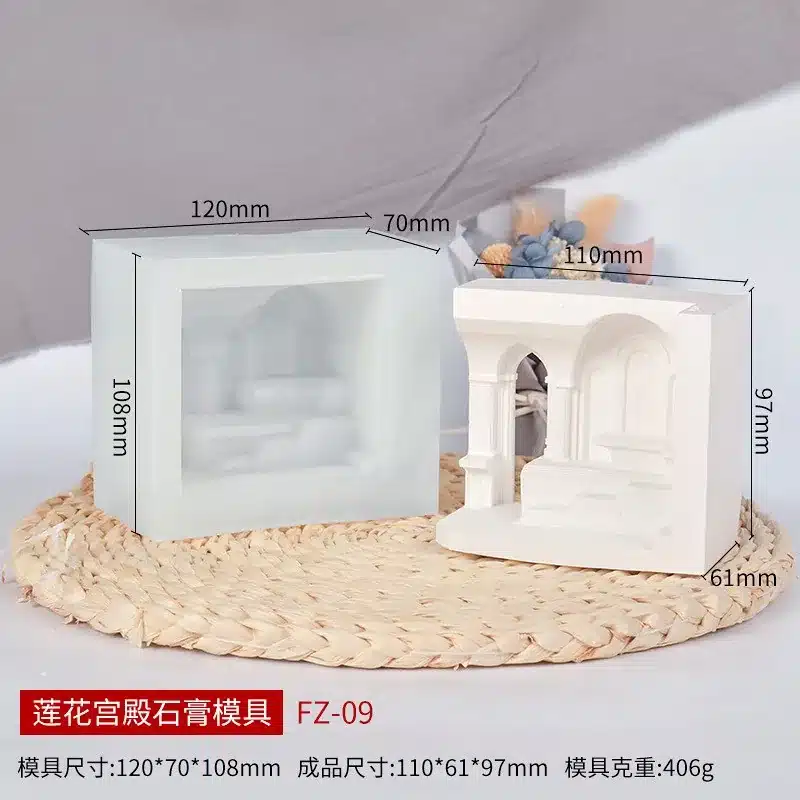
Architectural gypsum will not stretch a silicone the way a resin miniature does. It will sit on it, scrape it, and try to lock in undercuts the size of a cornice. Concrete adds weight and mineral abrasion. The mold that was perfect for a 200 g PU figure is the wrong structure for a 25 kg cladding tile.
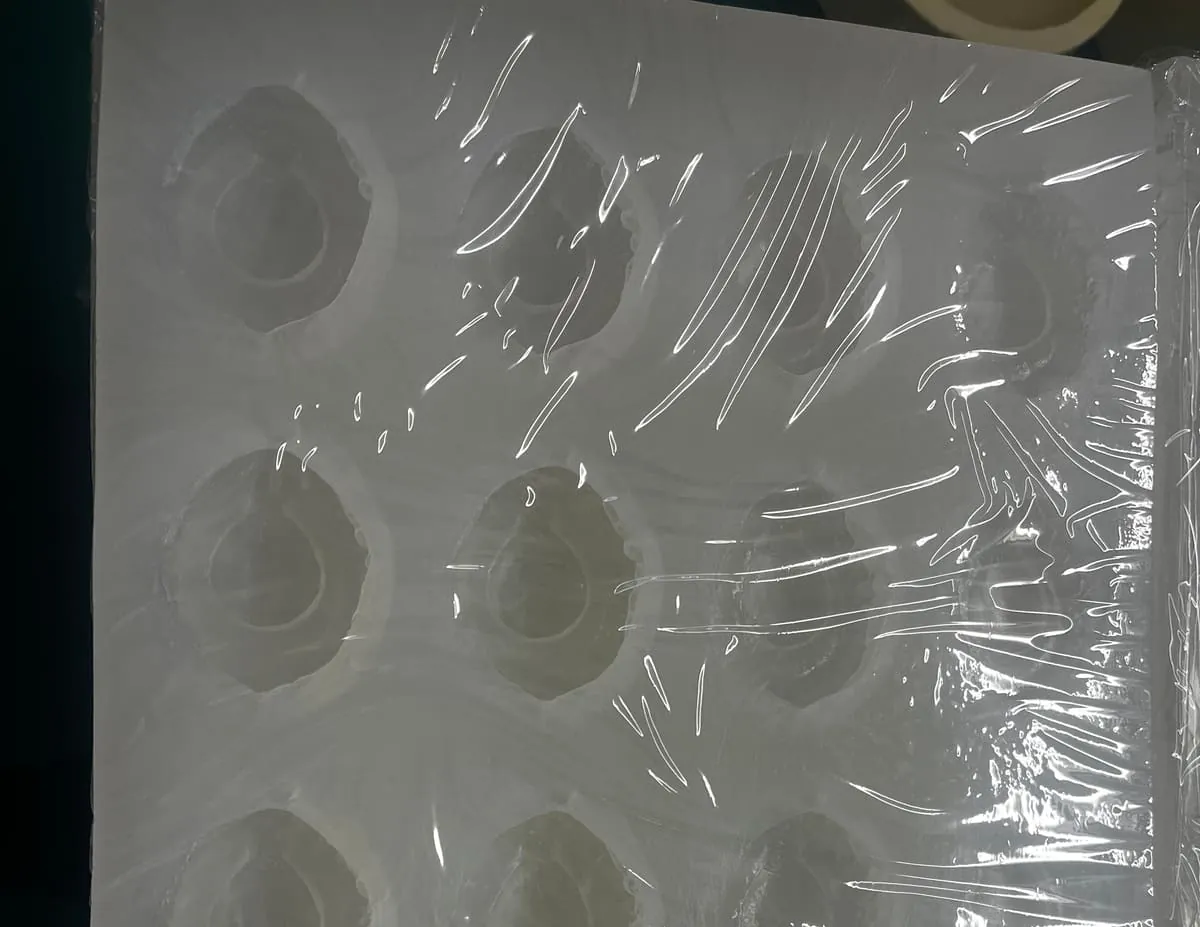
This is production thinking for facade ornaments, cornices, columns, tiles, and GFRC or gypsum art panels. Platinum RTV skins with rigid jackets are the usual custom-mold answer. LSR/HCR appear for small repeating *parts* modules, not for a 2-metre leaf scroll.
The loads that are not in a jewelry spec
Dead weight. Wet concrete and gypsum press the cavity outward. A soft block without a close-fitting jacket prints a fat profile and a rounded arris. The jacket (fiberglass, filled resin, plywood crate, or a printed shell) is part of the tool, not an accessory.
Suction. Large flat faces create vacuum on demold. Gypsum is worse when it is still thirsty; concrete is worse when it has keyed into a texture. You need air, a peel sequence, and sometimes a sacrificial draft. Ripping a 1 m² skin off a green tile is how you tear a week of mold-making.
Abrasion. Sand, aggregate, and gypsum crystals wear a glossy RTV into a matte, then into a torn texture. A high-tear grade matters more than an extra-soft feel. If the architectural finish is a polished arris, expect to recast the skin on a schedule. Do not promise a cycle life you have not run on that slurry.
Chemistry. Gypsum is not a strong chemical attack. Concrete is alkaline. Platinum RTV is the default. Tin-cure is a short-run or contaminated-master prototype. Release agents for concrete (form oils) can swell or contaminate some silicones; if the mix design needs a form oil, test it on a plaque. Many architectural silicones run without oil because the rubber already releases; oil then becomes a stain in the facing.
Water. A mold that lives outdoors between pours grows algae and takes dirt into texture. Store dry, out of UV. UV chalking on a facade mold shows up as lost sharpness on the next leaf.
Skin and jacket, not a giant block
For anything larger than a hand tile, pour or brush a skin against the master (often 8–15 mm, depending on texture depth), then a mother mold that registers with keys.
- Soft enough to peel a moderate undercut (often the 20–30A band for architectural skins; go softer only where the ornament is truly locked, and keep that zone local).
- Thick enough that the skin does not wrinkle in the jacket. Wrinkles become fins in the concrete.
- Jacket stiff enough that two people can close it without the skin pinching.
A solid 80 mm block of 20A is a heavy, slow, expensive way to get a cavity that still needs a crate. Save solid blocks for small repeats.
Geometry rules for stone-like casts
Draft. Add it wherever the architecture allows. A 1–2° draft on a panel edge pays back every cycle. The places you cannot draft (acanthus undercuts, dentils) are why you bought silicone instead of a two-part epoxy mold.
Undercuts. Map them. Deep locks need either a softer local skin, a breakaway insert, or a split jacket so you are peeling, not levering. A single split through a cornice is cheaper than a torn scroll.
Texture. The master texture *is* the architectural spec. Do not wet-sand the silicone to “clean it up.” You will lose the tooth the designer wanted, and you will change how the slurry wets the face.
Seams. Jacket seams print. Put them on a break in the ornament or on an edge that will be rasped. Gypsum is more forgiving to a seam repair than a fine resin; concrete with a fine facing mix is not.
Thickness of the casting. GFRC skins and hollow gypsum are lighter on the mold than a solid pour. If the customer insists on solid, design the jacket for that mass and plan a vibration or rodding path that does not spear the rubber.
Process notes that keep the mold alive
- Release only if the plaque test says you must. If you use a form oil, keep it off the jacket keys so the next close still registers.
- Vibrate or rod in a way that does not fold the skin. A skin that creeps in the jacket creates a step.
- Demold when the cast can take its own weight, not at the moment the mix is no longer liquid. Early strips tear both the part and the mold. Late strips on concrete increase lock in the texture.
- Peel from an edge with air. Do not pry with a screwdriver on the rubber.
- Wash slurry off the same day. Set gypsum in a texture is an abrasive chisel on the next cycle.
- Repair only tears that are off the show face, with the skin in the jacket, using the same cure family. A glued leaf that is 1 mm proud is visible in raking light on a facade.
Common mix-up: quoting a jewelry 10A block on a metre-long drawing
Hardness without a jacket is an incomplete tool. LSR multi-cavity for small modules is a different factory.
What to ask when you're buying
- Overall size and mass of the pour?
- Gypsum vs concrete vs GFRC, facing mix fine or aggregate?
- Indoor or outdoor mold storage?
- Show-face texture and undercut photos?
- Is the jacket in the quote, and who owns the master for recasts?
Worked example: 25 kg cladding tile vs a hand tile
25 kg wet cladding tile, platinum skin ~20–30A, 8–15 mm, keyed mother mold, air peel. Sister SKU: a hand tile can be a small solid block. Same “architectural mold” email. The 25 kg job without a jacket prints a fat arris. Recast the skin when abrasion kills the tooth; do not promise infinite cycles.
When this article is the wrong quote
If you need small repeating silicone *parts*, that is HCR/LSR. A tiny shallow gypsum coaster can skip a heavy jacket. Geometry can override quantity: a one-off 2 m leaf scroll is still RTV.
Related reading: salvage vs recast a torn skin, peel vs yank, storage out of UV, custom RTV molds.
What the architectural RFQ must include
Overall size and mass of the pour, gypsum versus concrete versus GFRC, facing mix, indoor or outdoor mold storage, show-face texture, undercut photos, and whether a jacket is in the quote. If the buyer sends a jewelry-mold hardness and a metre-long drawing, send back the load discussion before you quote a block.
Send size, mass, slurry type, and undercut photos. We will quote a skin and a jacket, not a jewelry block.
We would not recommend a jewelry 10A block for a 25 kg tile
We would not recommend wet-sanding architectural silicone to “clean” texture. We would not raise Shore A first to survive weight — add the jacket. We would not pry with a screwdriver. We would not paste LIM cycle-life claims onto a slurry skin.
RUUIPON Mold Structure Decision: flat tile back? open-back skin in a crate. Deep acanthus that cannot peel? split jacket / plug. Large wet casting? mother mold required.
- Larger than a hand tile? - yes -> Skin 8-15 mm + keyed mother mold
- Larger than a hand tile? - no -> Small block may suffice
- Skin 8-15 mm + keyed mother mold -> Deep lock?
- Deep lock? - peel safely -> Local softer zone or 20-30A skin
- Deep lock? - cannot peel -> Split jacket / breakaway
- Skin 8-15 mm + keyed mother mold -> Platinum; wash slurry same day; recast on abrasion
Typical shop values
Reference values only. Confirm material-specific limits against the supplier’s technical data and agree project acceptance criteria before production.
| Item | Typical shop value | | --- | --- | | Chemistry | Platinum 1:1 or 10:1; vacuum degas; tin only short-run | | Architectural skin Shore | Often 20–30A; softer only in locked local zones | | Skin thickness | Often 8–15 mm vs texture depth | | Platinum shrink | About 0.1–0.3% after full cure | | Draft where architecture allows | About 1–2° on panel edges | | Unsupported sag analog | Large floppy skins print fat profiles; jacket is the spec |
FAQ
Why is a jewelry 10A block the wrong tool for a 25 kg cladding tile? Wet gypsum and concrete load the cavity with dead weight, suction, and mineral abrasion. A soft unsupported block prints a fat profile and a rounded arris. Use a platinum RTV skin in a rigid jacket. LSR/HCR appear for small repeating modules, not a two-metre leaf scroll.
Why is the jacket part of the tool, not an accessory? It keeps the skin from wrinkling into fins and lets two people close without pinching. For anything larger than a hand tile, brush or pour a skin against the master, then a keyed mother mold. A solid thick block is a heavy, slow way to get a cavity that still needs a crate.
Should I wet-sand architectural silicone to clean up texture? No. The master texture is the architectural spec. Sanding loses the tooth the designer wanted and changes how slurry wets the face. Put jacket seams on a break in the ornament or an edge that will be rasped.
When do I demold gypsum versus concrete so I do not tear the skin? When the cast can take its own weight, not the moment the mix is no longer liquid. Early strips tear part and mold. Late strips on concrete increase lock in the texture. Peel from an edge with air; do not pry with a screwdriver. Wash slurry off the same day.
What RFQ items stop a jewelry-hardness quote on a metre-long drawing? Pour size and mass, gypsum versus concrete versus GFRC, facing mix, indoor or outdoor storage, show-face texture, undercut photos, and whether a jacket is in the quote. Hardness without a jacket is an incomplete tool. Platinum is the default; tin is a short-run or dirty-master prototype. Test form oil on a plaque if the mix requires it.
Custom silicone development · DFM & prototype support
CAD, drawing, photos or sample details