
Nesting Silicone Mold Trays for Export Cartons Without Crush Damage
Nesting silicone mold trays for export cartons - stack geometry, crush load limits, foam vs nest packing, and RUUIPON MOQ 50 shipments with prototype 3-7 days.
 Kyler Yang · Founder5 min read
On this page
Fifty gummy trays nested cavity-down in one carton - the bottom tray's webs crush 1.2 mm and every cavity in row three leaks deposit for the rest of the run. RUUIPON ships custom silicone molds at MOQ 50 with prototypes in 3-7 days. This guide sets nesting geometry and carton spec so export packing survives freight without cavity crush.
Quick answer: Nest trays flange-to-flange or cavity-in-cavity only when cavity depth allows ≥5 mm air gap; max 8 kg stacked load per 400 × 300 mm carton; point-load on webs forbidden. Use corrugated nest inserts or EVA foam pockets - walls 2.5-5 mm and spacing 8-20 mm need structural support, not loose bubble wrap.
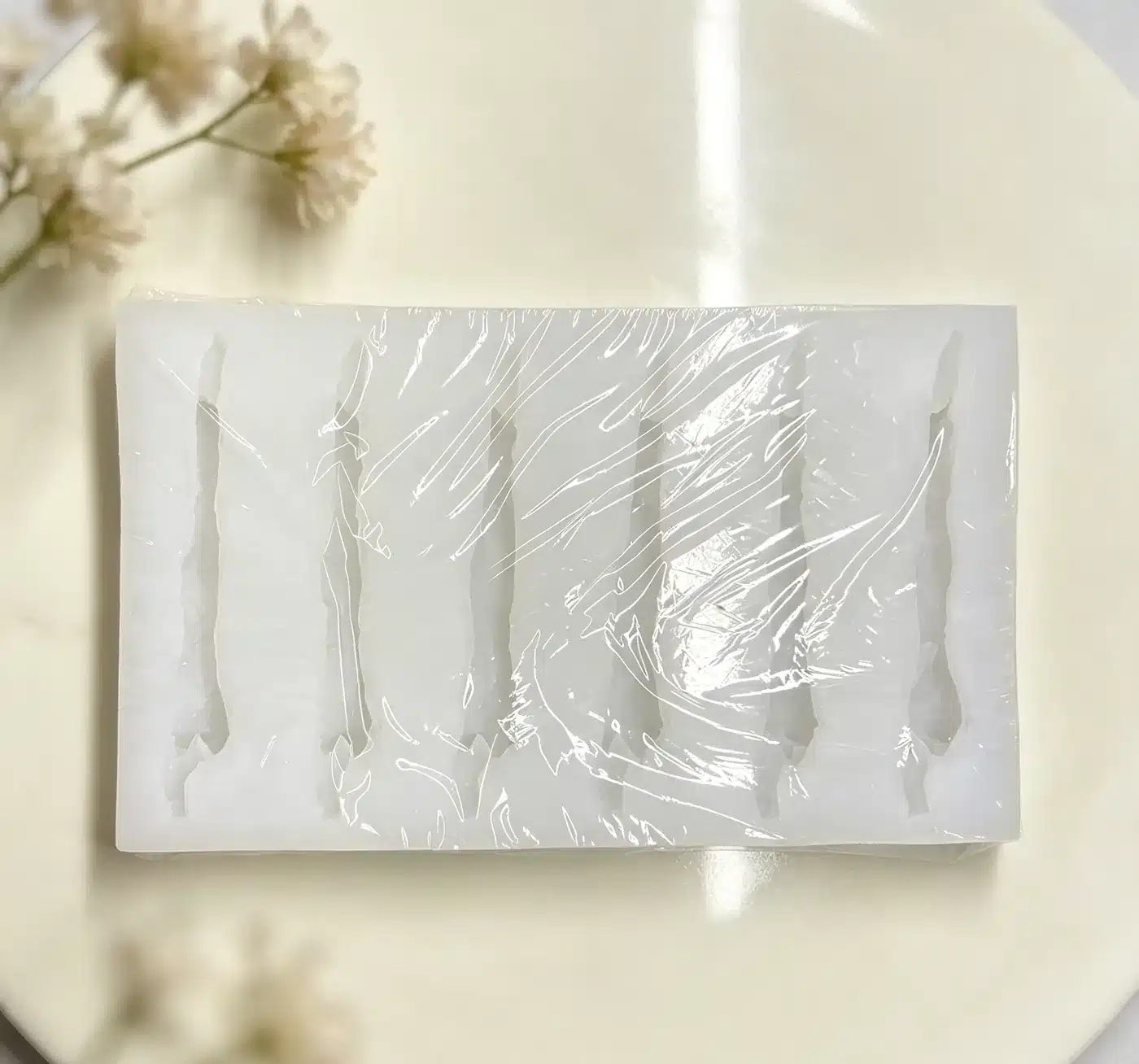
Nesting & Packing Spec in One Table
| Nest method | When to use | Max trays per layer | Crush risk |
|---|---|---|---|
| Flange-to-flange flat stack | Shallow trays ≤15 mm depth | 5-8 with divider | Low |
| Cavity-in-cavity nest | Matched geometry sets | 3-5 | Medium - needs 5 mm gap |
| Individual foam pocket | Deep geode / irregular | 1 per pocket | Lowest |
| Vertical edge rack | Large single-cavity logs | 4-6 upright | Low with slot support |
| Loose stack (no nest) | Never on MOQ 50 | - | High - reject packing |
Nest Stack Geometry Rules
Nesting works when load transfers through flange and outer rim - not through cavity floors or webs.
- Flange width - ≥10 mm continuous flange for stack contact; broken flange points load on cavity lip.
- Cavity relief gap - when nesting cavity-in-cavity, opposing cavity floors must not touch; ≥5 mm air or foam pad.
- Web protection - inter-cavity webs are weakest axis; divider sheet between every tray layer on multi-cavity.
- Registration pins - pin pockets in nest prevent lateral shift that crushes corner cavities. Depositor registration.
- Two-part molds - nest halves separately or bolted; never stack split face on split face without pad.
Wall spec for crush resistance: wall thickness 2.5-5 mm. Layout: cavity spacing 8-20 mm.
Crush Load Limits by Tray Type
| Tray type | Max stack load per layer | Failure mode |
|---|---|---|
| 6-cavity shallow gummy (15 mm) | 1.5 kg/tray | Web dimple between cells |
| 12-cavity chocolate (8 mm) | 1.2 kg/tray | Cavity floor crush on logo |
| 4-cavity resin geode (40 mm) | 0.8 kg/tray - pocket pack only | Bowl rim crease |
| Soap bar 6-cavity (25 mm) | 1.8 kg/tray with divider | Floor bow - recovers if elastic |
| Single log mold 300 mm | Vertical rack - 0.5 kg horizontal max | End-to-end bend |
Foam vs Corrugated Nest Materials
| Material | Best for | Cost | Notes |
|---|---|---|---|
| Corrugated divider sheet | Flat stack shallow trays | Low | Standard on MOQ 50 food trays |
| EVA foam pocket | Deep / irregular cavities | Medium | One tray per pocket - resin geodes |
| Molded pulp nest | Eco export to EU | Medium | Moisture buffer; tray must be dry |
| Bubble wrap only | Sample ship 1-2 trays | Low | Not for bulk MOQ 50 |
| Anti-static bag | Inside carton liner | Low | Dust - not crush protection |
Full export packing workflow: packing export guide. Storage after unpack: storage & warping.
Export Carton & Label Spec
| Spec | Standard | Why |
|---|---|---|
| Carton burst strength | ≥8 kPa B-flute double wall | Sea freight stack 2 m |
| Max gross weight | 12 kg per carton | Handler drop limit |
| Corner protectors | Required on ≥10 kg | Edge crease prevention |
| "No stack" / fragile | Side + top label | Carrier handling cue |
| Silicone content label | HS 401699 / material note | Customs clearance - import guide |
| PO + tray SKU inner label | Each nest group | Receiving count vs invoice |
Vacuum-degassed trays are dimensionally stable (~0.1% shrink) - crush is mechanical, not shrink in transit.
Receiving Inspection After Nested Ship
- Carton exterior - photo crush >15 mm before open. Shipping damage.
- Layer count - match packing list nest groups.
- Bottom tray first - highest load; inspect webs and cavity floors.
- Flatness - granite check ±0.3 mm before depositor setup.
- Random 10% cavity backlight - crush dimple >0.5 mm = claim.
Sample ship uses rigid mailer - bulk MOQ 50 uses nested cartons; inspect both protocols. Sample approval baseline: sample checklist.
Frequently Asked Questions
Can I request flat-pack one tray per box?
Yes - adds freight cost ~30-40% vs nest; best for deep geode or high-value two-part molds.
How many trays per MOQ 50 carton?
Typically 10-25 trays per carton by size - 2-5 cartons per MOQ 50 shipment common.
Does nesting affect registration pin alignment?
Pin deformation from crush shifts depositor grid - inspect pins on receipt.
Reuse nest inserts?
Corrugated dividers: recycle. EVA foam: reuse for storage stack in your shop.
Air freight vs sea for warp?
Warp from heat unlikely; crush from handling worse on air if cartons over-weighted.
Specify packing on PO?
Yes - include nest method, max stack height, and divider requirement on PO line.
Quote packing spec?
Send tray drawing + qty to [email protected] | Contact RUUIPON | WhatsApp +86 135 3006 2969 | prototype 3-7 days, production MOQ 50.
Ready to order custom silicone molds?
Free quote for OEM/ODM projects. MOQ 20 · Prototype 3-7 days · FDA/LFGB available.