
Does Vaseline Inhibit Platinum Silicone? | RUUIPON
Petroleum jelly rarely poisons platinum the way sulfur clay or raw SLA does. It leaves a film, flash, and copied grease. Confirm with a puck test.
 Kyler Yang · Founder7 min read
Buyers smear petroleum jelly on a master “as release” and then ask whether it inhibited the platinum. Usually it did not poison the catalyst. Sulfur-bearing clay, latex glove film, tin-cure leftovers, and unsealed SLA/DLP prints poison addition-cure at the contact face — the jacket cures, the cavity strings. Petroleum jelly sits as a hydrocarbon film. The rubber often skins over it, copies the grease as a dull patch, and flashes where the film pooled. That is a contaminated master, not classic inhibition.
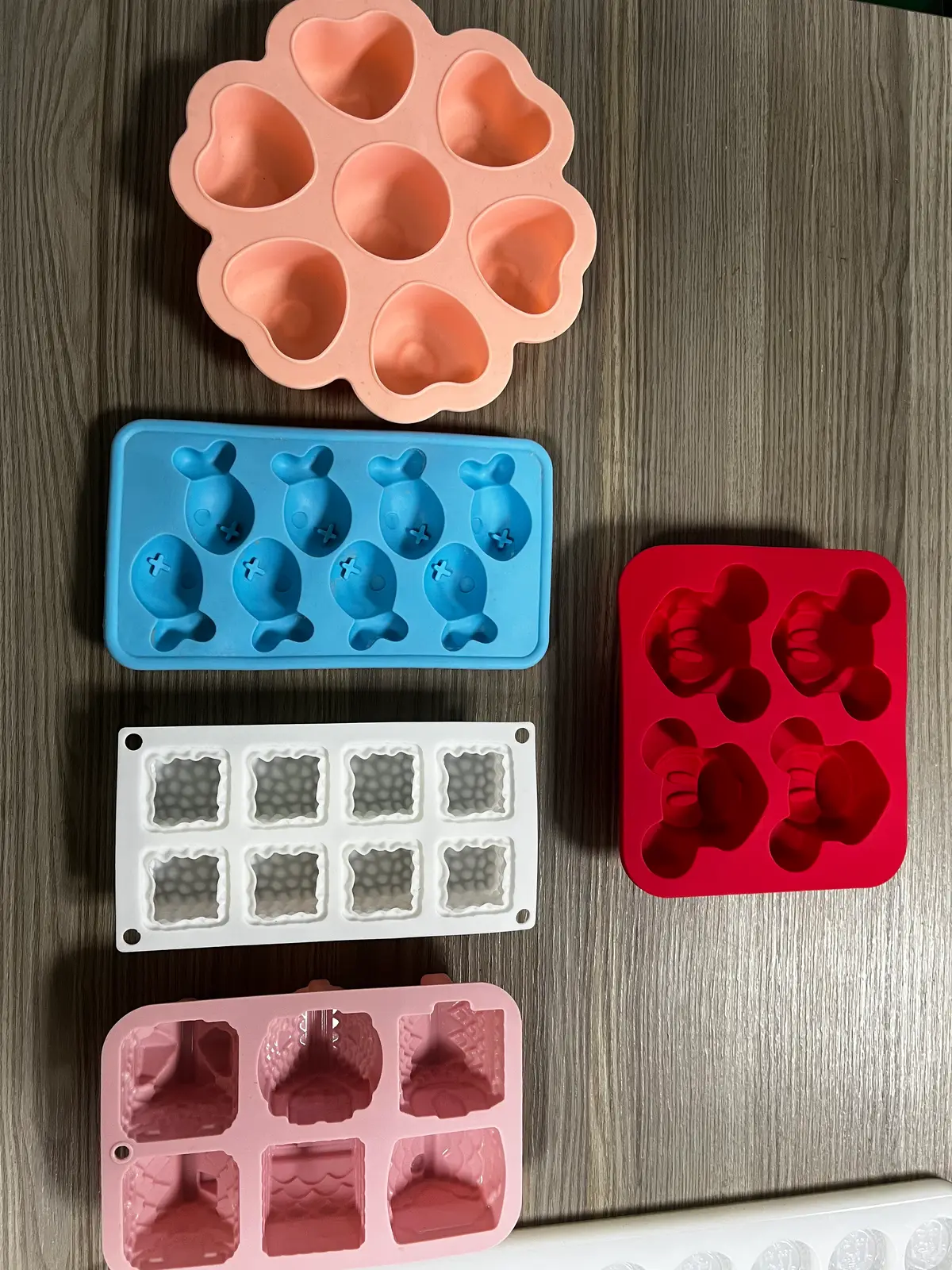
RUUIPON pours platinum RTV tools in Bao'an since 2018. Mix is 1:1 or 10:1 by weight. Prototype 3–7 business days after CAD lock, which includes “the master is chemically quiet.” Production MOQ 20 pieces per design. Simple 3D is USD $50 when that CAD scope applies. Steel or LSR *part* tools are a different RFQ - ask us.
Does not apply when the face is tacky and the jacket is firm — that is inhibition, and petroleum jelly is the wrong suspect. It also does not apply to food-contact cavities you tried to “help” with Vaseline; we would not put petroleum on a food path, and we would not wash-and-hope that well into 21 CFR 177.2600 paperwork.
Three contaminants, three benches
Petroleum / mineral oil / “mold release” from a tub. Symptom: cavity demolds; local wells are glossy-greasy or have a wrinkled skin; flash at the puddle. Jacket is a normal Shore. Cause: film thickness. Platinum can cure through a thin smear and still copy oil. A thick smear becomes a void or a weak skin. Confirm: wipe a hidden land with a clean solvent the kit allows, pour a 20 g witness puck on that land vs an un-wiped land. If both pucks snap and only the wiped land is matte-dry, you had film, not catalyst death. Fix: degrease the master (named solvent, not a kitchen spray), dry, then pour. Do not add more jelly “so it releases.” Masters that already have draft and a sealed face do not need a grocery-store grease.
Sulfur clay, latex, tin residue. Symptom: face strings on a stick; jacket snaps. Cause: true platinum inhibition. Confirm: tongue depressor test, face vs back, after the posted cure window. Fix: remake. Scrap a food skin. Rebuild the master without sulfur, handle with nitrile, keep tin off a platinum recast. Petroleum jelly did not cause this pattern.
Unsealed SLA / DLP, amine wash. Symptom: same face/jacket split, often worse in shadowed undercuts of the print. Cause: leftover oligomer, not grease. Confirm: the print still smells of wash; a sealed, UV-post-cured duplicate of the same STL does not inhibit a puck. Fix: wash, full UV, barrier coat, then rubber — or $50 CAD when we should stop fighting the print and remodel a pour-ready master.
A common stack is worse than any one of those: latex gloves, then Vaseline, then a still-wet DLP. You will not diagnose that stack by arguing about petroleum on a forum.
Typical shop values
Reference values only. Confirm material-specific limits against the supplier’s technical data and agree project acceptance criteria before production.
| Item | Typical shop value | Contaminant note |
|---|---|---|
| Platinum mix | 1:1 or 10:1 by weight | Off-ratio whole-mass softness is not Vaseline |
| Platinum shrink | about 0.1–0.3% | Grease films also ruin a shrink conversation |
| Food path | platinum; article extraction if specified | Petroleum on a food master is a stop, not a tip |
| SLA masters | wash + UV + seal before platinum | Do not “Vaseline the print instead of sealing” |
| Prototype | 3–7 business days after CAD lock | Quiet master is part of lock |
| MOQ | 20 pieces per design | A greasy sample is not close enough to multiply |
| Simple 3D | USD $50 when that CAD scope applies | We would rather remodel than pour on grocery grease |
The photo that would prove a film miss: master with a visible smear in one well, witness puck from that well vs a degreased well, both pucks sitting on a card labeled petroleum vs clean.
Worked example (anonymized)
A CNC acrylic master for a soap stamp, buyer-greased “like the YouTube two-part.” Platinum 25A open-back. Face demolded in 24 h; the logo well had a wrinkled, oily copy and the stamp looked melted. Jacket durometer was on target. We degreased, poured a 20 g puck on the logo land — snap cure, sharp copy. Recast the skin. CAD already locked. They asked if Vaseline “killed platinum.” It did not; it printed itself. MOQ 20 after the clean well.
One procurement mix-up
“Release agent” on an RFQ is not a product. Say whether you mean a sealer on porous plaster, a barrier on SLA, a named craft release on *your* dump, or petroleum jelly on the master. Those four jobs fight each other if you stack them. Tooling charge ≠ a license to keep greasing a food master we already sealed.
We would not recommend
We would not recommend petroleum jelly as a platinum-master release on a production tool.
We would not recommend using Vaseline to “block” an SLA print you did not wash and UV.
We would not recommend diagnosing inhibition from a greasy well without a face-versus-jacket stick test.
We would not recommend a food-contact path on any cavity that saw petroleum, butter, or a kitchen spray.
- Face strings, jacket firm? - Yes -> True inhibition — sulfur / latex / SLA / tin
- True inhibition — sulfur / latex / SLA / tin -> Scrap food skin; remake from quiet master
- Face strings, jacket firm? - No, rubber cured -> Wrinkle, flash, oily copy?
- Wrinkle, flash, oily copy? - Yes -> Hydrocarbon film — degrease master, recast
- Wrinkle, flash, oily copy? - No -> Look at mix ratio and B-side age
- Hydrocarbon film — degrease master, recast -> Food-contact well?
- Food-contact well? - Yes -> Stop — no petroleum on food path
- Food-contact well? - Craft -> Degrease; do not re-grease
What to ask when you're buying
- What actually touched the master: nitrile, latex, clay, print wash, tin, petroleum?
- Will the shop refuse grocery-store grease on a platinum pour?
- If a film ruined the first skin, is the recast on the same master after a documented degrease?
- Food vs craft — petroleum on a food well ends the document path for that skin.
- Who owns the master after we refuse to pour on grease?
RFQ copy-pack
[email protected] · +86 135 3006 2969
RUUIPON petroleum / inhibition split RFQ Photo: face + jacket back; close-up of greasy well What touched master: petroleum yes/no; latex; clay; SLA resin name; tin leftover Food-contact? yes / craft only Market docs: 177.2600 / LFGB / none Witness puck offered? yes/no Qty: remake sample / MOQ 20 CAD: locked / need $50 3D
Matched next step: send the face-and-back photo and a list of what touched the master. We will say film vs poison. We will not pour platinum over Vaseline to hit a date. Prototype 3–7 business days after CAD lock. MOQ 20 per design.
Related: sticky uncured inhibition, 3D-printed masters, how custom molds are made, contact.
FAQ
Does Vaseline inhibit platinum RTV? Rarely as a catalyst poison. It more often copies as a film, wrinkle, or flash. True inhibition looks like a tacky face and a cured jacket from sulfur, latex, tin, or raw SLA.
Can I use a thin smear if the master has no draft? We would not. Fix draft or split. Grease hides a geometry problem for one pour and prints itself into the cavity.
Is petroleum jelly OK on tin-cure? Tin is more forgiving of dirty masters and still a bad food start. For craft, a named release is cleaner than a tub from a pharmacy. Tell us the rubber family before anyone greases.
Will solvent wipe a food master after Vaseline and keep the docs? We would not put that skin on a 21 CFR 177.2600 path. Recast from a clean master. The failed well is not production.
Do I pay $50 CAD to degrease? No. USD $50 applies when we still need CAD scope. Degrease and recast is shop work on a locked master, quoted as a remake, then MOQ 20 of the clean design.
Custom silicone development · DFM & prototype support
CAD, drawing, photos or sample details