
Epoxy Resin Silicone Molds: Shore A Ranges That Demold Clean
Epoxy resin silicone mold Shore A ranges that demold clean - soft vs firm bands, undercuts, wall thickness, platinum vs tin, and sample checks before MOQ 50.
 Kyler Yang · Founder5 min read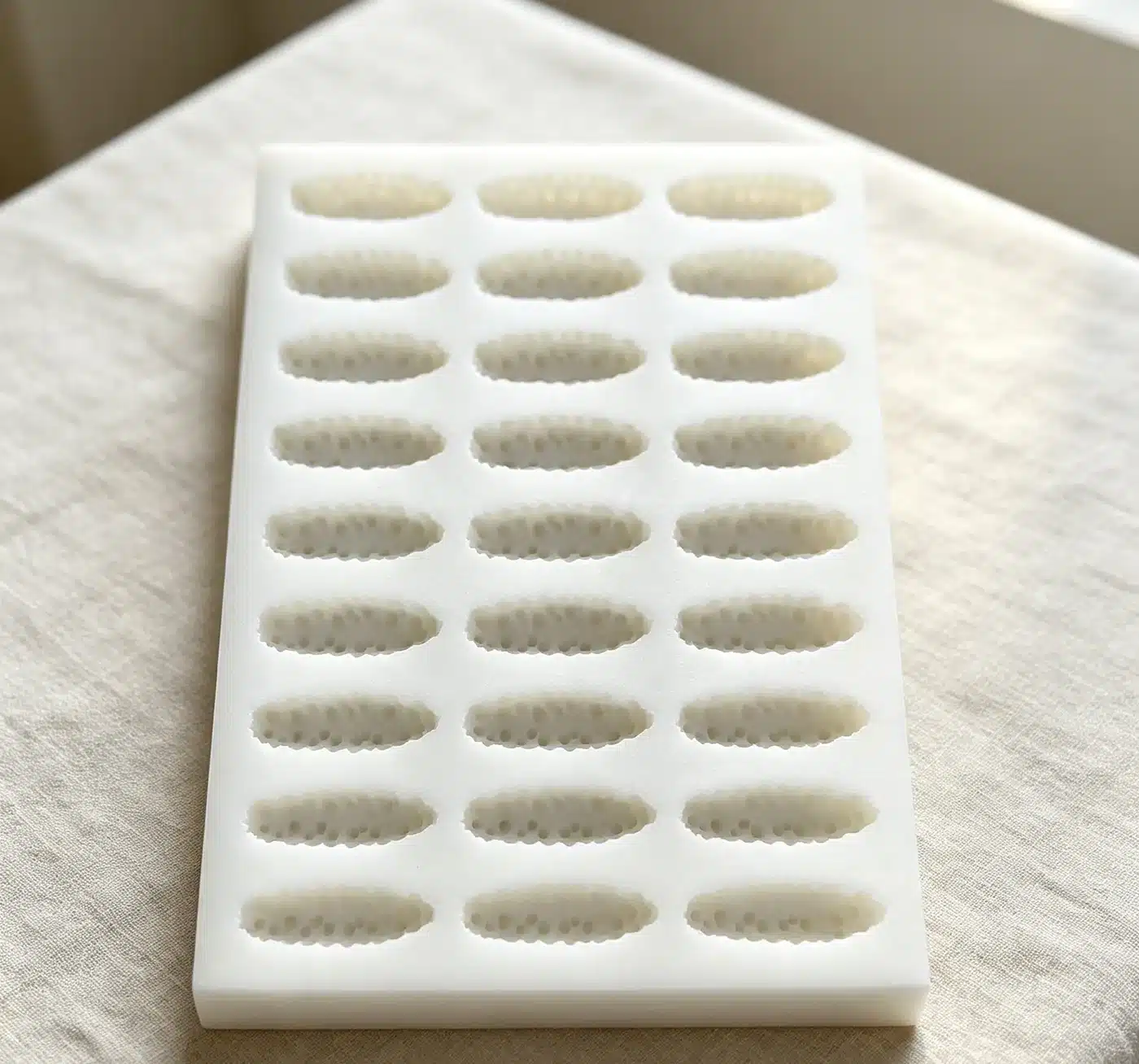
On this page
A resin studio emailed photos of coasters that would not leave a "premium hard" silicone tray. Edges tore, logo wells held cloudy epoxy, and operators started prying with plastic sticks. They asked for a stronger release spray. Durometer on the returned sample sat near Shore A 50. The undercuts wanted flex. Epoxy resin silicone molds fail on Shore long before they fail on brand art.
If your pieces hang or tear on demold, set a Shore A band first - then check draft, walls, and cure system - before you buy another drum of release. Spray is a process patch. Hardness is a tooling decision.
Hard Trays Feel Durable and Still Trap Epoxy
Hard silicone looks professional in a hand check. For deep coasters, geodes, and letter wells, firm stock fights peel. Operators flex harder, thin webs tear, and you teach pry habits that scar pieces. Soft enough to peel does not mean floppy - it means the band matches the undercut depth.
Watch the first 20 peels on a new tray. If edges need a stick by pour five, Shore or draft is already wrong. Do not wait until week three when webs are split and Instagram photos show cloudy logo wells. Log scrap: torn edges, stuck letters, minutes per tray. Those numbers belong on the remake brief. Bring the stuck piece with a ruler in frame - depth guesses from memory waste a revision round.
RUUIPON builds custom silicone resin molds at MOQ 50 after sample approval. Prototypes typically land in 3-7 days after CAD sign-off; production often follows in a 2-4 week window. Complete briefs usually get a quote within about 24 hours.
Shore A Bands That Usually Work
For many epoxy coasters and shallow trays we land in roughly Shore A 20-35 so operators can flex peel without tearing. Deeper molds with mild undercuts often sit in Shore A 25-40. Above ~45 starts to feel "tough" and still holds resin in tight letter wells unless draft is generous.
Put the band on the RFQ and the PO. Blank "resin silicone" lets a shop ship whatever stock is on the shelf. Primer with ranges by application: Shore hardness guide. If a catalog tray feels firm in the hand and needs pry on letters, measure it - do not guess from a listing title that says "soft."
Wall thickness in the 2.5-5 mm band keeps trays flexible without razor edges. Cavity spacing in the 8-20 mm band reduces web tears when you peel multi-up sheets. Dense catalog sheets look efficient and fail at the web on firm Shore. Fewer cavities with clean demold beat dense sheets that scar every third coaster.
Case (anonymized): a US craft brand pouring ~40-60 epoxy coasters/day used a catalog tray that measured ~Shore A 48 on our check. Edge tears sat near 9%; logo fill needed pry. We remade at Shore A 28, walls ~3.5 mm, emboss 0.5 mm with light draft, 6 cavities. After sample cure with their resin system, MOQ 50 production cut tears under 2% and they dropped spray to an optional light pass on humid days only.
Geometry Still Beats Soft Rubber Alone
Soft Shore will not save a sharp undercut with zero draft. Keep emboss and engraved marks in a release-friendly band when you can - often 0.3-0.8 mm for logos that must leave clean. Add draft on vertical walls taller than about 5-8 mm. Deep negative spaces need radius at the floor so epoxy does not lock a corner.
If marketing insists on a deep channel, thicken surrounding walls so the piece peels as a unit. Do not deepen every stroke "for Instagram" and then wonder why letters stay behind. Photograph the demolded piece - customers buy the casting, not the empty cavity render. When undercuts cannot open, remake the master before you remake Shore again.
Platinum vs Tin for Resin Life
Tin-cure craft kits are common for hobby one-offs. For production molds that see repeated epoxy pours, platinum-cure grades usually last longer and tear less after heat cycles from exotherm. Tin stocks can age stickier and tear sooner under shop heat. Detail: platinum vs tin cure.
Also watch exotherm. Thick pours that spike heat can soften a marginal Shore band mid-cure and then lock as the piece cools. Spec max pour thickness and whether you use a pressure pot - those notes change wall design more than brand color ever will. If you pour 20 mm slabs on a tray designed for 8 mm coasters, expect demold fights even at a soft Shore.
Shore Decision Table
| Your geometry | Start Shore A | Notes |
|---|---|---|
| Shallow coaster, light emboss, hand peel | 20-30 | Flex first; avoid firm catalog stock |
| Deeper tray, mild undercut, multi-up sheet | 25-35 | Walls 2.5-5 mm; spacing 8-20 mm |
| Tall walls with draft, need shape hold | 30-40 | Still sample; >45 often traps letters |
| Sharp undercut, marketing will not open draft | Remake geometry | Soft Shore alone will not unlock |
| Hobby tin kit aging sticky after weeks | Platinum remake | Production life vs one-off |
| Unsure | Prototype 3-7 days | Prove demold before MOQ 50 |
Sample Checks Before MOQ 50
Cure your production resin in the sample mold. Check:
- Release without tools on logo wells and edges.
- Web integrity after 20+ flex peels on multi-up trays.
- Flash and cavity sharpness that could scar pieces.
- Dimensional match to target thickness (mm, not "looks right").
- Surface finish vs master - cloudy epoxy is often lock-in or contamination, not only pigment.
Approve with numbers. Vague "looks good" approvals are how firm trays reach MOQ 50. Quote reading: how to read a silicone mold quote. A cheap unit price with blank Shore and no sample line is a remake waiting for your next coaster drop.
Put Numbers on the RFQ
- STEP or clean files of the master / cavity.
- Shore A target band (or ask us to recommend from demold method).
- Max pour thickness, pressure pot yes/no, and resin system notes.
- Emboss depth targets in mm.
- Cavity count and daily output.
- Use the RFQ template so NRE, sample, and production stay on one page.
Send geometry, Shore preference, and a stuck-piece photo with a ruler to [email protected], WhatsApp +86 135 3006 2969, or /contact. We will say whether Shore, draft, or walls is the first fix - usually within about 24 hours on a complete pack - then prototype before you buy another drum of release spray.
Ready to order custom silicone molds?
Free quote for OEM/ODM projects. MOQ 20 · Prototype 3-7 days · FDA/LFGB available.