
Why “FDA Approved” Fails on a Custom RTV Food Mold
FDA does not approve RTV baking or chocolate molds as registered products. 21 CFR 177.2600 is finished-article extraction for repeated-use rubber.
 Kyler Yang · Founder8 min read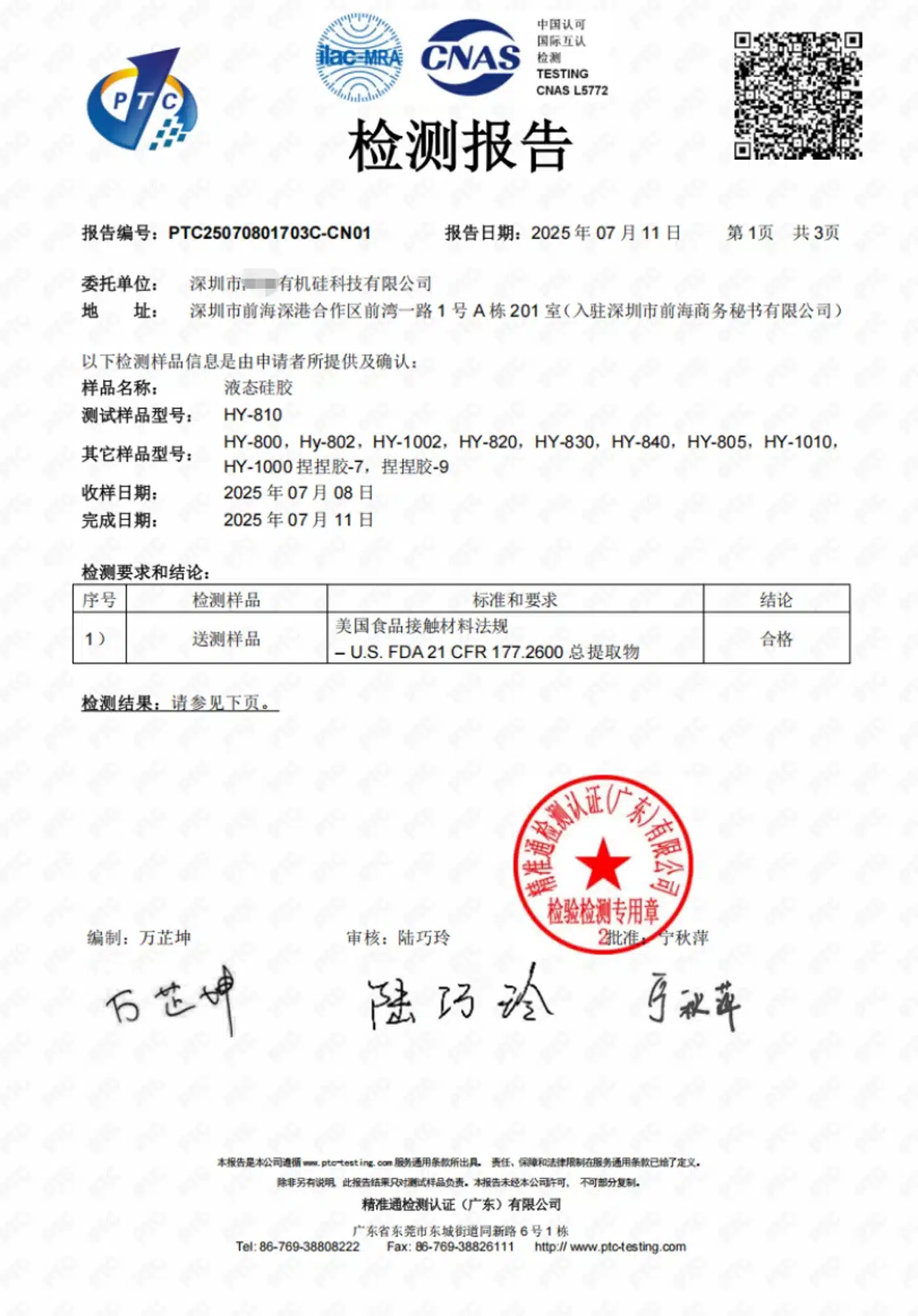
If you're searching “FDA approved silicone molds,” you're walking into a phrase the regulation doesn't support. FDA doesn't approve a muffin tray, a chocolate cavity, or a gummy sheet as a registered product under 21 CFR 177.2600. That section is composition constraints plus extraction of the finished rubber article intended for repeated use — in this business, the platinum RTV cavity after post-cure and cleaning.
The honest claim is narrower: the finished mold was tested to 21 CFR 177.2600 for named food types after production post-cure and cleaning. Platinum addition-cure RTV is typical. LFGB/BfR XV is a different, German/EU path. BPA-free isn't an FDA approval, because silicone isn't polycarbonate. No fake approval numbers. If the listing is actually selling a molded LSR *part* from a heated tool with a cold-runner, that's a different product line with the same slogan problem.
Common mix-up: the kit letter, or a facility registration, approves the mold
A lot of RFQs treat “our gum is FDA” as product approval of the cavity. In the shop that usually means a compounder letter gets printed on the carton, nobody extracts the recast, and buyers stop asking for the report.
Food-contact rubber isn't a drug, isn't a medical device 510(k), and isn't a food additive petition for the poured SKU. When a listing says “FDA approved,” it's usually compressing one of these into a slogan: the compounder believes the formulation sits inside the section; a lab extracted some article, maybe not yours; or someone copied a competitor's badge. None of those is product approval.
Facilities may be registered for food facility purposes. That isn't approval of a silicone mold. A color additive may be listed. That isn't approval of the poured cavity. Keep those facts in their lanes.
What to ask when you're buying (and rewriting the claim)
- Can they show 21 CFR 177.2600 extraction of *this* finished RTV article, with food types, lab, and date — not a logo?
- Is the specimen this SKU, color, post-cure, and master revision, or a kit letter / spatula / sister color?
- Will carton and portal language say “tested to 21 CFR 177.2600 as a finished article,” not “FDA approved”?
- If Germany or the EU is in play, is LFGB / BfR XV a second sentence on the same SKU, not “FDA and LFGB approved”?
- Who owns the master, and does a recast stay inside the freeze the report describes?
What 21 CFR 177.2600 compliance actually means on an RTV cavity
The finished article, cleansed, food-contact surface extracted: aqueous distilled water at reflux, 20 mg/in² first 7 hours, 1 mg/in² succeeding 2 hours; fatty n-hexane at reflux, 175 mg/in² then 4 mg/in². Dry-food use is framed as suitability under GMP. Composition lists still bind. A gum letter isn't the flask. A sister spatula isn't your chocolate mold. An LSR plaque isn't a platinum RTV tray poured against a master.
Platinum-cure RTV is the usual chemistry because addition-cure plus post-cure is the realistic path to those flasks and to dual-market sensory. Tin-cure RTV is the wrong start. Peroxide HCR is the harder odor path on molded *parts*, not this jacketed tool.
The phrase still shows up because it's short, retail copy wants a badge, and some platforms reward the keyword. None of that makes it true. Retail legal risk sits in the false implication of a government product license. Engineering risk sits in skipping the flask because the carton already shouts approved.
Replace the headline with sentences a report can support: finished article tested to FDA 21 CFR 177.2600 for repeated use with named food types; specimen SKU, color, platinum RTV, post-cure, master revision; not a product registration, report available. If you also sell in Germany or the EU, add a second sentence for LFGB / BfR Recommendation XV on the same SKU. Don't say they nest. If you have no report yet, don't print the agency. Budget first-article testing. Send the production-real recast against the production master, not a lab-only bake.
“CE food grade,” “LFGB certified factory,” and invented certificate numbers are the same disease in a different font. CE isn't a food-contact mark for a silicone muffin tray in the way people print it. LFGB is a German statute applied to an article via methods such as BfR XV, not a factory halo.
Worked example: carton language for a 6-cavity cakelette mold
A bakery wants a 6-cavity cakelette mold, cups about 70 mm, platinum RTV with a fiberglass jacket, 150–400 oven cycles a month, US grocery listing.
Spec sheet: platinum RTV, Shore as a handling number, color code, master revision, post-cure, then “Finished article tested to 21 CFR 177.2600 for [food types]. Report [lab, date]. Not an FDA product approval.” Carton: short version of the same. No badge that looks like an agency hologram. No invented number. If space is tight, drop BPA-free before you drop the section number.
Retailer portal: attach the PDF. If the portal has a yes/no “FDA approved” checkbox, use comments or an appendix, not a lie. Internal sales scripts should answer “is it FDA approved?” with the long sentence in one breath. If legal counsel wants a still-shorter phrase, the only honest compression is “tested to 21 CFR 177.2600 as a finished article,” with the PDF one click away.
When this article is the wrong quote
If a regulator actually issued an approval for a *drug* or a *device*, that's a different statute — don't drag 177.2600 language onto it, and don't drag 510(k) language onto a muffin tray. If you only sell resin molds, don't print FDA at all. If Germany is the only door, “FDA approved” is the wrong translation of LFGB. A kit letter isn't the cavity; a facility food registration isn't the cavity. Geometry doesn't create a product license.
Related reading: what food-grade means, FDA vs LFGB, certification guide, food-grade molds.
What to send to rewrite the claim (and keep the listing)
Copy this onto the spec sheet before you fight a portal checkbox.
- Honest line: finished article tested to 21 CFR 177.2600 for [aqueous / fatty / dry], specimen SKU / color / platinum RTV / post-cure / master revision
- Lab, date, method; PDF attached; “not an FDA product registration”
- Second sentence if needed: LFGB / BfR XV on the same SKU — not nested, not “FDA and LFGB approved”
- Drop invented numbers; drop hologram badges; drop BPA-free before you drop the section number if space is tight
- Who answers “is it FDA approved?” on the sales script (the long sentence)
Send the current carton copy and the report you have (or don't). We'll rewrite the claim to match the flask, or we'll tell you to budget first-article extraction before you print the agency.
We would not recommend printing "FDA approved" on the carton
We would not recommend a kit letter as the muffin tray, a facility registration as the cavity, or a fake inspection stamp per lot. We would not nest LFGB under that slogan.
- Carton claim - tested to 21 CFR 177.2600 as finished article -> Matches the flask
- Matches the flask -> Specimen: SKU, color, platinum RTV, post-cure, master rev
- Specimen: SKU, color, platinum RTV, post-cure, master rev -> PDF attached; lab, date, method
- PDF attached; lab, date, method -> EU too?
- EU too? - yes -> Second sentence: LFGB / BfR XV on the same SKU
- EU too? - no -> US file only
Typical shop values: honest claim vs flask
| Item | Typical shop value | | --- | --- | | Honest line | Finished article tested to 21 CFR 177.2600 for named food types | | Aqueous / fatty ceilings | 20/1 mg/in² water; 175/4 mg/in² n-hexane | | Chemistry | Platinum RTV 1:1 or 10:1; 10A–20A + jacket | | Not a number | No FDA registration No., no invented SGS No. | | Dual-market | Add BfR XV; do not nest |
Reference values only. Confirm material-specific limits against the supplier’s technical data and agree project acceptance criteria before production.
FAQ
Can I say FDA compliant instead of FDA approved on this RTV tray? “Compliant with 21 CFR 177.2600 as demonstrated by extraction of the finished article” is defensible if the report exists. Bare “FDA compliant” without section, specimen, and food type is still mush. Prefer the long sentence.
Does FDA inspect and stamp each mold lot or recast? There's no lot stamp under 177.2600. You control process identity and keep the article report. Invented inspection numbers are a red flag.
If my RTV kit supplier says the kit is FDA approved, can I print that on the mold? 177.2600 extracts the finished rubber article. A kit letter isn't your muffin tray. Pour against the master, post-cure, clean, test the SKU.
Will Amazon or a retailer accept the corrected wording? Many will, if you attach a real report. Some still demand the keyword. Don't invent approval to satisfy a field. Offer the section number and the PDF.
Does “FDA approved” cover LFGB for EU listings of the same cavity? Parallel path, different flasks and sensory. Dual-market SKUs need both. Neither is a product registration.
Custom silicone development · DFM & prototype support
CAD, drawing, photos or sample details