
Food-Grade RTV Mold DFM Notes That Survive the Lab
Design RTV food molds for dry release, even walls for post-cure, washable logos, and a 21 CFR 177.2600 specimen that matches the SKU you recast.
 Kyler Yang · Founder7 min read
If you're designing a custom RTV food mold, DFM is ordinary mold design plus a food-contact face that has to survive a lab and a sink. Draft, undercuts, and cavity count still matter. So do even wall thickness against the master for post-cure, a texture that releases cake or chocolate without an unlisted oil, and geometry you can wash because FDA 21 CFR 177.2600 expects a thoroughly cleansed article.
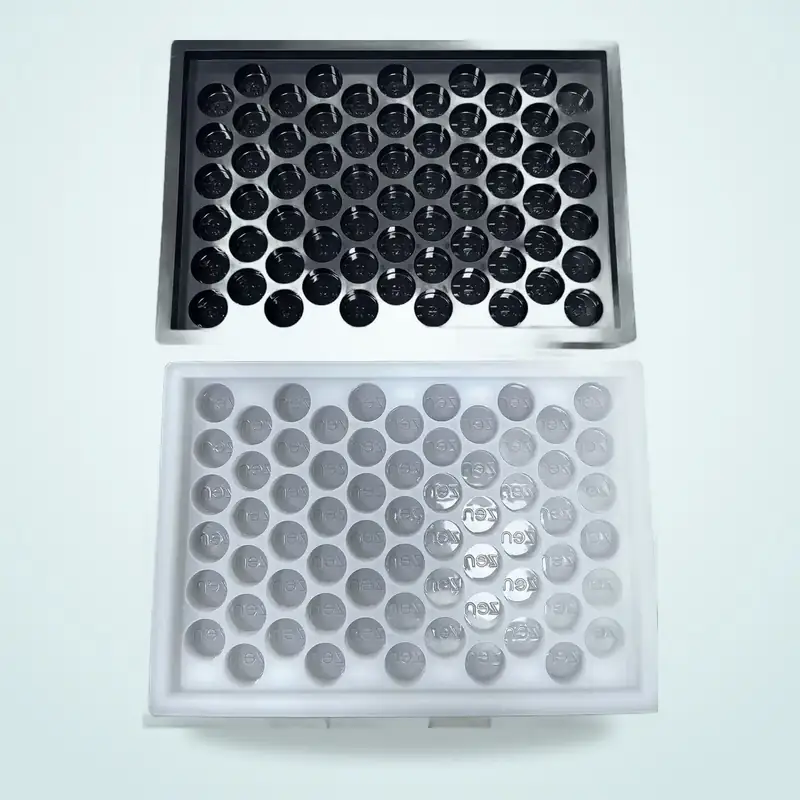
Platinum addition-cure RTV is typical. LSR *parts* and HCR compression trays aren't interchangeable specimens with this pour. Don't design a cavity you can only demold with a spray you can't name on the report.
Common mix-up: Shore A is the food-grade, and oil will save a sharp logo
A lot of RFQs treat lower Shore as “more food-safe” and plan a secret aerosol for the first dump. In the shop that usually means knife-edge letters that tear, fat trapped in an aggressive blast, and a 177.2600 / LFGB sensory fail from leftover release.
Start with what the food sees: cavity polish or texture, logo depth, corner radii, and any groove that will hold sugar or fat through a wash. Put logos on a face that demolds, not in a reverse-draft pocket that needs a pick. The non-food back can carry jacket ribs. Don't starve the cavity wall to make the back look thin — post-cure cares about the thickest food-adjacent section you actually pour.
What to ask when you're buying the DFM
- Food types and temperatures on the title block, plus 177.2600 and/or LFGB/BfR XV on *this* SKU — not “FDA approved”
- One-piece tray or keyed split? Bail, negative-draft letters, two-sided logos almost always need a split
- Shore of the skin as a demold tool, and a rigid jacket so 10A–20A doesn't balloon
- Max wall for post-cure; even walls; where flash and vents land (off the eating face)
- Texture and logo depth with a wash test in mind; unnamed release forbidden
- Color freeze; first-article specimen is this cavity, this color
Release, thickness, and the specimen the lab will hold
Cake, gummy, and chocolate stick for different reasons. Use draft on deeper cups. Use flex (lower Shore, thinner webs) on undercuts so the part peels. Radii beat knife-edge letters that tear and then trap residue. A light bead-blast can break vacuum on a smooth chocolate face; too aggressive a blast holds fat. Prototype texture on a single cavity before you commit a 64-cavity jacket.
Uneven mass is how one corner under-bakes. Target even walls. If a rim must be thick, write a longer post-cure and send that thickness to the lab. Don't send a 2 mm plaque for a 12 mm pan. Process choice is a design input: platinum RTV pours have bubble and orientation rules (vacuum degas, detail coat, pour path). Pick that before you freeze CAD, because the report is process-specific.
Pigment is a design freeze, not a late marketing choice. Dishwasher-claimed parts need geometry that drains. Freezer ice trays need stiffness to carry ice and flex to twist. Write oven, dishwasher, or freezer on the drawing if you'll print them on the carton.
Worked example: 20 mm undercut bunny, one cavity first
A seasonal chocolate wants a 20 mm undercut bunny, 12 cavities later, 800–1,500 dumps a month, fatty food.
Don't cut the 12-cavity jacket first. Pour a single-cavity platinum RTV slug against a radiused master, keyed if it's two-sided, with a stiff jacket, and see whether chocolate releases dry. If it needs oil, move the split or add radius before you multiply cavities. Send that slug to the lab only if thickness and color match production; otherwise admit it's a demold trial. Skipping the slug is how you recast eight cavities of a letter that needs oil, and oil then poisons first article.
When these DFM notes are the wrong list
If you're designing an LSR injection *part* (heated cavity, cold-runner, gates), this RTV jacket list is the wrong drawing review. If the mold is resin-only, food-wash geometry is optional and 177.2600 is the wrong spend. A tiny, shallow one-piece ice tray can run near-zero draft; a deep muffin cup usually can't. Geometry can override quantity — and can override a 64-cavity wish.
Related reading: how we pour food-grade RTV, custom food-grade molds, applications by food type, custom RTV molds.
What to send for a DFM pass before the master is CAM'd
Copy this.
- STL or STEP, finished dimensions, cavity count, monthly dumps
- Food and temperature; markets/methods
- Undercut photos, logo depth, two-sided faces, hollow cores
- Shore target, jacket yes/no, one-piece vs split
- Color freeze; dry release mandatory (name any aid)
- First-article plan: one-cavity slug then cavitation, or jump (and why)
Send the CAD and the food you'll dump. We'll mark split line, jacket, radii, and whether a one-cavity slug should gate the 64-cavity block.
We would not recommend raising Shore A first, or oiling a sharp logo
We would not recommend a 64-cavity jacket before a one-cavity slug proves dry release. We would not send a 2 mm plaque for a 12 mm pan. We would not copy a plastic pan's draft blindly.
RUUIPON Mold Structure Decision: flat back → open-back. Deep undercuts + peel? If no → two-part / plug / core. Large wet casting or soft Shore → mother mold.
- Flat back? - no -> Deep undercuts?
- Deep undercuts? - silicone can peel safely -> Open-back RTV
- Deep undercuts? - cannot peel -> Two-part / removable plug / inner core
- Large wet casting or soft Shore? - tiny shallow tray -> Open-back RTV
Typical shop values: DFM starting points for RTV food molds
| Item | Typical shop value | | --- | --- | | Cavity Shore | 10A–20A with jacket; Shore is demold, not 177.2600 | | Mix | Platinum 1:1 or 10:1; vacuum degas; detail coat on fine logos | | Linear shrink | ~0.1–0.3% platinum — build it into the master | | Edge sag if unjacketed | About 0.5–1.5 mm on a large loaded tray | | Outer-row gummy weight | Often 3–6% heavy vs center if the sheet sags | | Prototype | One-cavity slug before a 64-cavity block |
Reference values only. Confirm material-specific limits against the supplier’s technical data and agree project acceptance criteria before production.
FAQ
How much draft does a food-grade RTV muffin tray need? Enough that cake releases without spray. Flexible RTV forgives less draft than people think on deep cups; zero-draft still scuffs and traps crumb. Prototype one cavity. Don't copy a plastic pan's draft blindly.
Can I cut sharp 0.2 mm logo lines for a chocolate brand mark? You can cut them. They may not wash, they may tear, and they may need oil to release. Radius and depth that demold dry are the food-contact design. Test a slug before the multi-cavity jacket.
Does a steel or printed jacket change 177.2600? The RTV food-contact face is still the rubber article. The jacket is a different materials conversation if it also touches food. Design so the bond line is cleanable.
Should I design a thin plaque into the tool just for the lab? Not as a substitute for the real pan. A plaque with different thickness is a different post-cure. If you add a coupon, match thickness and cure to the SKU or admit it's representative only.
Is lower Shore A always better for demold on food molds? Too soft and the cavity distorts, logos smear, and bakeware spills; too hard and undercuts need release oil. Shore is a design variable. It isn't a 21 CFR 177.2600 result.
Custom silicone development · DFM & prototype support
CAD, drawing, photos or sample details