
Glossy vs Matte Chocolate Mold Cavities: What Changes in the Finished Product
The surface finish of your chocolate mold cavity directly determines the finish of your finished chocolate piece. A mirror-gloss cavity produces a high-glo
 Kyler Yang · Founder4 min read
Introduction
The surface finish of your chocolate mold cavity directly determines the finish of your finished chocolate piece. A mirror-gloss cavity produces a high-gloss chocolate surface — the standard for premium bonbons and display chocolates. A matte or textured cavity produces a satin or patterned finish — popular for artisan bars and decorative pieces.
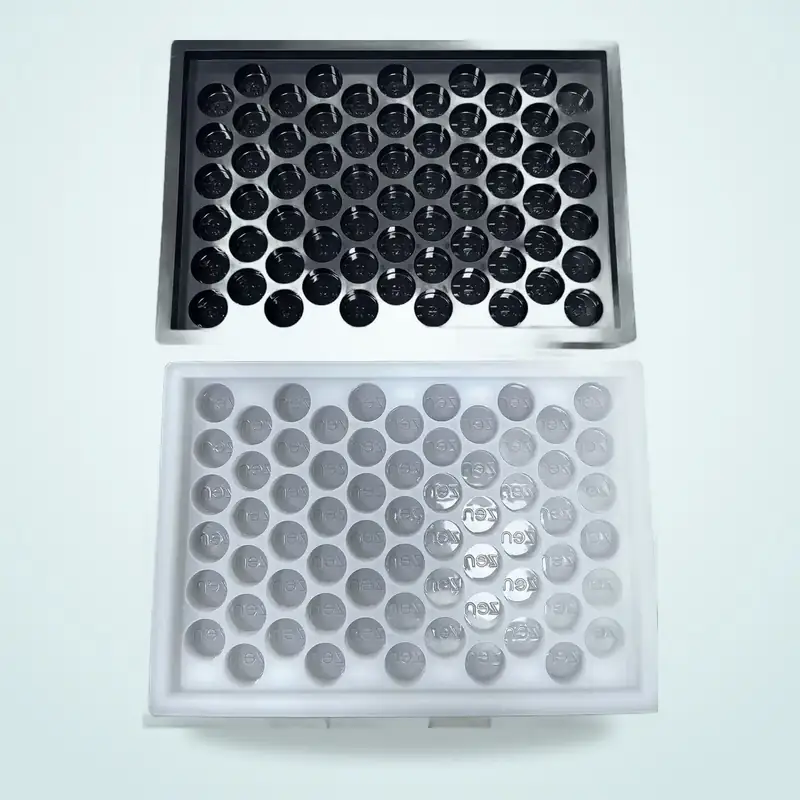
Choosing the right finish isn't just aesthetic. It affects demolding, temperature handling, and even the perception of quality by your customers.
Surface Finish Options
High-Gloss Finish (Ra < 0.5μm)
| Characteristic | Detail |
|---|---|
| Appearance | Mirror-like, highly reflective surface |
| Demolding | Easiest — chocolate releases cleanly from smooth surface |
| Temperature handling | Excellent — no surface friction during release |
| Best for | Premium bonbons, display chocolates, high-end bars |
| Master model | CNC machined and hand-polished to mirror finish |
| Cost impact | +10–15% vs. standard finish |
Standard Finish (Ra 0.5–0.8μm)
| Characteristic | Detail |
|---|---|
| Appearance | Smooth, slight sheen — not mirror, not matte |
| Demolding | Good — reliable release for most applications |
| Temperature handling | Good — standard performance |
| Best for | Everyday chocolate bars, standard bonbons |
| Master model | SLA printed or CNC finished to standard smoothness |
| Cost impact | Baseline pricing |
Matte Finish (Ra 1.0–1.6μm)
| Characteristic | Detail |
|---|---|
| Appearance | Soft, non-reflective satin surface |
| Demolding | Good — slightly more friction than gloss |
| Temperature handling | Good — standard performance |
| Best for | Artisan chocolate bars, rustic presentation |
| Master model | Sandblasted or textured master |
| Cost impact | +5–10% vs. standard finish |
Textured Finish (Custom)
| Characteristic | Detail |
|---|---|
| Appearance | Patterned, patterned, or custom texture |
| Demolding | Variable — depends on texture depth and release angle |
| Temperature handling | Variable — deeper textures may require higher pour temperature |
| Best for | Decorative chocolates, branded pieces, specialty products |
| Master model | Custom textured master (sandblasted, engraved, or 3D printed) |
| Cost impact | +10–25% vs. standard finish |
Finish Impact on Chocolate Quality
Gloss vs. Matte: Side-by-Side
| Factor | Gloss Finish | Matte Finish |
|---|---|---|
| Visual appeal | Premium, high-end appearance | Artisan, handcrafted appearance |
| Reflectivity | High — catches light | Low — diffused light |
| 指纹 resistance | Shows fingerprints during handling | Hides fingerprints |
| Demolding speed | Fast — clean release | Slightly slower — more friction |
| Temperature sensitivity | Less sensitive — smooth surface releases easily | Slightly more sensitive |
| Customer perception | "Premium" | "Artisan" |
When Gloss Is Essential
- Chocolate display pieces —Mirror finish is expected for premium presentation
- Bonbons — Glossy surface is a quality signal for chocolate connoisseurs
- Gift chocolates — High-gloss finish communicates premium quality
- Branded pieces — Logo and detail reproduce most sharply on gloss
When Matte Is Preferred
- Artisan chocolate bars — Matte finish complements handcrafted positioning
- Rustic or organic branding — Matte finish aligns with natural aesthetic
- High-traffic production — Matte finish hides minor handling marks
- Textured decorative pieces — Patterns and designs read better on matte
Technical Considerations
Pour Temperature
| Finish Type | Recommended Pour Temperature | Notes |
|---|---|---|
| High-gloss | 31–32°C (88–90°F) | Lower temp prevents surface defects on mirror finish |
| Standard | 32–34°C (90–93°F) | Standard tempering range |
| Matte | 33–35°C (91–95°F) | Slightly higher temp helps flow into textured cavities |
| Textured (deep) | 34–36°C (93–97°F) | Warmer chocolate flows into deeper textures |
Cooling Time
| Finish Type | Typical Cooling Time | Notes |
|---|---|---|
| High-gloss | 15–25 minutes | Shorter cooling preserves gloss; over-cooling causes bloom |
| Standard | 20–30 minutes | Standard cooling cycle |
| Matte | 25–35 minutes | Matte finish less sensitive to cooling variations |
| Textured | 30–40 minutes | Thicker chocolate in textured cavities needs more time |
Demolding Technique
| Finish Type | Demolding Temperature | Technique |
|---|---|---|
| High-gloss | 12–14°C (54–57°F) | Gentle flex; gloss surface is fragile when warm |
| Standard | 10–15°C (50–59°F) | Standard flex and release |
| Matte | 8–15°C (46–59°F) | Slightly more forgiving; can demold at slightly higher temp |
| Textured | 8–12°C (46–54°F) | Ensure full set before demolding; textured details are fragile |
Finish Selection Decision Guide
| Your Priority | Recommended Finish |
|---|---|
| Premium appearance | High-gloss (Ra < 0.5μm) |
| Best value | Standard (Ra 0.5–0.8μm) |
| Artisan aesthetic | Matte (Ra 1.0–1.6μm) |
| Brand differentiation | Custom texture |
| Maximum demolding speed | High-gloss |
| Hiding handling marks | Matte or textured |
| Logo/detail sharpness | High-gloss |
FAQ
Q: Can I mix gloss and matte finishes on the same mold? A: Yes. We can create molds with different cavity finishes — for example, a gloss finish on the main cavity and a matte finish on the background or logo area. This requires a multi-finish master model.
Q: Does finish affect chocolate taste? A: No. Surface finish is purely aesthetic and affects demolding performance. It has no impact on chocolate flavor or composition.
Q: Which finish is better for production speed? A: High-gloss finishes demold fastest because the smooth surface creates minimal friction. Matte and textured finishes require slightly more careful demolding.
Q: Can I change the finish on an existing mold? A: No. Surface finish is determined during master fabrication. If you need a different finish, we can manufacture a new master and remold.
Q: What master model process produces the best gloss finish? A: CNC-machined masters that are hand-polished to mirror finish produce the highest quality gloss. SLA-printed masters can achieve good gloss (Ra < 0.5μm) but require additional post-processing.
Request a Quote
Tell us your chocolate product requirements and finish preference. We'll recommend the optimal cavity surface finish for your application.
*Published: 2026-08-13 | Category: Technical Guide | Read Time: 8 minutes*
Custom silicone development · DFM & prototype support
CAD, drawing, photos or sample details