
Glove Mold vs Block Mold for Custom RTVs | RUUIPON
A glove is an open-back skin; a block is a box pour around the master. Structure Decision plus rubber grams, peel, and jacket. Typical shop. MOQ 20.
 Kyler Yang · Founder7 min read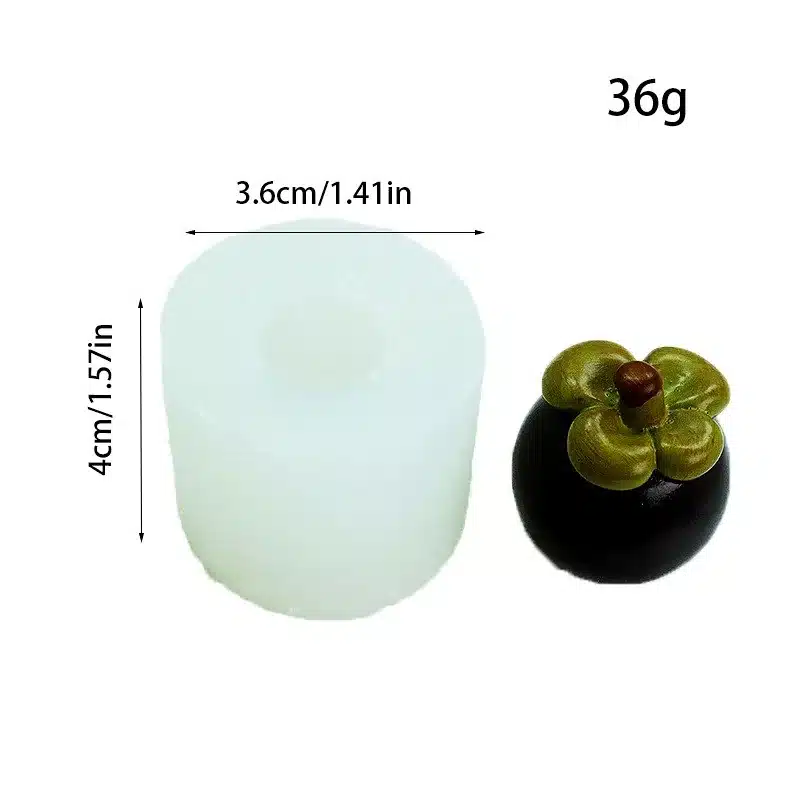
A glove mold is an open-back RTV skin that wraps the master and peels like a sock. A block mold is a box pour: the master sits in a dam and you bury it in platinum until you have a cube you cut or a two-part you split. Gloves use less rubber and need a jacket the moment the dump is wet or tall. Blocks cost more grams, hold shape without a jacket on small parts, and fight you on demold if you expected a one-piece peel. Run the RUUIPON Mold Structure Decision: flat back → glove/open-back. No flat back, deep undercuts that will not peel → block that is actually a keyed two-part (or a plug). Large wet casting → mother mold either way. "Glove vs block" is a rubber-volume and peel conversation, not a brand of silicone.
RUUIPON pours both in Bao'an since 2018. Prototype is 3–7 business days after CAD lock. Production is MOQ 20 pieces per design. Simple 3D is USD $50 when that CAD scope applies. LSR *parts* are not gloves: an HTV product RFQ here. Jacket: mother-mold shell. Split: split mold.
Does not apply when you meant HCR compression of a *part*, when the "block" is a steel cavity, or when a tiny soap sample will be cast twice and never needs either jacket or keys. Jewelry gloves and concrete blocks are not food. Do not paste 177.2600 onto a PU block because the rubber is platinum.
Structure Decision, applied to glove versus block
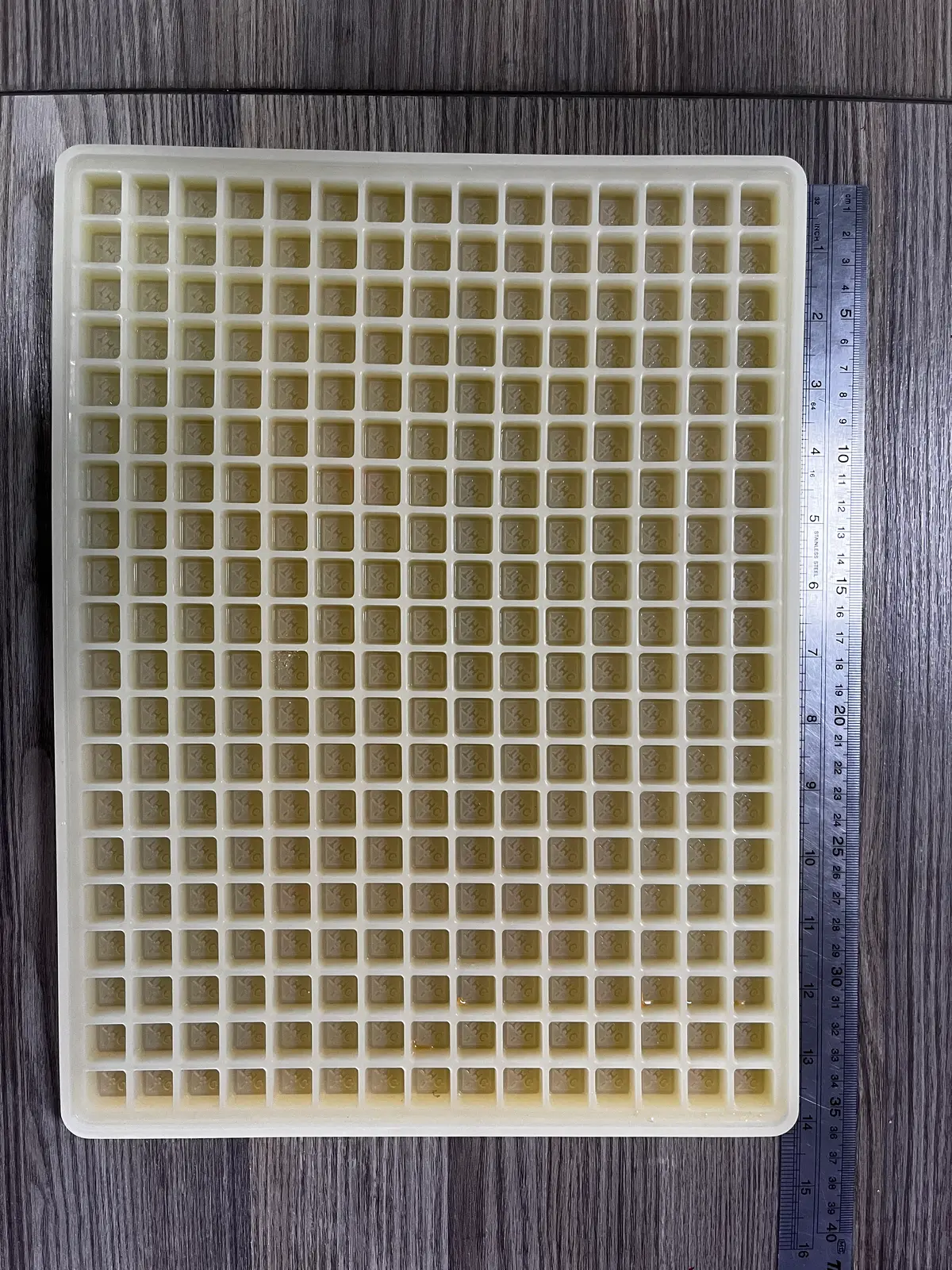
Flat back, cavity on one face (chocolate bar, gummy tray, coaster). Glove/open-back. You are not burying a master in a cube. You still spec wall, a board or jacket if sag would be 0.5–1.5 mm, and platinum 1:1 or 10:1.
Master you can wrap and peel without inverting through a hook. Glove. Think a simple candle, a one-sided figurine relief, a planter with draft. Rubber grams follow skin thickness, not box volume.
Master that is two-sided, posed, or full of undercuts. A one-piece glove will tear or oval. A *block you then cut* is a shop-made split — you are choosing where the knife goes after cure. A *designed two-part block* puts keys in CAD before the pour. We would rather design the split than surprise-cut a cube on a production SKU.
Wet kilograms (concrete, large resin). Glove without a jacket balloons. Block without a jacket still flexes at 10A–20A if the cube is large. Jacket is the hydrostatic answer, not "pour a thicker block."
Rubber volume: box minus master plus waste for a block; skin envelope plus waste for a glove. That is why a glove of the same figurine can be a fraction of the grams and still need a more expensive jacket.
The photo that would prove the choice is the master on a board (glove) versus the master in a dam with pour height marked (block), plus the Structure Decision note on the PI. A cube of leftover rubber is not proof you needed a block.
Typical shop values
Reference values only. Confirm material-specific limits against the supplier’s technical data and agree project acceptance criteria before production.
| Item | Glove / open-back | Block / box pour |
|---|---|---|
| Rubber | Skin envelope | Box − master + waste |
| Peel | Sock peel | Cut or keyed split |
| Jacket | Often required if wet/tall | Still often required when large |
| Shore | 10A–20A skin common | Same chemistry, more mass |
| Mix / shrink | 1:1 or 10:1; ~0.1–0.3% | Same |
| Best fit | Flat-back trays, drafted wrap | Two-sided masters, designed splits |
| Prototype | 3–7 business days after CAD lock | Same |
| Production | MOQ 20 / design | MOQ 20 / design |
| CAD | USD $50 when modeling applies | Same, plus split solids |
Common mix-up: glove is always cheaper so always glove
Grams are cheaper. Downtime is not, if the glove tears at a posed arm. The cousin mix-up is pouring a block "for strength" on a flat chocolate tray — you spend rubber and still need a jacket for sag. Another: calling a cut-block a one-piece because it started as one pour. Once you cut it, you own a split with no keys unless you cut keys too.
Worked example (anonymized)
A 180 mm resin bust, no flat back, arms off the torso. Buyer asked for a glove "to save silicone." Structure Decision: not a flat back; peel would invert through armpits. Quoted a designed two-part block, drafted keys, ~15A platinum, resin jacket, USD $50 because the STL had no parting solids. Proto 3–7 business days after lock. Production MOQ 20. A candle of the same height with draft would have been a glove plus jacket. This bust was not food; jewelry-scale copies of the face would not inherit 177.2600 either.
We would not recommend
We would not recommend a one-piece glove on a posed two-sided figurine to save grams.
We would not recommend a block pour on a flat-back food tray "for premium weight."
We would not recommend surprise-cutting a production cube instead of CAD keys.
We would not recommend pouring a thicker glove instead of a jacket on wet concrete.
- Flat back? - yes -> Glove / open-back
- Flat back? - no -> Peel without tearing hooks?
- Peel without tearing hooks? - yes -> Glove / open-back
- Peel without tearing hooks? - no -> Block as designed two-part or plug
- Glove / open-back -> Large wet dump?
- Block as designed two-part or plug -> Large wet dump?
- Large wet dump? - yes -> Mother-mold jacket
- Large wet dump? - no -> CAD lock → 3–7 days → MOQ 20
- Mother-mold jacket -> CAD lock → 3–7 days → MOQ 20
What to ask when you're buying glove vs block
- Flat back or a wrap-around master?
- Are we designing a split in CAD, or hoping to cut a cube?
- Jacket in the quote, or only rubber grams?
- Food tray vs craft (jewelry/concrete are not food)?
- After lock, 3–7 business days, then MOQ 20 of *that* structure?
Related: sculptures and figurines, quote, contact.
RFQ copy-pack — name glove or block
Email [email protected]:
Structure Decision: glove-open-back / two-part block / plug / jacket Master: STEP / photos (USD $50 if you model) Pour: food / resin / wax / concrete (concrete is not food) Shore band 10A–20A unless geometry says otherwise Platinum 1:1 or 10:1, vacuum Prototype 3–7 business days after CAD lock, then MOQ 20 / design Do not default to glove only to save grams
Send whether the back is flat. We will pick glove vs block from the peel path, not from a video titled "easy glove mold." Phone +86 135 3006 2969.
FAQ
Is a glove mold the same as an open-back tray? Same family: rubber on one side, peel, often a board or jacket. A food gummy tray is an open-back. A wrapped candle is a glove. Neither is a buried block.
Why would I ever pour a block if gloves use less silicone? Two-sided undercuts, a designed split, small parts that you want to stand without a jacket. Grams are one line. Demold is another.
Can you turn my glove into a block later? That is a new pour, often a new CAD. Production of a new structure is another MOQ 20 if it is a new locked design. The first glove is not a free cube.
Does a block hold tighter tolerances? ISO 3302-1 M2 is still a rubber class. A jacketed glove can beat a floppy cube. Structure plus jacket, not mass of leftover RTV.
Can I food-dump in a glove that previously cast resin? We would not. Retire that cavity from food. Platinum chemistry does not reset a resin cabinet.
How we would quote grams so the two options are comparable
Ask for both numbers on a borderline part: glove skin grams (envelope × thickness × density × waste) versus block grams (box − master × density × waste). Add jacket cost to the glove column. Add split-CAD time (the $50 when modeling applies, plus keys) to the block column. The cheaper PI is often the glove-plus-jacket, not the glove-without-jacket that sags 0.5–1.5 mm, and not the block that wastes a kilogram of platinum around a flat bar.
Tin-cure blocks that sit on a shelf keep shrinking; we would not spec tin as a warehouse spare in either structure. Platinum ~0.1–0.3% then holds.
Licheng Technology Industry Park, Xinhe Blvd, Shajing, Bao'an, since 2018. Mix, vacuum, pour the structure you locked — not a surprise cut.
Custom silicone development · DFM & prototype support
CAD, drawing, photos or sample details