
How Many Cavities Does Your Silicone Mold Actually Need?
How to choose cavity count for custom silicone molds - daily output math, 8-20 mm spacing, wall thickness, and why fewer cavities often beat a dense first tray.
 Kyler Yang · Founder5 min read
On this page
Start with fewer cavities.
That is the advice we give most first-time buyers, and it still surprises people who arrive with a screenshot of a 48-up tray from a competitor catalog. Cavity count is not a trophy. It is a labor and demold decision. Get it wrong and you pay twice - once for the dense tool, again for the remake when webs tear or demold time eats your shift.
Why "Max Cavities" Is Usually the Wrong First Ask
Dense trays look productive. On a real bench, each extra cavity adds fill time, inspect time, and flex stress on the silicone between pockets. If your formula is still changing - pectin vs gelatin, new acid level, new color - a dense sheet locks mistakes into every pocket at once.
A 1-6 cavity sample tray teaches you demold force, flash, and weight control. A 24-up production sheet should come after that lesson, not before it. RUUIPON builds custom trays for small and mid-volume brands; we are not trying to replace a steel gummy plant that stamps millions of bears a month. Different tool for a different problem.
Daily Output Math (Do This Before You Quote)
Write three numbers on a notepad:
- Finished pieces needed per shift
- Realistic cycles per tray (pour + set + demold + clean - not theoretical best case)
- Operators available for demold (one person flexing a huge sheet slowly is not "high cavity efficiency")
Pieces per shift ÷ cycles per tray ≈ cavities you need on the plate - then round to a layout that still respects spacing. If the math says 9 cavities and you order 24 "for growth," you bought unused silicone and thinner webs.
| Daily finished output | Typical cavities / tray | Notes |
|---|---|---|
| Under 100 | 1-6 | R&D, new shapes, formula trials |
| 100-300 | 6-12 | Most small-brand sweet spot |
| 300-600 | 12-24 | Only after sample demold is clean |
| 600+ | Multiple trays or denser layout | Watch labor per demold, not cavity count alone |
Example: you need 240 gummies per shift. You can honestly run 20 cycles per tray. That is 12 cavities - not 30. If set time is long, buy a second identical tray so one cures while the other fills, instead of cramming more pockets onto one plate.

Spacing and Wall Thickness Gate Cavity Count
You cannot pick cavity count in isolation. Geometry eats density.
- Spacing - plan 8-20 mm edge-to-edge. Small shallow shapes can sit near 8-12 mm; wide ears, arms, or tall fills want 12-20 mm.
- Walls - keep silicone walls in the 2.5-5 mm range for production trays. Under 2.5 mm looks sleek and tears early.
- Outer rim - leave 10-20 mm for grip so operators are not crushing edge cavities.
If your piece is large, "more cavities" may mean a bigger tray footprint, not a denser grid. Shipping and oven/freezer shelf size then become constraints. Layout guide: multi-cavity layout.
Cavity Count by Application (Rough Guidance)
| Application | What usually limits density | Bias |
|---|---|---|
| Gummy / soft candy | Sticky demold, shallow depth, depositor path | Start modest; scale after formula lock |
| Chocolate / bonbons | Logo air traps, snap-out labor | Medium density after sample temper test |
| Resin coasters / shallow | Cure time, bubble inspection | Density OK if walls stay thick |
| Candle / deep draw | Depth, two-part keys, flash | Fewer cavities, sometimes multi-part |
| Ice / large spheres | Footprint and freezer space | Low cavity count by nature |
Gummy design specifics (depth, draft, food grade): gummy mold design guide. Chocolate detail limits: custom silicone chocolate molds.
Labor Beats Catalog Density
Watch one operator demold a dense sticky tray for twenty minutes. That is your real cost. A slightly lower cavity count with cleaner pull can raise finished pieces per hour even when the photo looks "less professional."
Also count clean time. Food trays with sugar dust or oil film need wash cycles. More cavities = more surface to scrub between batches. Brands that ignore clean time always under-count labor.
How to Scale After the Sample
Typical path we recommend:
- Sample at 1-6 cavities with production material.
- Lock weight, draft feedback, and Shore feel.
- Build production layout at the cavity count your shift math supports.
- Order a second identical tray when set time, not cavity count, is the bottleneck.
Production MOQ at RUUIPON is 50 pieces per design after approval. Reorders of the same layout are faster because tooling already exists - see reorder lead time. Do not "scale" by asking for a redesign every week; scale by locking one good layout.
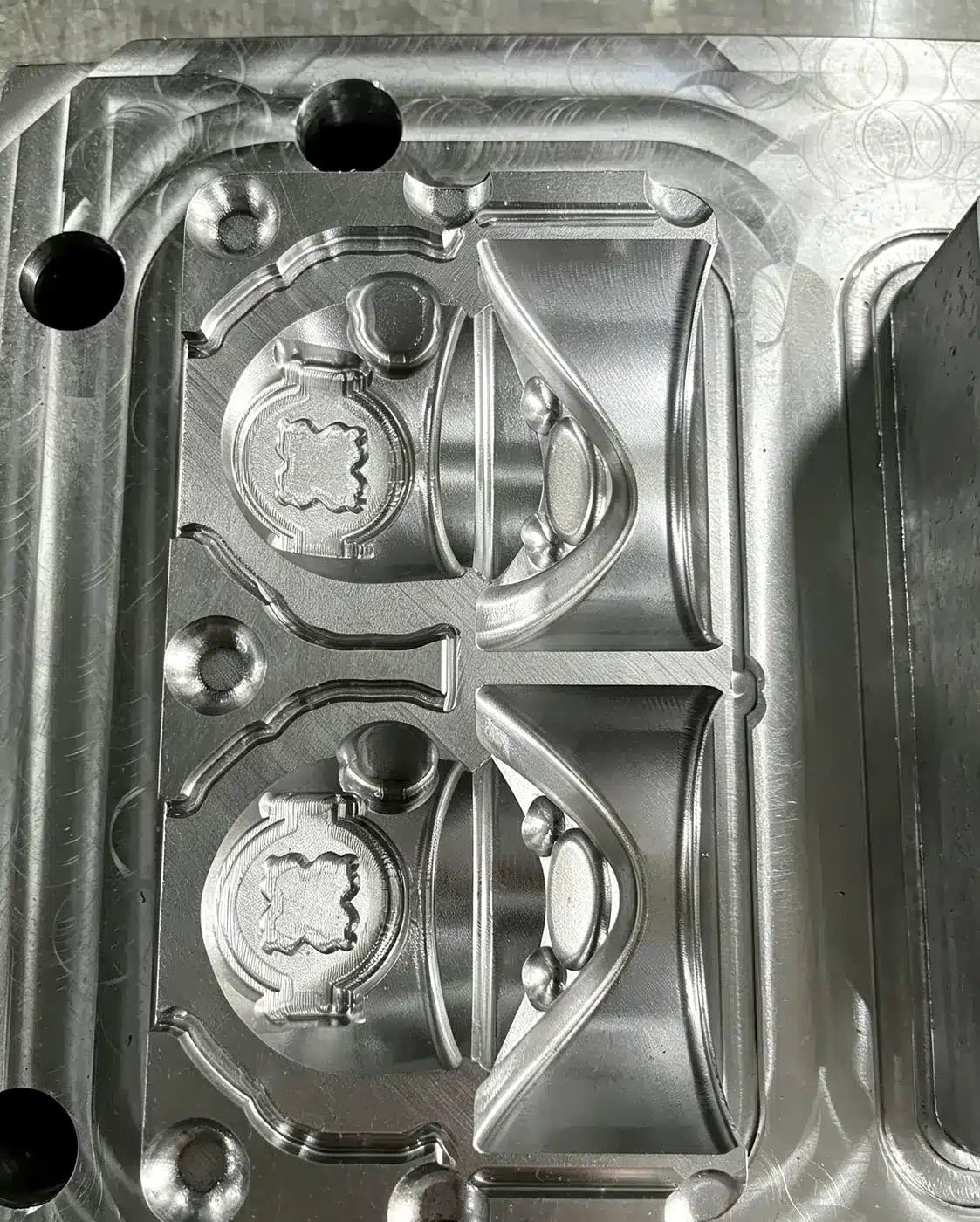
When Dense Layouts Do Make Sense
High cavity counts are fine when all of these are true:
- Formula and demold are proven on a sample
- Pieces are shallow and spacing still hits 8-20 mm
- Walls stay in the 2.5-5 mm band
- Operators can fill and inspect without skipping cavities
- Your volume is mid-range silicone work - not a million-unit steel line
If you are already quoting steel tooling and integrated depositors for eight-figure annual units, say so. Silicone trays can still prototype the shape; they may not be the long-term production tool. For everyone else launching branded casts, send daily output, piece size, and a STEP file to [email protected], WhatsApp +86 135 3006 2969, or /contact - we will recommend a cavity count that matches the shift, not the catalog.
Ready to order custom silicone molds?
Free quote for OEM/ODM projects. MOQ 20 · Prototype 3-7 days · FDA/LFGB available.