
Cleaning Custom RTV Molds: Food vs Resin | RUUIPON
Food RTV trays need a rinse, no oil, and a matte-dry face. Resin tools take a solvent wipe. Dishwasher film and grease shorten life; spec wash on the RFQ.
 Kyler Yang · Founder7 min read
Clean the tray for the pour it was built for. A food-contact platinum cavity wants hot water, a food-safe detergent if you must, a full rinse, and a cavity-up dry until the face is matte — never butter, never release spray, never a greasy "seasoning." A resin or wax tool can take a dedicated solvent wipe that you will never let near a chocolate well. Mixing those two cabinets is how food trays pick up a film that looks like stick and how resin tools swell.
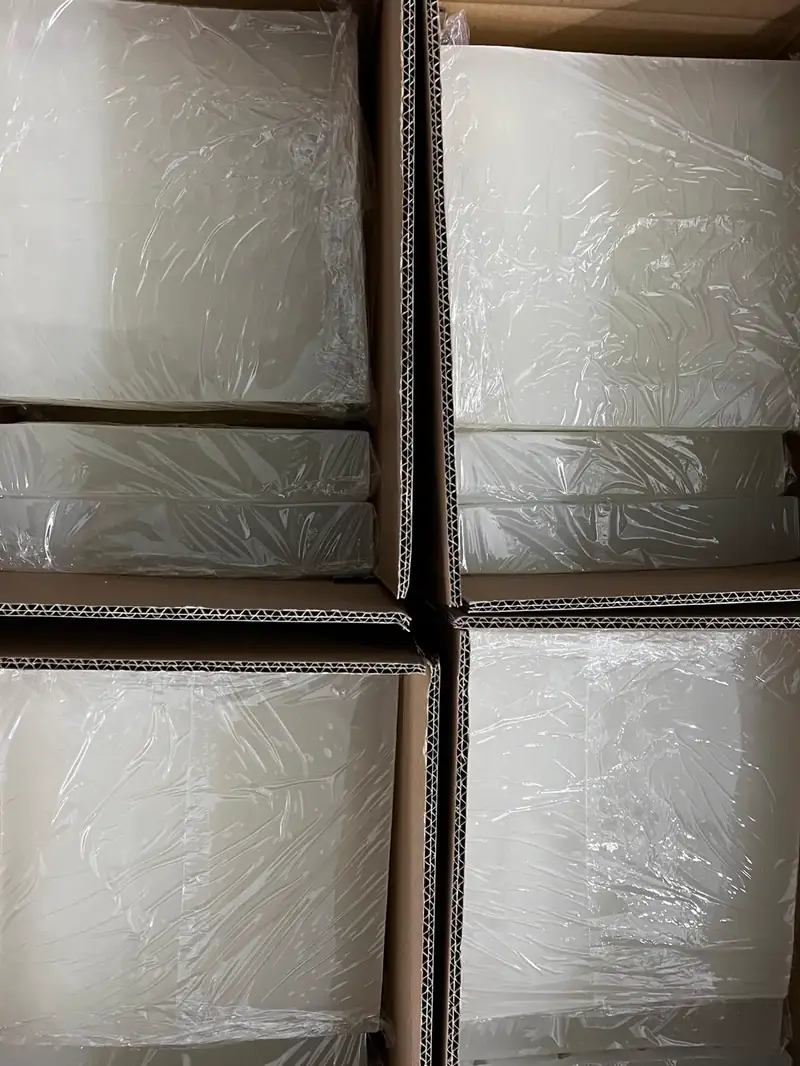
RUUIPON pours custom RTV tools in Bao'an since 2018. This note is use and care of that tool, not a steel/LSR part wash. Parts RFQs an HTV product RFQ here.
Does not apply when the "dirt" is an inhibited, still-tacky face (that skin is scrap), when you are sterilizing medical silicone *parts*, or when a commercial dishwasher is already in the PO as a required spec — that last case has its own life-shortening diagnostic. Don't copy a kitchen-blog vinegar soak onto a production gummy sheet.
Two cabinets, two sequences
Food-contact trays (gummy, chocolate, baking, ice)
- Dump debris. Don't gouge serifs with a knife.
- Warm water. Food-safe detergent only if fat or pectin film remains after water.
- Rinse until the face no longer feels slick.
- Dry cavity-up at room temp until matte. A towel left in a logo well just moves lint and water.
- Store dry, unstacked if the skins are thin, away from sulfur rubber and latex.
Confirm it's clean: a cool breath should fog evenly; droplets that nucleate in the logo mean it's still wet, not still dirty. Weighing a "dry" tray against its inbound weight catches dishwasher water in micro-texture.
Resin, wax, soap (craft) tools
- Peel flash and cured drips while they're fresh.
- Wipe with the solvent your resin vendor actually names — not a random "strong" can from the paint aisle.
- If the rubber swells or goes milky, stop. That's a compatibility limit, not a dirt problem.
- Dry fully before the next pour. Trapped solvent will inhibit some platinum recasts and will fog a clear resin.
Confirm: a cotton swab on a used well should not pick up color after the wipe. Color on the swab is leftover pigment or a bleeding colorant — different RFQ.
What not to use (either cabinet)
- Oil, butter, cooking spray, mold-release on food cavities. We would not grease a food mold. You will fight streaks, a worse next wash, and a document-pack argument.
- Abrasive powders and Scotch-Brite on logos. You burnish the platinum face and create a new stick pattern.
- Bleach soaks as a weekly ritual. Occasional dilute use in some kitchens is a shop-by-shop call; a bleach bath as "sanitizing the silicone" yellows and shortens life.
- The same rag for epoxy and chocolate.
- Dishwasher as the default on a thin 20A gummy sheet. High-temp jets plus detergent film tear nicks and leave a slick you will blame on Shore. If the line must dishwash, say so at RFQ so we spec a firmer tray and a hand-wash alternative for the logo SKU.
Typical shop values
Reference values only. Confirm material-specific limits against the supplier’s technical data and agree project acceptance criteria before production.
| Item | Typical shop value | Cleaning relevance |
|---|---|---|
| Food tray Shore | often 20A–40A | Softer skins nick if you scrape |
| Glove / undercut skins | 10A–20A | Don't invert in a jet washer |
| Platinum shrink | about 0.1–0.3% | Unrelated to wash; film is not "shrink" |
| Mix | 1:1 or 10:1 | Leftover uncured mix on a new tray is a wipe, then a QC hold — not a customer wash |
| Prototype | 3–7 business days after CAD lock | First wash happens on *your* line; tell us the method |
| MOQ | 20 pieces per design | Wash spec belongs on the PO, not an afterthought |
| Simple 3D | USD $50 when that CAD scope applies | Deep logos that can't be rinsed need a DFM pass, not a brush |
The photo that would prove a film problem: wet-looking well after a "dry" cycle, fingerprint smear, next to a matte unused cavity. No product-hero shot needed.
Worked example (anonymized)
A 24-cavity chocolate bar, platinum ~25A. First week dumped clean. After the pastry dishwasher, bars smeared. Buyer asked for a harder Shore and a "release coating." We asked for a hand-washed control tray from the same PO. Control dumped. Recast was the wrong spend. Next PO: hand-wash spec on that SKU, cavity-up dry rack, no oil. Shore unchanged. $50 CAD was not charged — geometry was already locked.
One procurement mix-up
"Dishwasher safe" copied from a consumer spatula is not an RTV-tray wash spec. A finished HCR part here and a 20A gummy sheet do not share a jet cycle. Write the wash on the RFQ. Tooling charge ≠ unrestricted ownership of a recast if you destroy the face with a scouring pad.
We would not recommend
We would not recommend greasing food-contact RTV.
We would not recommend boiling trays as a weekly sanitizer.
We would not recommend acetone on a food well "because it worked on the resin mold."
We would not recommend a dishwasher default on logo gummy sheets without a life conversation.
- Warm water -> Fat / pectin film?
- Fat / pectin film? - Yes -> Food-safe detergent + rinse
- Fat / pectin film? - No -> Rinse only
- Food-safe detergent + rinse -> Cavity-up dry until matte
- Rinse only -> Cavity-up dry until matte
- Cavity-up dry until matte -> Store dry; no oil
- Named solvent wipe -> Swell or milky?
- Swell or milky? - Yes -> Stop — compatibility RFQ
- Swell or milky? - No -> Dry fully before next pour
What to ask when you're buying
- What wash does the line actually run — hand, dishwasher, CIP?
- Food vs resin in the same building — two cabinets?
- Logo depth that can be rinsed, not only photographed?
- Will you spec "no oil" on the traveler for food SKUs?
- 21 CFR 177.2600 / LFGB as article tests after *your* wash, not a factory stamp.
- ISO 3302-1 class if the drawing has one.
RFQ copy-pack
[email protected] · +86 135 3006 2969
RUUIPON clean / wash-spec RFQ Pour: food / resin / wax / soap / mixed building Wash on the line: hand / commercial dishwasher / other Oil or release used today? yes / no (we will not spec oil on food) Logo wells that trap water? photo attached Solvent names for craft tools: Qty: prototype / MOQ 20 CAD: STEP / $50 3D if scope applies Market docs: 177.2600 / LFGB / craft
Matched next step: send the wash method with the drawing. We cut Shore, jacket, and logo depth for a tray you can actually rinse. We will not add a food-release coating. Prototype 3–7 business days after CAD lock. MOQ 20 per design.
Related: custom silicone chocolate molds, custom silicone resin molds, dishwasher and mold life, contact.
FAQ
Do I grease a food-grade silicone mold before chocolate or pectin? No. A dry platinum food-contact face is the release surface. Grease fights temper marks, dumps, and the next wash.
Can one sink handle resin tools and gummy trays? Not with shared rags and shared solvent. Two cabinets. Solvent on a food well is a document-path problem.
Is the dishwasher OK if the box says food-grade? Food-grade is the article's extraction path, not a jet-cycle rating. Thin logo sheets often want a hand-wash spec. Say the dishwasher at RFQ if it is mandatory.
How dry is dry? Matte face, even fog from a breath, no trapped droplets in serifs. Towel-wiped is not dry.
Will you recast a tray I scoured? If the face is burnished or nicked at the logo, yes, as a new skin — that is not a warranty against abrasive pads. Production still MOQ 20. $50 3D only when CAD still needs work.
Custom silicone development · DFM & prototype support
CAD, drawing, photos or sample details