
How to Measure Shore A on an RTV Tray Face | RUUIPON
Shore A on a tray is a method: thickness, dwell, three spots. Empty table you fill on the bench. Typical shop values. Do not quote a catalog number.
 Kyler Yang · Founder7 min read
A Shore A number on an RTV tray is only as honest as the coupon you stuck the durometer on. A 3 mm lip reads softer than a 12 mm block of the same pour. A dusty, greasy, or dummy-backed well lies. ASTM-style practice wants adequate thickness, a specified dwell, and more than one spot. We quote a band — 10A–20A gloves, 20A–40A food trays as the RFQ needs — not a fake lot reading. Fill the empty table on your bench. Don't tattoo "20A" on a PO because a catalog icon said so. Food wells stay ungreased while you measure; oil drops the reading and films chocolate.
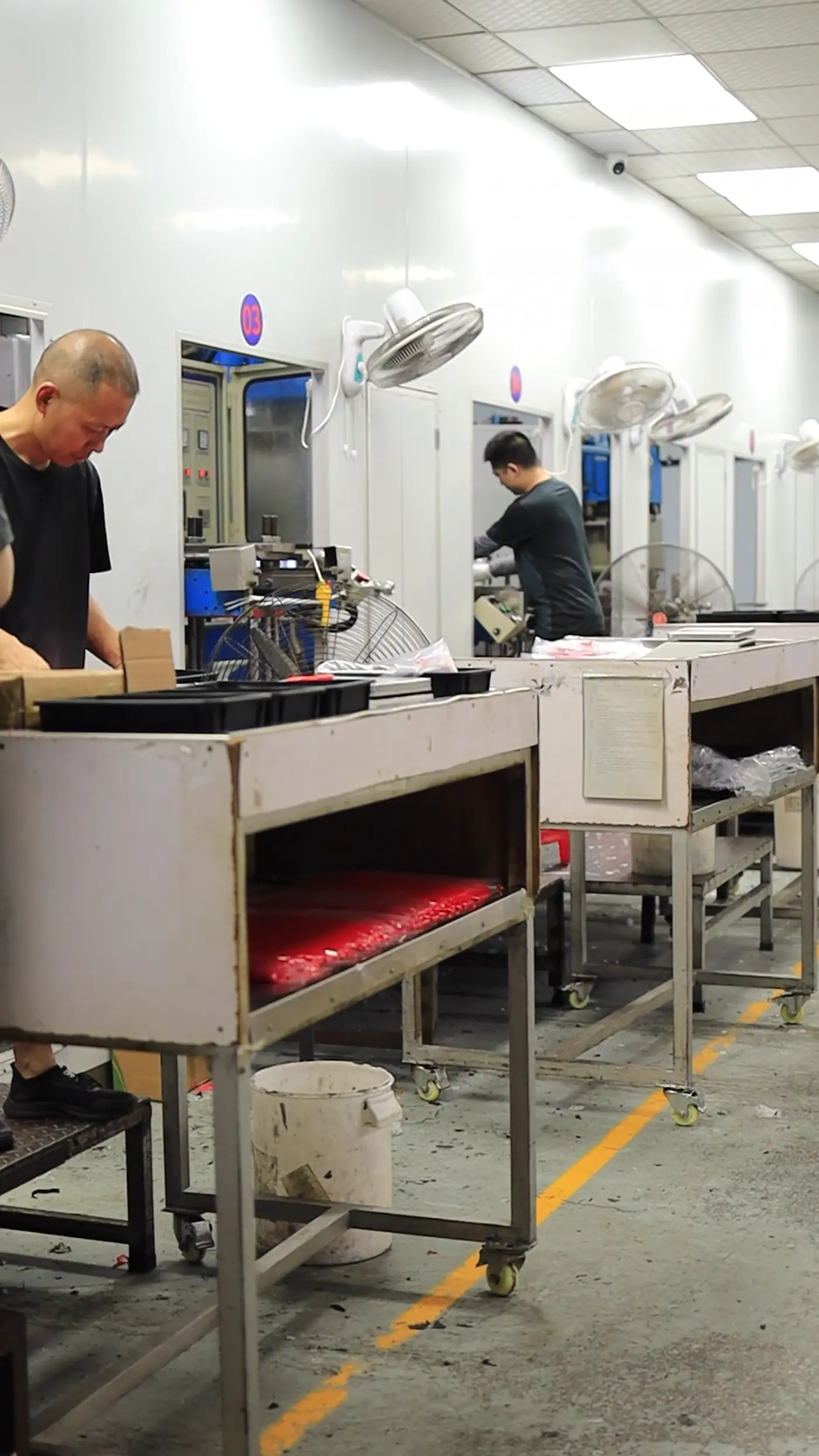
RUUIPON pours to a named band in Bao'an since 2018. On this site the path is photos, sketch, or CAD, then a 3D-printed pattern, often a temporary silicone flip, a resin production mother, then batch RTV. The mother is not the pattern. Free DFM. HTV/HCR compression mold tooling is also quoted on RUUIPON.
Does not apply when you meant ISO 3302-1 dimensional class (that's not hardness), when you are measuring HCR post-cured *parts*, or when the face is tacky from inhibition (scrap). Don't treat a durometer as 177.2600.
Method, not a result we invent
- Use a Shore A durometer in calibration.
- Measure on a stack or a coupon at least as thick as the instrument's practice — not on a 2 mm lip in air. Back the tray with a rigid plate.
- Wait the dwell the instrument expects; don't bounce.
- Three spots: center, edge, jacket-side if the glove varies.
- Record room temperature. Cold trays read harder.
- Caption your sheet Typical shop values until you have a named method. We will not write "we measured lot #…"
Empty table you copy:
Caption: Method table — fill on the bench; not a factory lab report.
| Spot | Thickness under foot | Dwell | Reading A | Notes (dust/oil/temp) |
|---|---|---|---|---|
| Center | ||||
| Edge | ||||
| Coupon / stack |
Raising Shore to fight stick, sag, or ozone without this table is how you lock a hook. Structure Decision first.
- Coupon thick enough, rigid back, clean dry face? - no thin lip in air -> Don't record — stack or pour a coupon
- Coupon thick enough, rigid back, clean dry face? - yes -> Three spots, dwell, temp
- Three spots, dwell, temp -> Food well oiled?
- Food well oiled? - yes -> Wipe is not enough for food — recast if you greased chocolate
- Food well oiled? - no -> Band vs RFQ; don't chase 1A
The photo that would prove the method: durometer on a stacked coupon, ruler for thickness, three marks. A catalog 20A icon is not that photo.
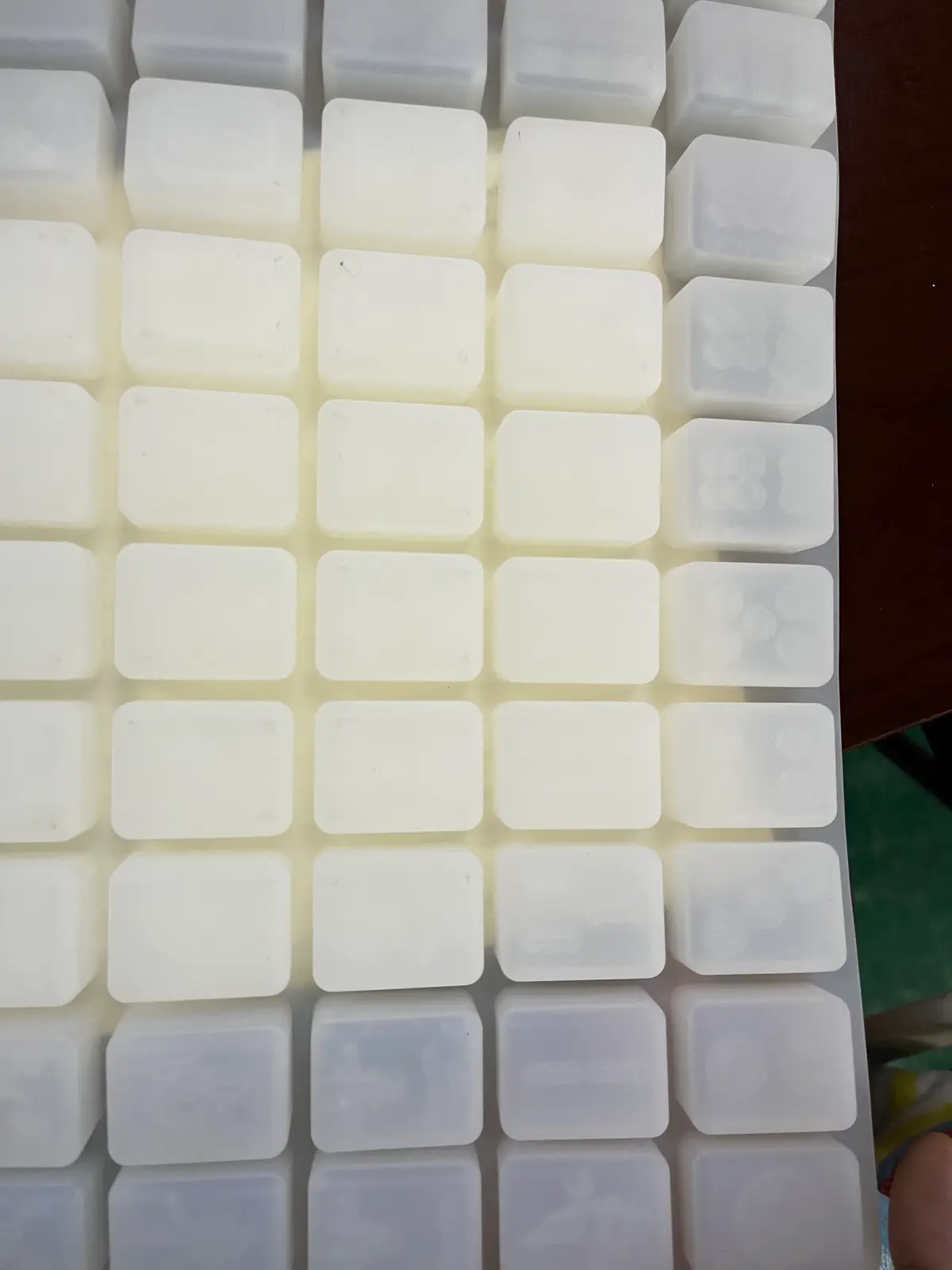
Typical shop values
Reference values only. Confirm material-specific limits against the supplier’s technical data and agree project acceptance criteria before production.
| Item | Typical shop value |
|---|---|
| Glove band | 10A–20A with jacket |
| Food tray band | 20A–40A as the RFQ needs |
| Mix | platinum 1:1 or 10:1 by weight |
| Platinum shrink | about 0.1–0.3% after full cure |
| Lip in air | do not use as the official reading |
| Food well during measure | dry — no grease, no tin |
| Prototype | 3–7 business days after CAD lock |
| Production MOQ | 20 pieces per design |
| Simple 3D | USD $50 when CAD scope applies |
Why the lip lies and the coupon doesn't
Durometer feet sink in thin sections and read the bench. That's why sag 0.5–1.5 mm and "the edge feels soft" are not the same as a 5A shift in the rubber. Pigment loading can shift hardness; measure after mix, not from the paste jar. Thixo in a glove can read differently than a pour-on block of the same grade — sequence, not magic.
ISO 3302-1 M2 stays on the drawing for dimensions. Don't write Shore in the tolerance block as if it were M2.
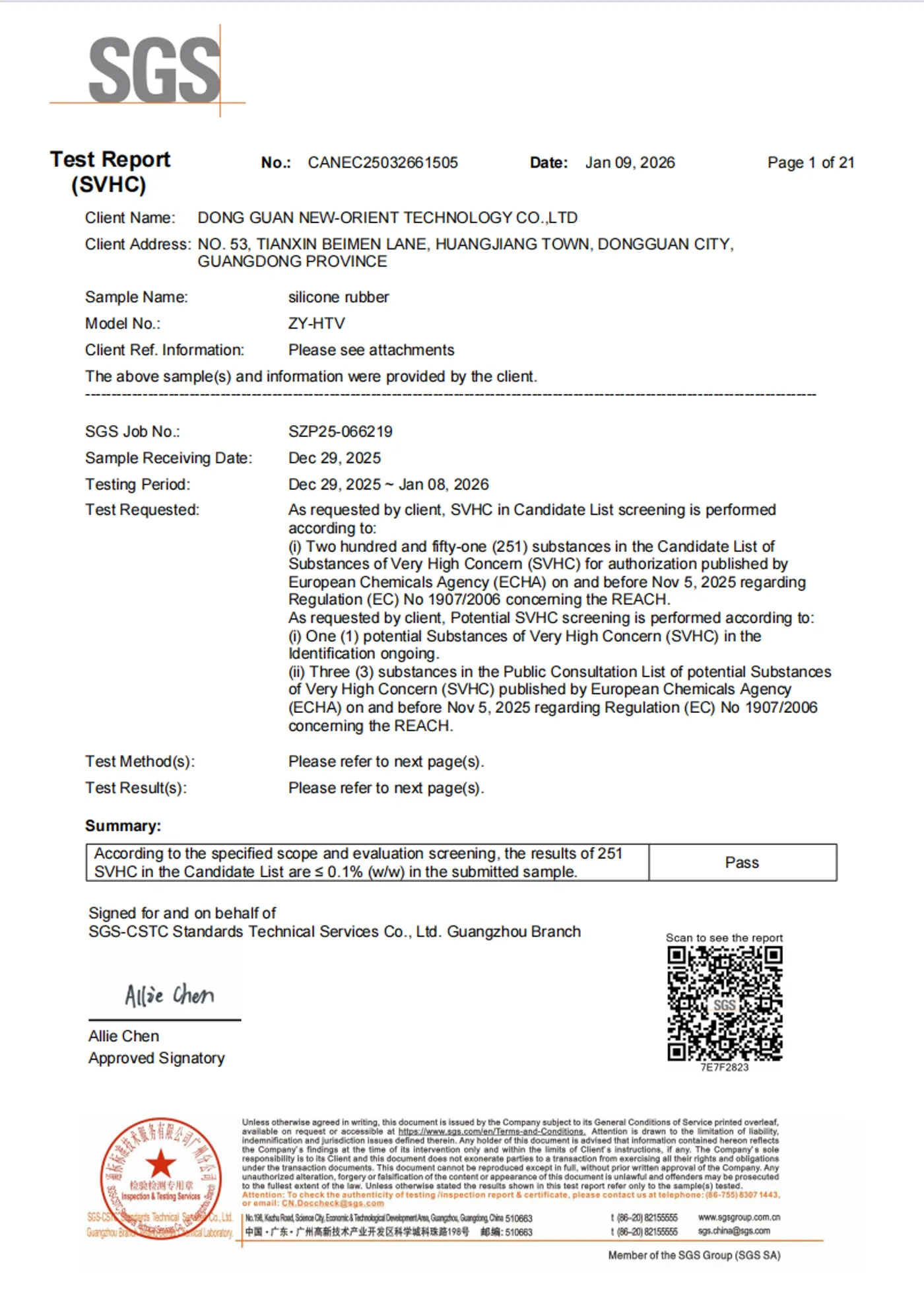
Temperature, dwell, and the greasy-foot lie
A tray from a 4 °C fridge reads harder; a tray from a 40 °C car reads softer. Write temperature on the method sheet. Dwell: if you bounce the durometer you are measuring your wrist. Three spots: if edge and center disagree by a wide band, you are seeing thickness/sag, not two rubbers. Pour a coupon.
Greasy foot: food oil, hairspray, talc, dummy dust. Clean a *craft* coupon; recast a food well you oiled to "help Shore." We would not. No tin.
Don't average a 12A lip with a 28A coupon and write 20A on the traveler. Report the coupon as the grade check and the lip as a geometry note.
If you need 10A–20A to peel and 30A to survive a spatula, you need a finger tab and a SOP, not a compromise 25A that does neither. Structure Decision plus method table.
LSR parts on steel have different Shore methods and shrink 2–3%; don't paste those onto an RTV tray RFQ. Route parts as an HTV product RFQ here.
Worked example (anonymized)
Buyer said a gummy sheet "wasn't 20A" because a pen-type durometer on a 3 mm lip read 12A. We poured a 12 mm coupon from the same batch, three spots in band, kept the sheet. No recast, no $50 CAD. Told them to stop oiling the lip before measuring. MOQ 20 unchanged.
Pen-type pocket durometers are worse on thin lips than a stand unit on a coupon. If the RFQ lives on a pocket pen, say so; we will still pour a coupon.
A jacketed 15A glove can feel "firm" in the mother and still be 15A on a coupon. Don't raise Shore because the jacket fooled your thumb.
One procurement mix-up
A marketplace "20A food grade" icon as the RFQ. Band plus method plus platinum vs tin. Charge ≠ a single-point reading on a greasy lip.
Stay on this page / skip this page
Stay when you need an honest Shore A method on an RTV coupon, not a lip reading you will write on a PO.
Skip HCR/LSR durometer on a finished part - a different RFQ - ask us. An HTV/HCR mold steel RFQ stays on RUUIPON but this page is the RTV tray coupon. Skip pitching Shore as a master / box / keys / jacket stack.
We will not take official readings on a 2 mm lip in air. We will not oil a food well to "stabilize" Shore. We will not chase 1A with a new CAD fee. We will not spec tin because a hobby durometer liked it.
What to ask when you're buying
- Band, not a tattooed integer?
- Coupon thickness and who measures?
- Food well stays dry during QC?
- Shore vs sag vs stick — which problem?
- Jacket if the glove must stay 10A–20A?
RFQ copy-pack
Send to [email protected] · +86 135 3006 2969 · Xinhe Blvd, Shajing, Bao'an.
RUUIPON Shore-A method RFQ Target band: 10A–20A / 20A–40A / other Dump: food / craft Photo of how you currently measure Want a 12 mm coupon poured? yes / no Qty: witness / MOQ 20 CAD: locked / $50 3D if geometry, not Shore, must move
Matched next step: send how you measure today. We pour coupons and quote bands. We will not oil chocolate to make a durometer happy. Prototype 3–7 business days after CAD lock. MOQ 20 per design.
Related: Shore 10A vs 30A, Shore A gummy resin concrete, food-grade molds, contact.
Witness coupon: 12 mm thick, three spots in band, temperature written, food lip not used as the official number. Keep the empty table on the traveler.
Copy the empty method table onto the traveler before first article. We will not accept a single greasy-lip reading as a reject of a locked CAD.
Thumb-flex is not a durometer. Use the coupon.
Record the instrument.
FAQ
Why did the edge read softer than the drawing? Thin section and sag, or a dirty foot. Stack a coupon.
Does platinum vs tin change Shore more than method? Both matter. Method first. Tin still isn't food.
Can I convert Shore A to "stiffness of the dump"? No. Dump stiffness is formula. Shore is the tool.
Will a harder reading mean longer PU life? Not if the failure is exotherm or a hook. Confirm the empty well.
Do I pay $50 CAD to change Shore only? Usually no. Shore is a mix/grade note. $50 when geometry is open.
Custom silicone development · DFM & prototype support
CAD, drawing, photos or sample details