
Glow-in-the-Dark RTV Molds: SrAl vs ZnS Mix Control
Glow silicone is SrAl or ZnS pigment in polysiloxane. Keep coarse phosphor out of a precision mold face. Mixing control beats a shop-invented loading
 Kyler Yang · Founder8 min read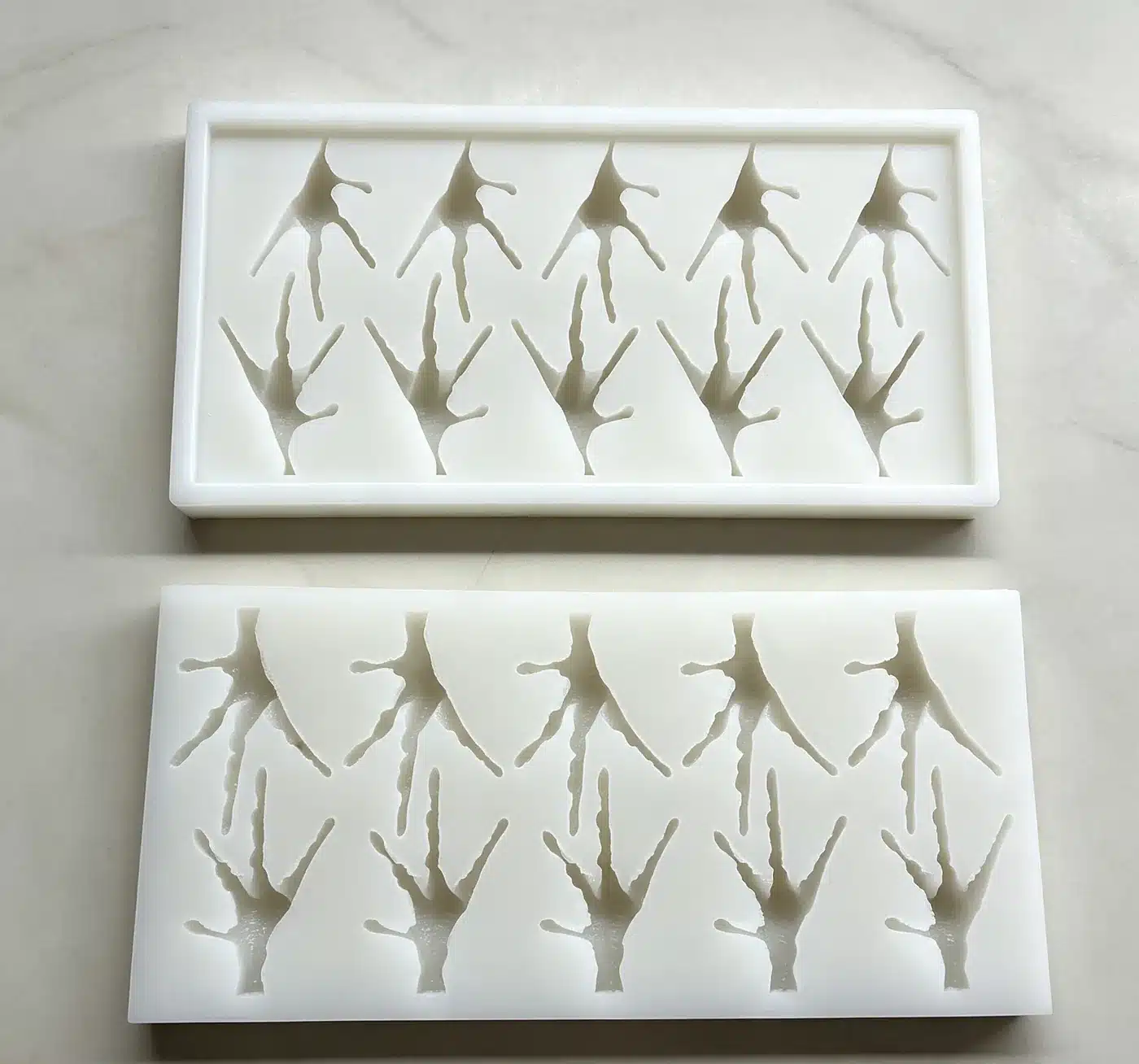
Glow-in-the-dark silicone is a phosphorescent pigment in polysiloxane, not a luminescent gum. Two families dominate: zinc sulfide (ZnS, usually copper-activated) and strontium aluminate (SrAl2O4 with Eu/Dy). SrAl is brighter and afterglows longer. ZnS is older, dimmer, and cheaper. Both are dense minerals. Both settle.
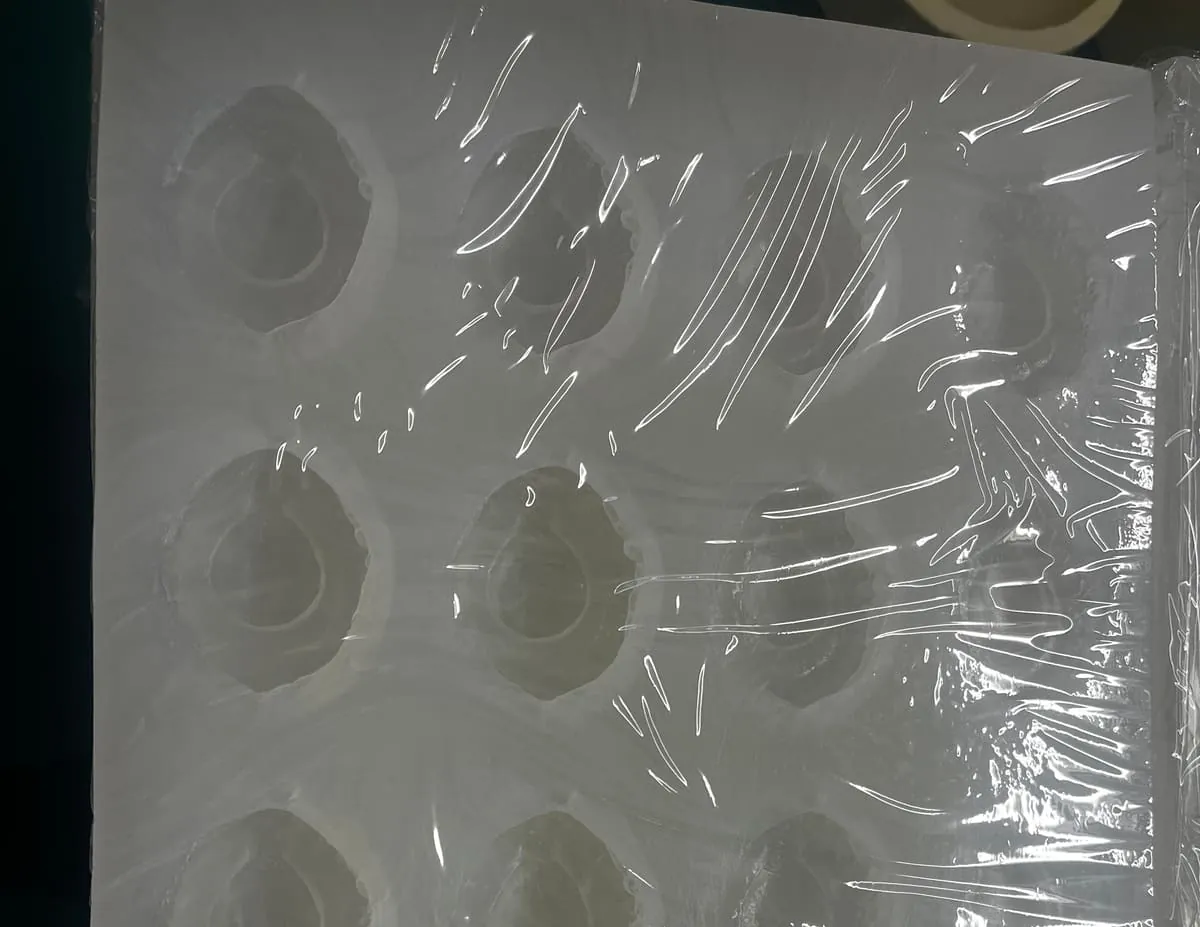
If you're buying a custom RTV mold, a glow jacket and a glow part are different jobs. Coarse SrAl at the cavity face is texture and can pit the master. Keep phosphorescent pigment out of a precision mold rubber unless grit is allowed. For glow parts, decide volume fill versus a pigmented face coat plus a plain backfill.
The usual failure is a stratified cup: bright sludge on the bottom, dead rubber on top. Mixing control is the work. A loading percent in an email is not a formulation. Platinum RTV is the common pour; tin will glow and keep shrinking; compounded LSR/HCR exists for production parts (cold-runner, never a LIM hot tool).
SrAl versus ZnS is a pigment choice
Zinc sulfide phosphors are the older glow. Afterglow is shorter. Color is often green-yellow. Particles can be smaller than coarse SrAl grades, which helps surface finish. Some ZnS packages are unfriendly to platinum cure. Test the lot. Do not assume a craft pigment is platinum-safe because it is “for resin.”
Strontium aluminate is the current default when someone wants a part that still shows in a dark room after the lights have been off for a while. Green is the efficient color; aqua and blue exist and are typically dimmer. Particles are often larger and harder. Many SrAl grades are coated because the host can hydrolyze with moisture; a wet bag is a dead bag and a platinum risk.
Neither pigment is a dye. Phosphorescence is particle loading, particle size, and a charge (UV and short-wave visible). A yellow daytime color does not prove a long afterglow. Charge the coupon the way the user will, then look in the dark after a stated wait. Charge the coupon the way the user will, then look in the dark after a stated wait. Afterglow time is not a universal catalog number. Radioactive paints are a different technology.
Common mix-up: glowing mold versus glowing casting
A toy brand wants a poured RTV mold for glow figures. The cavity stays unfilled (or lightly filled) platinum so the face stays smooth; the phosphor is in the casting. A glow part in silicone is a formulated RTV or compounded LSR/HCR with homogeneity checks.
Grit on a chocolate tray is a food-contamination failure. 21 CFR 177.2600 does not attach to a craft pigment.
What to ask when you're buying
- Glow in the RTV cavity, in the casting, or in a silicone part?
- SrAl vs ZnS, supplier and lot, coated/uncoated?
- Charge source, wait, inspect top and bottom of the shot?
- Face coat plus backfill allowed?
- Food/skin/toys regulatory path on the finished formulation?
Worked example: 6-cavity night-light figure mold
A 6-cavity platinum 20A glove, jacketed, for urethane figures. The mold stayed clear platinum RTV so the master polish copied. Glow was SrAl in the urethane, thixotropic, poured soon after stir. A first attempt dumped SrAl into the mold rubber: the pocket face went sandy, the master pitted, and the figure's skin looked sparkly in the light and patchy in the dark. Recast the skin dry. Tooling charge did not include a glow-in-the-dark jacket.
Settling, particle size, and cure
Phosphorescent powders are minerals. In a still, low-viscosity platinum RTV they sediment. A 20-minute rest after a good mix can undo the mix. Symptoms: gradient glow, a sandy layer that under-cures or tears, clear streaks that look like holes in the dark, a cup leftover that glows while the part does not.
Control: pick a thixotropic RTV if the pour can tolerate it; mix pigment into one component first if the TDS allows; vacuum after wetting; shorten time from last stir to gel; for a block, a pigment-rich face coat then unfilled backfill is a known art-mold trick — spec it. Production HCR milling and compounded LSR exist so you are not fighting Stokes’ law in a bucket.
Coarse SrAl on a Class-A cosmetic part is texture. It also sands the master if you are pouring a glow jacket over a soft pattern. Dispersion quality is visible in the dark as speckle versus an even field. Platinum inhibition: untreated ZnS, some sulfide residues, moisture-damaged SrAl, and unknown craft binders have produced sticky faces. Run a small plaque including a heavily pigmented smear.
Daytime color and night color are different specs. Tint (especially carbon or heavy white) can kill perceived afterglow. Food, skin, and toys: phosphorescent silicone is not food-contact by default. Glow teething toys are a regulatory file, not a mix ratio. Keep SrAl dust out of a culinary mold shop.
When this article is the wrong quote
Precision food molds stay unfilled platinum RTV. Production glow LSR parts belong on a parts OEM. A one-off art mold can use a face coat plus backfill if you write that stack down. Geometry can override quantity.
Related reading: custom RTV molds, how we make the mold, food-grade molds, what tooling means.
What to send for an RTV mold quote
- Object: unfilled platinum cavity vs glow *part*
- Pigment family: SrAl or ZnS, supplier and lot
- Charge and inspect: [light source], [wait], coupons from top and bottom
- Thixotropic base for pours; face coat + backfill if used
- Contact/regulatory on the finished formulation
- Ban shop percents and “hours of glow” without a method
Send whether the mold face must stay smooth and where the glow has to live. We'll keep phosphor off precision cavities.
We would not recommend glow pigment in a precision mold rubber unless grit is allowed
We would not recommend inventing a loading percent. We would not raise Shore A first to “hold the powder.” We would not use tin as a free pass for dirty craft pigment. We would not put SrAl in a culinary cavity.
RUUIPON Mold Structure Decision: glow is a pigment, not a split change. Flat back? open-back. Cannot peel? two-part / core. Soft 10A–20A? mother mold. Face coat + backfill is a two-layer part — spec it.
- Cavity face or the article? - precision cavity -> Unfilled platinum RTV; glow in the casting
- Cavity face or the article? - glow part -> SrAl or ZnS in thixotropic platinum / compounded LSR-HCR
- SrAl or ZnS in thixotropic platinum / compounded LSR-HCR -> Charge + wait; inspect top and bottom
- SrAl or ZnS in thixotropic platinum / compounded LSR-HCR -> Coarse SrAl?
- Coarse SrAl? - yes -> Face coat + backfill or accept grit
- Unfilled platinum RTV; glow in the casting -> Keep phosphor off food molds
Typical shop values: glow RTV vs mold rubber
| Item | Typical shop value | | --- | --- | | Precision mold | Unfilled platinum RTV, 10A–20A, jacket | | Mix | 1:1 or 10:1; vacuum after pigment is wet | | Platinum shrink | ~0.1–0.3% | | Default glow pigment | SrAl for longer afterglow; ZnS finer/cheaper | | Failure mode | Settling: bright sludge, dead top | | Food molds | Craft phosphor is not a 21 CFR 177.2600 argument |
Reference values only. Confirm material-specific limits against the supplier’s technical data and agree project acceptance criteria before production.
FAQ
Is strontium aluminate always better than zinc sulfide in silicone? SrAl is brighter and afterglows longer after a charge. ZnS can be finer and cheaper, and it still shows up in thin coatings. SrAl particles are often coarser and settle hard. “Better” is afterglow versus surface finish, cost, and whether the lot is platinum-safe. Test the lot.
Why is the bottom of my glow pour bright and the top dead? Settling. Both pigments are dense minerals. A thin RTV lets them fall during pot life and during a long gel. Use a thixotropic base, wet then vacuum, pour soon after the last stir, and inspect glow on both ends of the part.
Can glow pigment inhibit platinum RTV? Yes. Some ZnS packages, sulfide residues, wet or hydrolyzed SrAl, and unknown craft binders can leave a sticky face, especially in the pigment-rich sludge. Plaque-test the actual pigment in the actual base. Tin-cure may crosslink and then shrink in storage; it is not a free pass.
Will glow powder ruin the finish of a silicone mold jacket? Coarse SrAl at the cavity face is texture and can pit the master. Keep phosphorescent pigment out of a precision mold rubber unless grit is allowed. For glow parts, decide volume fill versus a pigmented face coat plus a plain backfill, and spec that stack.
How much pigment do I add to get a long afterglow? Do not invent a percent. Afterglow depends on pigment family, particle size, loading the mix can still suspend, thickness, tint, and charge. Specify SrAl versus ZnS, a charge method, a wait, and homogeneity. Use a compounded glow LSR/HCR when a cup cannot hold the suspension.
Custom silicone development · DFM & prototype support
CAD, drawing, photos or sample details