
Preventing Flash: RTV Splits vs High-Clamp Compression
More clamp coins a bending HCR land. RTV flash is overfill or a walking shut. Design overflow and stiffness. Compression mold tooling stays on RUUIPON.
 Kyler Yang · Founder14 min read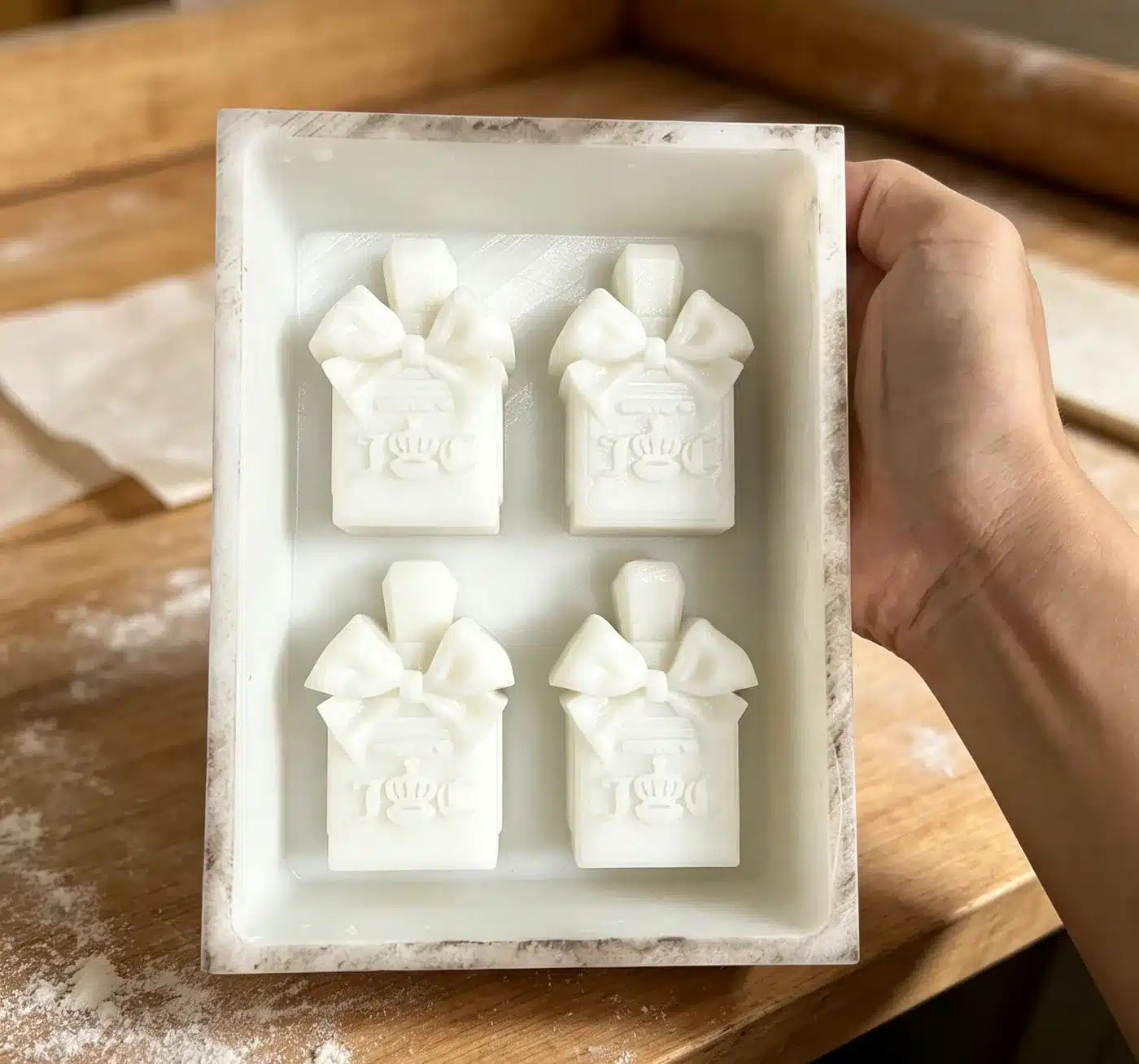
Turning the press up until the flash disappears is how you print the parting line into the steel and still flash. Compression molding of millable silicone (HCR) needs clamp to close the land on a viscous preform. It also needs a mold that stays flat while you do that. When the plates crown, the center can kiss while the corners leak. You then add more force, the crown grows, and the flash moves.
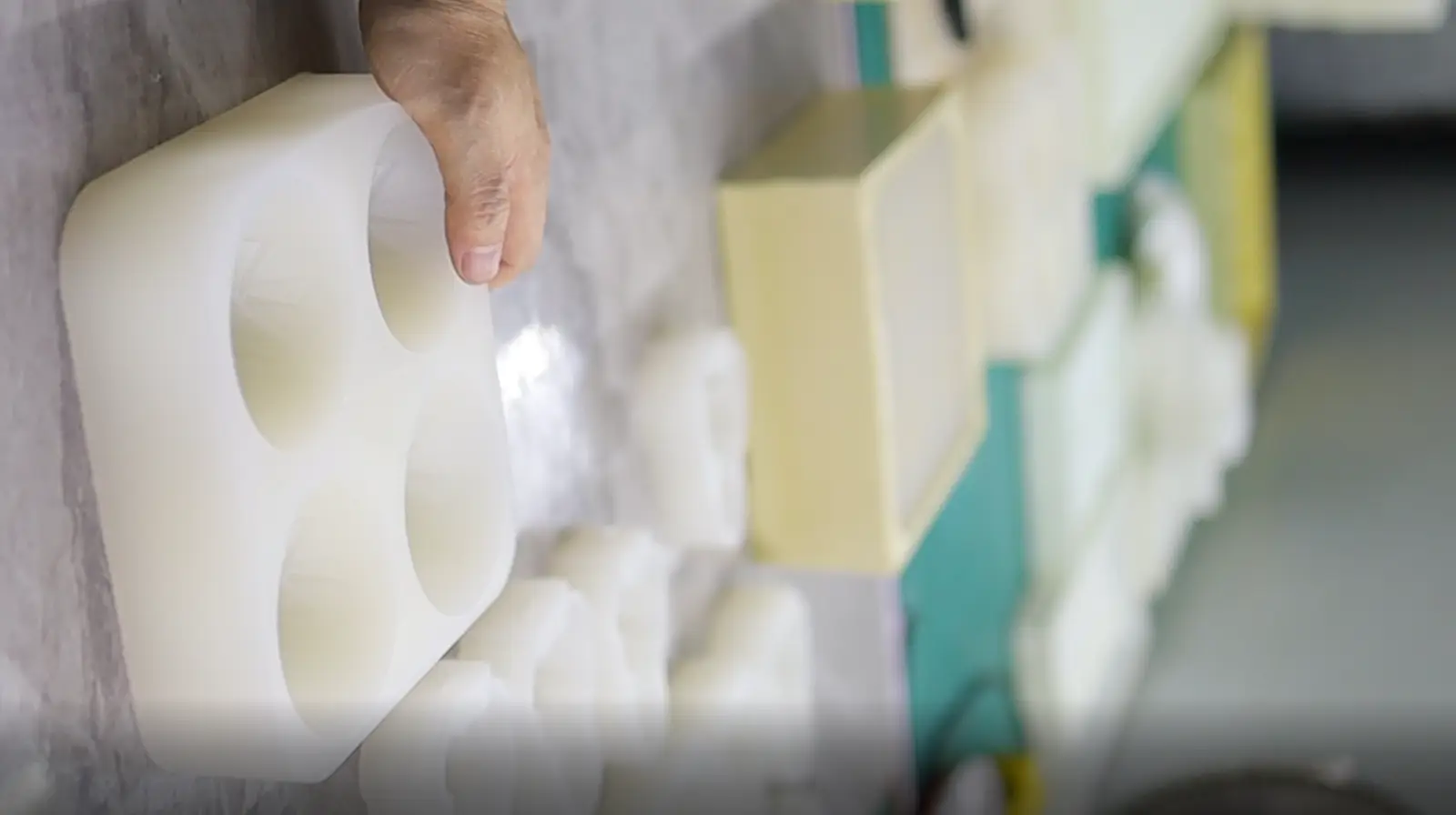
On this site the path is photos, sketch, or CAD, then a 3D-printed pattern, often a temporary silicone flip, a resin production mother, then batch RTV. The mother is not the pattern. Free DFM. HTV/HCR compression mold tooling is also quoted on RUUIPON.
What flash is: RTV split vs HCR land
Flash is rubber that left the cavity through a gap that should have been a land. Check charge too heavy, land or shut dirty or nicked, preform or mother rock, scorch or a face that gelled early, then plate or flask deflection. Only the last item is fixed by a different clamp if you were under-clamped on a stiff tool. The first four get worse if you only add bar - or only add straps.
On RTV, extra catalyzed mix has to go somewhere. If you over-weighed the cup and the support shell has no gutter, it goes out as a skirt you then tear off the dump face. A bruised shut is a runner. If your email still says "master, box, keys, jacket" as the flash fix, you are listing shop furniture.
High clamp as a cause, not a cure
A compression mold is two plates with cavities and a land. Clamp force is meant to keep that land closed while the gum flows and vulcanizes. If the plate is thin, or the platens are out of parallel, the stack becomes a spring. Under a high load the plate dishes: center land over-crushes, edges open, edge flash. Overflow that should have been a designed well becomes a thin film.
A pretty thin book that worked at 50 t may not work at 150 t. A floppy 10A-20A skin that dumped fine in a rigid support shell will skirt the moment you strap it to warped ply and call that clamp. Give extra charge a well that fills after the cavity. Hard stops can take excess clamp so the land sees a designed pressure.
Common mix-up: bolting an RTV book like an HCR press
A lot of RFQs treat flash-free via clamp as if it were a mold rubber. Specify the object: cavity you dump into, or vulcanized HCR article. Do not specify flash-free via clamp as a grade. Weigh the RTV kit. Leftover catalyzed mix is not clamp insurance. It is a skirt.
Typical shop values
Reference values only. Confirm material-specific limits against the supplier’s technical data and agree project acceptance criteria before production.
| Tell | Typical shop read | First lever |
|---|---|---|
| Even flash all around | Charge heavy or no well | Reduce charge / open gutter - do not add 20 t |
| One-edge flash | Preform / mother rock / nick | Seat the shell; pick the last skirt out |
| Corners only under high clamp | Plate or flask bending | Stiffen; add stops; do not climb |
| Outer-row 3-6% heavy on a tray | Loaded-tray sag 0.5-1.5 mm | Jacket / mother-mold support shell, not a press |
| RTV path / proto / MOQ | Pattern, often flip, living mother, batch RTV | 3-7 days after CAD lock; 20 pcs/design; DFM free; USD 50 CAD |
Worked example: 12-cavity gummy vs HCR gasket
A 12-cavity gummy skirted at the shut after the buyer added a second strap circle. The support shell was crowning. We did not add 20 t. Free DFM named a stiffer jacket / mother-mold support shell and a named overflow cup. After CAD lock: pattern, often a flip, living mother, batch RTV. A sister PO wanted an HCR gasket land that flashed at the corners at 150 t. That compression mold RFQ stayed on RUUIPON: thicker plate, stops, designed wells. The finished gasket carton stayed an HTV product or mold RFQ here, or a different LSR-tool RFQ - ask us.
Stay on this page / skip this page
Stay when flash showed up and you need the object named: RTV shut vs HCR land.
Skip if you only needed a recast for a nicked rubber shut - extend mold life. Skip finished HCR parts - a different RFQ - ask us. Do not skip the compression-tool RFQ as an HTV product RFQ here, or ask us for a high-volume LSR tool.
We will not quote another 20 t because a corner still flashed. We will not bolt an RTV book like an HCR press. HTV/HCR compression mold tooling stays on a RUUIPON RFQ.
Related: RTV vs HTV, contact.
What to send
- Object: RTV cavity flash or HCR land flash
- Photo of where the film starts
- Charge / mix mass you used; strap or clamp you added
- Whether the support shell or plate rocks on a flat table
- If HCR tool: land width notes - RUUIPON mold RFQ
Send the tell to [email protected] or contact.
- RTV cavity or HCR land? - RTV -> Charge / shut nick / crowning shell
- RTV cavity or HCR land? - HCR tool -> RUUIPON compression-mold RFQ
- RTV cavity or HCR land? - HCR part carton -> OUT
- Charge / shut nick / crowning shell -> Do not add 20 t first
FAQ
Will more clamp stop RTV flash? Usually not. RTV flash is overfill, a dirty or walking shut, or a crowning support shell. More straps reprint the film.
Where does an HCR compression mold RFQ go? The tool stays on RUUIPON. The finished part carton stays an HTV product or mold RFQ here, or a different LSR-tool RFQ - ask us.
What should I try before adding tonnes? Weigh the charge, clean the shut, seat the shell, open a gutter. If flash is corners-only under high clamp, the plate is bending.
Is flash-free a rubber grade? No. Do not specify flash-free via clamp as if it were a compound.
What is MOQ on the RTV recast after a nicked shut? MOQ 20 of the recast design. Prototype usually 3-7 business days after any CAD lock. DFM free. CAD about USD 50 when we edit 3D. We do not invent an HTV MOQ here.
Custom silicone development · DFM & prototype support
CAD, drawing, photos or sample details