
Prototype-to-Production: Scaling Overseas RTV Molds
A pretty sample jacket is not a pour system. Score overseas RTV shops on recast, master control, QMS, and change control before you freeze the pattern.
 Kyler Yang · Founder14 min read
A pretty prototype from an overseas silicone shop is evidence they can copy a shape. It is not evidence they can run your annual quantity, in the production compound, on a tool class you can maintain, with a QMS your device or automotive file will survive.
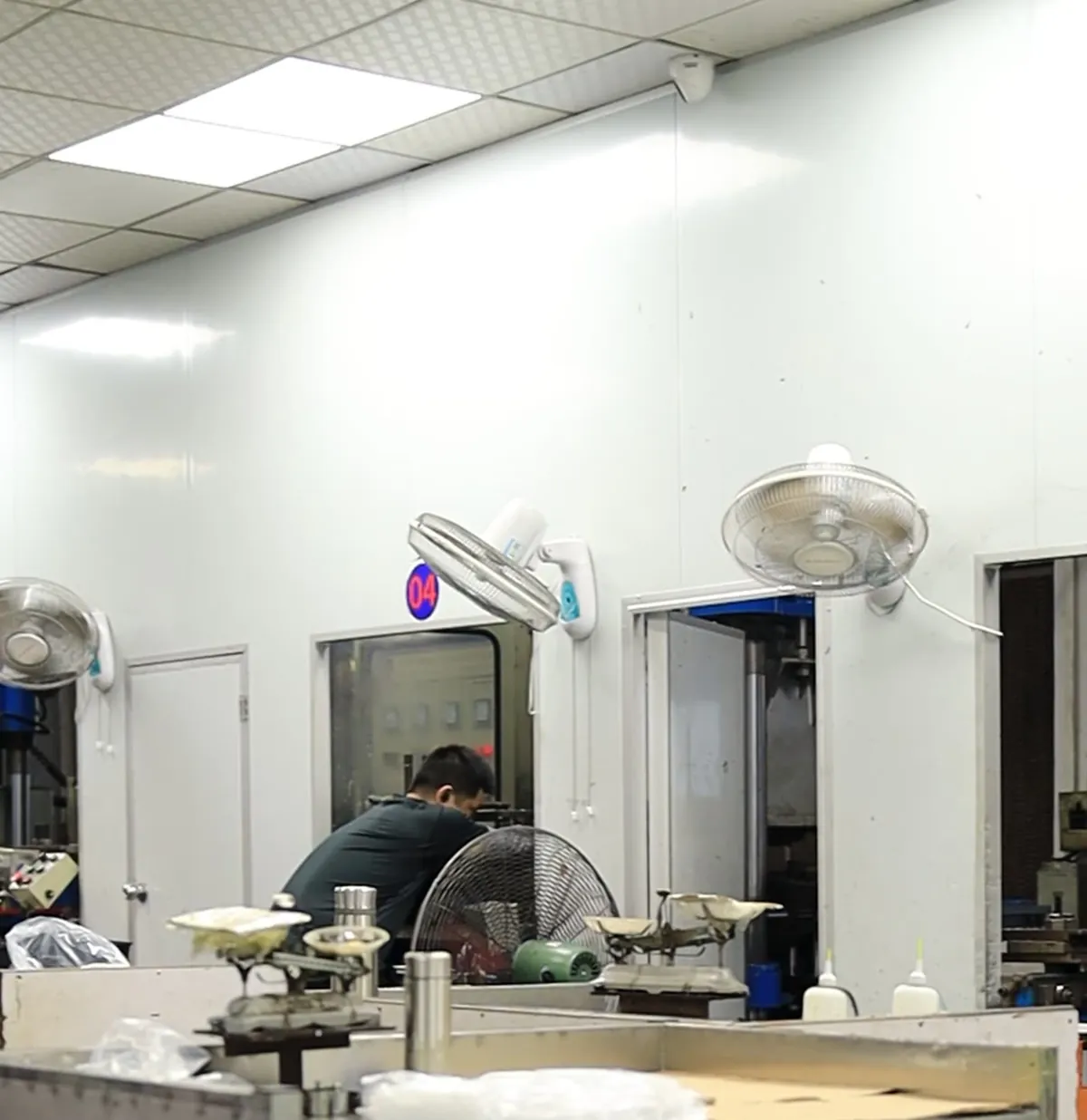
On this site the pretty box is usually a sample jacket. It is evidence they can pour a skin around your master. It is not evidence they can recast on a named kit, seat a 12-cavity mother, keep the master, and dump your season without sanding the pattern “clean.” Scalability is a score you give the *factory system*, not a feeling you get from a 20-piece courier box. Score it before you let them freeze the CNC master — or cut production steel at a parts OEM. After steel, you are funding their education or funding a transfer. After a sanded master, you are funding a reverse-engineer.
Unmix the processes while you score: tin-cure RTV jackets, platinum RTV, aluminum LSR bridges, steel LSR, HCR compression, extrusion. A shop that is brilliant at vacuum-cast samples and has two tired LSR presses is not “vertically integrated.” It is two businesses sharing a logo. A shop that poured one glove and outsources the jacket is not a pour system either.
Prototype capability is the wrong trophy
Ask how the sample was made. Then ask whether production will use that process.
RTV vacuum-cast samples (platinum jacket around a printed or CNC master) are fast and geometrically honest for undercuts. They lie about LSR shrink, flash, gate vestige, and cycle. If production is LSR *parts*, the sample only proved CAD — send that RFQ to a parts OEM. If production is still a dump cavity, the sample only proved one skin. Ask whether they will recast, keep the master, and add cavities in the tray.
Printed or aluminum 1-cavity LSR samples prove fill and vestige. They do not prove multi-cavity balance, cold-deck behavior, or Class 103 life. They also do not dump pectin.
Steel 1-cavity “prototype” on a production press is the most honest *parts* sample. It is also the one shops resist because it occupies a real machine.
If the shop’s prototype cell is a trading company plus a sample room, and production is “our partner factory,” you have not met the molder — or the pour shop. Scalability starts when you can name the press or the pour bench, the toolroom or the master mill, and the QMS site on the certificate.
Questions a sample cannot answer
Write these into the audit. Samples will still look fine.
Process match. Will production be LSR injection, HCR compression, or extrusion — or still RTV pour/dump? Does this site run that process every week, not once for your visit? Ask for a similar part’s process sheet or a similar tray’s mix sheet, not a brochure.
Tooling ownership and class. Who cuts steel — or who mills the master? In-house or a named toolroom? SPI/SPMA class language on *parts* quotes? Spare inserts? Spare skins? If they cannot talk class, cavitation, and cold runner, they cannot scale LSR. If they cannot talk recast, keys, and mother, they cannot scale RTV. Tooling charge ≠ unrestricted ownership of that master.
Capacity math. Presses in the right clamp range, cold-deck experience, oven space for post-cure, labor for destage. “We can add shifts” is not a number. Hours of similar work on the calendar is a number. RTV: vacuum-pump quality, mix discipline, technician calendar, jacket count, oven or wait space. “We can pour nights” is not a number.
Compound control. Incoming COA, lot hold, platinum vs peroxide segregation, approved mill list. Scaling a unique healthcare LSR is a mill relationship. The sample used a leftover pail. RTV: platinum vs tin segregation, food paste loading, leftover-kit owner. The sample used whoever’s 10A was on the bench.
Change control. How a drawing revision becomes a recut — or a recast. How a gum substitution is refused. Overseas email culture hides silent changes. You want a procedure you can sample. Dummy a small logo change. Time it.
Quality system vs product. ISO 9001 vs ISO 13485 vs IATF 16949, *scope matched to the site*. A 13485 trading office in front of a 9001 press hall is a scalability trap for medical. A food-mold PO in front of a tin bench that also pours industrial is a chocolate trap.
Export reality. Lead time with ocean, not with a sample courier. HS/docs competence. Ability to crate a tool if you leave — and to crate the *master*, not a torn 12A skin.
A scorecard you can reuse (weight what you buy)
Score 0–2 each. Zero is a story. Two is evidence (procedure + floor + a similar SKU).
- Production process = sample process, or a named bridge plan (RTV → more RTV cavities / spare skin; or RTV → aluminum LSR → steel *if the object became a part*).
- Toolroom that can recut lands and add cavities without a mystery sub-tier — or a mill that can recast skins and add pockets without sanding the master.
- QMS scope matches product risk.
- Material traceability from drum to carton on a live lot — kit lot and jacket ID on a live dump.
- Stated cavitation path (1 to N) with balancing talk, not “we will make an 8-cavity when you are ready.” RTV: 1 glove → 8–12 cavity tray with a mother, not “we will copy the glove eight times.”
- Post-cure and inspect capacity at production rate, not at sample rate.
- English (or your language) process sheets that match the press HMI — or mix sheets that match the bench.
- Ownership, no-duplicate, file-release clauses they will sign *now*.
- Second-site or second-press story that is real, or honesty that they are single-site. RTV: they can recast from *your* titled master at a second bench.
- A similar part they still run, with shot history and a PM log — or a similar tray with a recast log.
A shop that scores well on 1–4 and poorly on 5–6 is a prototype house. Keep them for samples; cut production steel elsewhere, or fund a real cell — or keep them for one-off gloves and pour production trays where the mother exists. A shop that scores well on 5–6 and poorly on 1 will “scale” you into a different geometry than you approved.
Do not average a 9/10 sample-room tour with a 3/10 production hall. The hall is the molder. The pour bay is the mold shop.
Capacity is a calendar, not a building
Walk the press list: tonnage, LSR vs thermoplastic (a converted plastic press is a question, not an automatic no), cold-deck plumbing, occupancy. A hall full of plastic tools with one LSR machine is a queue.
Walk the pour list: box sizes, vacuum capacity, platinum vs tin benches, jacket storage out of UV, occupancy. A showroom full of sample gloves with one technician is a queue.
Ask what happens at 3× your forecast. Honest answers: a second tool or a second skin, a night shift with a named technician plan, or “we cannot.” Dishonest: “no problem.” Overseas scalability deaths are usually queue and quality, not missing floor space.
Post-cure ovens, washing, and clean pack are the silent constraints on medical and food. The press is fast. The rack is slow. Count racks. Count UV bags and spare skins.
Change control is scalability
Your CAD will move. The overseas molder who scaled you is the one who can recut an insert in a known number of days, send steel-complete photos, and not ship mixed revisions. The overseas *pour shop* who scaled you is the one who can recast a skin in a known number of days, send seated-jacket photos, and not dump mixed masters. Put a revision drill in the kickoff: dummy a small logo change. Time it. If it disappears into a WeChat group, you found the limit.
Also drill *their* change: gum shortage, pigment swap, operator. If the quality agreement does not force a notice, scaling just scales the silent substitution.
an HTV product or mold RFQ here, or ask us if you need a high-volume LSR cold-runner tool Prototype → Compression → LSR is the parts path: tens–hundreds → aluminum/RTV mule. Thousands, millable rubber → HCR compression. Automation + LSR grade → injection + cold-runner. Geometry and what ships override qty. RUUIPON stays on the mule until the object is a part: more cavities in the tray, mother, spare skin, recast terms.
Common mix-up: freezing production steel at the sample vendor so the tray can “scale”
A valve-gated manifold will not dump pectin. A cup kit labeled LSR is almost always RTV. Saving six weeks of a second FAI is expensive if you then transfer a hostage tool — or a sanded master.
What to ask when you're buying
- Object: RTV cavity (this site) or LSR/HCR part (other factory)?
- Sample process vs production process, named site, QMS scope?
- Recast path, master kept, who owns it, spare skin?
- Cavitation path: 1 glove → N-cavity tray, or 1-cavity Al LSR → steel N?
- Similar SKU: mix sheet / PM log, not a trophy wall?
Worked example: 12-cavity gummy vs 64-cavity LSR
You're dumping a 45 × 28 mm gummy, 1-cavity platinum glove today, ~6,000 / season, CAD still moving logos. Stay: 8–12 cavity RTV tray, resin jacket, spare skin, recast clause, titled master. Do not jump to 8-cavity LSR steel — wrong object. If a sister SKU is a 50A LSR button, frozen, 80,000 / yr, score the *parts* hall on the 0–2 card and put aluminum 1-cavity on the same sheet before eight cavities.
When this article is the wrong quote
If you already know you need valve-gated LSR *parts* at volume, send the parts OEM the deck pack and the site certificate. A tiny shallow ice tray can skip scorecard theater. Geometry can override: a one-off deep-undercut figurine is still RTV at 20 casts, while 50,000 teats are still LIM. Do not crate a torn 12A skin as the production system.
Related reading: ROI: scale RTV vs jump to LSR, second-sourcing masters, tooling ownership, custom RTV molds.
RFQ that selects a factory you can grow with
“State sample process vs production process. Quote stay-RTV multi-cavity + spare skin, and (only if the object is a part) aluminum 1-cavity LSR and steel N-cavity as separate stacks. Name the production site, QMS scope, pour-bench or press count in range, and who mills the master. Sign tool ownership and file release. Provide a similar tray’s recast log or a similar part’s PM log. Sample courier lead time is not production lead time. No LIM substitution on a dump cavity.”
If they answer with photos of the sample and a single piece price at 10,000, they are not a production system. They are a sample that learned how to invoice. Send the STEP, what ships, annual dumps vs parts, and whether CAD is frozen. We will quote more jackets — or send you to a parts stack.
We would not recommend freezing steel at the prototype vendor to save six weeks
We would not recommend averaging a sample-room tour with a tired pour bay. We would not crate a torn glove as the dual-source tool. We would not skip the logo-change drill. We would not treat a tooling charge as title on the master. We would not jump to eight LSR cavities for a geometry that will change in March.
RUUIPON Mold Structure Decision: Scale RTV first: open-back vs two-part vs core, then cavity count in the tray, then mother, then spare skin. Jump to LSR only when the object is a molded part. Geometry can override quantity. Dual-source the master; recast skins locally.
- What ships? - Reusable RTV cavity -> Score the pour bay: recast, master, mother
- Score the pour bay: recast, master, mother -> More cavities + jacket + spare skin
- What ships? - Molded LSR / HCR part -> Score the press hall — different an HTV product or mold RFQ here, or ask us if you need a high-volume LSR cold-runner tool quote
- Score the press hall — different an HTV product or mold RFQ here, or ask us if you need a high-volume LSR cold-runner tool quote -> Al 1-cavity then steel N if frozen
- Pretty overseas sample - Piece price at 10k only -> Sample that learned to invoice
- Score the pour bay: recast, master, mother - Master sanded / unnamed site -> Not a system
Typical shop values
Reference values only. Confirm material-specific limits against the supplier’s technical data and agree project acceptance criteria before production.
| Item | Typical shop value | | --- | --- | | First food / gummy RTV layout | 8–12 cavities is a common kickoff band | | RTV skin | Platinum 1:1 or 10:1, 10A–20A, jacket | | Platinum shrink | About 0.1–0.3% if the master was not sanded | | LSR / HCR shrink (contrast) | About 2–3% / 1.5–2.5% — different factory | | Scorecard | 0–2 each; zero is a story, two is procedure + floor + similar SKU | | ISO 3302-1 | M2 common on an *article*; a sample photo is not a class | | Tooling charge | ≠ title on the master or spare skin |
FAQ
Can the same overseas shop do my RTV prototypes and my steel LSR production? Yes if both processes exist on the *named site* with people who still run them. Many "full service" shops sample in a prototype cell and outsource steel. That can work if the steel site is named, audited, and bound by the same ownership clauses. An unnamed partner is not scalability. It is a surprise. If you still need a dump cavity, stay on recast RTV and do not treat their LSR brochure as a tray.
How many similar parts — or similar trays — should I see before I trust capacity? Enough to prove the process family: a valve-gated small part if you need that; a compression HCR if you need that; a 12-cavity food tray with a recast log if you need that. One unrelated consumer gadget in a display case is zero. Ask for a live traveler and a PM or recast log, not a trophy wall.
Is a trading company always a scalability risk? A trader who names the plant, hosts the audit, and puts ownership clauses on the steel or the master can be a language and logistics layer. A trader who hides the plant cannot scale with you because you cannot find the press — or the pour bench — when forecast triples. Price the layer; do not pretend it is a factory.
Should I freeze production steel at the prototype vendor to save time? Only if the scorecard says they are the production system *and* the object is a molded part. Saving six weeks of a second FAI is expensive if you then transfer a hostage tool. Parallel: prototype vendor for geometry; production vendor cutting steel from the same CAD, with an aluminum bridge if LSR behavior is still unknown. For a cavity: freeze the titled master, not their leftover glove.
What lead-time number belongs in a scalability review? Production lead time at the stated batch size, including compound or kit procurement and ocean, plus a recut or recast interval. Sample courier days belong in a prototype SOP. Mixing them is how launches plan airfreight as a personality trait.
Custom silicone development · DFM & prototype support
CAD, drawing, photos or sample details