
Corner Radii Guidelines for Silicone Mold Longevity
A sharp internal corner in an RTV cavity is a tear starter. Fillet the master; keep true knives only where a seal or logo is a named exception.
 Kyler Yang · Founder9 min read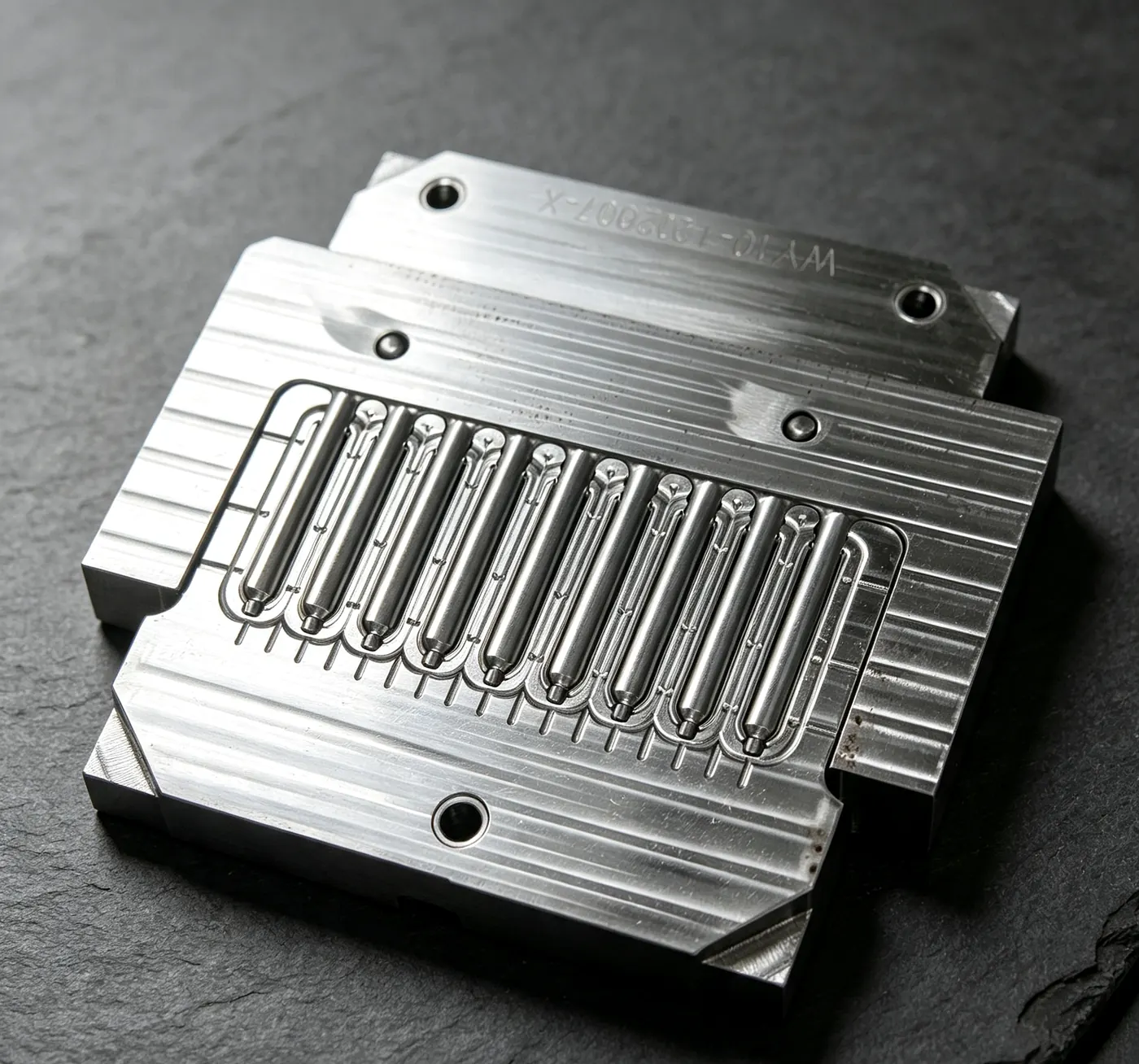
If you're buying a custom RTV silicone mold, knife-edge corners do not look premium. They look like the first place the 10A–20A skin will tear.
Longevity arguments usually start at dump counts and compound abrasion. Those matter. The cavity still dies at a corner: a torn letter, a split at a square undercut, a lip that nicks on a dead-sharp master bead and then tears the next hundred pours. Radii are a maintenance spec. Cosmetic “crispness” is a separate, named exception.
Unmix the tools. RTV molds tear. Steel LSR/HCR cavities chip. The fillet rules rhyme. The repair methods do not. Sharpening an SLA master with a blade so the silicone “looks crisp” is how a glove lasts twelve pulls.
Internal versus external, on the dump versus in the mold
On the dump (chocolate, gummy, resin):
- An internal corner (a valley) is a male knife on the master — the RTV has to fill around a needle, then peel off it.
- An external corner (a dump edge) is a female sink in the master — a stress riser in the rubber as it strips.
Rubber hates being asked to fill and then peel off a needle. Even a small break (0.2–0.5 mm where the wall is thin) beats a theoretically sharp mill leftover.
If you ignore this: first article looks jewelry-sharp. By a few dozen hot dumps the letter serifs are gone and the split lip is nicked. The quote’s cycle life assumed you did not design a chisel.
Common mix-up: “crisp” as a default on a 10A glove
A confectioner wants an 8-cavity bar, recessed brand, “make the letters as sharp as the render.” The shop blades the SLA master. Platinum 10A skin copies the knife, then tears at the serif root on pull five. Recessed letters on the dump are standing type in the *master*; those peaks nick the rubber, not the other way around. Specify which edges are optically sharp, the minimum radius you will accept, and whether the shop may add a 0.05–0.1 mm break the camera will not see.
ISO 3302-1 might class a logo *depth* on a rubber article drawing. It is a drawing class, not a promise a knife will last, and not another word for precision.
RTV tools: corners are tears, not chips
A platinum or tin mold fails at:
- Square undercuts (see self-demold in this cluster)
- Thin rubber fins that fill a sharp master groove and then rip
- Inside corners of the mold where peel strain concentrates (white stress marks, then a split)
Masters should carry fillets the production dump is allowed to have. If the product needs a crisp logo, that logo may belong as a separate insert on the master, or as pad-print, not as a knife in a soft mold.
Mother-mold shells (fiberglass, resin, printed jackets) need plastic-style radii on *their* splits so the jacket does not crack. That radius is not on the dump.
Tin-cure versus platinum does not change the fillet rule. It changes shrink (~0.1–0.3% platinum after full cure; tin keeps moving) and how long the knife lasts in storage as the rubber creeps.
Sharp logos versus sharp structural corners
You can have one true sharp. You should not have twenty.
Artwork. Specify which edges are optically sharp, draft on letter sidewalls (1–3° is a working band on the master), and a tiny crest radius on standing type. Deep, skinny serifs at 0° draft are not a longevity problem. They are a no-fill and tear problem on day one.
Structure. Fillets on bosses, rib roots, tube/wall junctions, and anything a demold strain will see. A structural knife is almost never a product requirement. It is leftover CAD.
Seals and wipers on a food tray. A sealing lip may be intentionally fine. Then hardness, jacket support, and shut-off land are the longevity package. Don't add a random R2 on a 0.4 mm wiper and ruin the function. Do break the *master* edges that are not the lip.
Steel-tool knives (parting razors, EDM recast, HCR shut-offs) are the parts conversation. Don't copy an LSR “we run sharp” habit onto a 10A chocolate tray.
What to ask when you're buying
- Default internal and external breaks on the master, written as a note?
- Which edges are named knives (logo, wiper), and is a recast of the skin priced?
- Letter sidewall draft and crest radius?
- Peel path at the sharpest lock — coupon before freeze?
- Who keeps the unsanded master when the letters tear?
Worked example: 0.4 mm recessed brand, filleted roots
An 8-cavity bar, 120 × 60 × 12 mm, food-contact, about 500 pours a month, recessed brand 0.4 mm in the pocket. CNC master, letter sidewalls 1–3°, crest break ~0.05–0.1 mm, structural corners ≥0.3 mm. Platinum 10A–20A skin, mix 1:1, vacuum degas, rigid jacket so the sheet does not sag 0.5–1.5 mm and smear outer-row letters. We would not have bladed the SLA “for crispness.” A parallel LSR engraving quote does not dump chocolate.
The radius that pays for itself
A useful drawing note on the master:
> Unless otherwise specified: internal dump radii ≥ 0.3 mm or 0.5× local feature, whichever is larger. External dump edges 0.2 mm min break. Letter sidewalls 1–3° draft; letter crest radius 0.05 mm min. Named wiper [ID] is sharp; tool land per shut-off spec. No knife-edge parting on the RTV split.
A second note belongs on the RFQ: *which edges are wear items, and whether a recast of the RTV skin is included.* If every corner is theoretically sharp, the first recast is not a failure of the shop. It is the drawing arriving on schedule.
Do not specify sharp as a cosmetic default and then argue dump life. You picked the failure location when you left the R0.00 in the model.
When this article is the wrong quote
If you actually need steel LSR/HCR cavities that chip rather than tear, fillet rules still apply but the repair is recut inserts, not a recast skin — different quote. A tiny, shallow tray can run crisper than a large wet dump. Geometry can override quantity: a negative-draft serif at 80 pours still needs the split off the face.
Related reading: custom RTV molds, self-demolding geometry, textures and logos, food-grade molds.
Radius pack to copy onto the RFQ
Copy this. “Make it crisp” is not a longevity spec.
- Process: platinum or tin RTV; art and corners live on the master
- Default internal/external breaks; named knives listed
- Letter draft and crest radius; off the parting
- Jacket yes/no; peel coupon of the sharpest lock
- Recast of the RTV skin when a tear reaches a logo or a key
- Who keeps the unsanded master
Send the STEP, which edges must stay sharp, and the dump material. We will mark fillets, the jacket, and whether a knife belongs on a 10A skin at all.
We would not recommend blading the SLA for crispness
We would not recommend a one-piece glove if the letters have negative draft. Raising Shore A first is the wrong fix for a tear at a square corner; fillet the master. We would not cut LSR steel “so the logo lasts” while you still need a cavity to dump pectin into. We would not add a random R2 on a named 0.4 mm wiper.
RUUIPON Mold Structure Decision: corners on the master. Flat back? open-back. Negative-draft letter that will not peel? move the split or add a core. Soft 10A–20A or wet dump? mother mold so a knife in the sheet does not also sag.
- Named logo or wiper? - no -> Fillet: 0.3 mm or 0.5x feature
- Named logo or wiper? - yes -> Named knife + recast plan
- Named knife + recast plan -> 10A-20A can peel it?
- 10A-20A can peel it? - no -> Widen, draft, or move split
- 10A-20A can peel it? - yes -> Keep unsanded master
- Corner on the master? -> LSR/HCR steel cavity?
- LSR/HCR steel cavity? - yes -> Stop: different part RFQ
Typical shop values
Reference values only. Confirm material-specific limits against the supplier’s technical data and agree project acceptance criteria before production.
| Item | Typical shop value | | --- | --- | | Cavity Shore | 10A–20A platinum RTV, jacket behind it | | Mix | Platinum 1:1 or 10:1; vacuum degas | | Linear shrink | ~0.1–0.3% (platinum); tin movement distorts fine knives in storage | | Default break | Internal ≥0.3 mm; letter crest 0.05–0.1 mm | | Loaded-tray edge sag | About 0.5–1.5 mm without a jacket | | 8-cavity bar, 500 pours/month | Recast the skin when a tear reaches a letter, not when it first looks tired |
FAQ
Why do raised-on-dump letters tear an RTV skin first? Recessed letters on the dump are standing type on the master. Those peaks nick the rubber on peel. Give letter sidewalls draft and a tiny crest radius unless the edge is a named wear item with a recast plan.
Can a sealing lip stay sharp if everything else is filleted? Yes, if it is a named exception. Hardness, jacket support, and shut-off land are then the longevity package. Do not drop a random large radius on a thin wiper and ruin function, and do break the master edges that are not the lip.
Do RTV molds fail the same way steel cavities fail at corners? No. Steel chips; RTV tears. Square undercuts, thin fins in sharp master grooves, and inside corners that concentrate peel strain are the RTV killers. Sharpening an SLA master with a blade so the copy "looks crisp" is how a 10A glove lasts a handful of pulls.
Will a mirror polish on the master save a knife-edge split? Polish on a knife is still a knife, and a sharper one. Split lands that are razors nick, then flash, then you recast. Give the RTV shut a land and a few degrees. Do not copy an LSR "we run sharp" habit onto a food tray.
What drawing note actually protects dump life? Call default internal and external breaks, letter draft and crest radius, and which edges are allowed to be sharp. Add which edges are wear items and whether a recast of the skin is included. Leaving every corner at theoretical sharp is choosing the failure location in CAD.
Custom silicone development · DFM & prototype support
CAD, drawing, photos or sample details