
Registration Keys vs Pins on RTV Split Molds | RUUIPON
Keys find two-piece RTV halves; steel pins belong in press tools. Wrong keys print flash on the show face. Shop geometry, MOQ 20, $50 CAD when it applies.
 Kyler Yang · Founder8 min read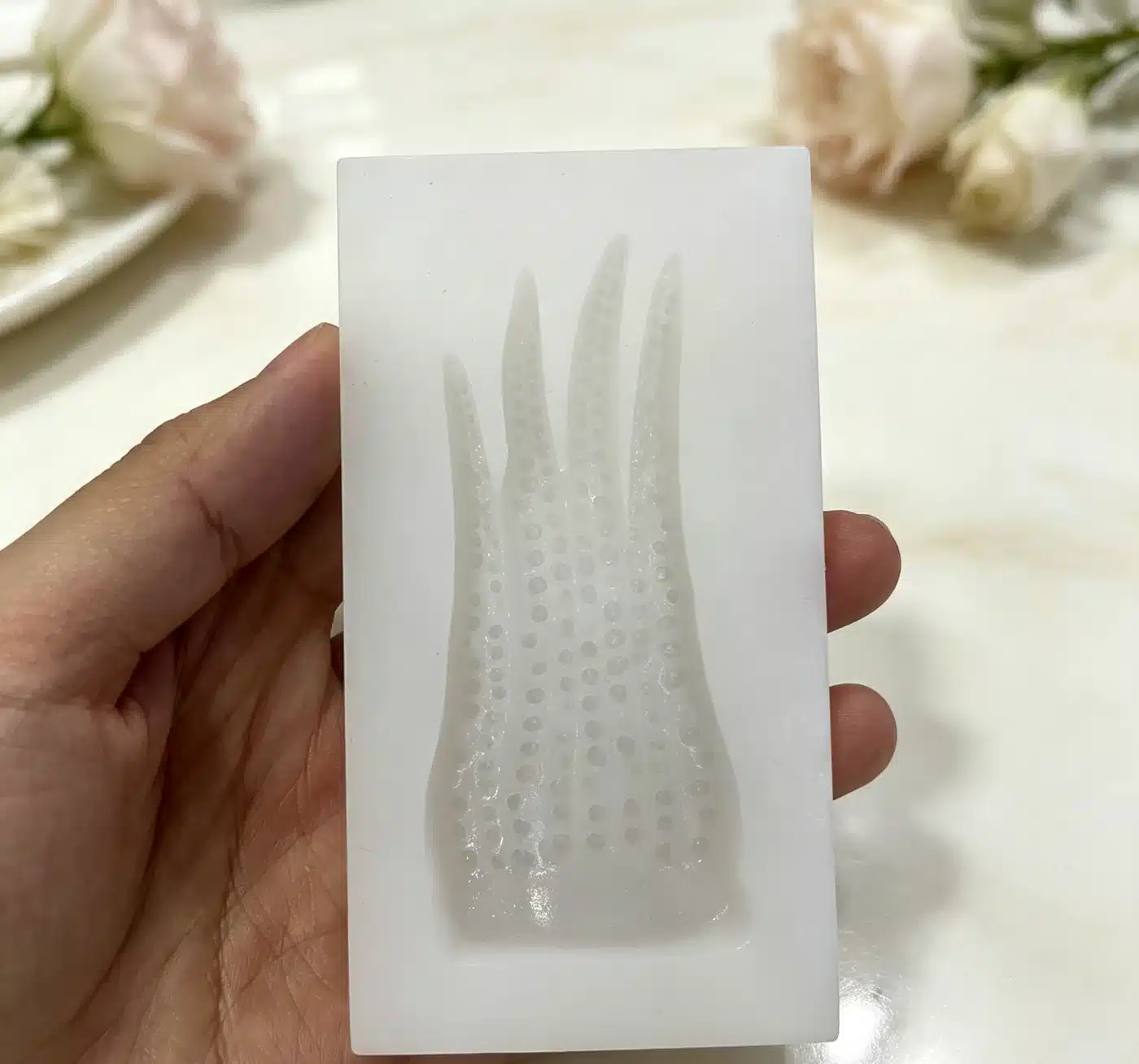
Registration keys are how a two-piece RTV mold finds itself every cycle. They are rubber bosses, sockets, fences, or jacket pockets — not the ejector pins and leader pins you see on a steel press tool. If the halves walk, flash walks onto the show face. If the keys tear on open, the next dump shuts on a chewed register and the seam steps. You spec keys from the split, the clamp, and the dump mass, not from a "two-part mold" checkbox.
RUUIPON cuts keys into the pour plan in Bao'an / Shajing since 2018. Prototype 3–7 business days after CAD lock. Production MOQ 20 pieces per design. Simple 3D is USD $50 when that CAD scope applies. Platinum mix 1:1 or 10:1 by weight; linear shrink after a full cure typically about 0.1–0.3%. Steel/LSR *parts* with leader pins an HTV product RFQ here.
Does not apply when the tool is an open-back tray. No shut, no keys. It also does not apply when you already have a rigid PC chocolate book-mold with metal hinges — that register is hardware, not RTV bosses.
Keys find the halves; pins belong in steel
A key is a positive and a negative that only assemble one way. Hemispheres on a fence, a triangular pip, a dovetail pocket in the jacket, a CNC boss on a printed shell. The operator should not be able to close the mold 180° off and still clamp it. If they can, the key failed.
Steel pins on an LSR cold-runner plate locate two metal halves under clamp tons. RTV does not see those loads. Dropping a drill-blank "pin" through a silicone split usually tears the hole on the third open, then the pin rusts into a food or resin cavity. We would not spec metal pins through a platinum skin unless the jacket is rigid and the pin never touches the dump.
Flash is the witness of a bad shut, not a separate defect. If keys are shallow, the halves slide under hydrostatic head and the land opens a tenth of a millimetre. That tenth prints as a ridge on a figurine seam or a chocolate shoulder. If keys are too sharp, they tear on open and the next cycle has no register at all.
- Can the operator close it backwards? - yes -> Change key shape; add a fence or a unique pip
- Can the operator close it backwards? - no -> Do keys sit in the rubber skin?
- Do keys sit in the rubber skin? - yes and they tear -> Move keys into the jacket or enlarge the fillet
- Do keys sit in the rubber skin? - jacket pockets -> Check clamp vs wet-dump head
- Change key shape; add a fence or a unique pip -> First dump: flash land off show face
- Move keys into the jacket or enlarge the fillet -> First dump: flash land off show face
- Check clamp vs wet-dump head -> First dump: flash land off show face
- First dump: flash land off show face -> Flash on logo or face?
- Flash on logo or face? - yes -> Move parting land; recast keys
- Flash on logo or face? - no -> Lock CAD; recast from unsanded master
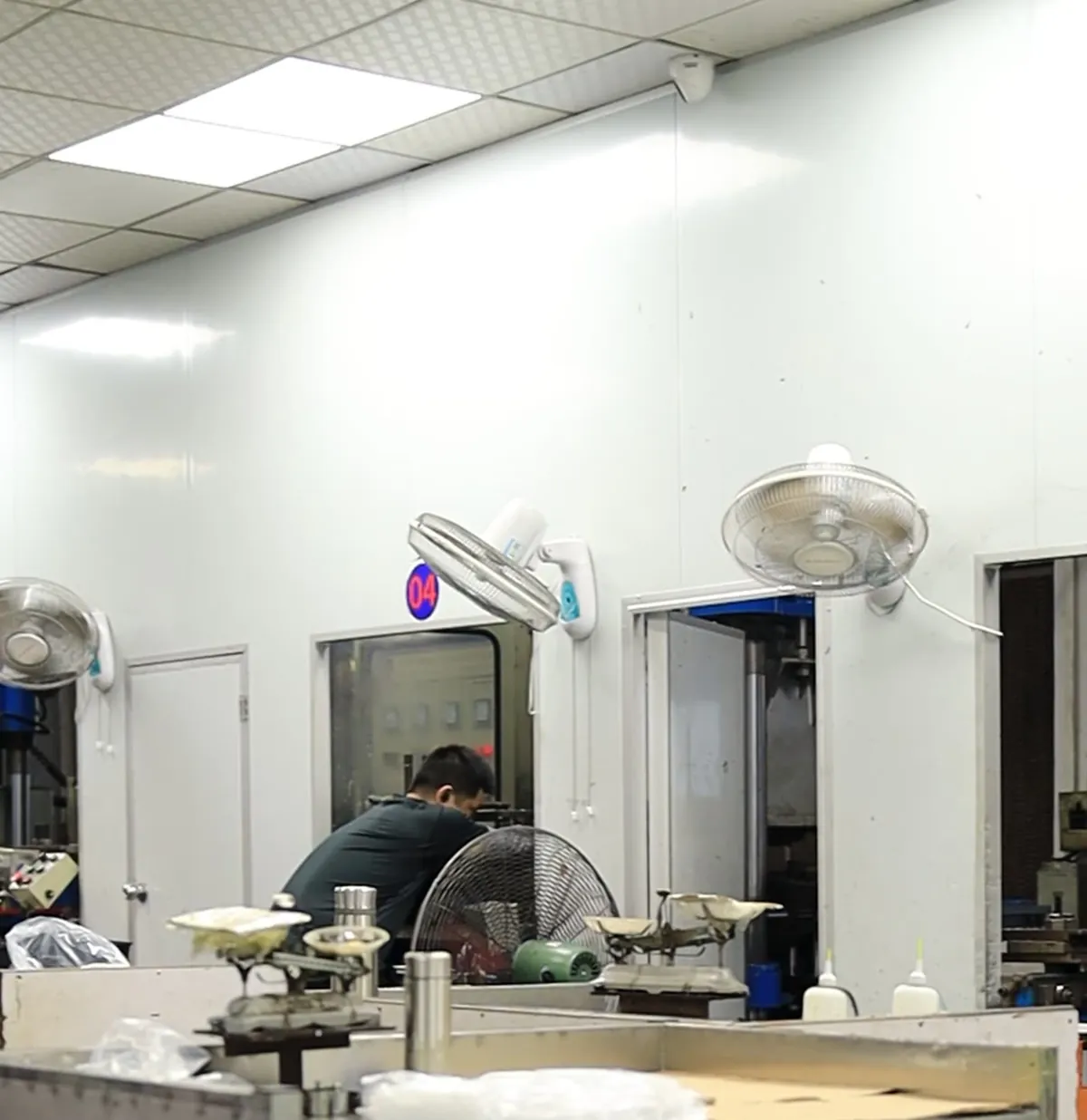
The photo that would prove a key call: two halves on the bench, keys painted so you can see whether they bottom, a dump with flash on the land versus flash on the cheek. We are not attaching a staged lot photo here.
Where flash lives when the register is wrong
Keys too close to the cavity. The boss pulls a dimple into the show wall. Keep a land between the cavity and the first pip.
Keys only in 10A rubber. Soft keys squash under a tall epoxy column. Put the register in the jacket, or use a harder local insert, and let the skin do peel.
No unique clocking. Four identical hemispheres let the operator rotate the top 90°. One odd-shaped key, or a fence that only fits one way, stops that.
Clamp without a stop. Straps crush keys. A jacket with a hard shut face takes the clamp; the rubber takes the copy.
Related structure: open-back vs split, parting land.
Shop numbers for keys and flash land
Reference values only. Confirm material-specific limits against the supplier’s technical data and agree project acceptance criteria before production.
| Item | Typical shop value |
|---|---|
| Cavity Shore | 10A–20A skin; keys in jacket when dump is wet and tall |
| Mix / shrink | 1:1 or 10:1 by weight; platinum about 0.1–0.3% |
| Loaded edge sag without jacket | about 0.5–1.5 mm |
| Prototype | 3–7 business days after CAD lock |
| Production MOQ | 20 pieces per design |
| Simple 3D | USD $50 when that CAD scope applies |
| Drawing class | ISO 3302-1 M2 as a common default — a class, not "precision" |
Key geometry we would not ship
We would not recommend relying on the flash line as the register. Flash is the leak. Keys are the location.
We would not recommend four identical ball keys with no clocking feature on a figurine that has a left and a right.
We would not recommend drilling steel pins through a food-contact platinum skin. Name 21 CFR 177.2600 extraction on the finished article if this is food; keep metal out of the cavity.
We would not recommend shrinking the keys "to save rubber" on a tall PU pour. The dump will open the land.
A tooling charge is not unrestricted ownership of the keyed jacket or the CAD. Write who keeps the master after the PO.
Worked example: 90 mm bust with torn hemispheres
A 90 mm resin bust, two-part platinum 15A, no jacket keys — only four 8 mm rubber hemispheres in the skin. First dumps looked clean. By dump ~40 the keys had torn on open, the operator started lining up "by eye," and a 0.4 mm step showed on the cheek. Recast: same 15A skin, keys moved into a rigid jacket as unique pockets, parting land down the hairline. Prototype of the recast in the 3–7 business day window after CAD lock of the jacket. Production MOQ 20 of that design. $50 3D did not apply; they already had a watertight STEP.
Mix-up: "pins" on an RTV quote means the same hardware as steel
Buyers paste "add location pins" from an LSR RFQ into an RTV split. On this floor that sentence means keys. If you actually need a molded silicone *part* with leader pins, that RFQ leaves this site. The other mix-up is treating a torn key as "the rubber is cheap" instead of a geometry fail. Recast the register; do not raise Shore first.
Questions that keep flash off the face
- Can the operator assemble the halves backwards? What feature stops that?
- Do keys live in the skin or in the jacket?
- Where is the parting land relative to the logo and the show cheek?
- What clamp or strap load hits the keys on a wet dump?
- Who keeps the keyed jacket after the tooling charge?
Related: custom figurine molds, resin PU molds, contact.
RFQ copy-pack — keys and flash
Paste into [email protected]:
Object: two-piece RTV mold I pour into, not an LSR/HCR part File: STEP / STL / photos with a millimetre scale Pour material, peak °C, and column height Show faces that cannot take flash: Preferred key style: jacket pockets / rubber bosses / you mark it Clocking: must not close backwards Clamp method: straps / jacket bolts / none CAD: mold-ready STEP OR USD $50 3D if that scope applies Prototype 3–7 business days after CAD lock, then MOQ 20 per design Who keeps the master and the keyed jacket
Send the split and the dump height. We mark key locations on your 2D — not a blank "free quote." Phone +86 135 3006 2969. Licheng Technology Industry Park, Xinhe Blvd, Shajing, Bao'an. Shop since 2018.
FAQ
Can I skip keys if I clamp the mold in a vice? A vice crushes the skin. Keys (or jacket pockets) locate; clamp holds. Without a unique register the halves still walk.
Why did my keys tear after a few dozen dumps? Sharp bosses in 10A rubber tear on open. Fillet the pip, enlarge it, or move the register into the jacket.
Is flash always a mix or degas problem? Flash on a two-piece is often a shut problem: shallow keys, no jacket, or a land that opened under head. Check register before you change the drum.
Do metal dowels make a tighter RTV split? Metal through a platinum skin usually tears the hole and can rust into the cavity. Put metal in the jacket if you need it; keep it off the dump.
If I pay tooling, can another shop recast from your keyed CAD? A tooling charge is not unrestricted ownership of master, jacket, or CAD. Write custody on the PO if you need a recast path.
Custom silicone development · DFM & prototype support
CAD, drawing, photos or sample details