
River-Table Silicone Molds Need a Jacket | RUUIPON
A river-table RTV is a large wet dump. Mother mold, dams, seams, recast of a 2 m skin. Typical shop. MOQ 20, $50 CAD when that CAD scope applies.
 Kyler Yang · Founder8 min read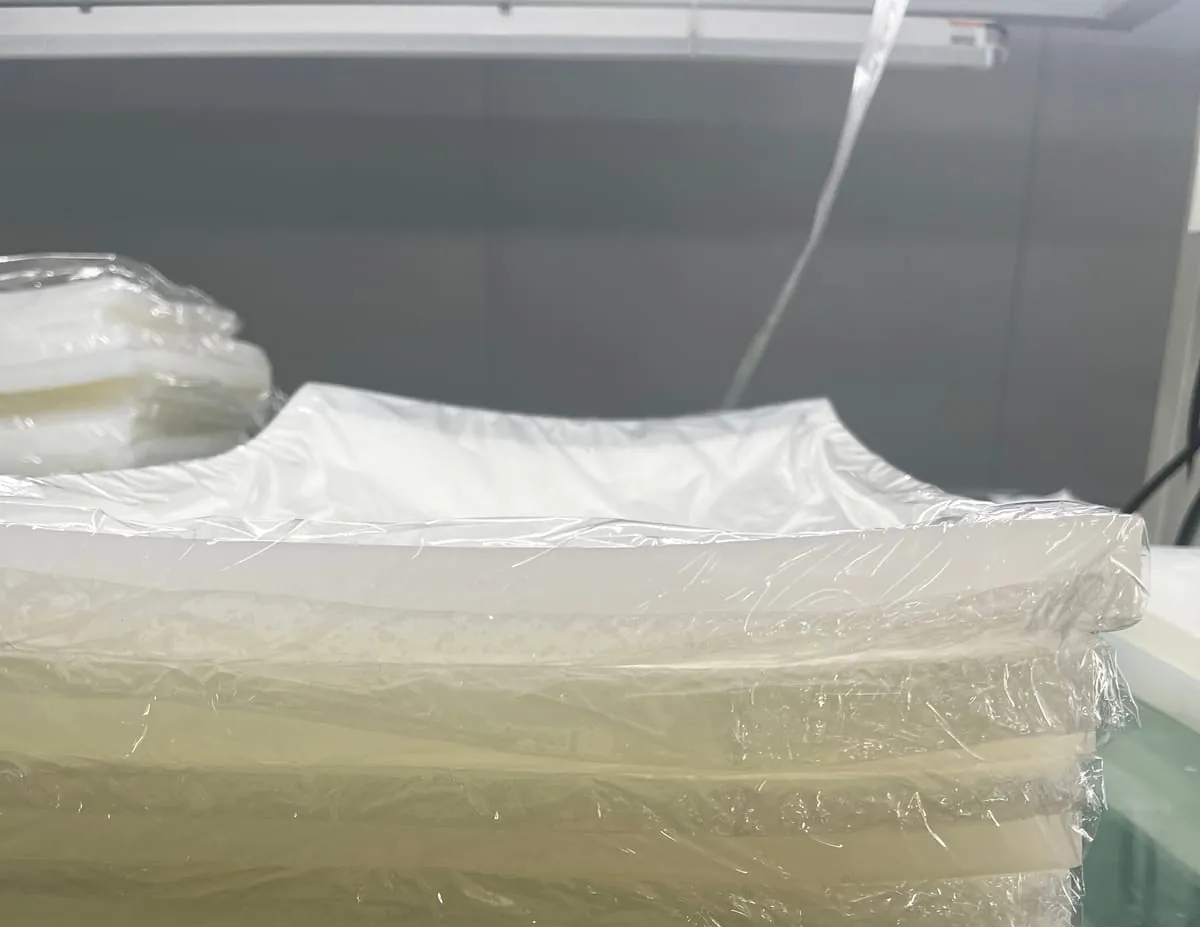
A river-table mold is a large, wet, hydrostatic dump - epoxy or similar - into an RTV skin that will balloon without a mother mold. It is not a scaled-up gummy tray and not a 200 mm chocolate bar you can peel off a board. The RUUIPON Mold Structure Decision lands here on the last branch: large wet casting → mother mold required. The rubber is still platinum 1:1 or 10:1, vacuumed in shots that fit the chamber, often poured in layers so the exotherm of the *rubber* does not cook the first coat. The jacket (plaster, FRP, or a printed/CNC shell) takes the kilograms. Extra Shore A does not.
On this site the path is photos, sketch, or CAD, then a 3D-printed pattern, often a temporary silicone flip, a resin production mother, then batch RTV. The mother is not the pattern. Free DFM. HTV/HCR compression mold tooling is also quoted on RUUIPON.
Does not apply when you meant a small epoxy jewelry tray, a chocolate slab, or a steel compression tool. We will not quote a heated LSR cavity as a river table. Food-contact docs do not belong on an epoxy table PO.
The jacket is the tool; the skin is the face
A 10A-20A glove a few millimetres thick will copy live-edge bark. It will not hold a 20 mm epoxy river without a shell. Loaded sag of about 0.5-1.5 mm on a candy tray becomes centimetres of belly on a table if you skip the jacket. Pour the dump with the skin in the jacket, keys seated, dams clamped.
Seams: a 2 m one-piece skin is a transport and recast problem. Designed splits in the jacket, with keys in the rubber, let you ship and flip. A surprise knife cut down the middle of a cured cube is how you mismatch the river banks.
Dams: the flask is a wall that sets epoxy volume. Cardboard and leaking foam board fail at this scale. Water-test the dam. Layer-pour the *rubber* so each cup fits the vacuum pot and so the platinum exotherm stays sane - that sequence is the layer-pour article; here the reason is size.
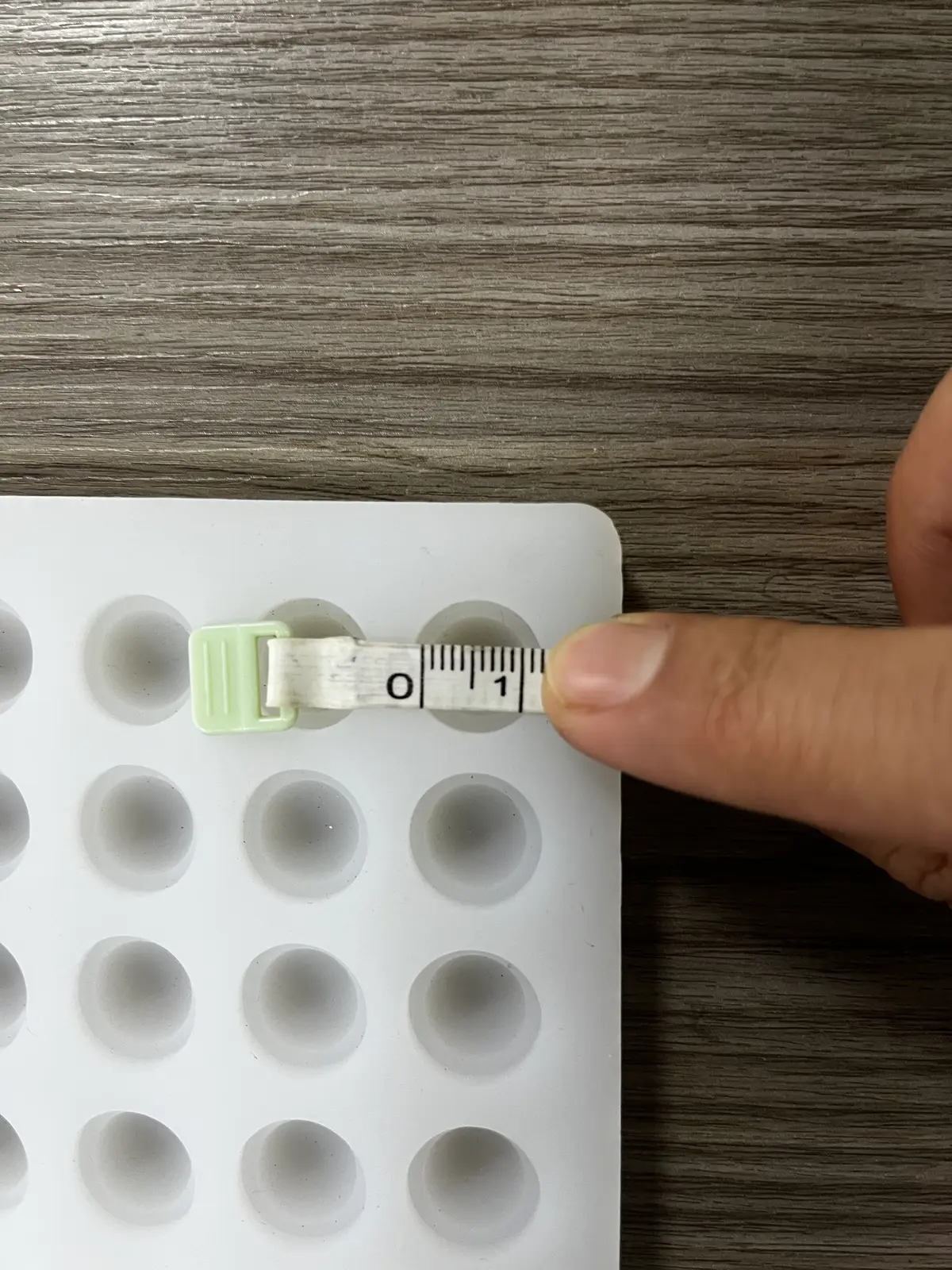
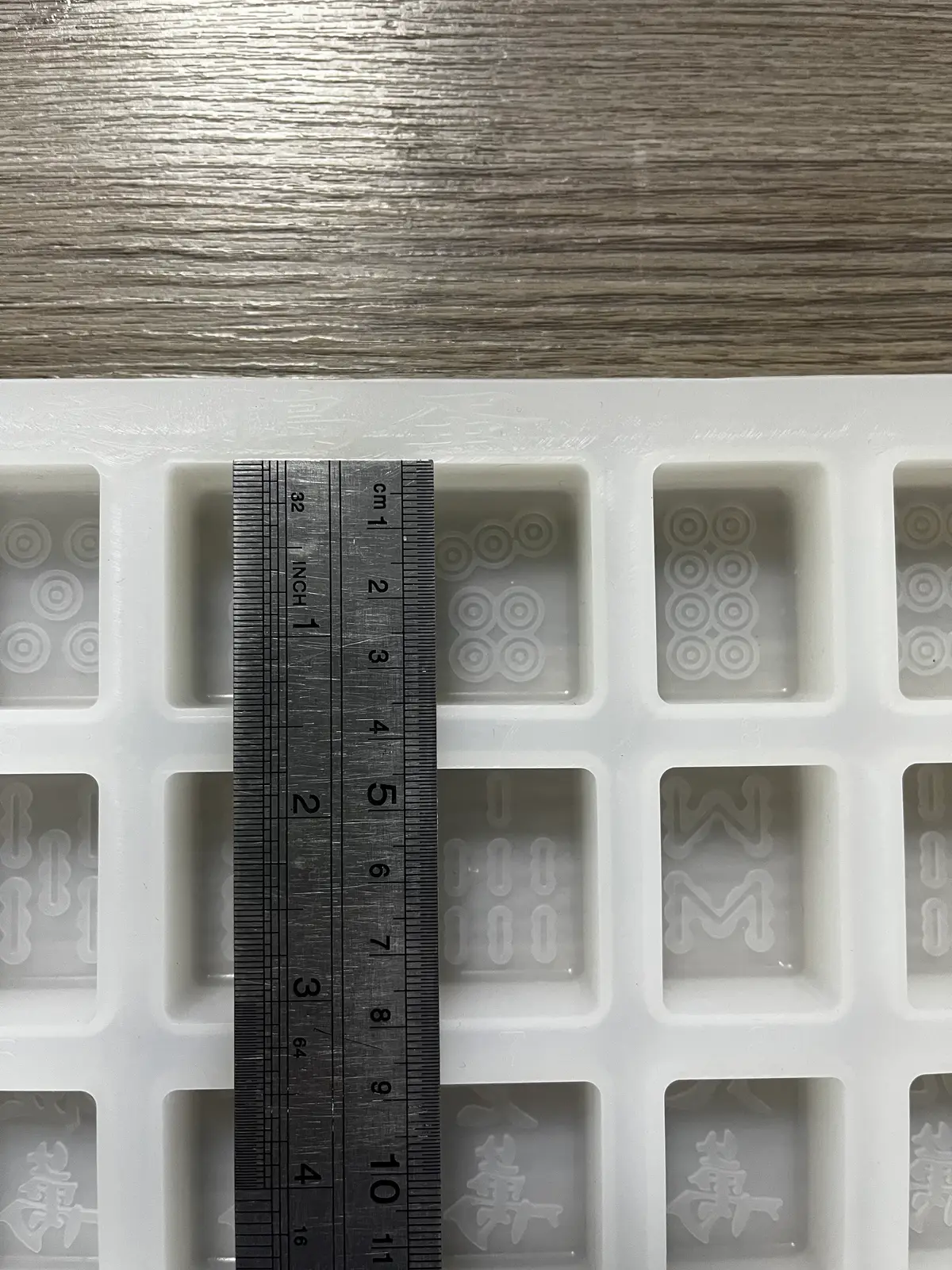
The photo that would prove a river-table spec: jacket halves with keys, skin thickness map, dam height in millimetres, a millimetre scale on the live edge. A finished walnut table in a showroom does not prove the mold.
- Structure: large wet → mother mold -> Skin thickness map
- Skin thickness map -> Jacket split + keys
- Jacket split + keys -> Degas platinum in shots that fit the pot
- Degas platinum in shots that fit the pot -> Layer the rubber if mass demands
- Layer the rubber if mass demands -> Water-test dams, then epoxy dump in the jacket
Transport, recast, and MOQ 20
A 2 m skin folded in a carton crushes keys. Pack on the jacket or on a dummy. Recast from the sealed master (the wood slab or a scanned CAD), not from a stretched skin. Tooling charge is not unrestricted ownership of the jacket CAD - write custody.
MOQ 20 / design is the production floor when you want a *repeatable SKU* - for example a 400 mm inlay mold you will run as a product line. One monumental table can still be a prototype conversation; we will not pretend 20 dining tables are the only way to start, and we will not pretend one skin is "MOQ 1 catalog." Say the SKU.
USD $50 CAD applies when we remodel a manageable master (an inlay, a logo river). Scanning a 2 m slab is a different scope; do not stuff it into fifty dollars.
ISO 3302-1 M2 on a table dump is rarely the buyer's worry; epoxy shrink and wood movement dwarf platinum 0.1-0.3%. Still put a class on any rubber article you care about.
Failure: belly in the river, or a split that does not key
Symptom: epoxy surface dishes; or the two banks step at the seam.
Cause: no jacket / jacket not seated; keys crushed in freight; dam leak that starved one end.
Confirm: empty skin on a flat table vs in the jacket. If it only lies flat in the shell, the shell is not optional.
Fix: build or recast the jacket, recut keys, recast the skin if it stretched. Do not raise Shore A on a 2 m glove as the first move.
Typical shop values
Reference values only. Confirm material-specific limits against the supplier’s technical data and agree project acceptance criteria before production.
| Item | Typical shop value |
|---|---|
| Mix / shrink | 1:1 or 10:1 by weight; platinum about 0.1-0.3% |
| Skin Shore | 10A-20A faces common |
| Loaded sag without jacket | about 0.5-1.5 mm on small trays; much more at table scale |
| Prototype | 3-7 business days after CAD lock |
| Production MOQ | 20 pieces per design |
| Simple 3D | USD $50 when that CAD scope applies |
| Drawing class | ISO 3302-1 M2 as a common default |
Stay on this page / skip this page
Stay when the dump is a large wet epoxy river and you need a platinum skin plus a jacket / mother-mold support shell - not a bigger candy tray.
Skip if you wanted a 200 mm chocolate bar. Skip a food-contact pack on epoxy. Skip stuffing a 2 m scan into a USD 50 CAD line. Finished table parts are not a RUUIPON carton.
We will not quote a jacket-free 10A skin for a wet epoxy river. We will not quote a cardboard dam at this scale. We will not fold the skin for air freight. We will not stuff a 2 m scan into the USD 50 CAD revision. We will not put a 21 CFR / LFGB sentence on an epoxy river PO.
Related: custom resin molds, contact.
Worked example: 400 mm inlay river, not a dining table
Repeatable 400 × 200 mm walnut inlay with a 30 mm resin river. Buyer asked for "river table mold, no jacket." We ran Structure Decision, built a 4-5 mm platinum 1:1 skin and an FRP jacket with keys, dams 10 mm above the pour. Prototype 3-7 business days after CAD lock of the inlay. $50 CAD applied because the live edge was a photo set we remodelled as a manageable master. Production MOQ 20 of that inlay design. The 2 m dining table stayed a wood-shop job.
Mix-up: bigger tray, same candy SOP
Gummy sag notes do not scale to epoxy kilograms. Related: when you need a mother mold, epoxy resin molds, contact.
What to ask when you're buying a river-table tool
- SKU size in millimetres - inlay vs full table?
- Dump kilograms and peak exotherm you actually see?
- Jacket material you can store - FRP, plaster, printed shell?
- Seam map and who keeps the jacket CAD?
- After lock, 3-7 business days, then MOQ 20 / design if it is a repeatable SKU?
RFQ copy-pack - river-table RTV
Paste into [email protected]:
Object: RTV skin + mother mold for a wet epoxy dump, not an LSR/HCR part Size mm (inlay vs full slab) Dump: epoxy kg and peak °C if known Jacket: FRP / plaster / printed / you decide Seam map if the skin cannot ship in one piece File: STEP / STL / photos with a millimetre scale CAD: mold-ready OR USD $50 3D if that *small* scope applies Prototype 3-7 business days after CAD lock, then MOQ 20 per design Who keeps the master and the jacket
Send millimetres and dump kilograms, not "river table mold." We jacket the skin - not a blank quote request. Phone +86 135 3006 2969. Xinhe Blvd, Shajing, Bao'an. Shop since 2018.
FAQ
Do I need a mother mold for a river table? Yes for a wet, large dump. The skin copies the edge; the jacket holds the kilograms. Extra Shore A is not the jacket.
Can you make a 2 m one-piece skin? Sometimes, and it ships badly. Designed jacket splits with keys are how production inlays survive freight.
Is MOQ 20 a dining-table order? MOQ 20 is per design for a repeatable SKU. Say whether you are buying an inlay product or a one-off slab conversation.
Will platinum shrink ruin the river fit? About 0.1-0.3% linear after full cure. Wood movement and epoxy shrink are usually larger. Lock the millimetres you care about.
Does $50 CAD cover a full table scan? No. USD $50 when that CAD scope applies - a manageable remodel, not a 2 m survey. Clock is 3-7 business days after lock.
Custom silicone development · DFM & prototype support
CAD, drawing, photos or sample details