
Transfer RTV Masters Safely; Recast Jackets
A second source is a qualified process, not a crate. Move the master with files and a first-dump pack. RTV jackets usually recast; they rarely travel well.
 Kyler Yang · Founder10 min read
Second-sourcing a custom silicone part is a process qualification, not a freight job. The crate can move in a week. The second factory still has to heat, vacuum, balance, and flash a tool it did not cut — or pour a jacket it did not mix — on a bench it did not try out, with a compound lot it did not validate.
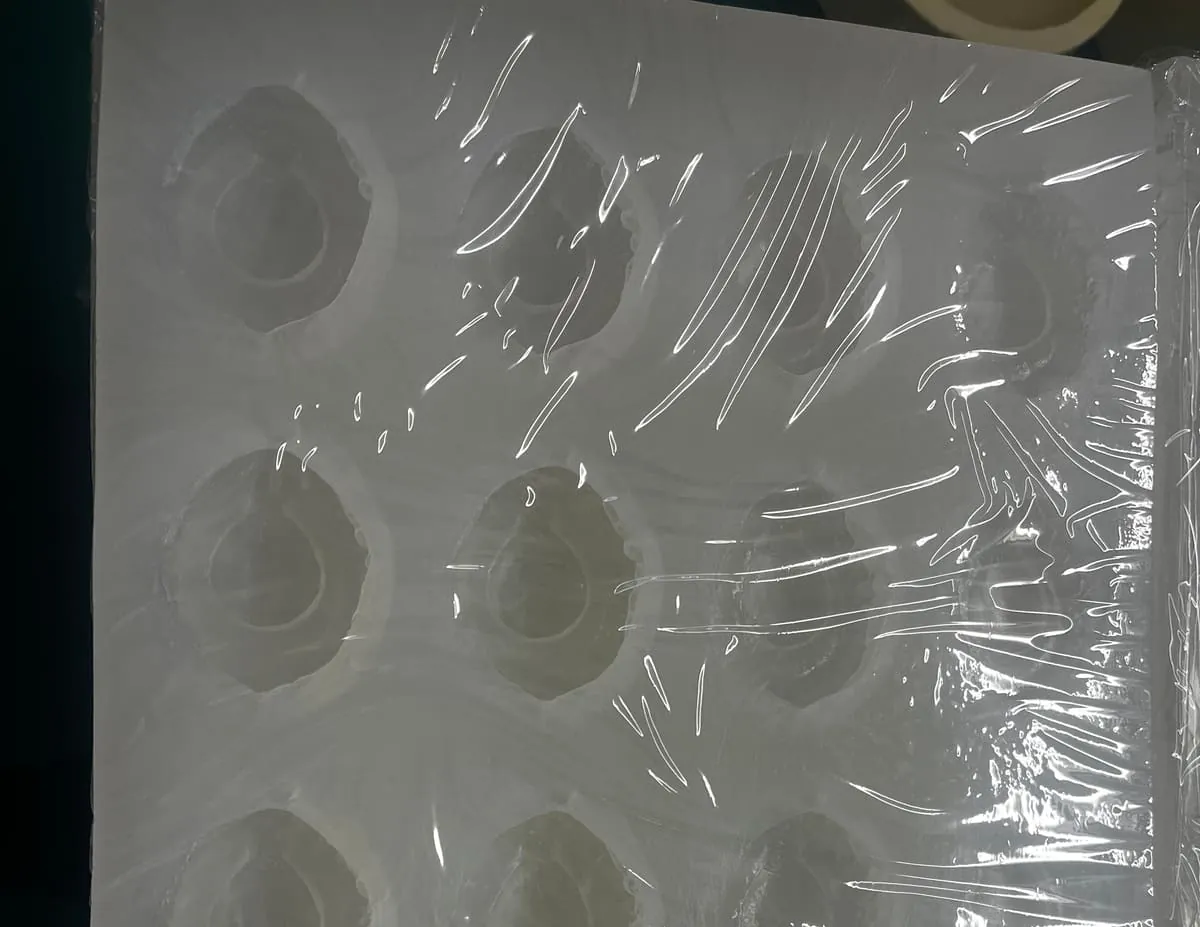
On this site, RTV jackets usually cannot transfer. You recast them at the new shop from a master you still control. LSR steel, HCR compression tools, and even aluminum bridges can transfer at a parts OEM. Do this when you need capacity, geographic risk cover, or an exit from a shop that has become a hostage-taker. Do not do this as a surprise punishment in week two of a quality fight, with no files and a torn 12A skin. That is how you buy two scrap streams.
Why a “simple transfer” fails
Fit to a different press (LIM). Tie-bar spacing, locator rings, cold-deck plumbing, heater connectors, vacuum pumps, clamp curves. A tool that ran on one LSR machine may be a hardware project on another. Ask for platens and connector drawings *before* the crate leaves.
Fit to a different pour bench (RTV). Vacuum pump quality, mix discipline, tin vs platinum segregation, box size. A jacket that ran in one shop’s mother may flash in another if keys were shop-made folklore. Recast from the master; do not ship a stretched skin and hope.
Unknown wear. The sending shop’s “good” flash spec may be a land that is already rolled — or a key that is already bruised. Photograph shutoffs/keys and measure flash on a last-lot sample before you ship.
Missing recipe. Cure temperature, time, clamp, vacuum, injection profile, post-cure — or mix ratio, degas spec, wait, dump recipe. If it lived in one technician’s head, the second source is developing a process from a used tool. That is not cheaper than a recut or a recast. It is slower.
Compound identity. Same grade code, different lot, different pigment paste, different mixer. Platinum LSR is intolerant of substitution theatre. Platinum RTV is intolerant of tin soap on the bench. Transfer the spec and the approved manufacturer, not “50A transparent” or “food silicone.”
IP and politics. The first shop still has electrodes, a spare insert, a copy of the SLA, and a night-shift CNC. A transfer without a no-duplicate clause and a file escrow is how you get a quiet third tool — or a quiet second master.
What must travel with the steel — or with the master
Make a transfer BOM. If a line is missing, assume you will pay for it twice.
- RTV: master, native CAD, 2D, DFM/split notes, last mix sheet, first-dump pack, sealed sample dumps, material spec, recast log, jacket photos (for wear, not as the production skin), packing that does not warp the master.
- LIM/HCR: mold base, all inserts, slides, spares, cold-runner deck or sprue bushing, heaters, thermocouples, vacuum seals, lifting gear, nameplate photos, native CAD, 2D with shrink, electrode files, tryout sheet, last FAI pack, maintenance log.
Contractually: title is yours (if it is not, you are not transferring; you are begging). Tooling charge was never unrestricted ownership. No-use after ship-out. Return of files from the first shop. Receiving shop signs the same ownership, no-duplicate, and no-export clauses you should have had the first time.
Receiving: treat it like a new tool, because it is
The second factory did not cut this steel or pour this skin. Their first job is incoming inspection, not “load it and quote a piece price.”
- Unpack against the BOM. Photograph nameplate, cavity count, shutoff or keys, deck or mother, connectors.
- Clean to a known state. Degrease rust preventive in a way that is LSR-safe. Check channels for water and rust. RTV: inspect the *master*, not a torn glove you plan to reuse.
- Fit-check on the intended press — or dry-fit the box. Adapters and plumbing are engineering, not surprises on tryout day.
- Dry cycle. Slides, ejectors, needles. Do not inject into a tool that is mechanically wrong. Do not pour onto a master that does not key.
- First shots / first pour on the *approved* grade, window from the tryout or mix sheet as a starting guess, not as a religion. The new press will not copy the old curve. The new bench will not copy the old humidity.
- FAI / first-dump pack against the drawing, not against the old shop’s sample vibe. If the land is tired, stop and recut. If the skin is tired, recast. Do not “process around” a rolled shutoff or a bruised key for six months.
- Lock a process window and a change-control rule. The second source is now the process owner for that site.
Expect tryout days. A transfer that is “free because the mold exists” is a lie you told purchasing. Budget receiving engineering as a line. Recasting an RTV skin from a healthy master is usually cheaper than a full steel recut *if* the master is healthy and documented.
When to recut instead of transferring — and when to recast
Recast RTV when the master is sound and the skin is the worn object. Recut steel (new cavities, or a new tool at the second source from your files) when:
- The first shop will not release files or an honest wear log.
- Shutoff, slides, or deck are at end of life — or the master is sanded “clean” and no longer the CAD.
- The receiving press family cannot host the base without a science project.
- You need different cavitation or a cold deck the original never had — or a different split the original glove never had.
- IP risk is high and you do not want the first shop’s steel (or SLA) traveling through a port they still influence.
- The original is aluminum you were already going to abandon for steel.
A parallel recut (or a parallel pour from your master copy) while the first tool keeps running is the clean dual-source: two qualified processes, two FAI/first-dump packs, no hostage crate. It costs a second T_tool. It buys a real second source. Transferring a single tool between factories is dual-source only while both have it, which is never. Transferring a single jacket is dual-source never.
RUUIPON Mold Structure Decision: Dual-source the *master* and the split decision (open-back vs two-part vs core). Recast skins locally. Do not dual-source a floppy glove with no mother.
Common mix-up: shipping the jacket instead of the master
A lot of RFQs crate a 15A skin and call it the tool. In the shop that usually means a stretched cavity and no CAD.
What to ask when you're buying
- Title on master / steel — listed, with files?
- Wear state: photos of keys or lands, last-lot samples?
- Mix sheet or tryout window traveling with the crate?
- Receiving inspection + first dump / FAI quoted as engineering days?
- Recast from master vs recut from CAD as a parallel line?
Worked example
You're dual-sourcing a 12-cavity gummy tray. Keep the CNC master (and a verified copy), recast platinum skins at shop B with the same mix sheet and first-dump pack. Do not ship the old 12A skin as the production tool. If the SKU is a 4-cavity LSR valve, transfer steel with files and a receiving FAI, and do not kill shop A until shop B’s FAI is signed.
We would not recommend asking shop A to email shop B the CAD
We would not recommend processing around a rolled shutoff for six months, treating a transferred aluminum bridge as a long-term dual source, or skipping incoming tool inspection because “the mold exists.” We would not reuse a torn RTV glove as the second-source cavity.
- RTV cavity or steel part tool? - RTV -> You hub the master + files
- You hub the master + files -> Recast skin at shop B + first-dump pack
- RTV cavity or steel part tool? - LSR/HCR steel -> Transfer BOM + receiving FAI
- Transfer BOM + receiving FAI -> Or parallel recut from your CAD
- Need a second source - Crate the torn jacket -> Stretched cavity / no dual source
Typical shop values
Reference values only. Confirm material-specific limits against the supplier’s technical data and agree project acceptance criteria before production.
| Item | Typical shop value | | --- | --- | | Platinum RTV mix | 1:1 or 10:1 — recast at the new bench, don’t ship folklore | | Platinum shrink | About 0.1–0.3% if the master was not sanded | | LSR / HCR shrink | About 2–3% / 1.5–2.5% — new press will not copy the old curve | | RTV cavity Shore | 10A–20A skins do not travel as production tools | | ISO 3302-1 | M2 common; receiving FAI is against the drawing | | Tooling charge | ≠ title; without title you are begging |
Copy this into a second-source RFQ
- Receiving inspection, press fit or box dry-fit, tryout/pour, and FAI or first-dump pack
- Quote those engineering days separately from piece or dump price
- Recut option from buyer CAD, or recast option from buyer master, as a parallel line
- Transfer BOM: master/files or steel stack/files
- Same ownership, no-duplicate, no-export clauses
Send the titled master (or steel) list. We'll recast from your pattern — not from a stretched glove. Custom RTV molds.
Related: tooling ownership, 3D scan damaged masters, NDAs.
FAQ
Can I ship an LSR tool to a new factory and expect identical parts on the first lot? No. Different presses, heater circuits, vacuum, and compound lots shift flash and shrink. Plan a receiving FAI and a process window at the new site. Identical drawings, not identical luck. RTV jackets: recast; do not expect a shipped 15A skin to dump identical chocolates.
Who pays for tryout at the receiving factory? You should, as a stated engineering line, unless the transfer is the receiving shop’s idea to win the work and they bid tryout in. Leaving it unspoken is how tryout appears as “tool repair” later. Healthy tools still need hours. Tired tools need a recut or recast quote, not optimism.
What if the original factory will not release CAD? Then you do not have a portable tool. You have hardware and a relationship. Use contractual file-delivery and, if the product is worth it, a parallel recut or recast from whatever files you still hold (your STEP, your 2D, your master). Reverse-engineering a hot LSR tool from parts is slow and inexact. Scanning a torn jacket is also inexact. Fix the contract on the *next* tool today.
Is a transferred aluminum bridge worth second-sourcing? Rarely as a long-term dual source. Aluminum shutoffs are already a wear clock. A second shop will inherit a land you did not watch. Use aluminum to qualify geometry at one site; cut steel (maybe two insert sets) for dual-source production. RTV: dual-source the master.
Should both factories run the same LSR or RTV grade lot? Same *approved grade and manufacturer*, yes. Same lot is a logistics trick, not a requirement, if incoming inspection and validation allow lot changes. Do not let shop B “equivalent” a cheaper kit to hit a piece price. Write the approved list and change notice into both quality agreements. Keep tin off the platinum bench at both.
Custom silicone development · DFM & prototype support
CAD, drawing, photos or sample details