
Silicone Mix Ratio Mistakes: 1:1 vs 10:1 | RUUIPON
Platinum RTV mix is 1:1 or 10:1 by weight, not by unmarked cups. Off-ratio faces stay tacky or crumbly. Shop scale habits, MOQ 20, $50 CAD when it applies.
 Kyler Yang · Founder8 min read
Platinum RTV mix is 1:1 or 10:1 by weight, by grade, on a scale that reads grams. It is not "equal cups because the bottles look the same size." A 10:1 drum poured as if it were 1:1 leaves a cavity that never becomes a cavity: the face stays wet, the back may skin, and the dump pulls gum. A 1:1 grade starved of B part cures short — crumbly, dull, tears on first peel. Ratio mistakes are the most common remake we see on kits sent in with a master.
RUUIPON weighs A/B in Bao'an / Shajing since 2018. Prototype 3–7 business days after CAD lock. Production MOQ 20 pieces per design. Simple 3D is USD $50 when that CAD scope applies. Platinum shrink after a full cure is typically about 0.1–0.3%. LSR/HCR *parts* in steel are not mixed in a cup — those RFQs an HTV product RFQ here.
Does not apply when the rubber is already a finished tray you are only dumping chocolate into. You are not mixing RTV. It also does not apply to a one-part acetoxy caulk; we would not spec that chemistry for production or food.
Weight, not cups: 1:1 and 10:1 are not the same drum
Read the TDS for the drum on the floor. 1:1 means 100 g A with 100 g B. 10:1 means 100 g A with 10 g B, still by weight. Specific gravity of A and B is often close, which is how people get away with volume on a 1:1 for a while — until a filled grade or a pigmented B throws the cup off. 10:1 by volume is almost always wrong.
Off-ratio tells:
- Too little B on a 1:1, or way too little B on a 10:1: gummy face, prints a fingerprint that stays, may never demold clean.
- Too much B: brittle, high shrinkage feel, tears at logos, sometimes a hot cup.
- Unmixed streaks: marbled soft lanes that inhibit the dump even if the average ratio was right. Fold, do not whip. See the sibling note on streaks when that page exists; here the fix is time on the walls of the cup and a scrape of the bottom.
A gram scale that rounds to 1 g is a poor fit for a 10:1 shot under 50 g of A. The B part becomes a rounding error. We batch enough A that B is several grams, or we use a scale that actually resolves 0.1 g. Pigment paste counted as "free" extra volume is another quiet ratio fail: colour is part of the shot if you mix it in, so it belongs on the TDS plan, not as a squeeze after you already closed the 1:1.
Inhibition (SLA, sulfur clay, tin residue) looks similar to off-ratio: tacky face, cured back. Confirm by mixing a coin-sized patty on a clean plastic lid. If the patty cures and the mold face does not, you have inhibition, not a scale error. If the patty stays wet too, reweigh.
- TDS says 1:1 or 10:1? -> Weigh grams; zero the cup
- Weigh grams; zero the cup -> Fold, scrape walls, vacuum until foam collapses
- Fold, scrape walls, vacuum until foam collapses -> Patty on a clean lid cures?
- Patty on a clean lid cures? - no -> Ratio, expired B, or cold drum
- Patty on a clean lid cures? - yes -> Mold face tacky, back cured?
- Mold face tacky, back cured? - yes -> Inhibition — seal master, do not add more B
- Mold face tacky, back cured? - no -> Pour
- Ratio, expired B, or cold drum -> Weigh grams; zero the cup
The photo that would prove a ratio call: scale display in grams with A poured, then B poured, cup tagged with the grade. A selfie of "two equal bottles" proves nothing.
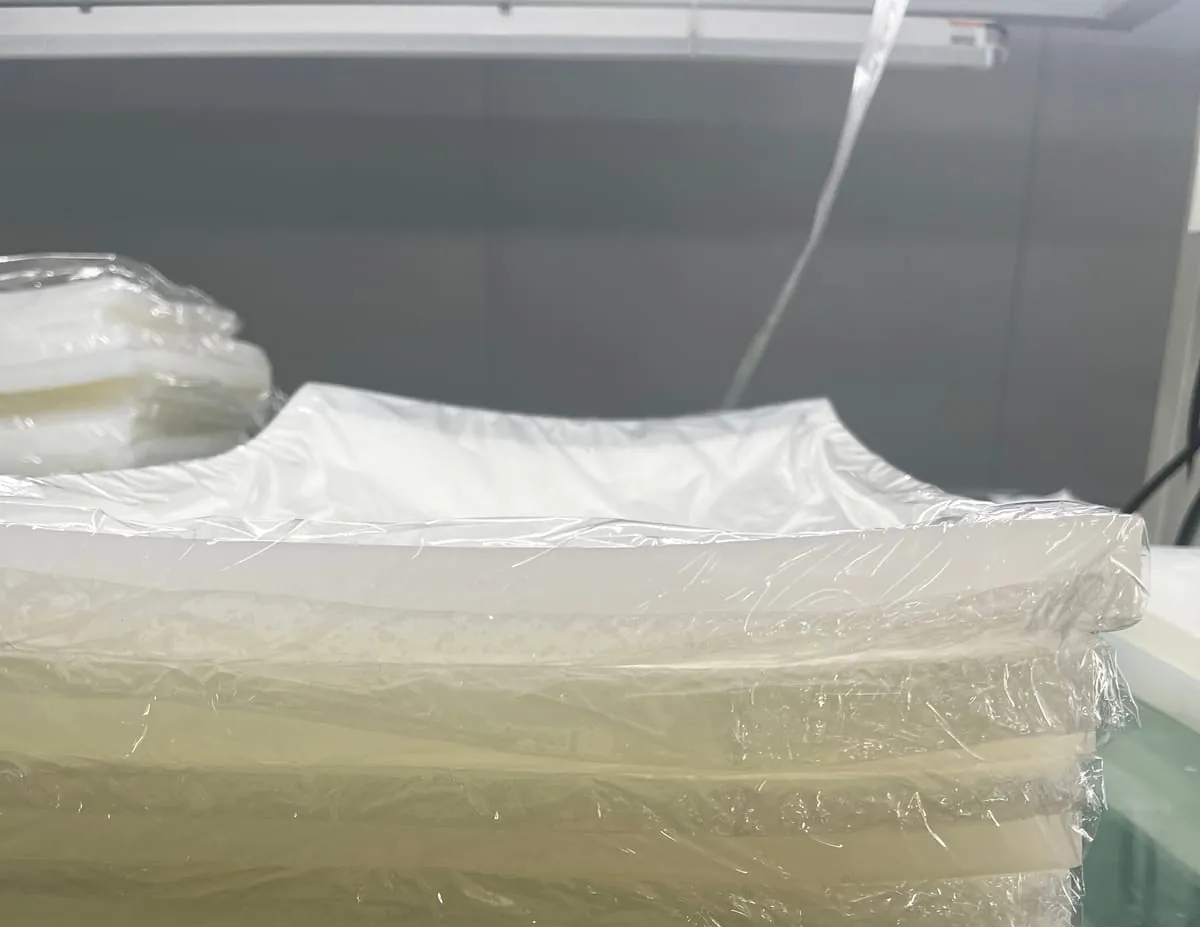
What a bad ratio looks like on the cavity
A food-contact tray that never fully skins cannot go to 21 CFR 177.2600 extraction. Scrap it. Adding extra B "to save it" after the pot life is gone does not repair a starved mix. Recast from the unsanded master.
ISO 3302-1 M2 is a drawing class. It does not forgive a 10:1 poured as 1:1.
Shop numbers for mix day
Reference values only. Confirm material-specific limits against the supplier’s technical data and agree project acceptance criteria before production.
| Item | Typical shop value |
|---|---|
| Mix | 1:1 or 10:1 by weight, by grade |
| Platinum shrink after full cure | about 0.1–0.3% |
| Cavity Shore | 10A–20A gloves; 20A–40A trays |
| Prototype | 3–7 business days after CAD lock |
| Production MOQ | 20 pieces per design |
| Simple 3D | USD $50 when that CAD scope applies |
| Drawing class | ISO 3302-1 M2 as a common default |
Mix habits we would not ship
We would not recommend marking a paper cup at "half" and calling it 1:1.
We would not recommend pouring a 10:1 B part "by eye" because the bottle is small.
We would not recommend adding extra B to a tacky inhibited face. That is not a ratio problem.
We would not recommend using an expired B catalyst and then blaming the master. Check drum dates before mix.
Cold drums lie. A 10:1 B that sat near 15 °C looks thick, so operators add "a little extra" to make it pour. That extra is still off-ratio. Warm the closed bottles in a water bath the TDS allows, then weigh. Do not thin with solvent to hit a cup mark. A tooling charge is not unrestricted ownership of the remaining kit on our shelf. If you supply drums, send lot dates.
Worked example: 10:1 kit mixed as equal pumps
Buyer sent a 120 mm soap loaf master and a 10:1 kit, mixed as "equal pumps." Face stayed wet at 48 hours; back of the pour was a skin. Clean-lid patty from a weighed 10:1 shot cured. We remixed by grams, vacuumed, poured in a gasketed box. Prototype 3–7 business days after CAD lock of the loaf outline. USD $50 3D applied (photos only). Production MOQ 20 of that design. Related: soap loaf molds.
Mix-up: the bottles are the same size, so the ratio is 1:1
Packaging size is not the TDS. Some 1:1 kits ship in twin bottles. Some 10:1 kits ship A in a pail and B in a bottle that looks "too small to matter." Weigh. The other mix-up is treating pot life as the time you have to *correct* ratio. Once the cup is streaked and warming, you recast.
Questions that lock the drum
- What grade, and is the TDS 1:1 or 10:1 by weight?
- Scale resolution (grams), and who zeros the cup?
- Drum date on B, and storage temperature?
- Master chemistry (SLA, clay, wood) in case the tack is inhibition?
- Who supplies the rubber — shop drum or your kit?
Related: pot life vs demold, platinum vs tin, contact.
RFQ copy-pack — mix ratio
Paste into [email protected]:
Object: RTV mold I pour into, not an LSR/HCR part Grade if you spec a drum: 1:1 or 10:1 by weight Master material (SLA / clay / CNC / wood) and sealer Dump material and peak °C File: STEP / STL / photos with a millimetre scale CAD: mold-ready STEP OR USD $50 3D if that scope applies Prototype 3–7 business days after CAD lock, then MOQ 20 per design We mix on a gram scale; do not send "equal cups" as the spec
Send the TDS line and the master notes. We weigh A/B — not a blank "free quote." Phone +86 135 3006 2969. Licheng Technology Industry Park, Xinhe Blvd, Shajing, Bao'an. Shop since 2018.
FAQ
Can I mix 1:1 platinum by volume if A and B look the same? Close specific gravity can hide a volume error until you change pigment or filler. Weigh grams. Do not guess from bottle height.
What if I already poured a 10:1 kit as 1:1? Scrap the tool. Extra time in a warm room will not finish a wildly off-ratio cup. Recast from the master.
Does adding more B fix a sticky mold? If the stick is inhibition, more B makes a mess. Run a clean-lid patty. Sticky face plus cured patty means seal the master.
Is 10:1 "stronger" than 1:1? It is a different packaging of catalyst, not a Shore upgrade. Pick grade from dump and peel, then mix what that TDS says.
Will you mix my leftover craft kit for a food tray? Food-contact wants a platinum path and article documents (21 CFR 177.2600 / LFGB). A random leftover kit is not that path.
Custom silicone development · DFM & prototype support
CAD, drawing, photos or sample details