
Storage for RTV Food Molds, Jackets, and Masters
Store RTV cavities cool, dark, uncreased, and away from sulfur and tin tools. Keep the food-contact face clean. Never stack jackets into a fold.
 Kyler Yang · Founder6 min read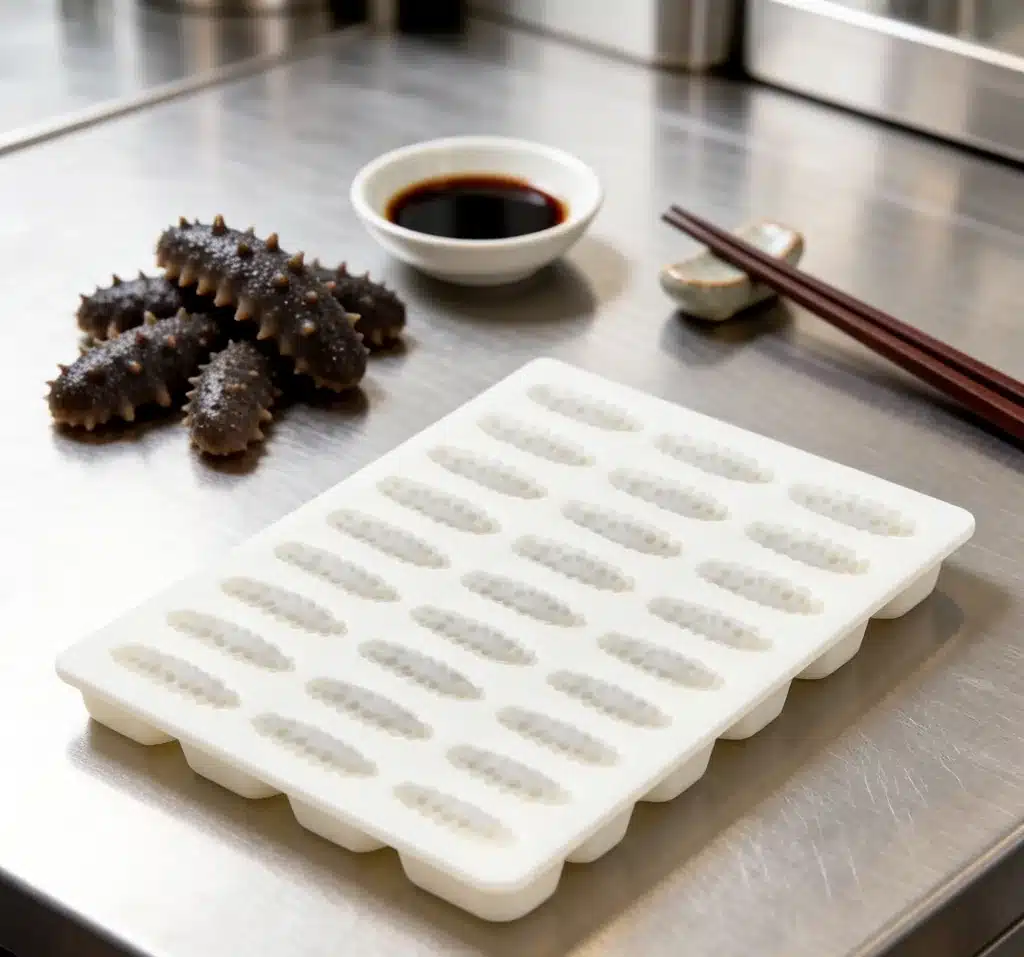
If you're storing a custom RTV food mold, store the food-contact face as if you still had to send it to the lab. A platinum RTV muffin tray that passed 21 CFR 177.2600 and LFGB / BfR XV is still only as good as the surface in the rack. Heat, sun, tight folds, sulfur, tin-cure tools, and grit will change that surface. Heat limits stay grade-specific: ice tools don't live in the pastry oven. Cleaning stays non-abrasive. Tin-cure RTV on the next shelf is a contamination neighbor, not a roommate. Masters and jackets need their own rules: a warped jacket prints the next recast wrong, and a sanded "cleaned up" master is a new CAM job.
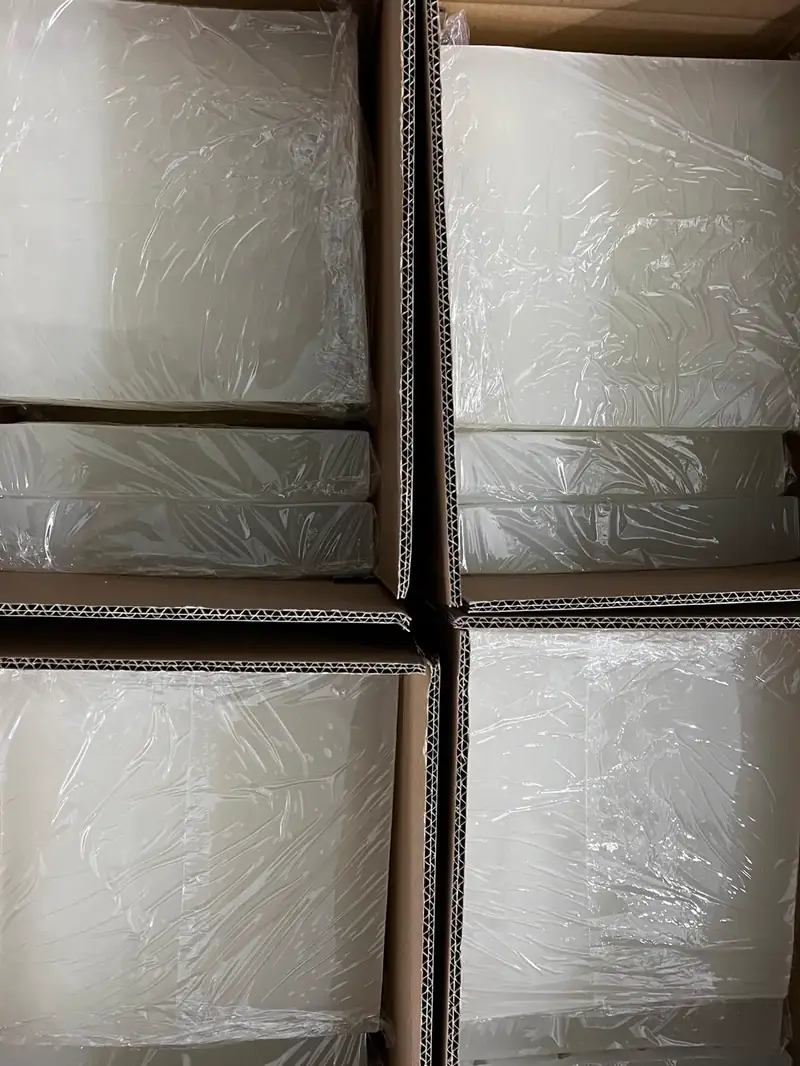
Cool, dark, uncreased, uncut
Stay inside what the grade can take at rest. A summer container can exceed a consumer ice-tray claim. Don't store under a deck oven. UV fades pigments and can chalk a face. Nested flexible cups take a crease if the pile is tall; the crease is a tear starter. Cover cavities so cardboard fibers don't sit on chocolate gloss. Never steel-wool a "pre-clean before storage." Dry, then store. 177.2600 expects a cleansed article before food contact; a warehouse that re-soils the part undoes the production wash.
Avoid sulfur-vulcanized rubber bands cinched around a bundle, tin-cure vapor in a shared cabinet, and industrial HCR with extending oils leaning on a food SKU. Packaging shouldn't smell — German sensory will notice. Chocolate: paper interleaf that doesn't lint. Ice: don't force a lid that cuts the rim. Mats (if you have a sister converting SKU) don't belong in a hard fold. Incoming: carton odor, crease, cuts, flash, color vs frozen SKU. Outgoing: repeat the care line on the pack list.
Common mix-up: vacuum-bagging to save cube
A lot of warehouses vacuum-bag thin RTV trays to save space. In the shop that usually means a hard crease in the wall and a jacket that no longer registers. If you bag, keep the shape and don't pinch the food-contact face.
What to ask when you're buying storage rules
- Nest height or a rack drawing — will stewarding invent a hook?
- Are ice tools and muffin cavities labeled and physically separated?
- Where do masters live, and who can sand them?
- Are tin-cure industrial molds in a different cabinet?
- First use after storage: wash as 177.2600 would expect?
Worked example: hotel cabinet with ice and muffins
A hotel wants to store 24-cavity platinum RTV muffins and 50 mm ice spheres in one pastry cabinet. Yes if they're labeled and the cabinet isn't hot. No if the team will "warm" ice tools in the muffin oven by habit. Physical separation prevents the wrong duty. Include a simple rack drawing in the commercial pack so nobody invents a pinching hook.
When this article is the wrong quote
If the SKU is an LSR consumer ice *part* in retail distribution, carton cube and lid fit are a parts-packaging problem. If you needed durability cycle counts, that's a different protocol. Don't use storage rules as a second certificate. A tiny one-piece tray can nest more aggressively than a keyed three-piece with a plaster jacket — geometry overrides a generic "stack them" line.
Related reading: shelf life, durability testing, commercial baking molds, custom RTV molds.
Storage block for the pack list and the bin
- Cool, dark, dry; no tight fold of jacket or cavity
- Food-contact face clean, uncut; soft cloth only
- Masters in a labeled box; do not sand "to clean"
- Tin-cure tools and sulfur bands off this shelf
- Ice vs bake labeled; heat duty on the bin
- First use after storage: wash, then bake or freeze
Send how you'll store (warehouse, hotel rack, seasonal drawer) and the cavity family. We'll write nest limits, a rack sketch if needed, and bin labels that keep ice out of the pastry oven.
We would not recommend vacuum-bagging thin RTV into a crease
We would not recommend sulfur rubber bands on chocolate gloss, storing ice tools under a deck oven, or inventing a hook that pinches a wall. We would not sand a master "to clean it" before the next recast.
Store the stack, not a pretzel:
- Dry, uncut, labeled -> Rack or designed nest
- Rack or designed nest -> Ice vs bake bins separated
Typical shop values: warehouse and hotel rack
| Item | Typical shop value | | --- | --- | | Cavity Shore | 10A–20A platinum RTV plus jacket | | Loaded-tray sag if stacked tall | About 0.5–1.5 mm | | Ice sphere example | 50 mm two-part; do not "preheat" in the muffin oven | | Hotel muffin grid | 24-cavity, bun-pan jacket, labeled bin | | Mix / shrink | Platinum 1:1 or 10:1; ~0.1–0.3% |
Reference values only. Confirm material-specific limits against the supplier’s technical data and agree project acceptance criteria before production.
FAQ
Can we store ice tools and muffin trays in the same hotel cabinet? Yes if they're labeled and the cabinet isn't hot. No if the pastry team will warm ice tools in the muffin oven by habit. Heat limits are grade-specific.
Is vacuum-bagging RTV molds a good warehouse method? A hard vacuum that folds a thin wall into a crease is a bad method. Keep the shape and don't use films that smell.
May we hold chocolate molds with rubber bands? Avoid sulfur-vulcanized bands cinched on the cavity. They leave set marks. Use a tray or a wrap that doesn't cut or crease.
How clean must a mold be before long storage? Dry, no fat film if you can wash it, no grit. Re-soiling and then storing locks odor into any micro-cut.
Do jackets store nested or on a rack? A designed nest or rack. Over-compressing to save cube is a crease factory. Don't let a steel cutter ride in the same bin as chocolate gloss faces.
Custom silicone development · DFM & prototype support
CAD, drawing, photos or sample details