
Pigment the RTV Tool, Not Your Food Dump | RUUIPON
Tint the platinum mold rubber so keys and streaks show. Do not color a chocolate dump through the cavity. Typical shop values. Food wells stay ungreased.
 Kyler Yang · Founder7 min read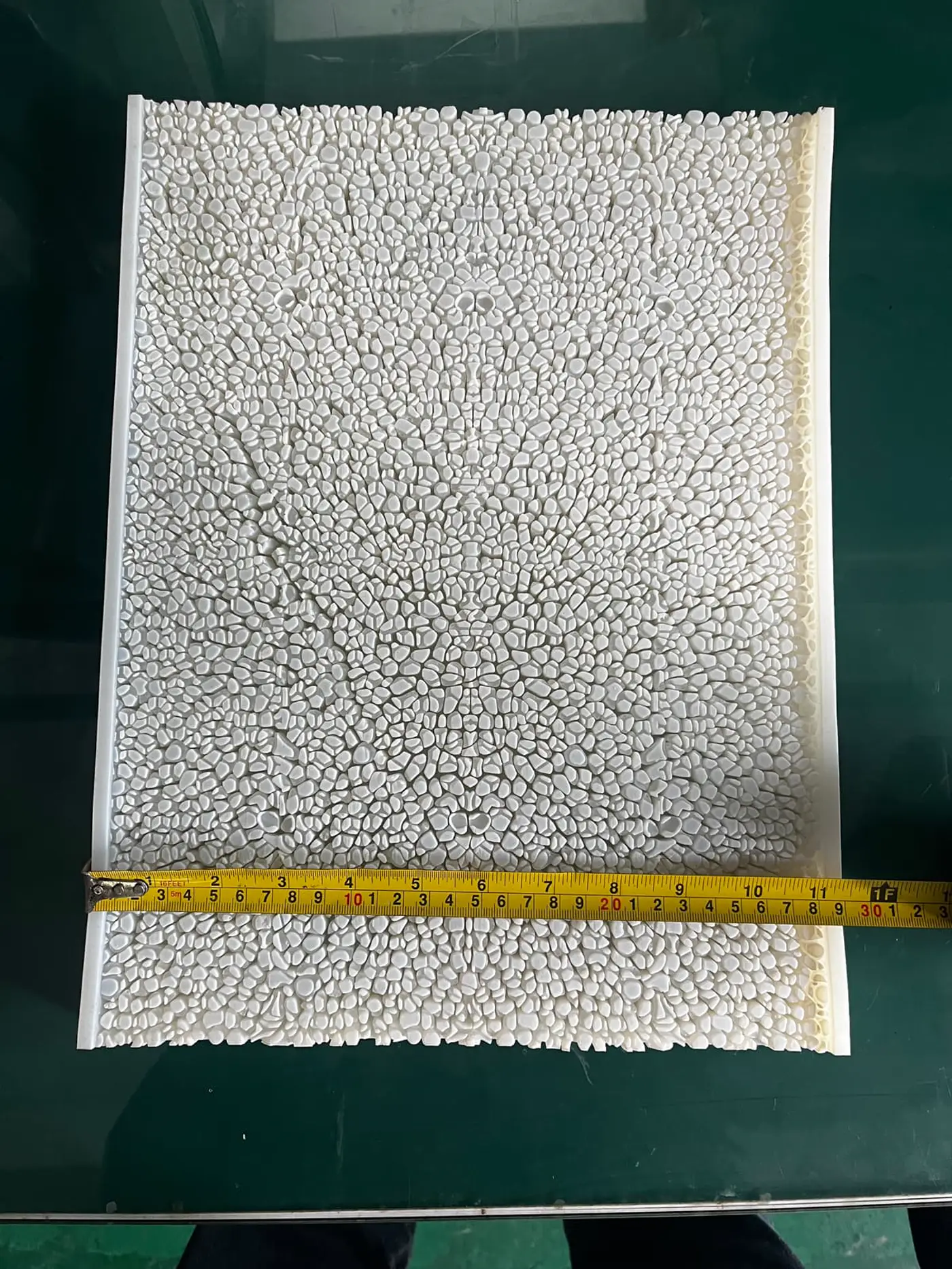
Pigment in mold rubber is a shop visibility choice: a tinted platinum skin shows mix streaks, key damage, and whether you closed the two-part on the right register. It is not how you color gummies or couverture. Food color belongs in the dump kettle, with a documented path. A dye that bleeds from a cheap tray into chocolate is a different failure (migration), and we will not spec that path. For the *tool*, we use a platinum-compatible paste at a low loading so Shore and cure stay in band. Too much pigment is filler: it can inhibit, raise viscosity, and print a dusty face. Food cavities stay dry — no grease, no tin.
On this site the path is photos, sketch, or CAD, then a 3D-printed pattern, often a temporary silicone flip, a resin production mother, then batch RTV. The mother is not the pattern. Free DFM. HTV/HCR compression mold tooling is also quoted on RUUIPON.
Does not apply when you want a translucent chocolate mold so you can watch temper fill — that's a clear-grade conversation, not a pigment loading. It also does not apply to painting acrylic on a cured well "to make it pretty," or to coloring CBD/THC gummies (tooling only; we don't dose). Don't treat a tinted tray as an FDA-approved-factory claim.
Why we tint the skin, not the dump
Operators miss streaks in unpigmented 1:1 platinum under shop LEDs. A mid-grey or a named shop color makes marbling obvious before the pour hits the master. Keys on a two-part read faster when A is one tint and B another — you see a mismatch at close, not after flash. Library shelves read faster when food trays are one color family and resin tools another. That cabinet split is the point.
What pigment will not do:
- It will not make tin leftover smell like platinum.
- It will not add tear strength. Loading past the TDS is how you get a chalky, weak face.
- It will not replace a food-contact extraction. 21 CFR 177.2600 is on the finished article, including any colorant in that article. If the *dump* is food, the dump's colorant is the buyer's formula IP. If the *tool* is tinted, we name a platinum-compatible paste and keep loading low.
Migration the other way — color leaving the cavity into chocolate — is a bleed/extraction problem. We will not hide bleed with more oil in the well. Recast in a named platinum, low pigment, wash before first food dump.
Loading, streaks, and inhibition
Add pigment to Part A (or the named side on the TDS), mix until uniform, then combine A/B by weight, then vacuum. Streaks you can still see after A/B mix are off-ratio risk. A 20 g slug on a white card is the check: no marble, no dry pigment specks.
Some artist pastes and some sulfur-adjacent "rubber color" kits inhibit platinum. Confirm with a 20 g inhibitor slug against the paste before you commit a food master. If the slug stays tacky, scrap that colorant, not the CAD.
Clear tools for UV resin or for watching a fill are a different RFQ (yellowing, window storage). Don't pigment those "a little" and expect optical clarity.
- Coloring the dump or the tool? - dump food -> Buyer's formula; cavity stays platinum, dry, ungreased
- Coloring the dump or the tool? - dump craft resin -> Color the resin; tool tint optional
- Coloring the dump or the tool? - tool visibility -> Platinum-compatible paste, low loading
- Platinum-compatible paste, low loading -> 20 g card + inhibitor slug
- 20 g card + inhibitor slug - tacky slug -> Reject that paste
- 20 g card + inhibitor slug - cures dry -> Tint A, mix A/B by weight, vacuum, pour
- Buyer's formula; cavity stays platinum, dry, ungreased -> 177.2600 / LFGB on the article
The photo that would prove loading: a white-card slug with uniform tint next to a marbled off-mix slug, plus the empty cavity under raking light showing no dusty transfer. A beauty shot of a red gummy is the wrong photo.
Typical shop values
Reference values only. Confirm material-specific limits against the supplier’s technical data and agree project acceptance criteria before production.
| Item | Typical shop value |
|---|---|
| Tool rubber | platinum RTV, mix 1:1 or 10:1 by weight |
| Pigment | platinum-compatible paste, low loading |
| Food cavity | no grease, no tin, no pantry dye in the well |
| Platinum shrink | about 0.1–0.3% after full cure |
| Shore | 10A–20A gloves; 20A–40A food trays as the RFQ needs |
| Prototype | 3–7 business days after CAD lock |
| Production MOQ | 20 pieces per design |
| Simple 3D | USD $50 when that CAD scope applies |
Worked example (anonymized)
A 24-cavity gummy sheet plus a resin coaster from the same logo art. Buyer asked to "dye the silicone red so the gummies come out red." We split the PO: food sheet in untinted or lightly grey platinum, dump color in their kettle, 177.2600 path named; resin coaster tool tinted green so the craft cabinet cannot be grabbed by the food line. $50 CAD once, shared master, two skins. MOQ 20 per design. The red gummy color never went through the well.
One procurement mix-up
"Food-safe colorant" on a craft-store bottle is not permission to pigment a chocolate cavity, and it is not 177.2600. Buyers also send a Pantone for the *gummy* and expect us to match it in the rubber. Rubber tint is a shop aid. Dump color is formula. Tooling charge is not ownership of their flavor IP.
Stay on this page / skip this page
Stay when you want a tinted platinum skin so mix streaks, key damage, and register show up on the bench - not so the dump picks up color.
Skip if you want a translucent chocolate well to watch temper fill. Skip painting acrylic on a cured well. Skip HCR mill pigment or LSR color on a finished part - a different RFQ - ask us.
We will not quote coloring chocolate or gummies by bleeding dye out of the mold. We will not oil a food well to "set" a pigment. We will not quote artist oil paints as platinum colorant. We will not share one tinted skin across food and resin cabinets.
Related: food-grade molds, contact.
What to ask when you're buying
- Is the tint for operator visibility, cabinet split, or a clear-watch fill (don't pigment that)?
- Named platinum-compatible paste, and do we run an inhibitor slug?
- Food docs on the article, including any tool tint?
- Same master, two skins, if food and craft both ship?
- Who owns the master at reorder?
RFQ copy-pack
Send to [email protected] · +86 135 3006 2969 · Xinhe Blvd, Shajing, Bao'an.
RUUIPON mold-rubber pigment RFQ Dump: food / craft resin / plaster / other Tool tint: none / shop grey / two-tone keys / other named Clear-watch fill needed? yes (no pigment) / no Inhibitor slug on the paste? yes Food docs: 177.2600 / LFGB / none Qty: witness / MOQ 20 per design CAD: locked / $50 3D if art still open
Matched next step: say whether tint is for the tool or for the dump. We color skins for visibility. We will not dye couverture through a well. Prototype 3–7 business days after CAD lock. MOQ 20 per design.
Related: food-grade silicone molds, custom resin molds, platinum vs tin for food, contact.
FAQ
Will a grey tool make grey chocolate? Not if the pigment is a low-loading platinum paste that stays in the network. Dusty transfer means the loading or the paste was wrong — recast, don't oil the well.
Can I use the same red skin for strawberry gummies and red resin dice? We will not. Cabinets split. Resin retires a well from food even if the tint matches a brand color.
Does pigment change Shore A? High loading acts as filler and can shift hardness and tear. Stay inside the TDS. Measure Shore on a thick coupon, not on a 3 mm tray lip.
Do I pay CAD again to change only the tool color on reorder? Usually no. Color is a mix note. USD $50 applies when geometry is still open. MOQ 20 still applies per design.
Is a tinted tray "FDA colored silicone"? No. There is no FDA-approved-factory stamp in that phrase. Name the article extraction and the paste family.
Custom silicone development · DFM & prototype support
CAD, drawing, photos or sample details