
When a platinum chocolate tray beats a polycarbonate book-mold
Soft platinum RTV chocolate trays win on undercuts, MOQ 20, and yearly SKUs. Rigid polycarbonate wins on high-volume flat shine. Temper, logo depth, jackets.
 Kyler Yang · Founder10 min read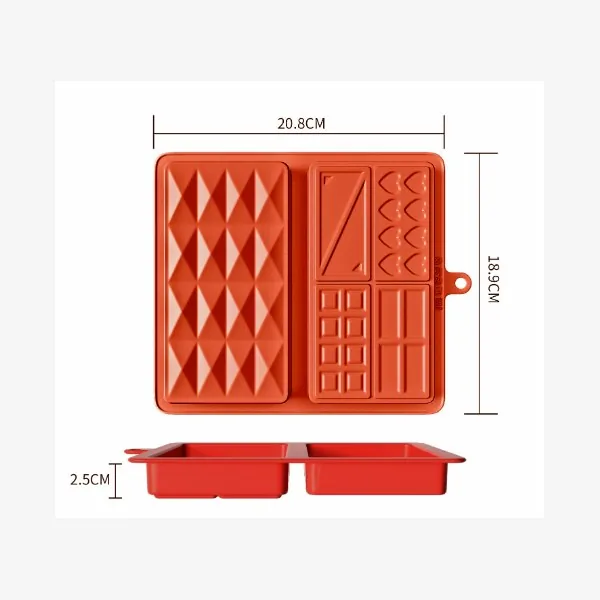
Buy a platinum RTV chocolate tray when you need undercuts, a yearly SKU, or MOQ 20 - not a polycarbonate book-mold library. Buy PC when the bar is flat, the shine is the product, and the volume pays for a rigid tool you will polish for years. Tempered couverture still has to contract and leave; silicone flexes and pops, PC taps or warms. Logo emboss on our trays is typically 0.3-0.6 mm with strokes 0.8 mm or more. Soft 20A-30A sheets want a jacket on a wet or tall dump so outer cells don't sag. We pour the silicone path. The product URL is custom silicone chocolate molds. Cavity manufacturing (not this decision) is the chocolate manufacturing guide.
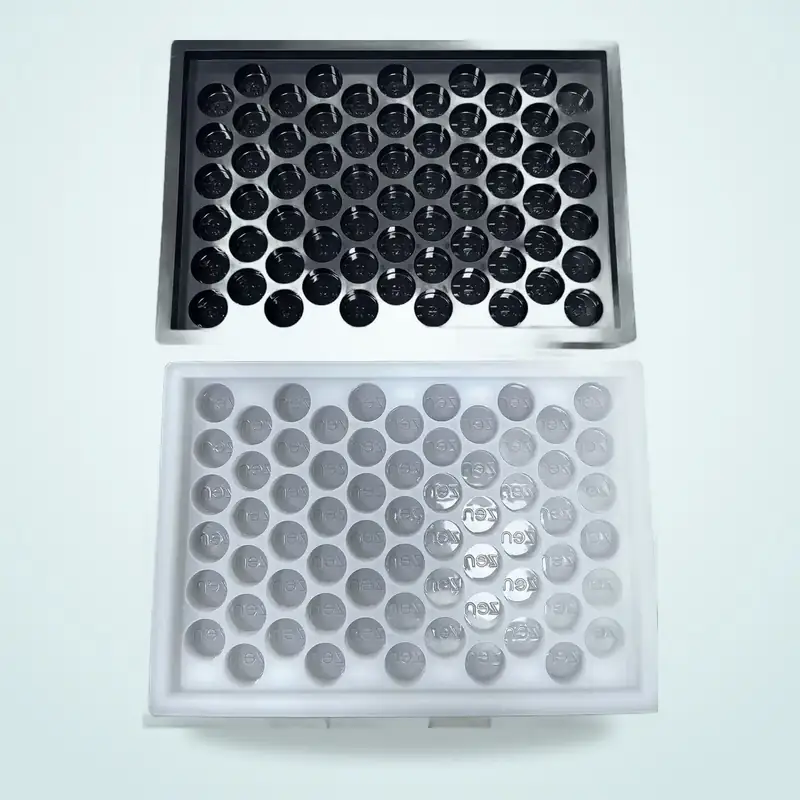
RUUIPON pours those cavities in Bao'an, Shenzhen (Licheng Technology Industry Park, Xinhe Blvd, Shajing; USCC 91440300MA5FAXCN9W) since 2018. Production is MOQ 20 per design. Simple 3D is USD 50 when that CAD scope applies. Prototype is 3-7 business days after CAD lock. Mix is 1:1 or 10:1 by grade, by weight. Platinum linear shrink after a full cure is typically about 0.1-0.3%. We are not a polycarbonate house.
Typical shop values
Reference values only. Confirm material-specific limits against the supplier’s technical data and agree project acceptance criteria before production.
| Factor | Platinum RTV tray (what we pour) | Polycarbonate book-mold (what we do not quote) |
|---|---|---|
| First order | MOQ 20 per design; prototype 3-7 business days after CAD lock | Tooling budget for a rigid library you will keep for years |
| Geometry | Undercuts, 3D figures, peel or keyed split | Drafted flats; undercuts fight ejection |
| Logo | Emboss about 0.3-0.6 mm; strokes 0.8 mm+ | Engraved / polished; shine from the PC face |
| Release | Temper shrink + flex-and-pop | Temper shrink + tap or warm; no flex |
| Cavity Shore / jacket | Often 20A-30A; jacket on a wet or tall dump | Rigid; no jacket, no sag band |
| Weight map | Edge vs center grams; 0.5-1.5 mm sag if unsupported | Cavity steel/PC is the map |
| Food papers | 21 CFR 177.2600 and/or LFGB sections 30/31 on this article, when requested | PC vendor's food-contact path - not ours |
| Shine / cycles | Satin or controlled matte; hundreds to low thousands depending on wash and demold | High gloss; tens of thousands when the plant keeps them polished |
| Mix / shrink | 1:1 or 10:1 by weight; platinum about 0.1-0.3% | No RTV shrink; thermal of the PC |
| 3D / CAD | USD 50 when that CAD scope applies | Their CNC / engraving shop |
Temper release vs a rigid snap
Tempered couverture contracts as Form V crystals set. That shrink opens a hairline between the bar and the cavity. On silicone you finish with a flex. On PC you tap or warm the book. If the mass never reaches that crystal state, both tools stick. Don't buy a new tray to fix a temper window. If the cavity is wet or fatty, both tools stick. Spray is rare on food-contact silicone for chocolate; if you use one, it has to be food-allowed for that market. We do not sell sprays.
Undercuts and logo depth
This is where PC usually loses the first SKU. Undercut ears, a wrapped ribbon, a two-sided figure: a rigid book needs draft, slides, or you accept a scuff. Platinum at 20A-30A can peel, or we split and key it. Deeper is not more premium. Logo deeper than about 0.6 mm on a tempered shell is how you trap air in the counters. Stroke islands under about 0.8 mm tear on demold 3. Manufacturing limits, cavity count, and the chocolate test sit on the manufacturing guide.
RUUIPON Mold Structure Decision: flat-back bar or tablet → open-back tray. No flat back, deep undercut the peel cannot survive → keyed two-part or a plug. Large wet dump → jacket either way.
Weight maps and jackets
A soft sheet is not a weight map by itself. Outer cells on a large unsupported tray often run 3-6% heavy versus center when the tray sags under a wet dump - a 10.0 g target can read about 10.3 g on the edge and 10.0 g in the center. Typical shop: 0.5-1.5 mm edge sag. A jacket or mother mold holds the span. PC does not sag; it also will not peel an undercut ear. If your carton claims a tight net weight, say so on the RFQ before we lock cavity millilitres.
Food docs on the article, not a factory badge
Food-contact material and test documentation may be available depending on the selected material and destination market. 21 CFR 177.2600 is extraction of the finished rubber article. LFGB sections 30/31 (and BfR XV on silicone) is a separate German/EU path. They do not nest. We do not claim an FDA-approved factory. A drum PDF is not automatically this tray. Name US, EU, or both before anyone books a lab. Buyer split: FDA vs LFGB. Evidence chain: food-grade silicone molds.
We will not spec tin-cure under couverture. Platinum only on a chocolate cavity we put our name on.
Cycle count vs PC shine
PC book-molds earn their keep on high-gloss flats you will polish for years. A platinum chocolate tray is a different finish: satin or a controlled matte you can hold, not a mirrored PC face. Shop band on the tray is hundreds to low thousands of dumps depending on Shore, how hard you flex, and the wash SOP - not a warranty number we print without your dump and wash. A silicone tray will not out-shine a maintained PC library. A 20-piece holiday figure with undercuts is a silicone quote, not a reason to buy PC.
When to stay on polycarbonate
Stay on PC when the shine is the SKU - a mirrored gift tablet you already run in PC, and the volume pays for that library. Skip platinum as a drop-in gloss clone of a PC cavity you need to match for a mixed carton. We will not quote a one-piece peel on a closed hollow bomb; that is a core or a welded-half plant SOP, not a softer Shore.
If you already own the PC tools and only need a short-run variant with an undercut, that short-run variant is the silicone quote. The PC library stays where it is.
Mix-up: PET blister is not polycarbonate
Buyers write "plastic mold" and mean a thermoformed PET or PP blister, a hobby polycarbonate tray from a catalog, or a steel mogul plate. Those are three quotes, none of them "add silicone." We will not CNC a PC book-mold. We will not find-replace a blister outline into platinum and promise the same gloss. If the file is a blister, say so; the RTV copy will be a soft cavity with RTV shrink (about 0.1-0.3%), not a second blister tool.
Worked example: holiday figure with undercut ears
Hypothetical, typical shop path. A 28 g holiday figure, undercut ears, one-season SKU, US carton. The buyer asked for "the same shine as our PC bars." First call: we will not match PC gloss. Recast as an open-back platinum tray only if the back is flat; it wasn't. Keyed two-part, about 25A, logo 0.4 mm on the chest, 0.9 mm strokes, jacket pockets. CAD from a mesh plus a verified 28 g target - USD 50 3D applied. Prototype in the 3-7 business day window after lock. They poured their 55% couverture; ears released without a tear. Production at MOQ 20. Food-contact path named 21 CFR 177.2600 on the finished article. The PC bars stayed on the PC line.
When this article is the wrong quote
Skip this page if you already chose silicone and need cavity millimetres, cavity count, and the chocolate test - that is the manufacturing guide, then the product page. Skip it if the dump is gummy, pectin, or starch. Skip it if the dump is resin, candle, or soap. Skip it if you need us to quote the polycarbonate or steel tool - we will not.
Silicone-vs-PC RFQ checklist
Paste into [email protected] or the quote form:
- Why you are off PC (or considering it): undercut, yearly SKU, MOQ, shine, mixed carton
- Bar / tablet / bonbon / 3D figure; temper range; enrobed vs molded
- Finished grams and which face carries the brand
- Logo depth and stroke width in mm, or artwork plus one verified dimension
- Undercuts: yes/no, and whether a one-piece peel is even possible
- Jacket: you have one / you need pockets / you refuse a jacket
- Market: US 21 CFR 177.2600, EU LFGB sections 30/31, or both
- CAD: mold-ready STEP, or USD 50 3D if that scope applies
- Prototype 3-7 business days after CAD lock, then MOQ 20 per design
RFQs we will not accept as-is
We will not quote a polycarbonate or steel chocolate tool as if it were an RTV tray.
We will not promise PC-level gloss on platinum.
We will not spec tin-cure under couverture.
We will not stretch a one-piece glove around a closed hollow sphere and call it a bomb tool.
Matched next step
If the undercut, the yearly SKU, or MOQ 20 is why you're off PC, send grams and the STEP to the RFQ page or [email protected] for custom silicone chocolate molds. WhatsApp +86 135 3006 2969. Quote about 24 hours on a complete RFQ. If you already know you want the silicone cavity spec, skip this page and use the manufacturing guide.
FAQ
When would you tell me to stay on polycarbonate?
Stay on PC for mirrored flats you already polish; we still pour a short-run undercut variant in silicone when PC cannot eject.
Does tempered chocolate release from silicone without spray?
Usually yes, if temper is real and the cavity is clean and dry. The shrink opens the gap; you finish with a flex. Poor release is more often temperature, draft, or a wet well than a missing spray. We do not sell release agents.
How do undercuts and logo depth change silicone vs PC?
Undercuts favor a peel or a keyed split in platinum. PC wants draft or slides. Logo on our trays stays shallow - about 0.3-0.6 mm - so tempered chocolate fills the counters. Deeper marks on either tool trap air.
Do I still need a weight map if the tray is soft?
Yes, more than on PC. Outer cells drift when an unsupported sheet sags. Typical shop: 0.5-1.5 mm at the edge on a wet or tall dump. Jacket the span, then weigh edge versus center before you lock carton net weight.
Will you quote a polycarbonate chocolate mold?
No. RUUIPON pours custom platinum RTV cavities at MOQ 20 per design. A PC book-mold is a different shop. If you send a PC brief, we will tell you we will not quote it, and we will quote the silicone path only when that path actually fits.
Custom silicone development · DFM & prototype support
CAD, drawing, photos or sample details