
Capture Real-Object Texture for RTV Masters | RUUIPON
Capture leather, wood, or stone on purpose, then CAD the back and draft. Scan noise is not a logo. Typical shop values. MOQ 20 pcs, $50 CAD.
 Kyler Yang · Founder7 min read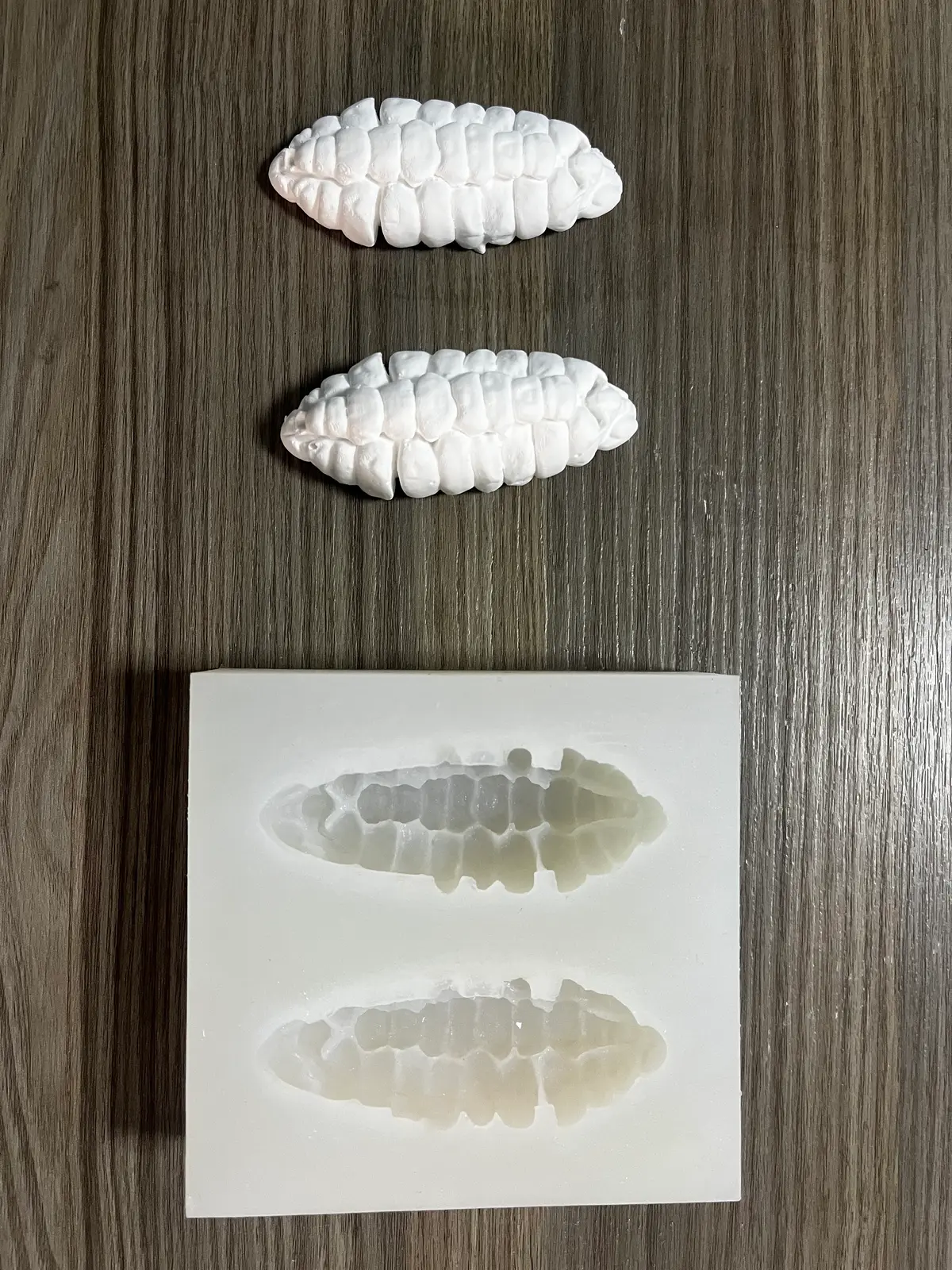
A real leather, wood, fabric, or stone face is a texture you *mean* to copy. Photogrammetry or a scan is the right tool for grain. It is the wrong tool for a logo well, a fill line, and a peelable back. Capture the face, lock a millimetre cube, then CAD the flask side — $50 when that simple-3D scope applies — so the RUUIPON Mold Structure Decision still runs: flat back → open-back; undercuts that will not peel → split. Do not pour platinum against a noisy mesh of a sofa and call the speckle "handmade."
RUUIPON captures and pours in Bao'an, Xinhe Blvd, Shajing, since 2018. Mix is 1:1 or 10:1 by weight. Prototype is 3–7 business days after CAD lock, not after the OBJ ZIP. Production is MOQ 20 pieces per design. Platinum shrink after a full cure is typically about 0.1–0.3%. Scan vs CAD: photo scan vs CAD. Steel textures: an HTV product RFQ here.
Does not apply when the SKU is a smooth brand logo, when you wanted to copy a competitor candy, or when the object is glossy chocolate (highlights become spikes). Dust or scan a matte stand-in.
Grain is the master; the back is CAD
Keep grain. Rebuild the back, the draft, the keys, the flask. A water-displacement check on a sealed object can size the shot; it does not clean the mesh. Seal the physical object if it is porous wood before you even scan, or grain fills with sealer later and dies.
Food: we would not spec a bark texture as a chocolate well without a wash story. Fat in grain looks dirty. Craft soap and concrete pavers love grain.
- Millimetre cube + scan the FACE -> CAD the back, draft, split
- CAD the back, draft, split -> Food dump?
- Food dump? - yes -> Washable grain? platinum only
- Food dump? - craft -> Pour platinum or named craft tin
- Washable grain? platinum only -> CAD lock, 3–7 business days
- Pour platinum or named craft tin -> CAD lock, 3–7 business days
The photo that would prove a texture RFQ: object, cube, scan of the face, CAD of the back, first dump. A lifestyle wood-table shot is not scale.
ISO 3302-1 M2 is dump class. Loaded sag ~0.5–1.5 mm still wants a jacket on a large paver skin.
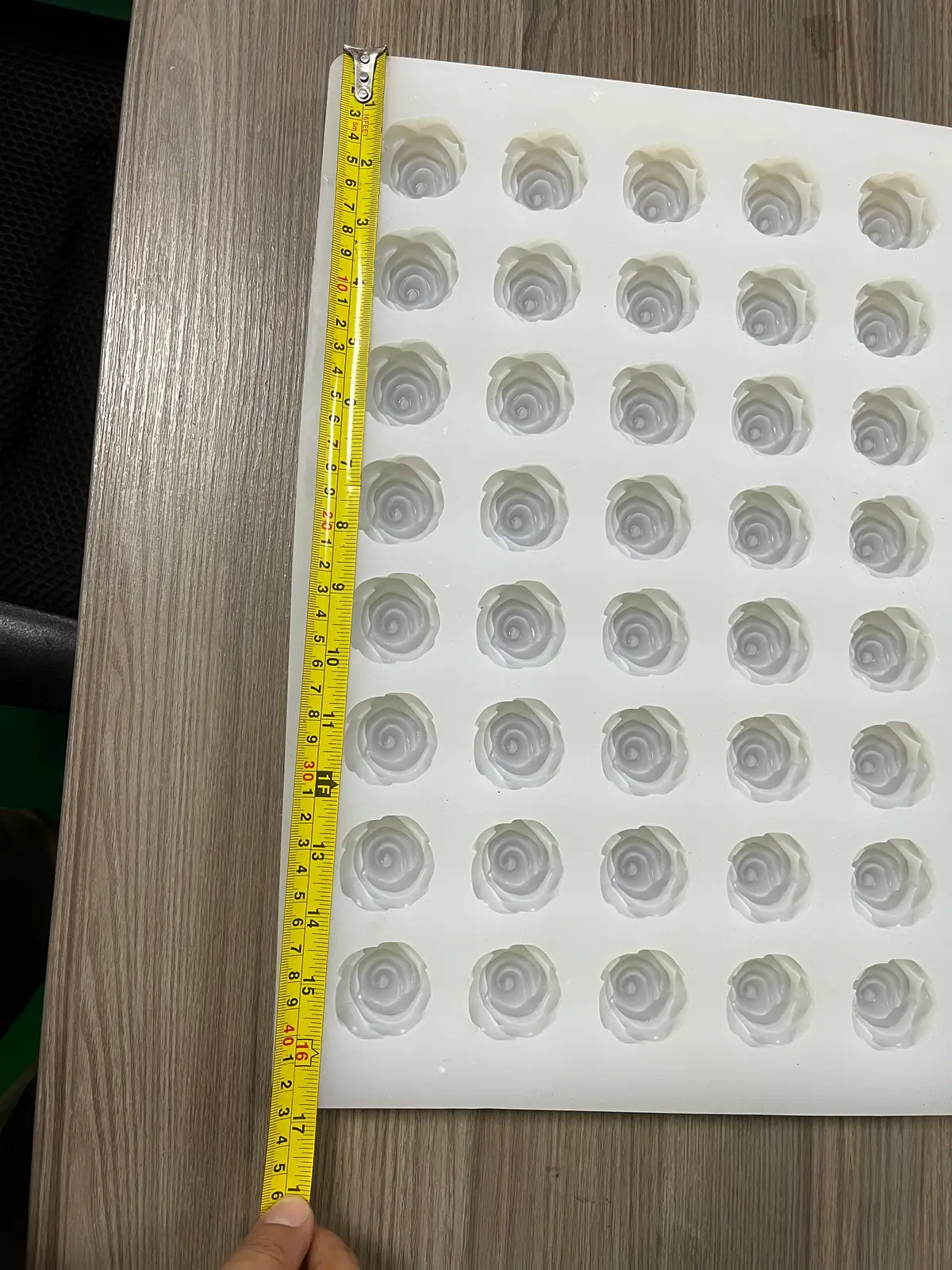
Failure: speckle in the logo, smooth where bark was
Symptom: buyer wanted bark, got noise; or wanted a wordmark on bark and the word vanished.
Cause: one mesh for two intents; no cube; smoothing ate grain and the letter.
Confirm: overlay.
Fix: CAD the letter, keep grain on the field, recast.
Typical shop values
Reference values only. Confirm material-specific limits against the supplier’s technical data and agree project acceptance criteria before production.
| Item | Typical shop value |
|---|---|
| Mix / shrink | 1:1 or 10:1 by weight; platinum about 0.1–0.3% |
| Simple 3D | USD $50 when that CAD scope applies |
| Prototype | 3–7 business days after CAD lock |
| Production MOQ | 20 pieces per design |
| Drawing class | ISO 3302-1 M2 as a common default |
| Cavity Shore | 10A–20A skins; 20A–40A paver trays |
Captures we would not lock
We would not recommend a glossy chocolate scan as a master.
We would not recommend a competitor object as your texture.
We would not recommend pouring food against raw wood oil.
We would not recommend skipping the cube because grain "looks full size."
A tooling charge is not ownership of the object's IP if it is not yours.
Worked example: leather coaster, phone scan, no back
Craft resin coaster, leather face, phone mesh, no cube, back fused. $50 CAD rebuilt the back as open-back, kept grain, platinum 20A. Prototype 3–7 business days after lock. Production MOQ 20 of that design. Related: resin molds, CAD from sample.
Ship the object to Xinhe Blvd when grain is the SKU. A caliper on three axes plus the piece in our hand beats a heroic mesh. Humidity on raw wood changes size between scan and pour — seal or store in band.
Concrete pavers that want a slate face are this page plus an abrasive RFQ. Name the dump. PU kills RTV faster than plaster; budget recast. Food chocolate bark bars still want platinum, wash, 177.2600, and a grain you can actually demold without tearing 10A.
Fabric texture pills and sheds into platinum. Back the fabric, seal, slug. We would not pour a fuzzy sweater as a food well.
Prototype 3–7 business days after CAD lock. MOQ 20 per design. Mix 1:1 or 10:1. Shrink about 0.1–0.3%. USD $50 CAD when that scope applies. Jacket if the sheet is large. ISO 3302-1 M2 as a common dump class. Steel/LSR parts are an HTV product RFQ here.
Glossy leaves, wet stone, and oiled leather spike in photogrammetry. Matte powder or a dry stand-in. We would not pour food against spiked leaves.
A mother mold is still required on a large wet paver even if the grain is perfect. Structure Decision: large wet casting → jacket. Grain does not stiffen 10A.
If the object is IP you do not own — a branded sole, a designer fabric — stop. Texture capture is not a license. Same rule as competitor gummies.
Prototype 3–7 business days after CAD lock of the back and the grain keep-list. MOQ 20 per design. USD $50 CAD when that scope applies. Mix 1:1 or 10:1. Platinum shrink about 0.1–0.3%. Loaded sag about 0.5–1.5 mm without a jacket. ISO 3302-1 M2 as a common dump class. Contact [email protected] or +86 135 3006 2969. Shop since 2018, Xinhe Blvd, Shajing, Bao'an. A water-fill of the flask still sizes the shot after the grain master is in; heel in the cup is a separate waste line. Do not let a beautiful bark face hide a short flask. Weigh the heel. Split summer shots. Seal SLA prints of the mesh before platinum if you printed the grain instead of pouring on the real object. Slug 20 g. A sticky grain face is inhibition, not rustic character. Recast from a sealed master. Food chocolate still refuses tin. Craft soap can be a named tin RFQ with the same grain, still with a millimetre cube and a CAD back so the glove peels. Write food vs craft on the same email as the scan ZIP. Keep a millimetre cube in that first photo frame.
Mix-up: texture means we should not CAD anything
Grain is scan. Walls are CAD. The other mix-up is smoothing the mesh until the leather looks like plastic.
What to ask when you're buying a textured face
- What grain must keep?
- What must be CAD-smooth (logo, back, draft)?
- Millimetre cube in the frames?
- Food vs craft?
- After CAD lock, 3–7 business days, then MOQ 20 / design?
Related: contact, concrete molds.
RFQ copy-pack — grain plus CAD back
Paste into [email protected]:
Object: RTV mold from a real textured object (not an LSR part) Face: keep grain; back/draft: CAD Photos/scan WITH millimetre cube Dump chemistry CAD: USD $50 3D if that scope applies Prototype 3–7 business days after CAD lock, then MOQ 20 per design
Send cube and which grain to keep, not a sofa OBJ as lock. We capture, then CAD — not a blank free quote. Phone +86 135 3006 2969. Licheng Technology Industry Park, Xinhe Blvd, Shajing, Bao'an. Shop since 2018.
FAQ
Can you mold real leather texture in silicone? Yes, as a captured face, then CAD the back so we can peel.
Will a phone scan be enough? With a cube, as a brief. Lock is CAD plus millimetres.
Is bark OK for chocolate? Wash story first. Grain holds fat. Platinum only if food.
Do you copy a competitor's stone tile? We need your object or your art.
When do 3–7 days start? At CAD lock, not at the scan. MOQ 20 per design.
Custom silicone development · DFM & prototype support
CAD, drawing, photos or sample details