
RTV Heat-Sink Potting: Alumina, BN, and the Bond Line
Thermally conductive silicone is alumina- or BN-filled paste. Heat follows a thin path onto metal. The potting mold locates the sink; don't invent watt
 Kyler Yang · Founder8 min read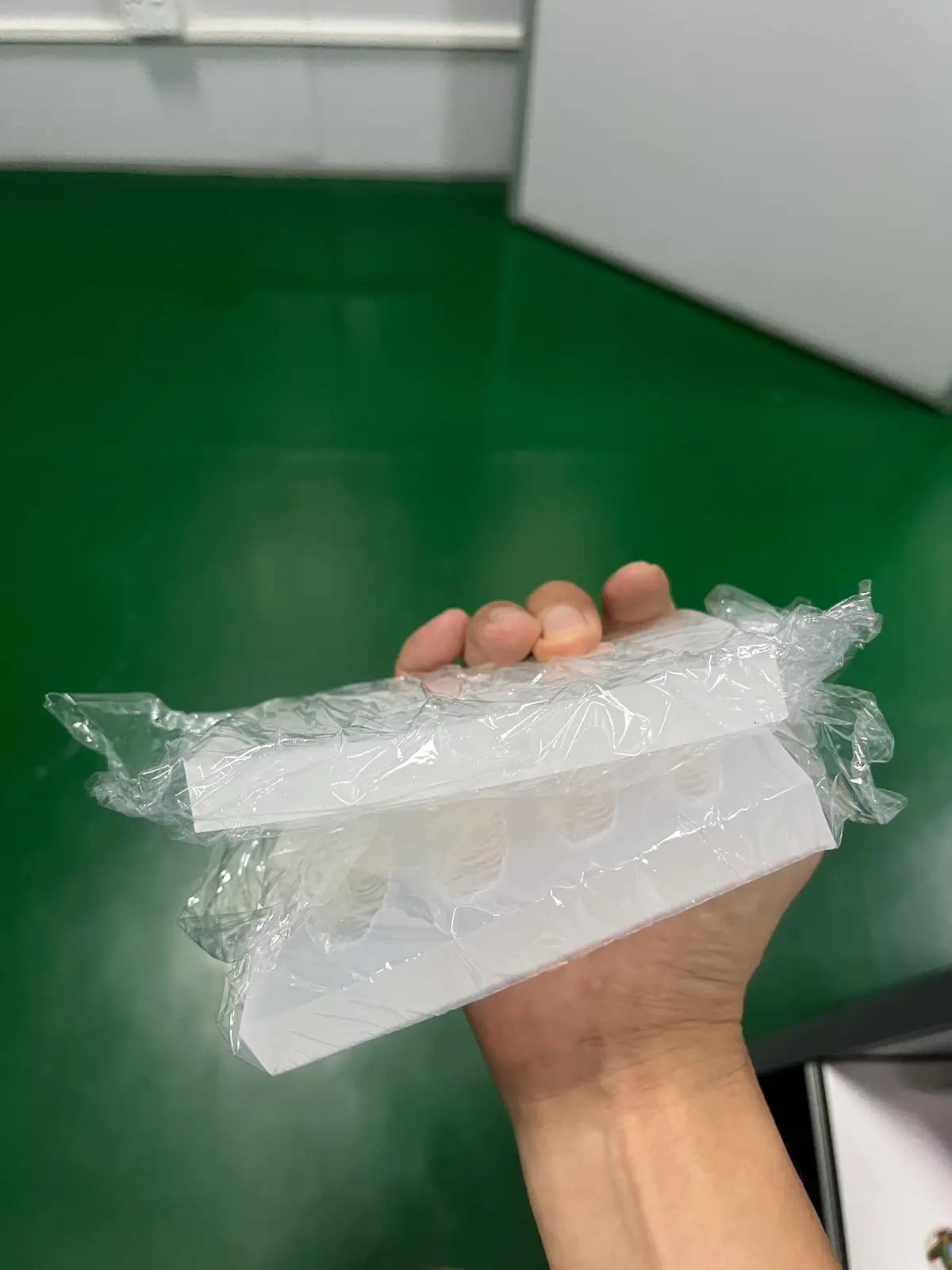
Thermally conductive silicone is filled silicone. Unfilled platinum RTV and unfilled LSR are electrical insulators and poor heat spreaders. To dump heat into a heat sink you add ceramics, usually alumina or hexagonal boron nitride (BN). Graphite can move heat and can ruin dielectric behavior.
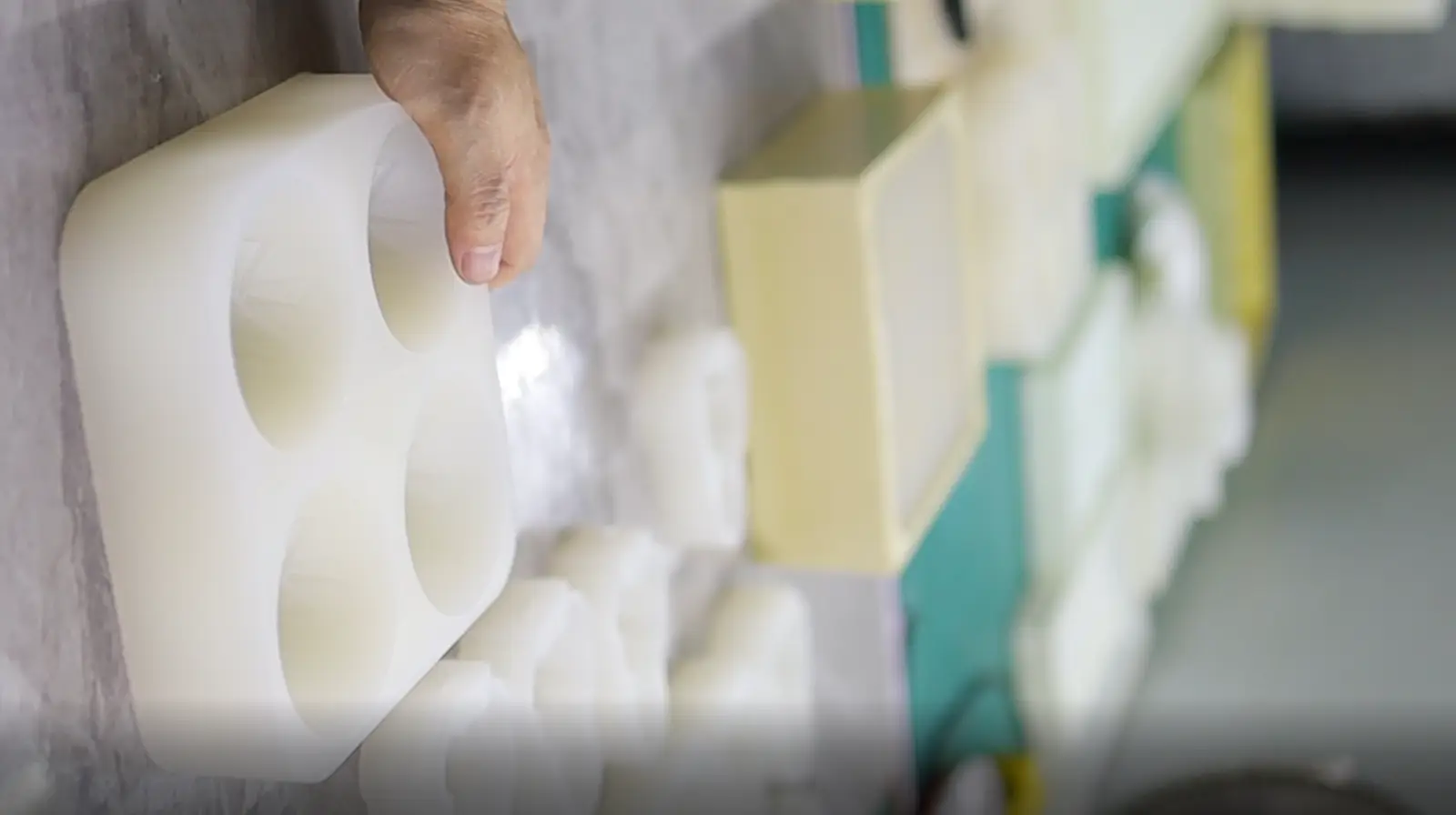
If you're buying a custom RTV mold, the mold and the bond line decide whether filler does any work. A void is an insulator. A thick brick of “thermal” paste is often a worse cooler than a thin path onto nested metal. The cavity can nest the sink and force fill from one side so the last air leaves at a vent. Do not dump alumina into the mold rubber expecting the jacket to become a heat sink. Do not invent a watt number or a filler percent.
This is heat-sink potting: platinum RTV for pours, thermal LSR for overmold on a parts OEM (cold-runner, never a LIM hot tool). Tin-cure is the wrong default around copper.
Heat follows a path, not a filler nickname
Ceramic particles raise bulk conductivity by building a particle network through the gum. That network still has polymer at every contact. Unfilled silicone stays in the thermal-insulator class. Filled pastes are better, not aluminum. Metal heat sinks, copper pours, exposed pads, and thickness still dominate. Halving a bond line often does more than chasing the next filler nickname.
Design the path on purpose:
- A defined thin layer of filled silicone between a hot package and a heat sink or chassis
- A nest in the potting mold (or in the housing) that locates the sink so the rubber thickness is a dimension, not a puddle
- Keep-out where metal must seat metal-to-metal
- Soft unfilled gel elsewhere if solder joints cannot live in a stiff, high-filler brick
A uniform 8 mm jacket of filled rubber around a PCB is a mechanical clamp and a mediocre cooler. Name a test method if you put a conductivity or impedance target on the RFQ. ASTM D5470-style thermal impedance work is common for gap pads (specimen thickness and pressure matter). A plaque number is not the impedance of a potted cavity with voids.
Common mix-up: thermal mold rubber versus thermal potting
An RFQ says “thermally conductive silicone mold.” Two objects:
- RTV cavity that locates a module and a sink so you can pour a named thermal potting.
- Thermal potting itself (alumina or BN paste) as the article.
Dumping ceramic into the mold rubber sands the master, raises Shore, and does not cool the die.
What to ask when you're buying
- Is this PO for the potting mold (nest, vents, keep-outs) or for the thermal paste?
- Bond-line thickness, sink location, vacuum potting yes/no?
- Alumina vs BN vs “named grade”; dielectric still required?
- Platinum RTV pour vs thermal LSR overmold?
- Who keeps the master if the nest changes after the first thermal cycle?
Worked example: 1-cavity nest, 0.5 mm bond line
A power module needed a 1-cavity platinum 20A glove plus rigid jacket, with a machined nest that held the sink 0.5 mm off the package. Unfilled RTV was the mold. Alumina-filled platinum potting, mixed wet, vacuumed, poured from one side to a vent. A floating sink had made an 8 mm brick that still ran hot. ISO 3302-1 M2 on the housing flange; the bond line was a thermal dimension, not a rubber class.
Alumina versus BN, voids, and dielectric
Alumina is the workhorse thermal ceramic: hard, relatively cheap, electrically insulating, abrasive, white, settles in a cup. Hexagonal boron nitride is the premium platelet; in-plane conductivity can look better than through-thickness if flow orients flakes parallel to the heat-sink face (the wrong way for a through-bond-line job). Carbon/graphite thermal silicones can percolate electrically — wrong next to live copper unless the drawing wants a conductive path.
Filler loading is the compounder's recipe. Pourable “thermal RTV” is already a paste at useful ceramic loadings. If it pours like water, it is probably not carrying much ceramic, or it will settle before gel.
Potting failures that look like “the compound is not thermal enough” are often geometry: air under the package, sink not located, wicking into connectors, strain from a stiff brick. Mix, wet, then vacuum. A dry powder dump into platinum RTV is a foam generator. Inhibition: platinum against sulfurated gaskets, some fluxes, amines. Confirm dielectric strength or volume resistivity on the filled grade. UL 94, if needed, is a specimen class at thickness, not a potting certificate.
When this article is the wrong quote
Chocolate trays don't need BN. Production thermal LSR overmolds belong on a parts OEM. A tiny shallow dam can skip a nest. Geometry can override: a one-off lab potting still wants a located sink.
Related reading: custom RTV molds, how we make the mold, what tooling means, custom mold design.
What to send for an RTV mold quote
- Process: platinum RTV potting mold and/or thermal pour [pick]
- Filler family as in the named potting grade; no carbon unless dielectric is waived
- Thermal: impedance or conductivity by [named method] and a defined bond line in the tool
- Heat-sink nest and keep-out on the drawing
- Vacuum or fill path; master, split, jacket, recast
- Ban shop percents and copied watt classes
Send the module, the sink, and the bond-line target. We'll nest the metal in the RTV cavity rather than fill the jacket with alumina.
We would not recommend dumping alumina into a 1:1 mold kit as a shop percent
We would not recommend a thick pour of thermal silicone as a substitute for a located sink. We would not use graphite thermal paste next to live copper without a dielectric waiver. We would not raise Shore A first to “conduct more.” We would not run alumina-filled LSR in a printed prototype tool.
RUUIPON Mold Structure Decision: the potting mold still follows split logic. Flat back? open-back. Cannot peel the module out? two-part / core. Large wet potting or soft Shore? mother mold — and put the sink nest in that jacket.
- Mold nest or the potting paste? - mold -> Unfilled platinum RTV cavity with sink nest + vent
- Mold nest or the potting paste? - paste -> Named alumina or BN grade; bond line is a dimension
- Named alumina or BN grade; bond line is a dimension -> Void under package?
- Void under package? - yes -> One-side fill, vent, vacuum
- Unfilled platinum RTV cavity with sink nest + vent -> Don't fill the jacket with ceramic
- Named alumina or BN grade; bond line is a dimension -> Dielectric required?
- Dielectric required? - yes -> No carbon/graphite
Typical shop values: thermal potting vs RTV mold
| Item | Typical shop value | | --- | --- | | Potting mold | Unfilled platinum RTV, 10A–20A, jacket, nest for the sink | | Mix (mold) | 1:1 or 10:1; vacuum degas until foam collapses | | Platinum shrink | ~0.1–0.3% | | Thermal path | Thin, void-free bond line onto metal beats a tall brick | | Fillers | Alumina workhorse; BN platelet; carbon can conduct electrically | | Shop degas vs thermal | Wet ceramic first, then vacuum; dry dump foams |
Reference values only. Confirm material-specific limits against the supplier’s technical data and agree project acceptance criteria before production.
FAQ
Should I specify alumina or boron nitride on the PO? Specify the thermal job and the dielectric job, then let the compounder pick. Alumina is the common, abrasive, insulating workhorse. BN is a platelet that can perform well and can orient the wrong way for a through-thickness bond line. Do not dump either powder into a 1:1 platinum mold kit as a shop percent.
Why is a thick pour of thermal silicone still hot? Heat cares about thickness and voids. A tall brick of filled rubber is a long thermal path. A void under the die is an insulator. Locate the heat sink, control the bond line, vent the last corner, and vacuum if the pocket is blind.
Can graphite thermal silicone be used next to live copper? Only if you have accepted electrical conductivity or a percolation risk. Graphite and some carbons can move heat and can ruin insulation. Alumina and BN families are the usual insulating thermal path. Demand resistivity or dielectric strength on the filled grade.
Will alumina-filled LSR run in a printed prototype tool? Poorly, and not for long. Alumina is hard. Thermal LSR belongs in steel with larger gates. A pourable RTV paste in a platinum mold of the housing, or a machined aluminum tryout with abrasion accepted, is the prototype path.
How do I keep BN or alumina from settling in a potting cup? Use the thixotropic grade the compounder sells for that filler, mix until wet, vacuum, and pour before the paste stratifies. A water-thin RTV will drop ceramic to the floor of the cup. Density or a cut-and-look coupon from top and bottom of a dummy shot is the check, not a stir-time story.
Custom silicone development · DFM & prototype support
CAD, drawing, photos or sample details