
Torch Myths vs Vacuum on RTV Face Bubbles | RUUIPON
We would not torch or alcohol-wipe platinum to pop face bubbles. That skins a food well. Vacuum and a detail coat. Typical shop. MOQ 20, $50 CAD.
 Kyler Yang · Founder7 min read
A butane torch or an alcohol wipe on a freshly poured platinum face is a hobby myth for popping surface bubbles. On a production cavity it skins the well, traps a mousse under a crust, can scorch a 10A–20A logo, and on a food tool it writes a process you cannot put next to 21 CFR 177.2600 with a straight face. The bubbles were in the mix because the cup was not degassed, the pour was whipped, or a serif never got a detail coat. Vacuum until the foam collapses. Brush a thin detail coat into letters. Then pour the bulk. Do not flame a chocolate well.
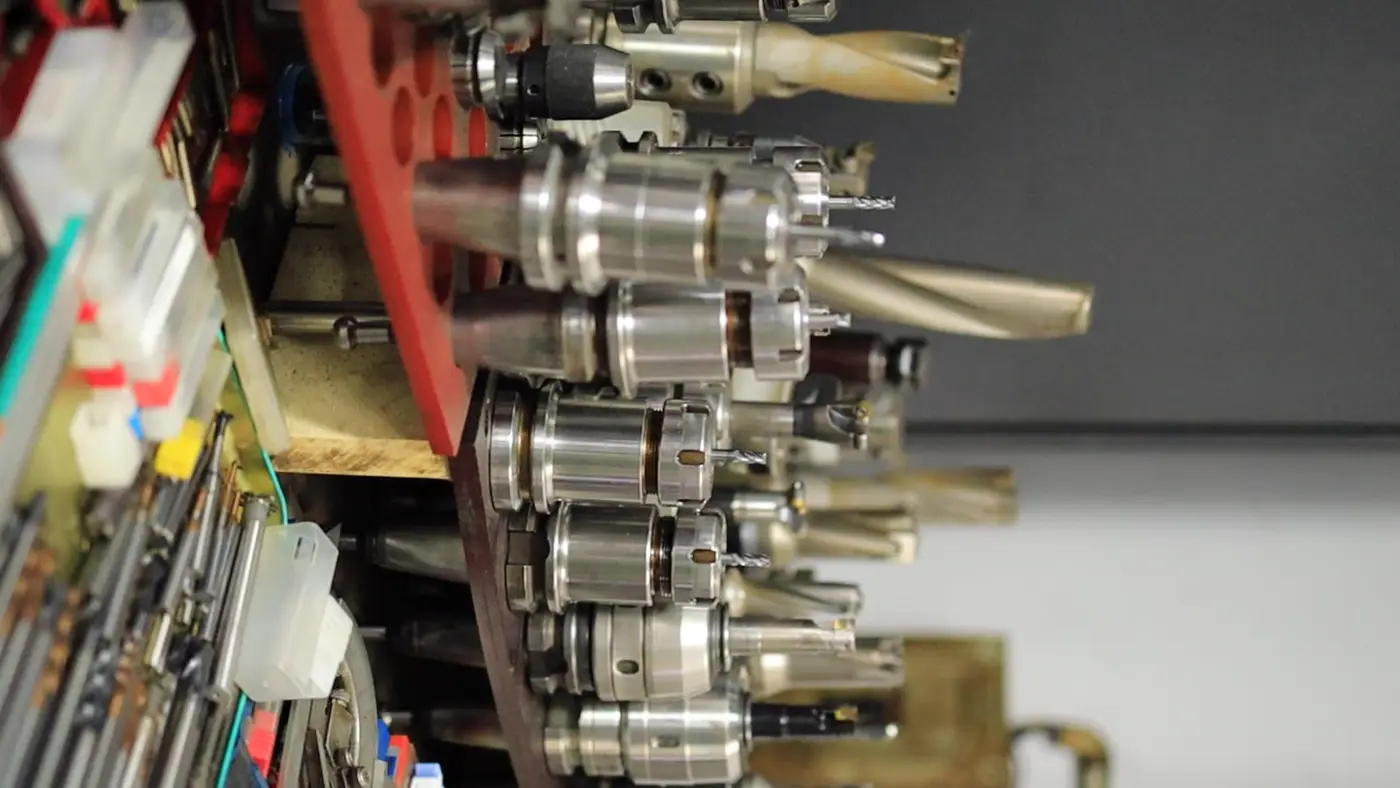
RUUIPON vacuum-degases platinum in Bao'an, Xinhe Blvd, Shajing, since 2018. Mix is 1:1 or 10:1 by weight. Prototype is 3–7 business days after CAD lock. Production is MOQ 20 pieces per design. Simple 3D is USD $50 when that CAD scope applies. Platinum shrink after a full cure is typically about 0.1–0.3%. LSR *parts* are not torch-finished: an HTV product RFQ here. Chamber vs shot: vacuum chamber size.
Does not apply when you are passing a torch over *resin in a finished mold* (a different, still-risky hobby move) or when the "bubbles" are inhibition tack, which flame will not cure. It also does not apply to tin craft you already own. Food platinum is the hard no.
Heat skins; alcohol can inhibit; vacuum collapses
Butane on a wet 10A face gels a skin in seconds. Air under that skin becomes a permanent crater with a shiny lid. Alcohol can flash-cool and can leave a residue some platinum grades dislike — another tack story that looks like SLA poison. Neither is a substitute for unused height in the pot.
Detail coat is the serif tool: brush or stipple mixed rubber into letters, hit that coat with a short vacuum or a careful pass if the grade allows, then pour bulk. A torch across a dry letter just burns the edge.
- Tacky or cratered? - tacky -> Inhibition or ratio — slug, do not torch
- Tacky or cratered? - cratered, snap-cured -> Air: cup vacuum and detail coat missing
- Air: cup vacuum and detail coat missing -> Recast: degas cup, detail coat, pour
- Recast: degas cup, detail coat, pour -> No flame, no alcohol wipe on food
The photo that would prove the myth: torched well with a skinned crater next to a vacuumed well with a sharp serif. We will not publish a flame-on-food demo as a how-to.
ISO 3302-1 M2 does not include a torch SOP. CAD lock still includes whether we pour here (vacuum) or you pour at your bench (name the pot).
Loaded sag (~0.5–1.5 mm) is still jacket work. A torch will not flatten a dished tray.
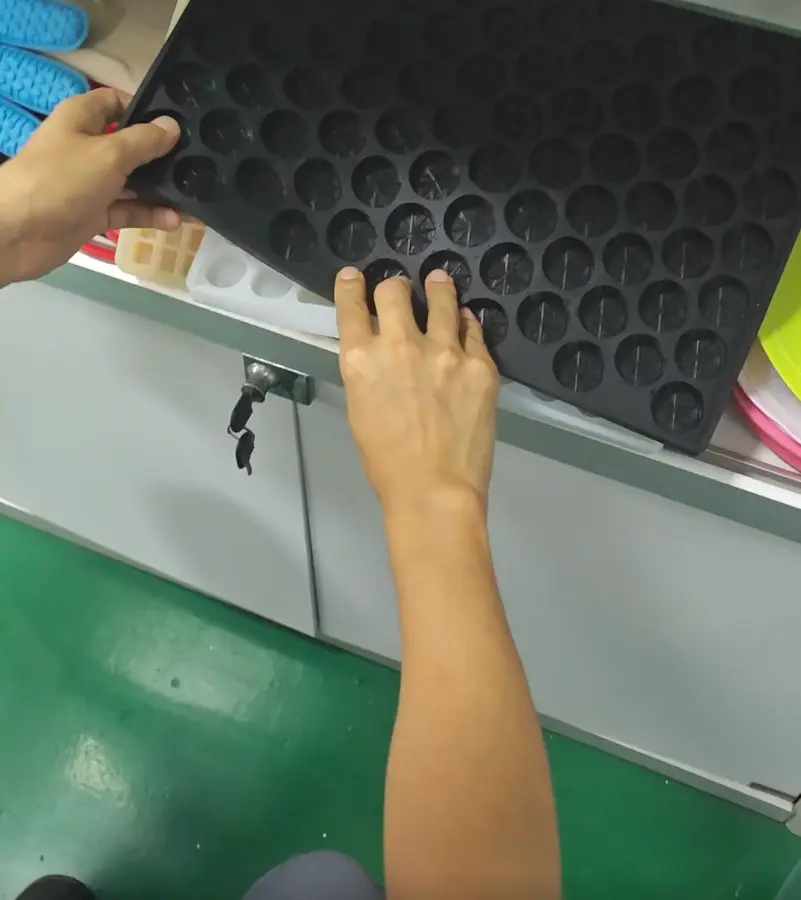
Failure: shiny craters in a chocolate logo
Symptom: circular pits with a glazed lid; first chocolate chips in the pit.
Cause: torch or heat gun on wet platinum; or alcohol wipe that collapsed one bubble and left twenty.
Confirm: pits match the flame path, not the master porosity.
Fix: recast, vacuum, no flame. Do not fill pits with more platinum as a "patch" on a food well.
Clear RTV yellowing under flame is a bonus failure on display tools. Do not.
Typical shop values
Reference values only. Confirm material-specific limits against the supplier’s technical data and agree project acceptance criteria before production.
| Item | Typical shop value |
|---|---|
| Mix / shrink | 1:1 or 10:1 by weight; platinum about 0.1–0.3% |
| Cavity Shore | 10A–20A skins; 20A–40A trays |
| Degassing | cup pull until foam collapses |
| Prototype | 3–7 business days after CAD lock |
| Production MOQ | 20 pieces per design |
| Simple 3D | USD $50 when that CAD scope applies |
| Drawing class | ISO 3302-1 M2 as a common default |
Surface tricks we would not run
We would not recommend a butane torch on a food cavity, ever.
We would not recommend isopropyl as a bubble killer on platinum.
We would not recommend a heat gun as a "local post-cure" on green rubber.
We would not recommend hairspray as a companion myth. Different page, same refusal family.
A tooling charge is not unrestricted ownership of a torch SOP we will not write.
Worked example: 8-cavity bar, torched serifs
Chocolate bar logo, 8-up, buyer skipped vacuum, torched the face, shipped photos of glazed pits. Recast here with cup degas, detail coat in the letters, platinum, jacket, wash. Prototype 3–7 business days after CAD lock (STEP already good). $50 CAD did not apply. Production MOQ 20 of that design. Related: chocolate molds.
Alcohol on a food well is not sanitation
A wipe with IPA after peel is a cleanliness habit some plants want. A wipe on *wet mixed rubber* is not that habit. Do not file them as the same SOP. After full cure, wash a food cavity as the food page says; dry matte; then dump. IPA on a cured tray is a plant call you write. IPA on a wet pour is the myth.
Hobby epoxy videos also pass a torch over the dump in the mold. That heat can still mark a 10A well if you linger. We would not spec a food chocolate well for flame-finished resin. Separate tools, or recast when the food SKU starts. Jacket still matters when the sheet is large; flame does not replace a mother mold.
Alcohol on a food well is not sanitation
A wipe with IPA after peel is a cleanliness habit some plants want. A wipe on *wet mixed rubber* is not that habit. Do not file them as the same SOP. After full cure, wash a food cavity as the food page says; dry matte; then dump. IPA on a cured tray is a plant call you write. IPA on a wet pour is the myth.
Hobby epoxy videos also pass a torch over the dump in the mold. That heat can still mark a 10A well if you linger. We would not spec a food chocolate well for flame-finished resin. Separate tools, or recast when the food SKU starts. Jacket still matters when the sheet is large; flame does not replace a mother mold.
Mix-up: torch is how resin casters finish, so it is how moldmakers finish
Resin in a *finished* mold is a dump conversation. Wet platinum *is* the mold. Flame on the tool is not flame on the part. The other mix-up is calling inhibition bubbles. Tack is not air.
What to ask when you're buying a bubble-free face
- Who degasses, and does the pot have headspace?
- Food logo vs craft block?
- Detail coat on serifs?
- Jacket on a loaded sheet?
- After CAD lock, 3–7 business days, then MOQ 20 / design?
Related: vacuum-degassed trays, contact.
RFQ copy-pack — no torch on the tool
Paste into [email protected]:
Object: platinum RTV mold (not an LSR/HCR part) Face: food logo / craft — vacuum required Who degasses; chamber unused height if you File: STEP / STL / photos with a millimetre scale CAD: mold-ready STEP OR USD $50 3D if that scope applies Prototype 3–7 business days after CAD lock, then MOQ 20 per design
Send the pot and the dump, not "we torch the bubbles." We vacuum the cup — not a blank free quote. Phone +86 135 3006 2969. Licheng Technology Industry Park, Xinhe Blvd, Shajing, Bao'an. Shop since 2018.
FAQ
Can I use a torch to pop bubbles in silicone mold rubber? We would not, especially on food. Vacuum and a detail coat.
Will alcohol wipe small bubbles on platinum? We would not use it as a process. Residue and flash-cool are extra risks.
Why did torching make shinier pits? You skinned the face and trapped air. Recast.
Are resin-dump torch tricks OK in a finished mold? Different object, still risky on food. This page is the *tool* pour.
Does refusing the torch change lead time? No. 3–7 business days after CAD lock, MOQ 20 per design. Vacuum sits inside that calendar.
Custom silicone development · DFM & prototype support
CAD, drawing, photos or sample details