
Two-Day Full Cure Before the First RTV Dump | RUUIPON
Demold is peel. Full cure is when the cavity may take a hot or abrasive dump. Do not treat pot life or 3–7 days as that wait. Typical shop. MOQ 20, $50
 Kyler Yang · Founder8 min read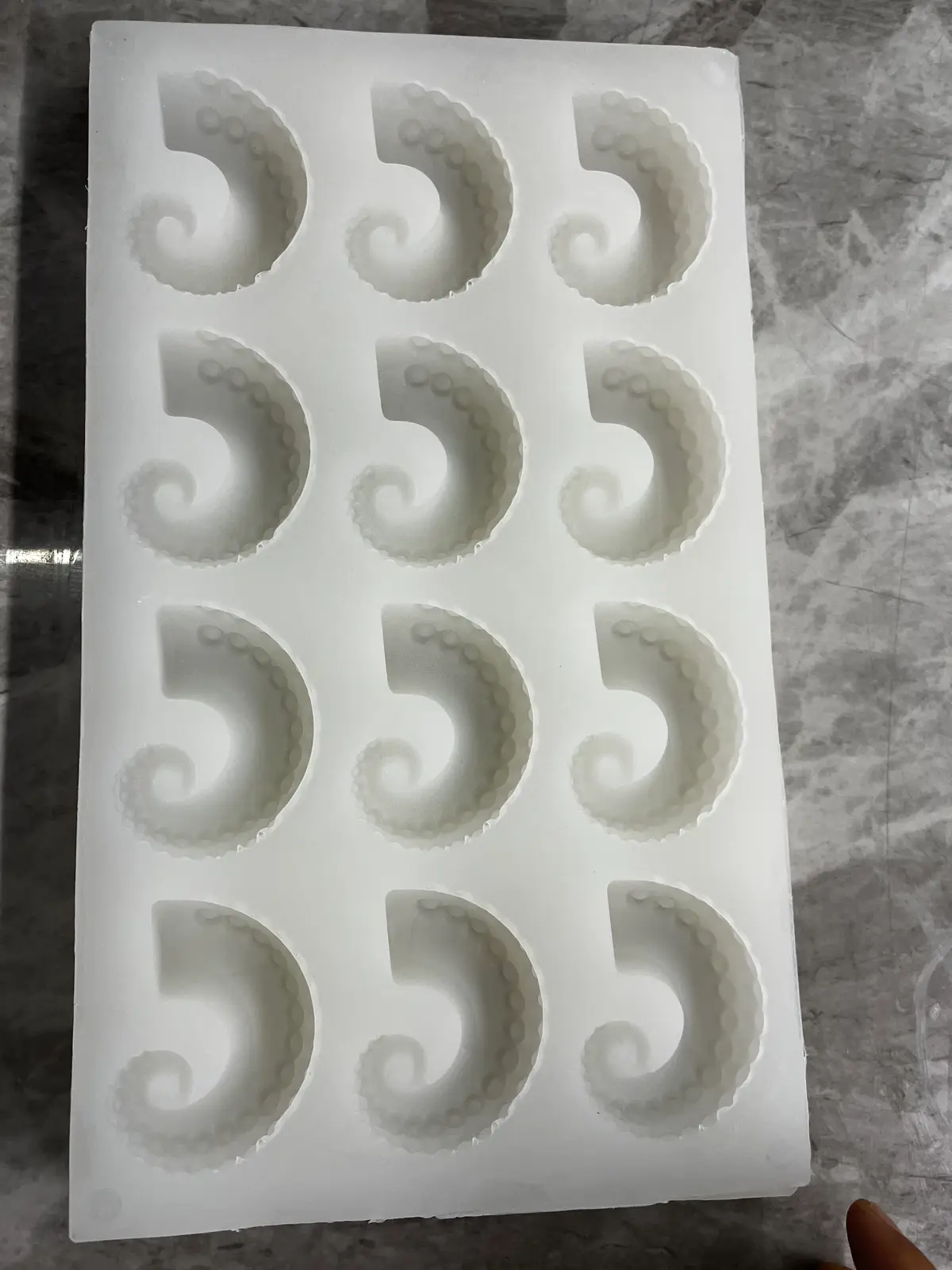
Peel (demold) is when the rubber can leave the master without smearing a fingerprint into the cavity. First dump is later. A platinum 1:1 or 10:1 grade that lists a full-cure band of about 24 hours — often written as a next-day or two-day wait on a shop traveler — is telling you when the network is ready for a hot PU, an abrasive concrete, or a fatty chocolate, not when you may pop the flask. If you dump at peel because the kit card said "demold 6 hours," you tear a green lip and copy that tear into every later part. Pot life is a third, shorter clock in the cup. The 3–7 business day prototype is a fourth clock: the shop calendar after CAD lock.
RUUIPON runs those clocks in Bao'an, Xinhe Blvd, Shajing, since 2018. Prototype is 3–7 business days after CAD lock. Production is MOQ 20 pieces per design. Simple 3D is USD $50 when that CAD scope applies. Platinum shrink after a full cure is typically about 0.1–0.3%. Steel/LSR *parts* post-cure in a different cell: an HTV product RFQ here. Mixer vs peel clocks: pot life vs demold.
Does not apply when you are only filling a finished food tray whose rubber already sat through full cure and a wash. That is dump set time. It also does not apply to an HCR mill post-cure on a *part*. A kitchen overnight on a windowsill is not a written full-cure band.
Peel, full cure, and first dump are three stamps
Write three times on the traveler: mixed at, peeled at (not-before), first dump not-before. TDS lines do not travel as screenshots. Room, mass, and master temperature move all three. A cold aluminum master delays the face; a thick block holds heat and can feel "done" on the back while a deep serif still smears.
A witness tab next to the flask is how we confirm peel: fingernail recovers, no grease. Full cure is not a harder fingernail. It is the grade's stated wait, sometimes plus a mild oven if the PO names a food or odor path. First dump chemistry then decides whether that wait is enough. Soft chocolate at room temperature is a gentler first use than 80 °C PU.
- Vacuum and pour — eats pot life -> Wait demold on a witness tab
- Wait demold on a witness tab -> Nail mark recovers?
- Nail mark recovers? - smears -> Wait; check master temperature
- Nail mark recovers? - recovers -> Peel cavity
- Peel cavity -> Full-cure wait from the TDS
- Full-cure wait from the TDS -> First dump hot or abrasive?
- First dump hot or abrasive? - yes -> Do not dump at peel
- First dump hot or abrasive? - gentle room dump -> Still honor full cure if the PO says food
The photo that would prove the two-day: witness tab with a timestamp at peel, traveler with "first dump not-before," and the dump chemistry named. A single "cured overnight" caption hides which clock you meant.
Shift handoff is where the stamps get mixed. Night crew sees "24 h" and reads it as pot life remaining. Spell the stamps in full.
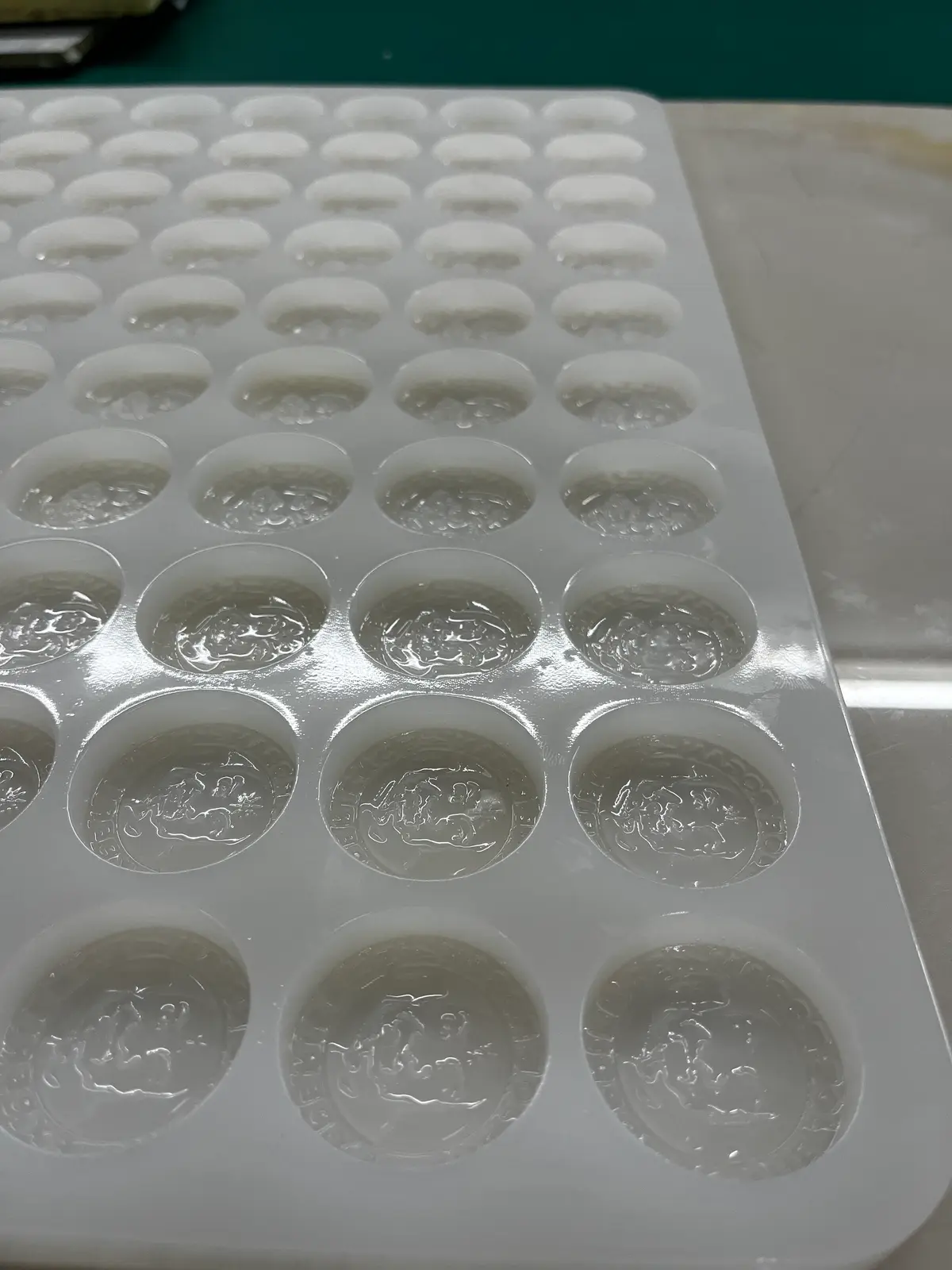
What a green cavity does to the first dump
Symptom: first PU or concrete pull takes a skin; chocolate tastes like new rubber; a logo lip rolls.
Cause: dump at peel; dump into a cavity that never reached the full-cure band; heat-gun "kick" that skinned the face and left the core green.
Confirm: compare a hidden face to a 20 g slug poured the same hour on a clean cup. If the slug is still tacky, the clock was early. If the slug is fine and the cavity face is tacky, that is inhibition from the master, not a missing two-day — remake, do not bake.
Fix: recast or wait the remaining full-cure band *before* a hot dump. Do not oil a green food well to "help release." Oil fights sanding and doc packs.
ISO 3302-1 M2 is still the dump class you asked for. A green tear is not an M2 conversation. Loaded-tray sag of about 0.5–1.5 mm still needs a jacket; waiting two days does not stiffen a 10A skin into a self-supporting sheet.
Typical shop values
Reference values only. Confirm material-specific limits against the supplier’s technical data and agree project acceptance criteria before production.
| Item | Typical shop value |
|---|---|
| Mix / shrink | 1:1 or 10:1 by weight; platinum about 0.1–0.3% |
| Pour-room band | commonly about 20–25 °C |
| Cavity Shore | 10A–20A skins; 20A–40A trays |
| Full-cure wait before hard dump | often next-day to two-day — read the TDS |
| Prototype | 3–7 business days after CAD lock |
| Production MOQ | 20 pieces per design |
| Simple 3D | USD $50 when that CAD scope applies |
| Drawing class | ISO 3302-1 M2 as a common default |
Waits we would not compress
We would not recommend peeling at pot life because a video did, then dumping PU the same hour.
We would not recommend a kitchen oven as a substitute for the two-day wait on a floppy 10A tray with no support. Sag becomes the cavity.
We would not recommend adding extra B to "finish faster." That is a ratio fail.
We would not recommend treating the 3–7 business day prototype as the full-cure wait. The calendar includes CAD lock, pour, peel, and the TDS wait inside it.
A tooling charge is not unrestricted ownership of the traveler stamps. Ask for the grade name if you will recast the same clock.
Worked example: PU bumper dumped at six-hour peel
Craft bumper, two-part block, 1:1 platinum. Buyer peeled at six hours (kit "demold" line) and dumped PU the same shift. Lip tore at a bolt boss; every later bumper copied the nick. Recast: vacuum, overnight on the master, witness tab, then a two-day wait before PU as the TDS full-cure band required. Prototype 3–7 business days after CAD lock of the split. $50 CAD did not apply (STEP in mm). Production MOQ 20 of that design. Related: polyurethane resin molds.
Mix-up: demold time is when I can use the mold
Demold is when the *rubber* may leave the *master*. Using the mold is a later dump clock. Pot life is how long *you* can still pour the rubber. Three sentences. The other mix-up is a warm room shortening peel and then assuming full cure shortened by the same factor — mass and TDS still rule a hot dump.
What to ask when you're buying the wait
- Grade, 1:1 or 10:1, and the TDS peel vs full-cure lines?
- First dump chemistry and peak °C?
- Room and master temperature on pour day?
- Food path that also wants a wash and oven, or craft-only?
- After CAD lock, 3–7 business days, then MOQ 20 / design?
Related: RTV molding, contact.
RFQ copy-pack — peel vs first dump
Paste into [email protected]:
Object: RTV mold (not an LSR/HCR part) Grade if specified: 1:1 or 10:1 by weight When you need to peel the master When the first dump happens, chemistry and peak °C Food-contact docs or craft-only File: STEP / STL / photos with a millimetre scale CAD: mold-ready STEP OR USD $50 3D if that scope applies Prototype 3–7 business days after CAD lock, then MOQ 20 per design
Send the dump hour you need, not "fast silicone." We put "first dump not-before" on the traveler — not a blank free quote. Phone +86 135 3006 2969. Licheng Technology Industry Park, Xinhe Blvd, Shajing, Bao'an. Shop since 2018.
FAQ
Can I dump resin as soon as the mold peels? Peel means the cavity left the master. A hot or abrasive dump may still want the TDS full-cure band. Read both lines.
Is a two-day wait the same as your prototype lead time? No. 3–7 business days after CAD lock is the shop calendar to a first tool. Full cure is hours to a couple of days on the bench inside that calendar.
Can I oven-shorten full cure on a food tray? Only with a written post-cure plan and a supported tray. A kitchen "as hot as it goes" sags a 10A skin. See the oven page when you need that path.
Why did a large block feel done overnight but tear on PU? The back skins first. The face against a cold master lags. Use a witness tab and the full-cure line, not the back of the block.
Does extra B shorten the two-day wait? We would not. Extra B is off-ratio rubber, not a clock.
Custom silicone development · DFM & prototype support
CAD, drawing, photos or sample details