
RTV Undercuts: Peel, Split, Core — Not a Robot Wrist
A human can peel an RTV undercut that a robot cannot. On custom molds, design peel, keyed splits, or cores. Robotic LSR ejection is a different quote.
 Kyler Yang · Founder8 min read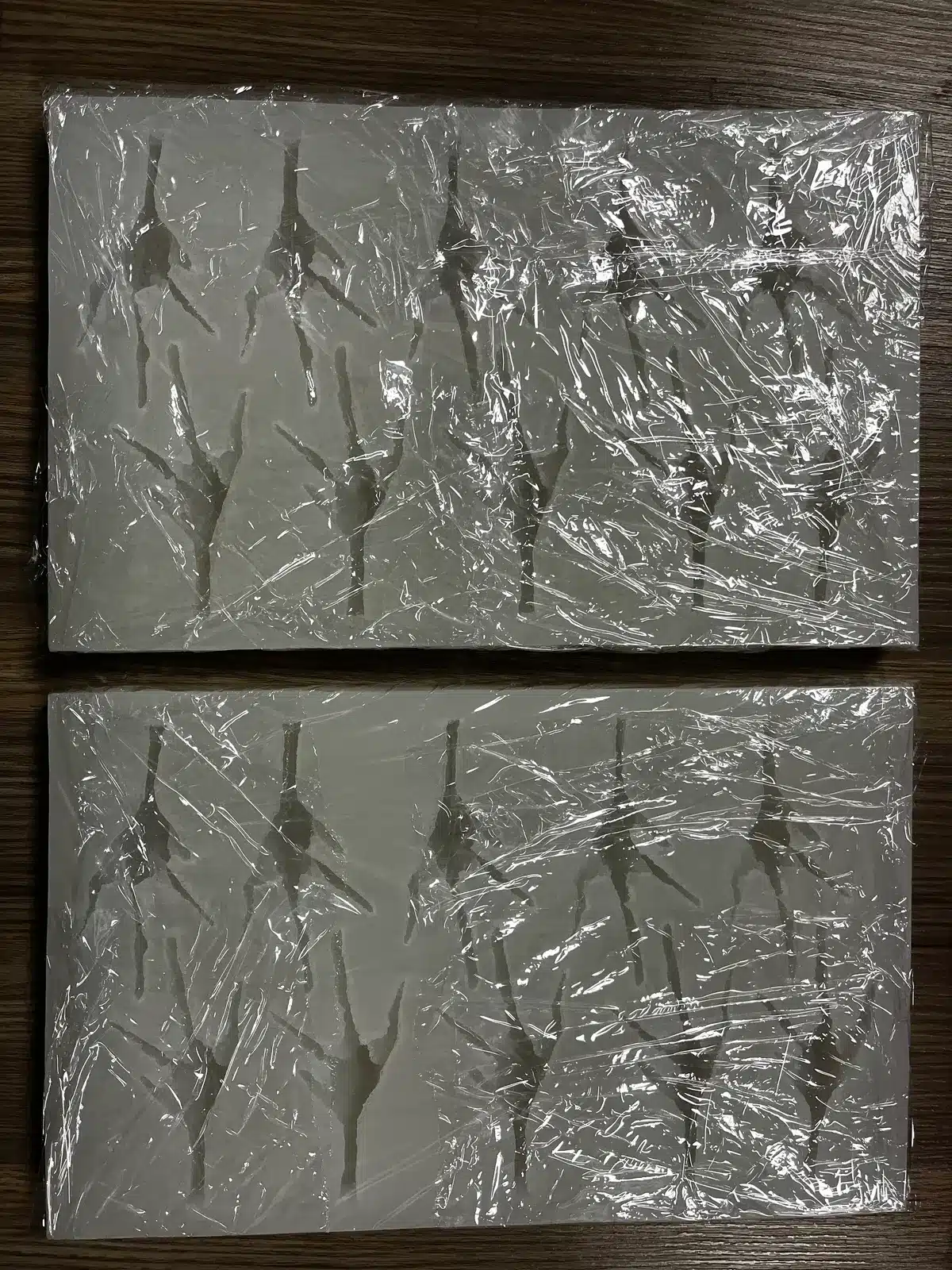
A technician can roll a 20 Shore A boot off a barb. A robot cannot “just peel it.”
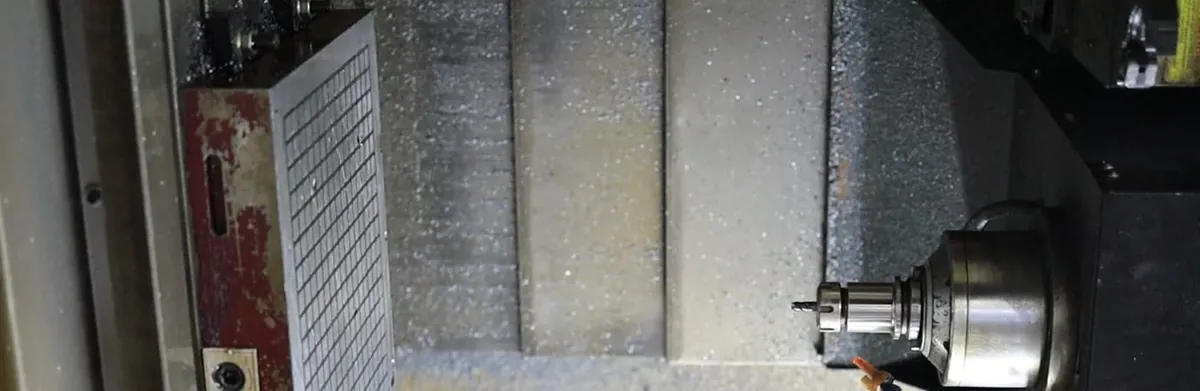
If you're buying a custom RTV mold, undercuts are a cavity problem: can the platinum skin peel off the master, and can the casting peel out of the pocket, without tearing a logo or a key? High-volume LSR lives or dies on a repeatable exit from hot steel, usually with a valve-gated cold-runner — never a LIM hot tool. Those are different drawings. HCR compression with an operator pulling parts is a third rule book. Do not mix them on the same PO.
The rubber's elongation is real. It is not a license to leave a geometry that only a human wrist can solve. Design the undercut as an ejection — or a dump — specification: direction, stretch, and what happens on the shot or pour that is stickier than the mean.
Name the undercut by how it must leave
Not all undercuts are equal:
- Local lip / sealing barb that must stretch over a core. Something has to balloon it off (air, stripper, or a peel).
- Side hole or window that needs a lifter, a side core, a plug, or a split because the rubber cannot stretch that far without tearing a thin wall.
- Internal groove on a bore that a collapsible core, a split core, or a removable RTV plug was born for.
- Cosmetic wrap that a human peels and a vacuum cup will fold into a crease — and that a gummy dump will tear if you insisted on a one-piece glove.
Write the strip vector on the drawing. If the honest demold is a rolling peel around an axis that is not the open of a press — or not the dump direction of a tray — you need a tool action, a keyed split, or a gripper/operator plan.
If you ignore the vector, the defect is a torn ear, a core that never sheds, or an operator standing next to a “lights-out” cell.
Common mix-up: robot cell versus gummy dump
A 16-cavity LSR boot cell needs stripper rings, timed core air, and a pad the gripper can hit. A 12-cavity gummy bear with locked ears needs a high-tear platinum 10A–20A skin, a jacket, and usually a keyed two-piece if the ears cannot peel. Raising Shore A so “the robot can grip” wrecks the dump. Asking an RTV shop for robotic ejection hardware is the wrong factory.
What to ask when you're buying
- Is the undercut on the master (mold making), on the casting dump, or on an LSR part?
- Peel allowed, or must we split / plug / core?
- Shore A, tear grade, jacket?
- If LSR: gripper faces, strip direction, tool actions you will pay for?
- Who keeps the master if we recast after a tear at the logo?
Worked example: 12-cavity bear, locked ears, “robot OK”
A nutraceutical wanted 2,000 dumps/month of an 18 mm bear with locked ears and a note that the line might automate later. The RTV job: CNC master, high-tear platinum 15A, keyed split through the ears, rigid jacket so the sheet doesn't sag 0.5–1.5 mm and throw outer-row weight 3–6% heavy. A robot was irrelevant. A parallel LSR quote with stripper plates would have molded silicone bears — not pectin.
What RTV will actually stretch — then the LSR cousin
Elongation and tear (ASTM D412 / D624 on the *grade*) set the budget. Soft 10A–20A high-tear platinum can come off surprising barbs. 40A with a knife-edge lip cannot. Fillers, inhibition tack, and a mirror master (vacuum lock) all spend that budget.
Useful checks:
- How much hoop stretch is required, and is that a small fraction of elongation at break?
- Is the lip thick enough to take the stretch without cut-growth?
- Is there a lead-in so the lip walks off, or a square shoulder that must snap?
- Will a textured master act as a thousand extra undercuts?
- Zero draft plus an undercut is two problems.
RUUIPON stack: one-piece glove if it peels safely; keyed two-part / removable plug / inner core if it cannot; mother mold for large wet dumps and soft Shore. Air assist through a core works on some boots if the part can balloon without wrinkling. Stripper plates are LSR/HCR hardware.
On LSR cells, valve-gated cold runners mean there is no sprue to grab — you must grip the part. Vacuum cups on 10 Shore A collapse the feature. Cure is not binary: an undercut that strips clean at 25 s may tear at 18 s. Flash on a barb turns a stretch-off into a tear-off. ISO 3302-1 on a nicked lip is meaningless. Self-bonding LSR can stick to cores; mask the core. None of that belongs on a chocolate-tray RFQ except as a warning that you asked the wrong shop.
When this article is the wrong quote
Lights-out LSR with robotic demold belongs on a parts OEM. Custom RTV food and resin molds belong here. A tiny shallow tray can skip the split. Geometry can override quantity: one locked sculpture is still a two-part RTV job.
Related reading: custom mold design, gummy trays, custom RTV molds, what tooling means.
What to send for an RTV mold quote
- Every undercut with strip / dump direction and whether stretch is allowed
- Shore, high-tear grade, jacket
- One-piece vs keyed split vs plug vs inner core
- Casting material, monthly dumps, recast of the skin
- If you actually need LSR robotic demold: separate RFQ with gripper concept and tool actions
Send photos of the undercut and a dump video if you have one. We'll name peel vs split and refuse a robot cell on a pectin tray.
We would not recommend a one-piece glove for a bail or negative-draft letter
We would not recommend raising Shore A first so a robot can grip. We would not count on a six-axis arm to “figure out” a peel. We would not cut LSR steel while you still need a cavity to dump into. Tooling charge ≠ a robot program.
RUUIPON Mold Structure Decision: flat back? open-back. Deep undercuts the rubber can peel? stay one-piece. If it cannot peel, two-part / removable plug / inner core. Large wet casting or Shore 10A–20A? mother mold.
- RTV cavity dump or LSR part? - RTV -> Peel safely?
- Peel safely? - yes -> One-piece / open-back + jacket
- Peel safely? - no -> Keyed two-part / plug / core
- RTV cavity dump or LSR part? - LSR robot cell -> Different RFQ: stripper, air, gripper pad, cold-runner
- Keyed two-part / plug / core -> Don't raise Shore A first
Typical shop values: RTV peel vs LSR robot cell
| Item | Typical shop value | | --- | --- | | Undercut food/resin cavity | 10A–20A high-tear platinum, jacket | | Mix / shrink | 1:1 or 10:1; platinum ~0.1–0.3% | | Locked ears / bails | Keyed split or plug, not hope | | Loaded-tray sag | ~0.5–1.5 mm unsupported; outer row 3–6% heavy | | LSR robot | Known face at a known time; not a wrist peel | | ISO 3302-1 | M2 common default; a nicked lip fails the dump first |
Reference values only. Confirm material-specific limits against the supplier’s technical data and agree project acceptance criteria before production.
FAQ
Can a robot peel a deep LSR undercut the way an operator does? Usually not: operators roll and invert, while robots pull along programmed axes. If the honest exit is a peel around a barb, add air, a stripper, a lifter, or change the geometry. On an RTV mold, write peel vs split instead of hoping a future robot will save a one-piece glove.
Does a softer durometer always make ejection or dump easier? It makes stretch easier and gripping harder. 10A–20A comes off a barb and then collapses in a vacuum cup — and sags as a tray without a jacket. 40A grips well and tears at a sharp lip. Pick durometer for the product, then design the split and the jacket to that rubber.
Where should the robot grip if there is no sprue on a valve-gated part? On a designed pad, rim, or thick wall you declared as a handling surface. That is LSR cell DFM. For RTV trays, the “grip” is an operator dump or a frame; keep keys and jackets in register.
Will air-blast ejection damage a medical sealing lip — or a chocolate detail? It can fold, invert, or contaminate. Aimed core air with a timed pulse is a tool on a steel LSR core. A shop air wand on an RTV pocket can tear a logo. For food molds, peel or split; don't blast sugar dust into the next cavity.
Do self-bonding LSR grades stick to cores more in automated cells? They can. Mask or plate the core. On RTV, inhibition tack (undercured platinum) is the analog: a sticky face turns a peel into a tear. Patch-test the master; don't confuse tack with a designed undercut.
Custom silicone development · DFM & prototype support
CAD, drawing, photos or sample details