
Why Mold Rubber Did Not Cure: Ratio, Cold | RUUIPON
If the jacket is as soft as the face, look at weigh-up, shop temperature, and B-side age before you blame the master. Face-only tack is a different
 Kyler Yang · Founder7 min read
If the entire pouring is still a gel after the posted cure window — jacket, sprue, leftover puck in the cup — you do not have a master-inhibition story yet. You have a mix or a clock problem: A/B off ratio (volume marks instead of a scale), B side past its work, a shop so cold the addition reaction crawled, or a cup that sat through pot life and then got poured dead. Inhibition is the other split: face strings, back snaps. Confirm which split you have before anyone seals a print or rewrites CAD.
RUUIPON weighs platinum 1:1 or 10:1 by weight, vacuum degasses until the foam collapses, then pours. Bao'an since 2018. Prototype 3–7 business days after CAD lock. MOQ 20 pieces per design. USD $50 when CAD still applies. A steel/LSR *part* that “didn't vulcanize” is a press/oven issue here. not this cup.
Does not apply when only the cavity face is wet (inhibition / SLA / sulfur — remake from a quiet master), when the “uncured” feel is oil or resin on a cured Shore, or when you mixed tin and expected a platinum odor. Don't oven a food skin to hide a bad cup.
Read the mass, not the internet comment
Whole block is soft; leftover puck is soft. Cause: ratio or dead B, sometimes a mix that started in the cup and was stirred too late. Confirm: weigh the empty cups if you still have them. 10:1 grabbed with a marked tub is a classic under-catalysed pour. B bottle date. Puck from the same cup is the witness you already have. Fix: remake with a scale. We would not “save” a batch with extra B from a different kit. Food skin from a bad cup is scrap.
Whole block is soft; shop was cold overnight. Cause: addition-cure platinum slows hard as temperature drops. The window on the TDS assumed a warm bench. Confirm: same kit, same ratio, a 20 g puck in a warm room snaps while the box in the cold room does not. Fix: warm the *components* and the box into the band the kit actually lists, then pour a new mix. Do not torch the wet face. Do not call it inhibition because the master was a print.
Face and back both tacky in spots; mix looks streaky. Cause: incomplete fold — unmixed A or B veins. Confirm: marbled colour if the kit is pigmented; clear kits show greasy streaks on a cut sprue. Fix: remake, fold to a uniform colour, scrape the cup. Vacuum will not mix for you.
Back cured, face strings. Cause: inhibition at the master. Stop using this article as the SOP. Quiet the master, remake. Confirm: depressor test. Fix: scrap food; seal/UV/replace master.
Timed out in the cup, poured anyway, mass never set. Cause: pot life is work time, not a suggestion. Platinum that has already networked in the cup will not restart on the master. Confirm: the cup leftover is a rubber lump and the box is still soup — or both are gel if you caught the end of pot life. Fix: mix less, pour sooner. We would not thin a started mix with extra A.
Expired B can look like a perfect 1:1 and still under-cure. If B is old, a control puck with fresh B is the confirm. We do not publish a shelf-life number that is not on your bottle.
Typical shop values
Reference values only. Confirm material-specific limits against the supplier’s technical data and agree project acceptance criteria before production.
| Item | Typical shop value | Cure-fail note |
|---|---|---|
| Mix | 1:1 or 10:1 by weight | Volume marks are the usual 10:1 miss |
| Vacuum | Until foam collapses, then a short hold | Air is bubbles, not a gelled mass |
| Platinum shrink | about 0.1–0.3% | Irrelevant until the mass is rubber |
| Prototype | 3–7 business days after CAD lock | A dead cup is not lock |
| MOQ | 20 pieces per design | Soft sample is not a lot |
| Simple 3D | USD $50 when CAD scope applies | Ratio fails do not need a new model |
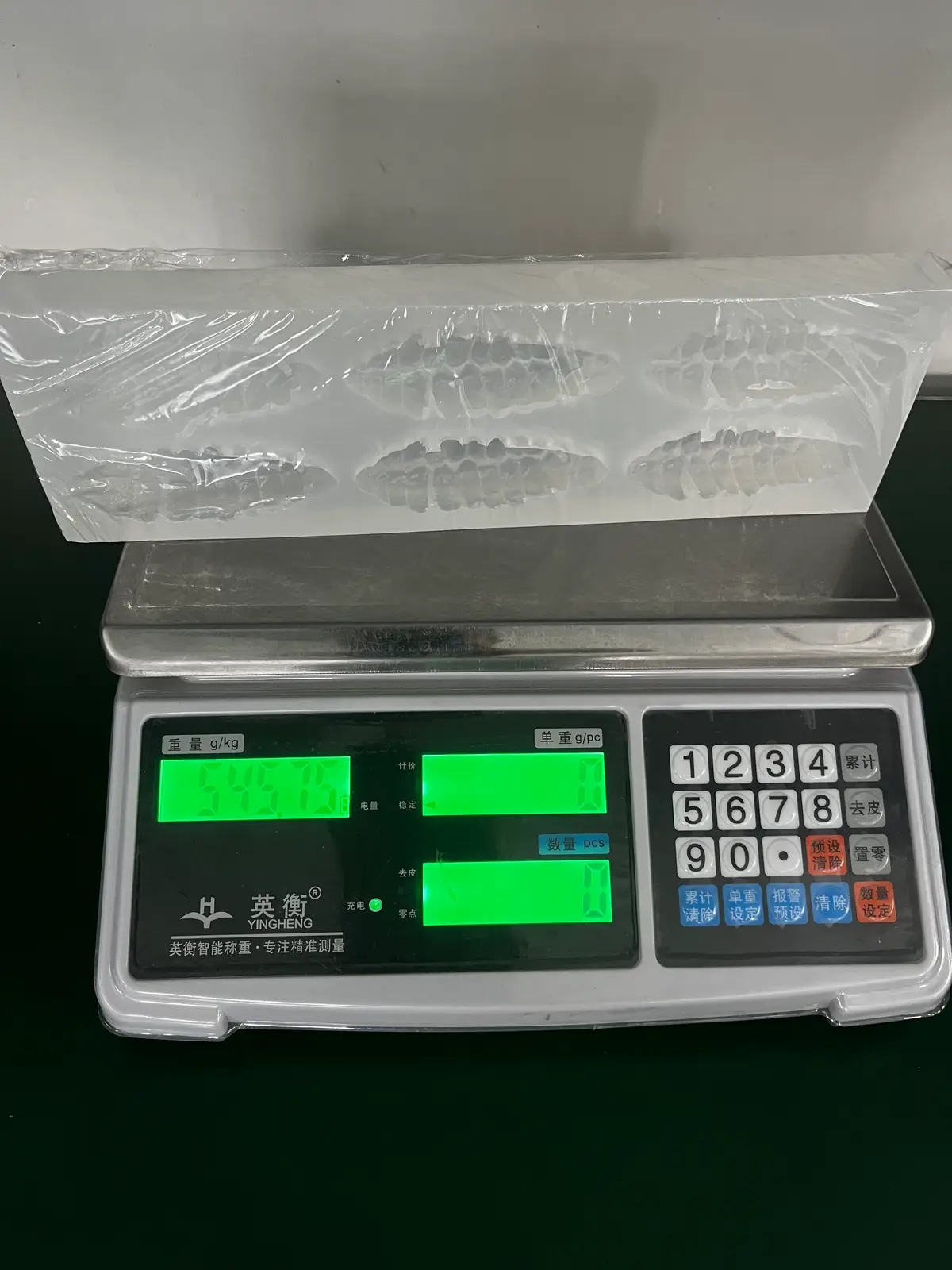
The photo that would prove a cup fail: scale readout of A and B, B-side lot/date, leftover puck next to a cut through the jacket, both still soft.
Worked example (anonymized)
A 10:1 platinum glove, buyer mixed “100 ml to 10 ml” in a kitchen cup. Twenty-four hours later the whole glove bent like clay. They blamed a printed master. We asked for the leftover cup — same clay. Fresh weighed 10:1 puck in a warm room snapped on a sealed land of the same print. Remake on a scale. CAD already locked; no $50. MOQ 20 after the firm witness. The print was not the poison.

One procurement mix-up
“It didn't cure, so your platinum is expired” skips the scale photo. Send weights. Tooling charge is not a warranty against volume-mark 10:1. Ownership of the master is a separate sentence from “who ate the A/B.”
We would not recommend
We would not recommend mixing 10:1 by volume marks on a kitchen cup.
We would not recommend adding mystery catalyst from another brand to a dead batch.
We would not recommend baking a still-wet food glove to “finish” an off-ratio cup.
We would not recommend calling whole-mass gel “SLA inhibition” without a puck from the cup.
- Leftover puck / jacket back firm? - No, whole mass soft -> Weighed A/B?
- Weighed A/B? - No or volume marks -> Remake on a scale — 1:1 or 10:1 by weight
- Weighed A/B? - Yes -> B-side in date? shop warm?
- B-side in date? shop warm? - B old -> Control puck with fresh B
- B-side in date? shop warm? - Cold box -> Warm components, new mix — do not torch the face
- B-side in date? shop warm? - Streaky cut -> Fold longer; remake
- Leftover puck / jacket back firm? - Yes, only face strings -> Inhibition — quiet the master, remake skin
What to ask when you're buying
- Does the shop weigh every cup, including samples?
- What bench temperature do they pour at, and will they hold a job if the room is cold?
- How do they date B side on the job card?
- If a sample cup fails, is the remake quoted as mix, not as CAD?
- Food: a gelled skin is scrap even if the master was perfect.
RFQ copy-pack
[email protected] · +86 135 3006 2969
RUUIPON did-not-cure RFQ Photo: jacket cut + leftover puck + scale if you have it Kit: 1:1 or 10:1; mixed how (weight/volume) B-side date if readable Shop temp if known Master: CNC / SLA / other Face-only tack? yes/no Food-contact? yes / craft Qty: remake sample / MOQ 20 CAD: locked / need $50 3D
Matched next step: send the puck-and-jacket photo and how you mixed. We remake from a weighed cup. We will not oven a bad ratio into a food tray. Prototype 3–7 business days after CAD lock. MOQ 20 per design.
Related: sticky uncured inhibition, how molds are made, platinum vs tin RTV, contact.
FAQ
How do I know it is ratio and not the print? If the leftover puck is as soft as the glove, the cup failed. If the puck is rubber and only the print face strings, the master failed.
Can I wait another day in a cold room? Sometimes a cold but correctly mixed platinum will catch up. If the puck is still clay after a warm-room control, waiting will not invent catalyst. Remake.
Does vacuum help an off-ratio mix? No. Vacuum removes air. It does not fix 10:1 poured as 10:2 by volume.
Is expired B obvious by smell? Not reliably. Date the bottle; run a control puck. We do not guess lots from a photo of a label we cannot read.
Will a failed mix restart MOQ? A gelled sample is not production. After a firm witness, production is MOQ 20 pieces per design. $50 CAD is unrelated unless the geometry was never locked.
Custom silicone development · DFM & prototype support
CAD, drawing, photos or sample details