
Candle Seam Flash vs Wax Lock
A visible seam and a candle that will not leave the mold can happen on the same dump. They are not the same failure. If you are diagnosing a candle RTV, this page is that split: parting, keys, and close versus geometry lock, cooling, or a dirty face. More release spray is the wrong first fix for a locked undercut.
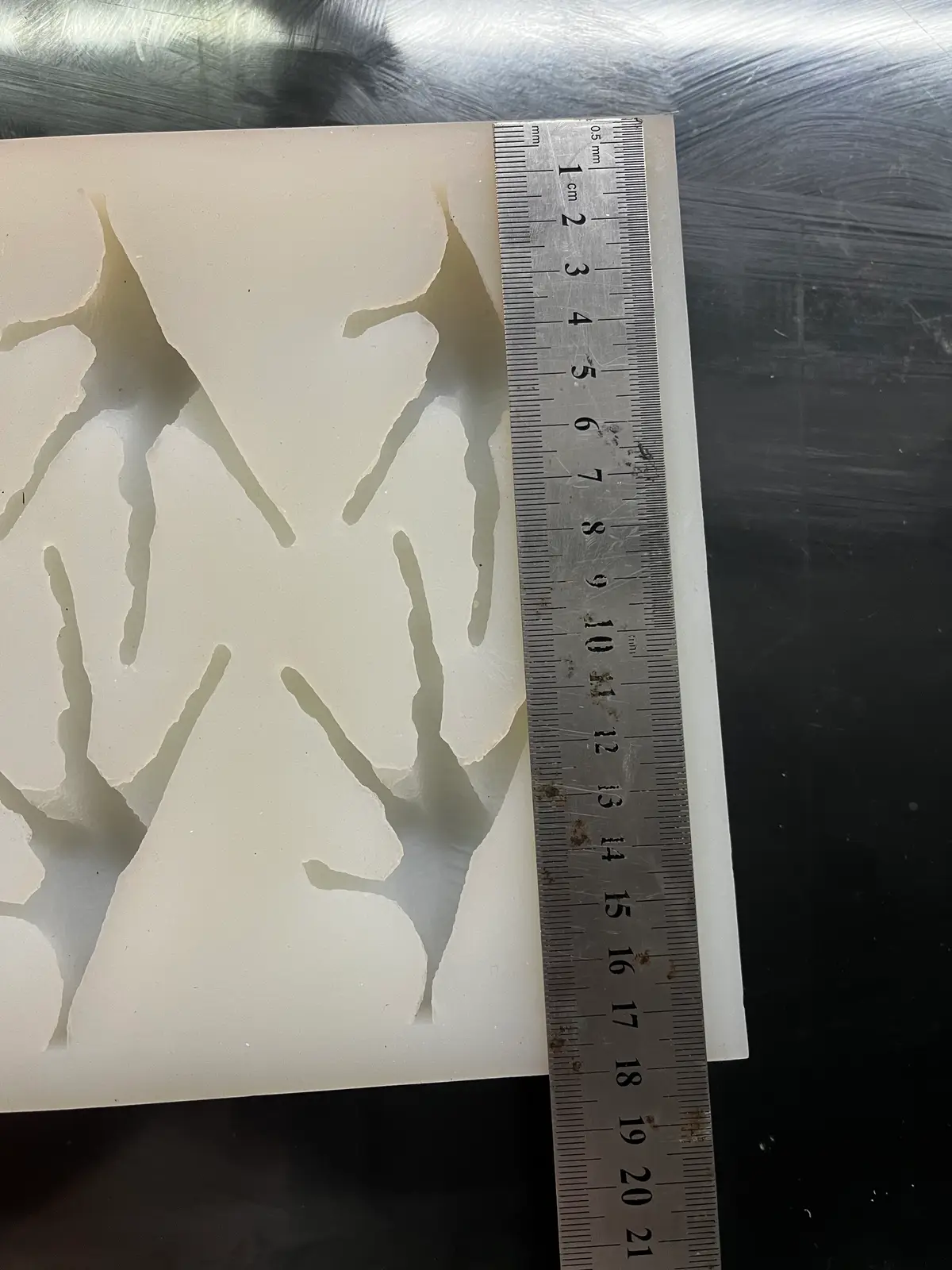
RUUIPON pours platinum RTV tools in Bao'an, Shenzhen (Licheng Technology Industry Park, Xinhe Blvd, Shajing; USCC 91440300MA5FAXCN9W) since 2018. Simple 3D is USD 50 when that CAD scope applies. Prototype is 3-7 business days after CAD lock. Production is MOQ 20 pieces per design. Candle tools are not food-contact trays.
Where this page sits
Buy the mold on custom silicone candle molds. Wick path lives on wick hole design. Handles and plugs live on sculptural candle mold structure. This page covers seam vs stick.
Does the mark follow the seam?
Seam defects follow parting geometry, registration, closure, support, and flash. Sticking follows wax condition, a lock, contamination, demold timing, or local texture. If the step or ridge tracks the split, fix alignment and close. If the candle hangs in a pocket away from the seam, look at lock and peel.
Typical shop values
Reference values only. Confirm material-specific limits against the supplier’s technical data and agree project acceptance criteria before production.
| Item | Typical shop value |
|---|---|
| Seam mismatch | Keys, flange close, and support must return the same cavity |
| Flash | A close / load problem, not a Shore problem first |
| Wax lock | Undercut, logo, or texture the wax cannot leave |
| Peel | Peel the silicone off the candle - do not yank the wax |
| Spray | A controlled input if needed - not the default answer |
| 3D / CAD | USD 50 when that modeling scope applies |
| Prototype after CAD lock | 3-7 business days |
| Production after written pass | MOQ 20 pieces per design |
| Contact | [email protected] · +86 135 3006 2969 |
Hide the seam; do not promise zero
On a full-3D sculptural candle some seam is often unavoidable. Put it on a back edge, texture valley, fold, or base. Mark the hero face before tooling. Cooling too early can lock a good cavity; contamination can mimic chemical stick.
Worked example: handle lock
Typical job, not a named PO. Buyer sprayed every cycle. The seam was clean. The lock sat in a handle loop. We added a plug and stopped the spray. The empty mold photo had looked fine.
When this page does not apply
This diagnosis does not replace the candle product or wick design. It does not apply to food trays. HCR compression products and molds stay on a RUUIPON HTV RFQ. High-volume LSR cold-runner part tools are a different RFQ - ask us.
RFQs we will not accept as-is
More spray as the only fix. A zero-seam promise on a two-sided sculpture. Sending an HCR / LSR part through this RTV seam page.
Matched next step
Send photos of the empty cavity, the stuck candle, and whether the mark follows the seam. We will say close, lock, or process. "Candle sticks" is not enough.
Send seam photos and wax type · Candle product · Wick hole · Sculptural structure
[email protected] · +86 135 3006 2969 · Licheng Technology Industry Park, Xinhe Blvd, Shajing, Bao'an, Shenzhen. USCC 91440300MA5FAXCN9W.
FAQ
Is this the candle product page? No.
Can you eliminate every seam? Not on most full-3D sculptures. Hide it.
Should we add more spray first? No. Name seam vs lock first.
Do you hang FDA papers on candle tools? No.
What is MOQ after a pass? 20 pieces per design.